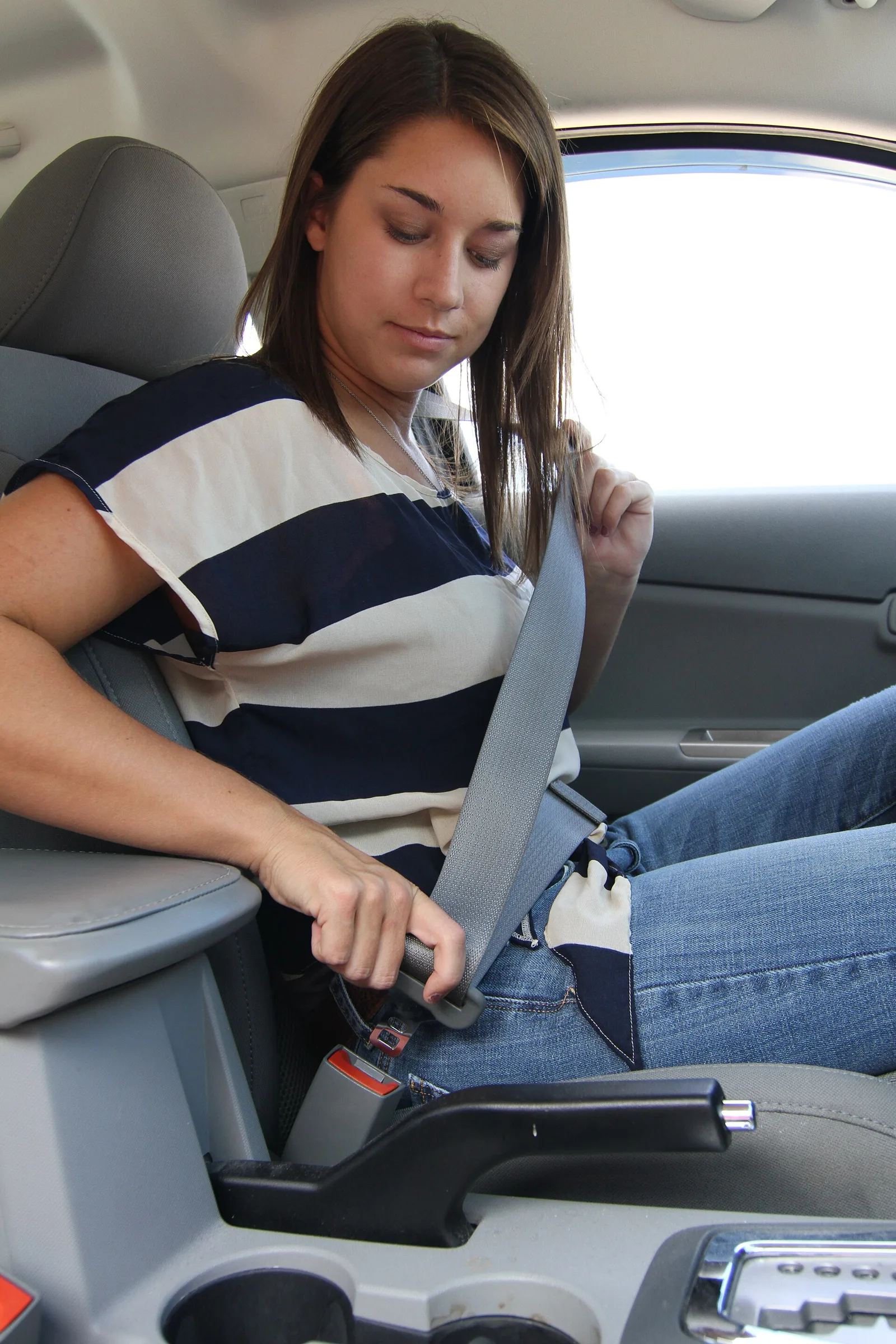
How a 19th-century glider strap became the Volvo three-point belt, why automatic belts failed and what the reminder chime has changed.
A seat belt is the basic restraint in a car, keeping occupants from striking the interior or leaving the vehicle in a crash. Volvo's 1959 three-point design became the modern standard, and belts keep occupants positioned so that airbags work as intended.
The seat belt is a simple device with a long history. It holds occupants in place during a sudden stop or a crash, and it works alongside airbags rather than being replaced by them.
What does a seat belt do?
A seat belt secures the driver or a passenger against harmful movement in a collision or a sudden stop. It reduces the force of secondary impacts with hard interior surfaces, keeps occupants positioned for the airbag, and prevents ejection in a crash or a rollover.
When a vehicle halts suddenly, its occupants keep moving at the speed they were travelling. The belt applies an opposing force that stops them falling out or striking the interior, including the windshield. For that reason seat belts are classed as primary restraint systems.
A glider strap became the three-point belt that now sits beside every airbag, and it remains the first defence in a crash.
How effective are seat belts in a crash?
Seat belts are credited with large reductions in harm. A 1984 US analysis of belts alone and with airbags found fatality reductions for front seat passengers ranging from 20% to 55%, and the Centers for Disease Control and Prevention has summarised the data as showing belts cut serious injuries and deaths by about half.
Rollover data from US passenger cars show the gap clearly. Fatalities were 0.71% for restrained users in 1994 and 0.87% in 2014, against 7% and 13% for unrestrained users in the same years. The probability of no injury was 45% for restrained users in 1994 and 44% in 2014.
It has been argued that belt use encourages riskier driving, so mandatory laws would have little effect on the total number of deaths. That idea, known as compensating-behaviour theory, is not supported by the evidence.
Who invented the seat belt?
English engineer George Cayley is credited with seat belts for his glider in the mid-19th century. By 1928 all aircraft were required to carry them, and Nash became the first American car maker to offer belts as a factory option, in its 1949 models.
Nash installed them in 40,000 cars, but buyers did not want them and asked dealers to remove them. Ford's 1956 option fared better, with 20% of buyers ordering belts from the factory and another 10% choosing dealer-installed belts.
Glenn W. Sheren of Mason, Michigan, filed a patent application on 31 March 1955 for an automotive seat belt, and he was awarded US patent 2,855,215 in 1958. An earlier application he filed on 22 September 1952 was the root of that patent.
In the early 1950s the Pasadena neurologist C. Hunter Shelden studied head injuries from car accidents. His 1955 paper proposed retractable belts, recessed steering wheels, reinforced roofs, roll bars and passive restraints such as airbags.
How did the three-point belt reach the road?
The modern three-point belt came from Sweden. Vattenfall, the national electric utility, found that most of its fatal on-the-job accidents happened on the road, and two of its safety engineers, Bengt Odelgard and Per-Olof Weman, started work on a belt. Their work reached Volvo in the late 1950s.
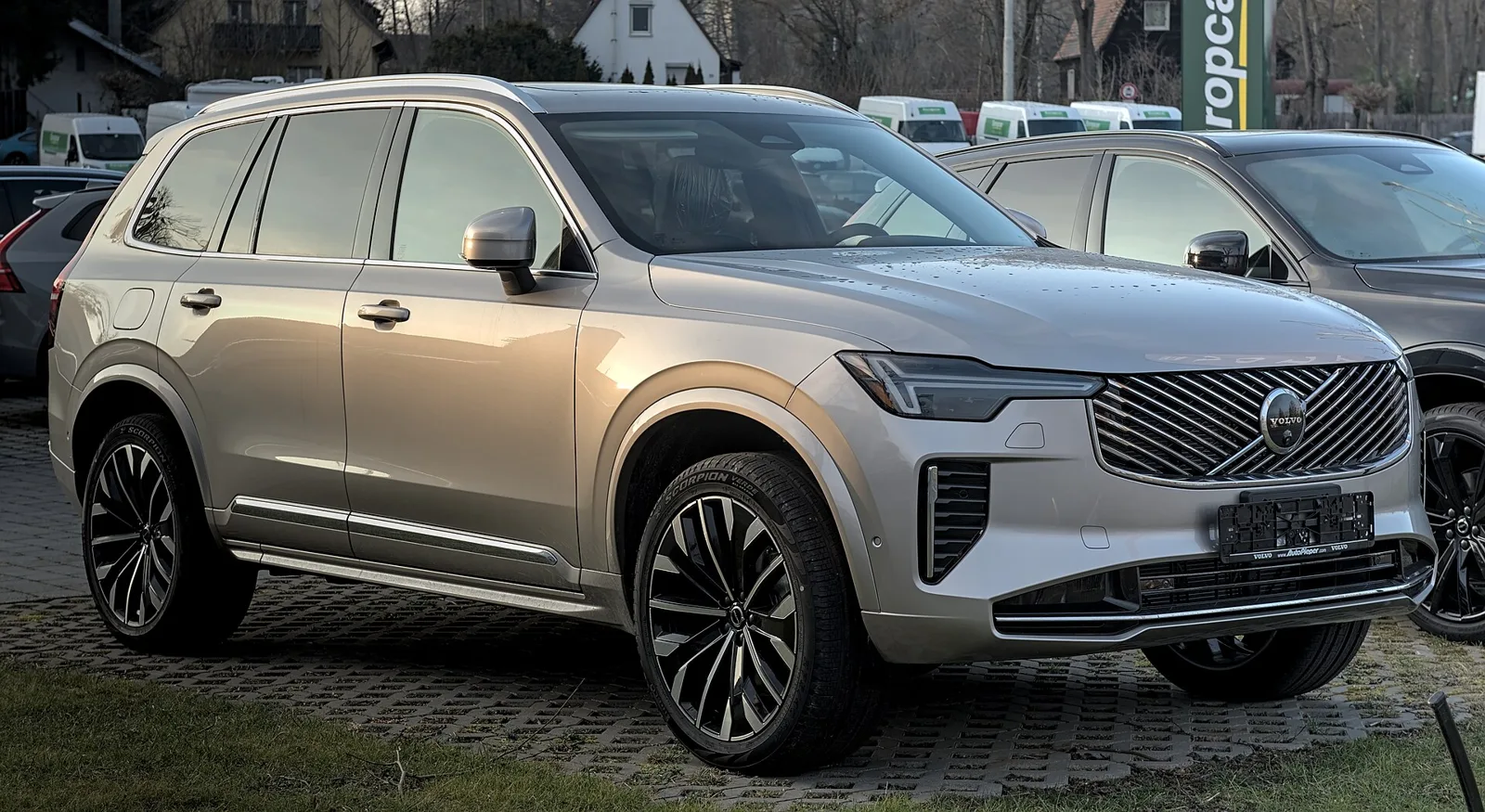
Nils Bohlin developed the three-point design for Volvo, which introduced it as standard equipment in 1959. Bohlin studied 28,000 accidents in Sweden, and none of the belted occupants was fatally injured at accident speeds below 60 mph. Volvo then made the design patent open, free to other manufacturers.
The first car with a three-point belt was a Volvo PV 544 delivered to a dealer in Kristianstad. The 1959 Volvo 122 was the first model to have the three-point belt as a standard item, after its initial two-point belts were replaced the following year.
When did belt laws begin?
In the US, automakers agreed to provide seat belt anchors from the 1962 model year, and Wisconsin became the first state to mandate belts in all new cars that year. The National Traffic and Motor Vehicle Safety Act followed in 1966, requiring automobiles to meet safety standards.
Johnson signed two bills in 1966 that required belts in all passenger vehicles from 1968, following hearings led by Senator Abraham Ribicoff. The first compulsory seat belt law came in 1970 in Victoria, Australia, and it followed trials of Hemco belts in police vehicles.
Mandatory laws in the United States began in the 1980s, and they faced opposition, with some consumers going to court and some cutting belts out of their cars.
What are the main types of seat belt?
The main types are the lap belt, the shoulder harness and the three-point belt, which combines both into one Y-shaped arrangement. Five-point harnesses are typically found in child seats and racing cars, while aerobatic aircraft use a seven-point combination harness.
| Type | Points | Typical use | Notes |
|---|---|---|---|
| Lap belt | Two | Older cars, coaches and airliner seats | A strap over the waist; linked to seat-belt syndrome injuries |
| Three-point belt | Three | Modern cars and buses | Spreads crash energy over the chest, pelvis and shoulders; Volvo, 1959 |
| Belt-in-seat | Three | Front seats of some vehicles | Shoulder belt attached to the seat itself; Range Rover Classic from 1970 |
| Five-point harness | Five | Child seats and racing cars | Two shoulder belts plus a lap belt |
| Six-point harness | Six | NASCAR teams | Adds two belts between the legs; popular after Dale Earnhardt's death |
| Seven-point combination | Seven | Aerobatic aircraft | Five-point harness with a redundant lap belt |
The six-point harness became popular in NASCAR after Dale Earnhardt's death. He was wearing a five-point harness in his fatal crash, and it was first thought that his belt had broken and caused his neck injury at impact, so some teams ordered six-point harnesses in response.
How do locks and pretensioners work?
Modern belts run on spring-loaded reels with inertial locks that stop the belt extending in a sudden deceleration. A small charge in a pretensioner removes slack in a crash, and load limiters and webclamps further manage the forces on the occupant.
There are two main lock types. A webbing-sensitive lock responds to rapid pull from the reel, while a vehicle-sensitive lock uses a pendulum that is swung by sudden deceleration or rollover. Dual-sensing retractors use both signals, and from 1996 all passenger vehicles had to lock before a crash.
Mercedes-Benz first introduced pretensioners on the 1981 S-Class. Pretensioners reduce occupant motion in a violent crash and lower the risk of submarining, where a passenger slides forward under a loose belt. Electric pretensioners can operate repeatedly, unlike pyrotechnic ones, which fire once.
The inflatable seat belt, invented by Donald Lewis, uses tubular bladders that inflate to widen the restraint and tighten the belt. It supports the head better than a web-only belt and gives side impact protection. Ford began offering rear-seat inflatable belts in 2013 on models such as the Explorer and Flex.
Why did automatic seat belts fail?
Automatic belts move into position when a door closes or the engine starts, and they were developed to counter low usage of manual belts. The first commercial car to use them was the 1975 Volkswagen Golf, but they generally gave inferior protection and most manufacturers dropped them once driver airbags became mandatory.
A 1978 US Department of Transportation study reported a fatality rate of .78 per 100 million miles for cars with automatic belts, against 2.34 for cars with manual belts. The mandate that prompted them was dropped in 1981, and in 1984 the Reagan administration reversed course.
The design had practical flaws. Door-mounted belts left occupants unprotected if the door opened in a crash, and a manual lap belt still had to be fastened. Owners often disconnected motorised shoulder belts to make getting in and out easier.
Do seat belt reminders work?
Seat belt reminders are now mandatory for the driver seat in new cars sold in Europe. In the US, the 1974 ban on interlocks led to reminder systems instead, and studies showed reminders lifted belt use. Ford reported 76% use with reminders and 71% without, in 2002.
In 2007 Honda found that 90% of drivers of its cars with reminders used a belt, against 84% of those without. Sweden had 70% of newly registered cars fitted with driver reminders by 2005.
The earlier interlock applied to passenger cars built after August 1973, and it blocked starting until belts were fastened. Congress prohibited such interlocks from 27 October 1974. In the EU, reminders are now required in all front and rear seats of cars and vans.
Are belts safe for children and in other vehicles?
Children need child-sized restraints, because adult belts can cause serious injuries in small bodies. The UK extended compulsory wearing to children under 14 in 1989, a change that coincided with a 10% rise in fatalities and a 12% rise in injuries among the group it targeted.
Belts are now common on buses and coaches. The European Union requires them in new long-distance buses and coaches, Australia has required lap and sash belts in new coaches since 1994, and NHTSA requires lap-shoulder belts in new over-the-road buses from 2016.
School buses are debated. Six US states require belts on school buses, and in 2015 NHTSA endorsed them for the first time. Some argue that belts could trap students in a roll or tip, while others see them as added protection.
Aircraft belts serve other purposes. Airliner belts are mainly there to keep passengers seated in turbulence, not for crash protection, and research found no net safety benefit from three-point restraints on passenger rail vehicles.
What is the legal picture today?
Many countries now require belts by law. As of 2016, US laws were either primary, letting an officer cite a driver for not belting up alone, or secondary, allowing a citation only alongside another offence. Fifteen states enforced secondary laws, 34 states and the District of Columbia enforced primary laws, and New Hampshire had neither.
Risk compensation has been studied. A 2001 analysis of US crash data found seat belts decreased fatalities by 1.35% for each 10% increase in use, and that earlier estimates had been significantly overstated. Another study found no evidence that risk compensation made belted drivers more dangerous.
Observational studies and tests with crash dummies and cadavers indicate that belts greatly reduce the risk of death and injury in most crashes. One large US study put the odds ratio of crash death at 0.46 with a three-point belt, compared with no belt.