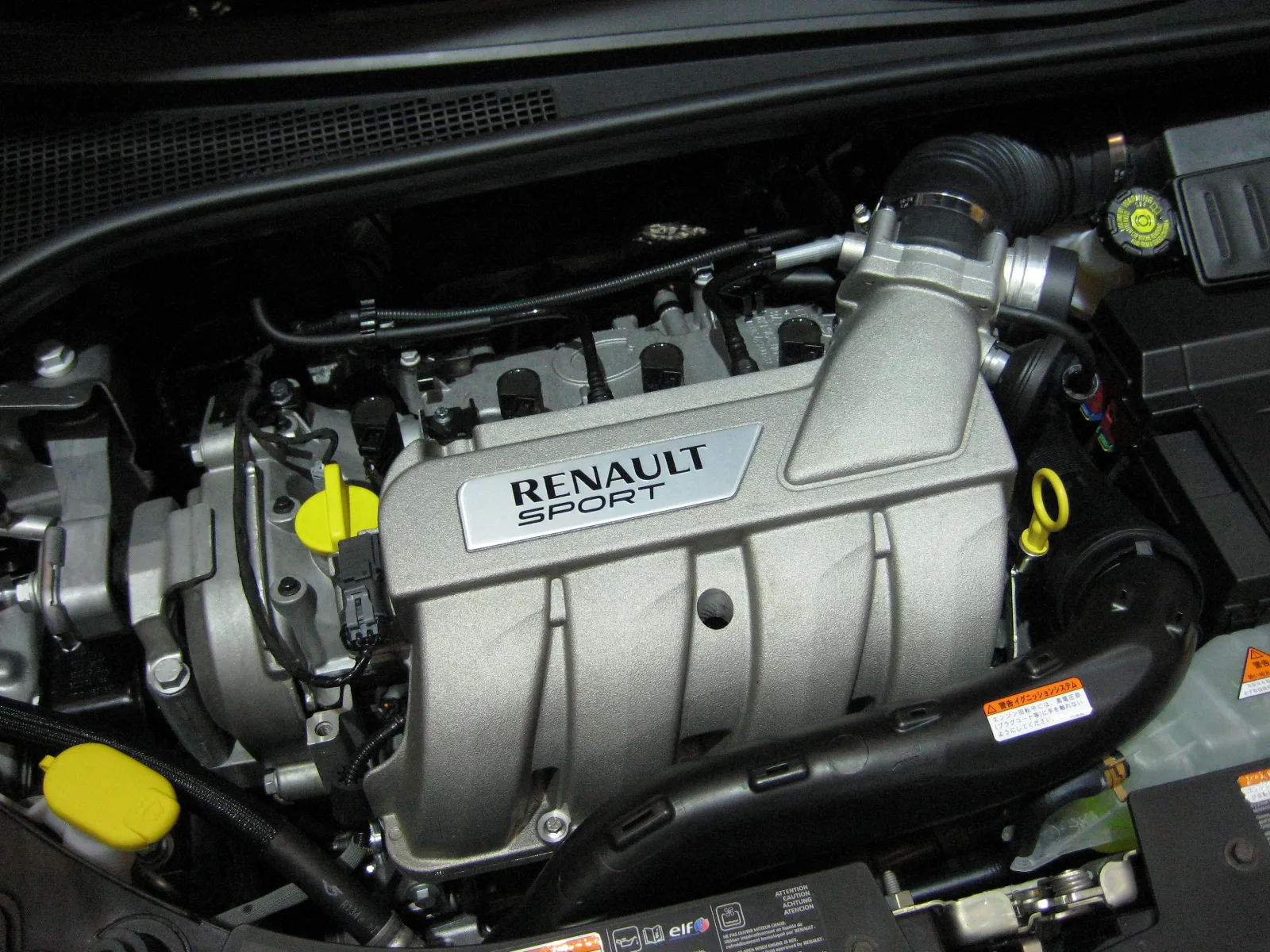
Built around a cast iron block, the F family ran from a 1982 diesel to the 2.0 litre 16-valve engines that powered Renault Sport hot hatches.
Renault's F-type began as a 1982 diesel and grew into a broad family of cast iron fours. Its 16-valve engines, including the F7R in the Clio Williams and the F4R, became the basis of Renault Sport hot hatches and sports cars.
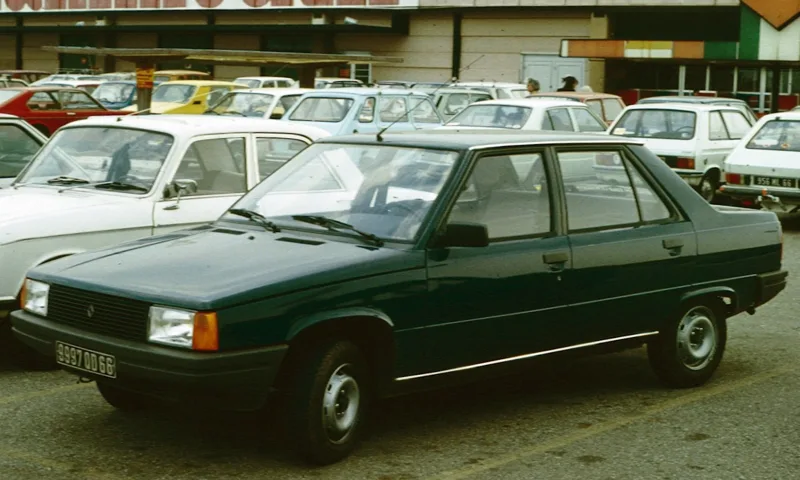
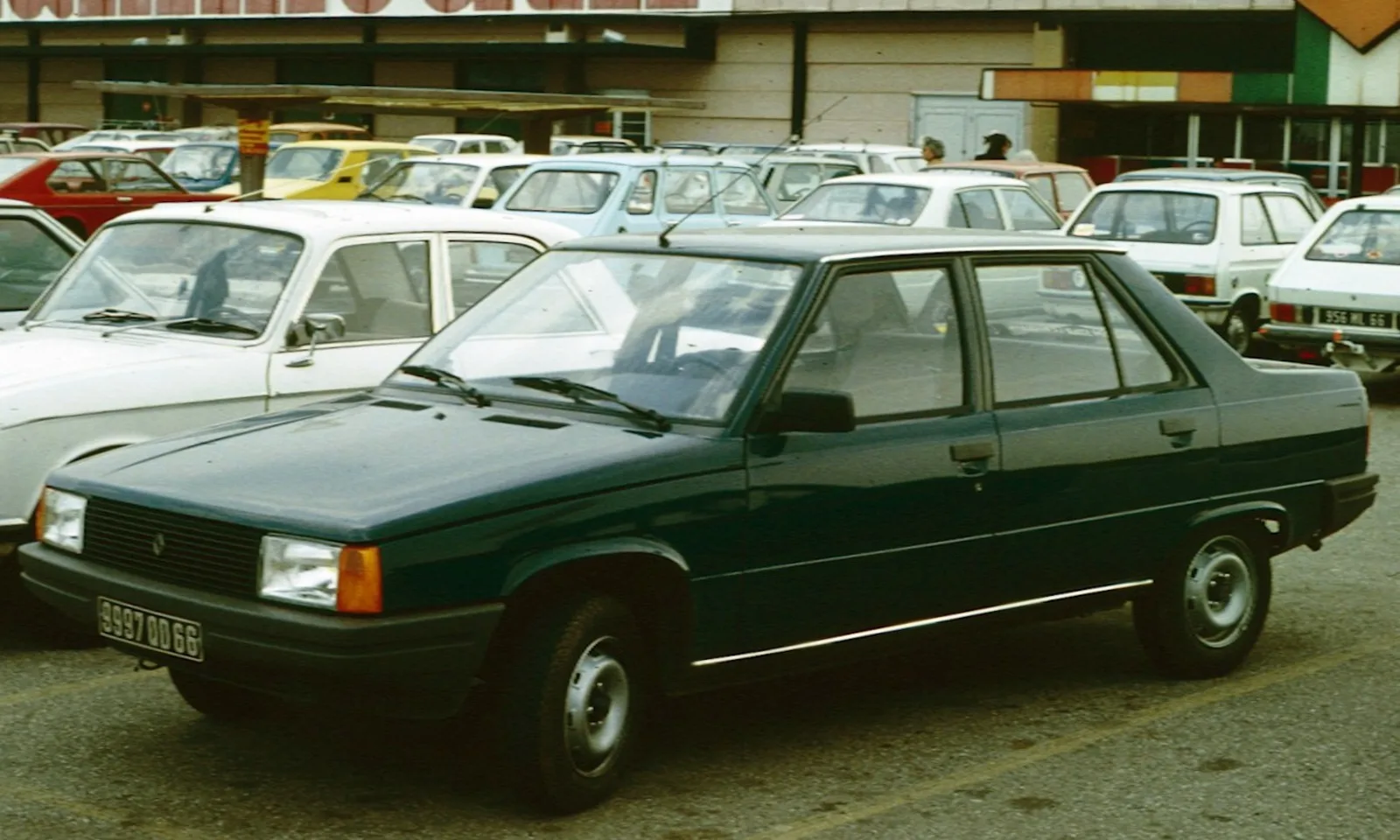
The F-type is a family of four-cylinder engines from Renault, in petrol and diesel form, with 8 or 16 valves. The F stands for fonte, French for cast iron, because the block is cast iron. It made its first appearance in the early 1980s in the Renault 9 and 11, and it went on to power hot hatches and sports cars for more than two decades.
When did the F-type engine begin?
The F-type began in December 1982, when the Renault board presented a new 1.6 litre diesel with 55 PS (40 kW; 54 hp) for the Renault 9. It was known as the F8M and was designed by engineer George Douin and his team. The diesel was added to the Renault 11 hatchback in the autumn of 1983.
The F8M broke with tradition by not using removable cylinder liners. Advances in metallurgy slowed the wear of rubbing parts enough to make that possible. The four-cylinder unit used an overhead camshaft driven by a toothed belt, which also controlled the diesel injection pump.
The cylinder head was a light alloy casting with Ricardo Comet prechambers, and the engine was mounted transversely and inclined rearwards. A second belt drove the alternator and water pump, while a vacuum pump at the rear operated the brake servo.
A cast iron family that began as a 1982 diesel and ended up powering the most celebrated Renault Sport hot hatches.
What was the F2N petrol engine?
In the autumn of 1983 Renault launched the 1.7 litre F2N petrol engine, which used the block of the F8M. It had a diesel-type architecture, with combustion chambers integrated into the piston design. Because the petrol version did not need water channels in the block, it could take a bigger bore than the diesel.
The F2N debuted in twin carburettor guise in the Renault 11 GTX and TXE, with the TXE Electronic adding a digital meter and speech. In February 1984 it joined the Renault 9 GTX and TXE. Volvo called the same engine the B172.
The engine spread widely, reaching the Renault 21, 5, 19 and Clio, plus Volvo's 340 and 360 and the 400 series, where it was the B18KP. A single-barrel carburettor version, the F1N, served in some early Renault Trafic and R21 models.
How did the F-type diesels develop?
Beginning in 1987 the 1.6 diesel was revised to run more quietly. That second generation F8M had weaker cylinder heads and head gaskets, partly because less asbestos was used in the gaskets. The two generations can be told apart by their cylinder head covers and the finish of the injection pump housing.
In 1988 Renault launched the Renault 19 to replace the 9 and 11, and the 1.6 diesel was too weak for the heavier car. Renault changed the stroke and bore to create a 1,870 cc (1.9 litre) engine, the F8Q, which made 65 bhp (48 kW; 66 PS). A turbocharged version, the F8QT, followed at the end of 1988 in the R19 and produced 95 bhp (71 kW; 96 PS).
In the autumn of 1997 Renault introduced the 1.9 dTi, the F9Q, as the first version with direct injection. It used a mechanical injection pump, and it spread through the Megane, Scenic, Laguna, Kangoo and Clio ranges. In July 1999 it was upgraded to common rail injection, becoming Renault's first dCi engine.
What were the main F-type capacities?
The family covered capacities from 1.6 to 2.0 litres, and each engine had its own code. The table lists several important versions with their size, bore and stroke, and an example application. Several versions used the same block with different heads or crankshafts, which is one reason the codes can look similar.
| Code | Capacity | Bore x stroke | Example application |
|---|---|---|---|
| F8M | 1.6 L (1,596 cc) | 78 mm x 83.5 mm | Renault 9 diesel from 1982 |
| F2N | 1.7 L (1,721 cc) | 81 mm x 83.5 mm | Renault 11 GTX from 1983 |
| F8Q | 1.9 L (1,870 cc) | 80 mm x 93 mm | Renault R19 diesel from 1988 |
| F7P | 1.8 L (1,764 cc) | 82 mm x 83.5 mm | Renault R19 sports version, 1988 to 1997 |
| F7R | 2.0 L (1,998 cc) | 82.7 mm x 93 mm | Clio Williams, 1993 to 1996 |
| F4R | 2.0 L (1,998 cc) | 82.7 mm x 93 mm | Laguna and Espace, 16 valve DOHC |
The F4R used the same 2.0 litre dimensions as the F7R that came before it, so the later Renault Sport engines inherited the Clio Williams layout.
What made the Clio Williams engine special?
The Clio Williams appeared in 1993, celebrating Renault's Formula 1 titles with Frank Williams' team. It was also homologated for competition, which required a minimum production of 2,500 cars. To run in Group A, Renault needed a 2.0 litre engine that was the best equipped in its class.
Renault started from the F7P block of the Clio 16S. It bored the engine out by 0.7 mm (0.03 in) and adopted the diesel engine's crankshaft, which increased the stroke from 83.5 mm to 93 mm (3.29 to 3.66 in). The result was the F7R, with 150 PS (110 kW; 148 bhp), and that stronger crank handled torque of 175 Nm at 4,500 rpm.
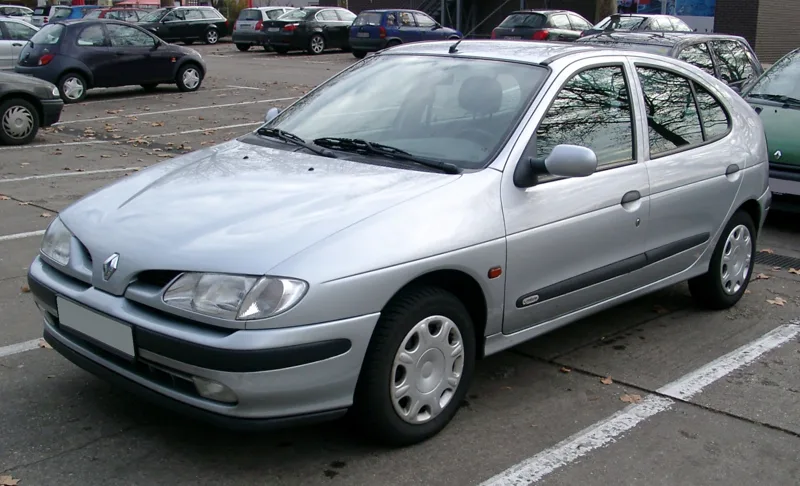
The F7R also powered the Megane 1 and the Renault Sport Spider. Its 16 valve DOHC head with hydraulic tappets made it the first of the F-type family with that layout.
How did the 16-valve F4R become a Renault Sport engine?
The F4R was a 16-valve DOHC engine with multipoint fuel injection and an indirectly actuated valve train. It was sourced from the Laguna and tuned by Mecachrome for the Clio 2 RS, which arrived in 1999 with 172 PS (127 kW; 170 bhp). The engine had two-stage variable valve timing on the intake cam and 4-into-1 exhaust headers.
The Phase 3 Clio 2 RS gained 10 PS in 2004, reaching 182 PS (134 kW; 180 bhp) with 4-2-1 headers and reworked mufflers. In 2006 the Clio 3 RS produced 197 PS (145 kW; 194 bhp), with continuously variable valve timing on the intake cam.
The Phase 2 third generation Clio RS was rated at 203 PS (149 kW; 200 bhp). In 2001 the Phase 2 F4R received electronic throttle control.
Which turbo versions followed?
The F4R was also made with a turbo, known as the F4Rt. It powered two Megane models, the Laguna 2, the Laguna 3 Avantime and the Vel Satis, and it became the basis of the Megane 2 RS. The 225 bhp (228 PS; 168 kW) Megane 2 RS had a 230 bhp variant.
The Megane RS 3 was presented at the Geneva show in March 2009 with the 2.0 16V turbo block, and its variable valve timing lifted output to 250 PS (184 kW; 247 bhp). In June 2011 a limited RS Trophy arrived with 265 PS (195 kW; 261 bhp), and a 275 PS (202 kW; 271 bhp) version followed.
Was the F-type a direct-injection petrol engine?
Yes, though not at first. The F5R of 1999 was an F7R with direct injection, and it used a 16 valve DI system in the Megane coupe and convertible and the Laguna 2. It was the first French petrol engine with direct injection.
The F5R was only offered as a 2.0 litre. Renault's diesel F9Q had already used direct injection from 1997, two years earlier.
What were the early F1 and F3 engines?
The F1x was only available as a 1.7 litre, with a parallel valve architecture fed by a single-barrel carburettor. It powered the Renault Trafic from 1984 to 1997, and the F1N was also the carburettor version used in some early R21 models.
The F3x was mechanically close to the F2x but relied on a monopoint injection system, and some later versions had multipoint injection. Porsche designed a turbo variant of it for the Volvo 400 range.
Which diesel models carried the F8Q and F9Q?
The F8Q 1.9 litre diesel went into the Clio 1 and its Express, Rapid and Extra derivatives, the Renault 21, the Kangoo, the Megane 1 and the Trafic 1. A detuned 55 PS (40 kW; 54 bhp) DIN version arrived in the 1990s, and the engine also appeared in the Mitsubishi Carisma.
The turbocharged F8QT was used in the Megane 1, the Volvo 440 and 460, the Volvo S40 and V40 and the Mitsubishi Carisma. Its second-generation cylinder heads and head gaskets were the weak point that owners and workshops came to know well.
The direct injection F9Q 1.9 dTi of 1997 served the Megane, Scenic, Laguna, Kangoo and Clio 2, along with the Carisma and the Volvo S40 and V40. Once the common rail dCi arrived in 1999, the engine spread to the Laguna 2, Megane 2, Scenic 2, Espace 3 and 4, Trafic 2, Master 2, the Suzuki Grand Vitara and the Nissan Primera.
How did the 1.8 litre petrol engines differ?
Three different 1.8 litre petrol engines sat within the F-type family. The F7P was a 16-valve unit of 1,764 cc, the F3P was a non-16-valve injected unit of 1,794 cc, and the 16-valve F4P was a later design of 1,783 cc. Each one served a different generation of Renault and Volvo cars.
The F3P came from the F2N, with its bore increased to give 1,794 cc, and it was built with a bore of 82.7 mm and a stroke of 83.5 mm. It powered the Renault R19 from 1988 to 2000, the Clio RSi from 1992 to 1997, the first Laguna from 1994 to 1999 and the Volvo 440 and 460 from 1993 to 1996.
The F4P first appeared in 1998, in the Phase 2 first generation Laguna. It went on to the first Megane Scenic and the second generation Laguna, and it was later used in the Proton Waja 1.8 from 2002 to 2005. Its distribution kit and water pump matched those of the 16-valve K-Type engines, the K4J and K4M.
Where did the 2.0 F4R and F4Rt end up?
The F4R was one of the most widely used members of the family. It powered the Laguna, Espace and Megane, the Scenic and the Clio Renault Sport models, and it was also used in the Trafic and Formula Renault 2.0 racing cars. Later it served in the Dacia Duster and the Renault Sandero R.S. 2.0.
The turbo F4Rt had a wider range of outputs than the naturally aspirated engine. In the Laguna 2 and the Scenic 2 it was rated at 165 to 180 hp with a twin-scroll turbo by Mitsubishi, and the TCe 180 reached an overboost figure of 190 hp. The Laguna 3 GT produced 205 bhp (153 kW; 208 PS), and the Fluence GT offered 180 bhp (134 kW; 182 PS).
The turbo F4Rt also gave the Megane 2 Sport its 225 bhp (168 kW; 228 PS) rating, and a 230 bhp (172 kW; 233 PS) variant followed. The Megane 3 TCe 180 used the same family, showing how long the 2.0 turbo design stayed in production.
How did Volvo name the F-type engines?
Volvo gave its own codes to many F-type engines, which can confuse anyone comparing the two ranges. The F2N was the B172 and the 400 series engine was the B18KP, while the 1.6 petrol with the diesel's bore and stroke was the B16F.
Volvo's turbo F2N, with multipoint injection, was the B18FT. It went into the 480 Turbo, the 440 Turbo and the 460 Turbo, and those engines are sought after today for fitting to Renault 5 GT Turbo, Renault 9 Turbo and Renault 11 Turbo cars.
The 8-valve F7R-based engine went into the Laguna 1 with 115 PS (85 kW; 113 bhp), and in the Volvo 440, 460 and 480 it was known as the B20F. Volvo's B18U was the injected 1.8 litre of the 1990s, and the B18EP was its 1.7 litre counterpart.
What were the early US versions like?
The American Renault 9 and 11, sold as the Alliance and Encore, used a single throttle-body fuel injection system drawn from Jeep and Chrysler equipment. That system applied to all of the 1.7 litre applications in North America, as well as the 2.0 litre fitted to the one-year-only 1987 GTA.
The 2.0 F3R that went into the Alliance GTA in North America was the injection version of the older 1,965 cc F2R. Its replacement was a 1,998 cc F3R in the 1993 to 1996 Volvo 440, 460 and 480 range and in later Laguna and Megane cars.