A decade-long effort codenamed Titan, with a chip, a shuttle and a string of failed partnerships, that ended with a February 2024 decision to move the staff onto generative AI.
Apple's Project Titan ran from 2014 to 2024, aiming at an electric self-driving car. It never reached market, but it produced test vehicles, a nearly finished autonomy chip and a series of partner talks before Apple cancelled the effort in February 2024.
Apple spent roughly a decade on an electric and self-driving car, codenamed Project Titan, before the company cancelled it in February 2024. The effort never produced an Apple-branded vehicle, but it reached thousands of staff, several test cars on public roads and a chip designed specifically for autonomy. Its story is a catalogue of shifting plans, lost partners and leadership changes that ended with the resources moved to generative artificial intelligence.
What was Project Titan?
From 2014 until 2024, Apple undertook research and development on an electric, self-driving car. Apple rarely discussed its automotive work in public. By 2018 around 5,000 employees were reported to be working on the project, and other parts of the company contributed design, engineering and silicon work. The project was reported to cost more than a billion dollars a year, with hundreds of millions more spent across the company.
The car was never revealed. Analysts and reporters tracked it through hiring records, testing permits, supplier talks and speculation, and most of what is known comes from those sources rather than from Apple itself. Even so, the outline of the programme is clear enough to show how a consumer electronics company approached the car industry.
A decade of hiring, testing and partner talks that produced a nearly finished chip and no car, before the resources moved to AI.
How did the project begin?
The project was rumoured to have been approved by Chief Executive Tim Cook in late 2014. Reports also named Johann Jungwirth, who had led Mercedes-Benz's research arm in North America, as a recruit, along with at least one transmission engineer. In February 2015, Apple board member Mickey Drexler said that co-founder Steve Jobs had plans to build a car, and that the idea had surfaced around the time Tesla Motors introduced its first car in 2008.
Public signals grew through 2015. Carl Icahn said he believed Apple would enter the car market around 2020, calling the car the ultimate mobile device. The Guardian reported that Apple was meeting officials at GoMentum Station, a test ground for connected and autonomous vehicles in Concord, California, and The Wall Street Journal said the car would be battery electric and initially lack full self-driving capability. In October 2015 Cook said the industry was at an inflection point, with software, autonomy and electrification reshaping the car.
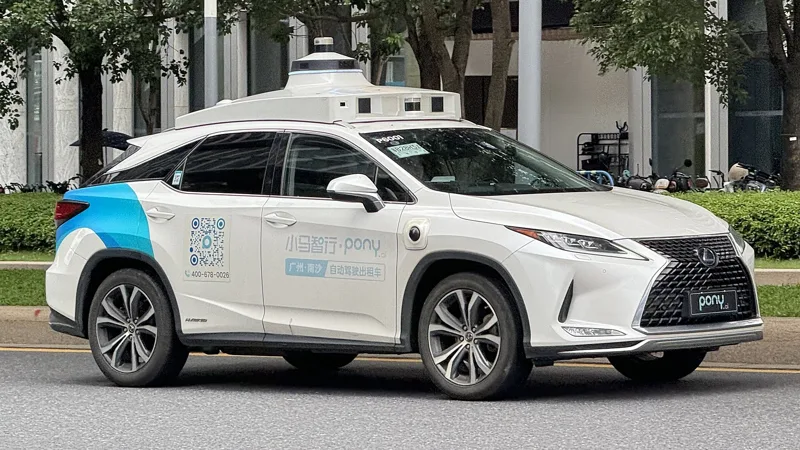
Apple also contracted Torc Robotics in late 2015 to retrofit two Lexus SUVs with sensors in a project known internally as Baja. The work gave the company an early test platform before it had a car of its own.
In 2016 Elon Musk remarked publicly that a company hiring more than a thousand engineers would struggle to keep an electric car secret. Reports that May suggested Apple was interested in electric car charging stations, and that autumn a team from Magna International was said to be working at Apple's Sunnyvale lab. An internal 2017 deadline was reportedly set to decide whether the project would continue in its current form.
Who led the project?
Leadership changed several times. In July 2016 The Wall Street Journal reported that Apple had persuaded Bob Mansfield, a retired senior hardware engineering executive, to return and take over Project Titan. Days later Bloomberg reported that Apple had hired Dan Dodge, the founder and former chief executive of QNX, BlackBerry's automotive software division. Dodge's arrival signalled a shift toward software for autonomous vehicles, although Apple was still said to be developing a vehicle.
In September 2016 The New York Times reported dozens of layoffs in an effort to reboot the team, which was still said to number around 1,000. In August 2018 Doug Field, formerly senior vice president of engineering at Tesla, became the leader of the Titan team. After Field left for Ford, Kevin Lynch, the wearables chief, was appointed to lead the project. In December 2020 Bloomberg reported that artificial intelligence chief John Giannandrea was overseeing development after Mansfield retired.
| Period | Leader or overseer | Notable change |
|---|---|---|
| 2014 to 2016 | Early executive oversight | Rumoured approval and first hires |
| July 2016 | Bob Mansfield | Returned to take over the project |
| August 2018 | Doug Field | Former Tesla engineering chief leads Titan |
| After 2019 | Kevin Lynch | Wearables chief appointed after Field's departure |
| December 2020 | John Giannandrea | Overseeing development as Mansfield retired |
Which companies did Apple talk to?
During the 2008 to 2010 crisis in the car industry, Tony Fadell, then a senior vice president, proposed buying General Motors at a reduced price. The idea was dropped partly because it would look bad and partly because of the focus on the iPhone. In 2014 Apple's corporate development chief met Elon Musk several times about acquiring Tesla, but Cook shut those early talks down, partly because the chief financial officer had warned how hard the car business was.
Talks with Mercedes-Benz went further. The plan was for Mercedes-Benz to build the car while Apple supplied its self-driving platform and user interface to other vehicles. The talks lasted more than a year before Apple pulled out, partly because it believed it could build a car itself and partly over control of the user experience and data.
The closest talks to buying a car company were with McLaren. Other discussions reportedly included BMW, Canoo, Nissan and BYD Auto. Apple briefly partnered with Magna Steyr, a maker of low-volume vehicles, and it was concerned that taking on an automaker would be a disaster internally.
What did the Volkswagen and Hyundai deals involve?
In May 2018 Apple agreed a deal with Volkswagen to produce an autonomous shuttle for employees at its Apple Park headquarters, based on the T6 Transporter commercial vehicle platform. The vans were to keep their chassis and wheels, with new dashboards, seats and other components. Field shut the deal down because he saw it as a distraction from the larger effort.
In 2021 the Korea Economic Daily reported that Hyundai was in early talks with Apple about building self-driving electric cars together. By early February the rumour was that Apple was close to a deal worth about 3.59B dollars that would use Kia's plant in West Point, Georgia, to build a fully autonomous car without a driver's seat. In February 2021 Hyundai and Kia confirmed they were not in talks with Apple to develop a car. Nissan also told Reuters it was not part of any Japanese discussions.
How far did the testing go?
Apple registered 27 self-driving vehicles with California's Department of Motor Vehicles in January 2018. In September 2018 it held 70 California autonomous vehicle permits, behind GM's Cruise with 175 and Alphabet's Waymo with 88. In August 2018 the BBC reported that Apple had 66 road-registered driverless cars and 111 drivers registered to operate them.
Testing was not without incident. On 24 August 2018 one of Apple's test cars was rear-ended while waiting to merge into traffic about 3.5 miles from its Cupertino headquarters, and no injuries were reported. Earlier that year, on 7 July 2018, a former employee was arrested by the FBI for allegedly stealing trade secrets about the programme. The criminal complaint showed that around 5,000 employees were then assigned to the project.
The company also bought Drive.ai, an autonomous vehicle startup, in June 2019. A patent application from August 2018 described a system that would warn riders ahead of time about what a self-driving car was about to do, to ease the discomfort of surprise.
What technology did the project develop?
The car project cycled through several designs. Teams from outside the core group also contributed, and Apple's silicon team worked closely on the processor used for autonomy. When the project was cancelled the chip was nearly finished, with the equivalent processing power of four M2 Ultras combined. The car's microkernel was named safetyOS.
Public detail on the hardware is sparse, so much of what is known about the chip comes from reporting rather than from Apple itself.
Researchers at Apple also contributed to the field. In November 2017 two Apple researchers, Yin Zhou and Oncel Tuzel, wrote a paper on VoxelNet, a method that feeds lidar points through a neural network to locate objects in 3D. That work fed into the wider effort to make autonomous systems perceive their surroundings reliably.
Why was the car project cancelled?
In 2020 it was still believed that Apple was working on self-driving hardware, software and services as a possible product, rather than on Apple-branded cars.
The project had a long run of setbacks. In December 2020 Reuters reported that Apple was aiming for a 2024 launch, but an analyst argued the car would not arrive before 2025 and might slip to 2028 or later. In 2022 Bloomberg reported that Apple had given up on a fully self-driving car and was instead planning a highway-only vehicle priced below 100,000 dollars. By January 2024 the release date had reportedly been pushed to 2028, with a much smaller scope focused on basic driver assistance.
On 27 February 2024 Apple executives announced internally that the car project would be cancelled, with most of its resources moving to generative artificial intelligence. In April 2024 more than 600 employees were laid off in Santa Clara, California, most of them in offices linked to Titan. One site, code-named Aria, had been developing microLED screens for the car.
Who worked on the car?
The programme drew engineers and executives from across the automotive and technology industry. Former Tesla and Nio engineers, a former Volkswagen automated driving specialist and researchers from Carnegie Mellon University and the Swiss Federal Institute of Technology joined at various points. Engineers from Ford, Bosch, Delphi and Nvidia, along with former Caterpillar, Fiat Chrysler and Lamborghini staff, also appear among the reported hires.
The leadership group included Doug Field, formerly Tesla's senior vice president of engineering, who led the project from 2018 before joining Ford. Dan Riccio's new role at Apple in early 2021 prompted speculation that he might lead Titan. Benjamin Lyon, a sensor expert who reported to Field, left in February 2021 for a space startup.