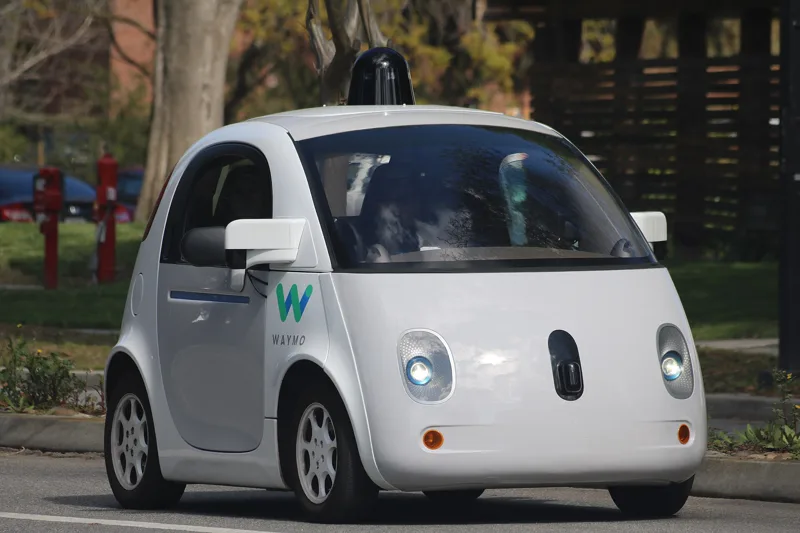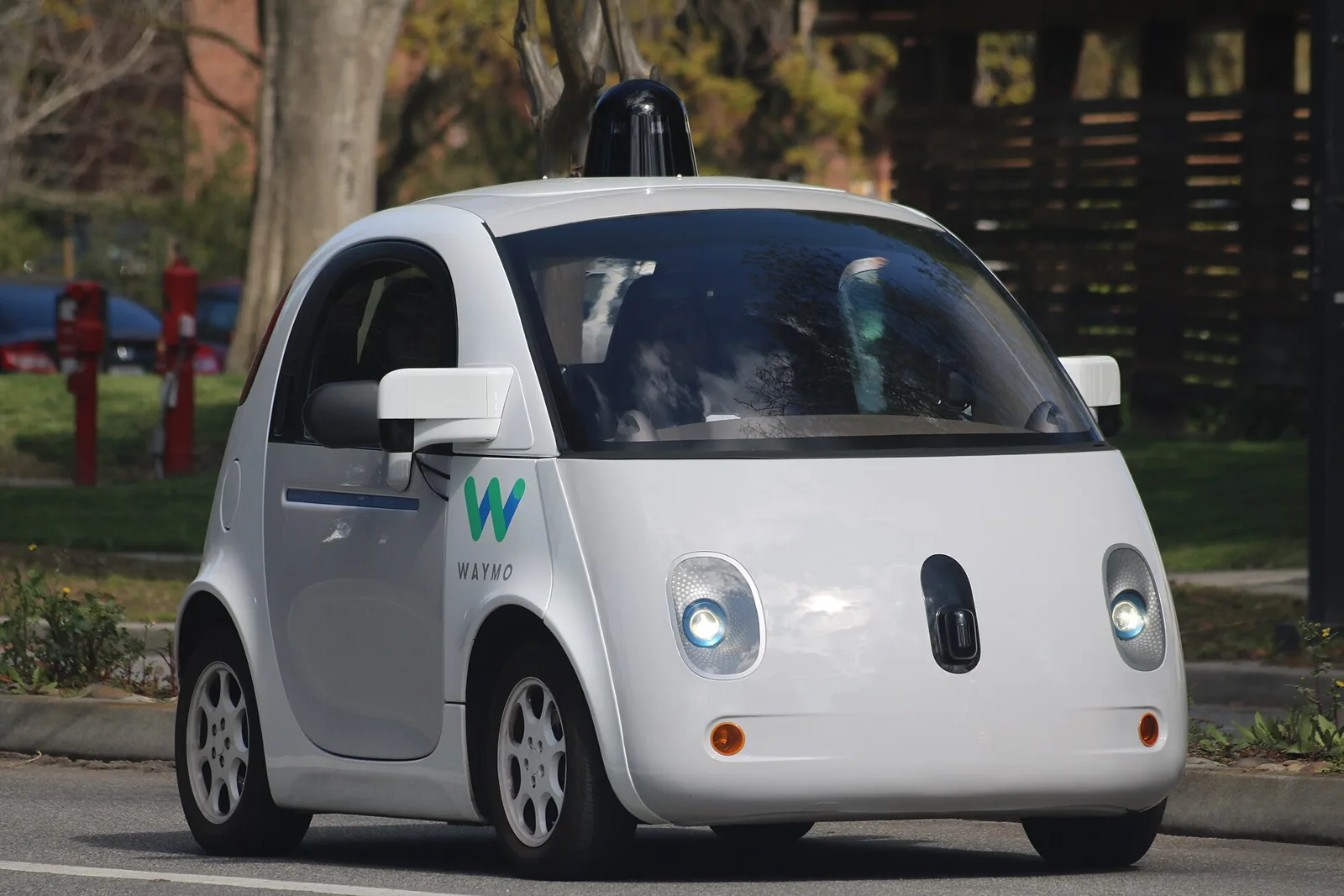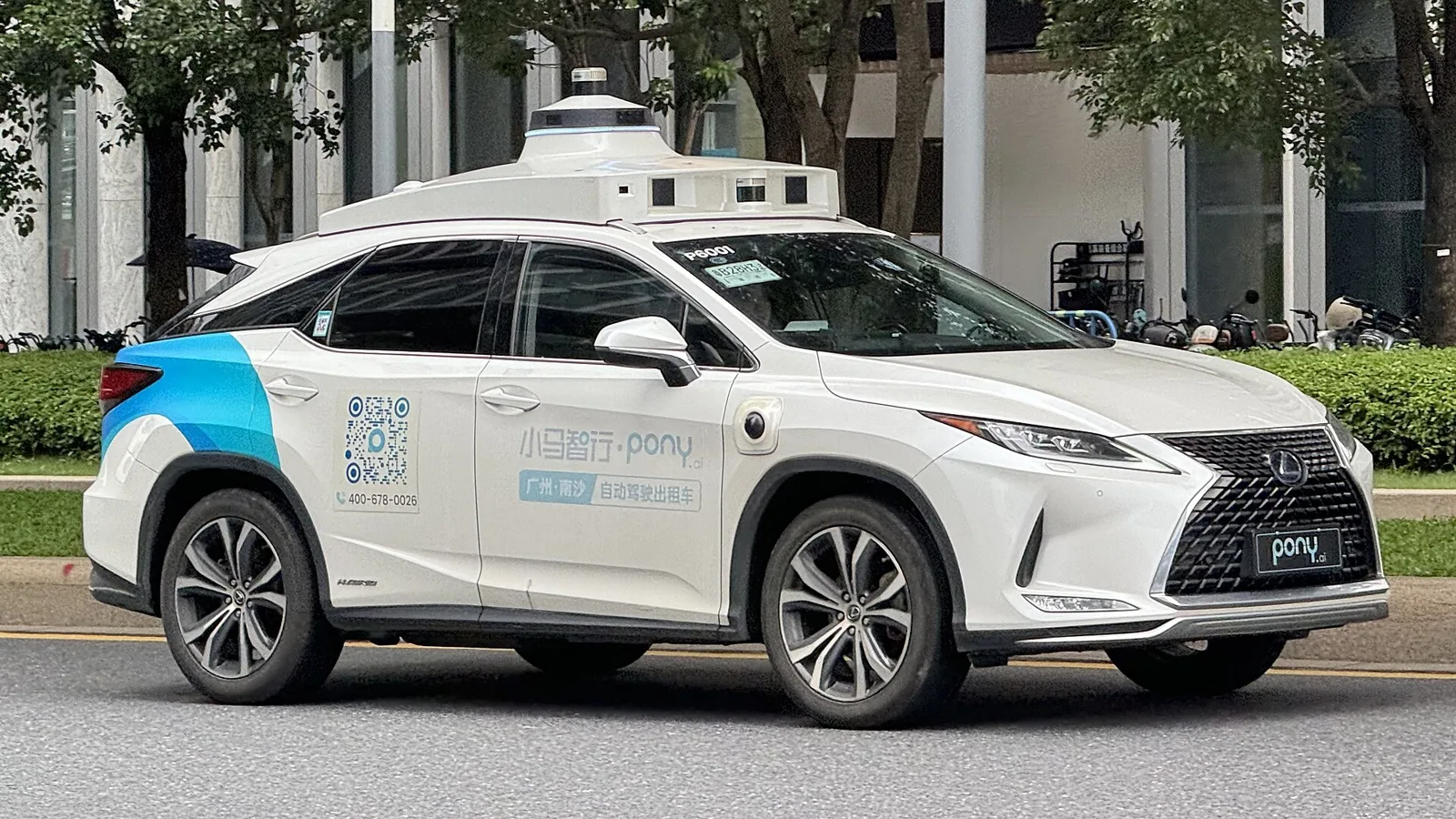
Four self-driving start-ups, four different endings: a shutdown, a merger back into the parent, a sale days before closing and a Nasdaq listing.
Argo AI was disbanded by Ford and Volkswagen in October 2022. Cruise lost its California permits in October 2023 and was merged into GM in February 2025. Apple bought Drive.ai in June 2019, while Pony.ai listed on the Nasdaq in November 2024.
In July 2021, Argo AI was valued at $12.4 billion after a ride-hailing partner put money in. By October 2022 its two owners, Ford and Volkswagen, had shut it down.
That swing sums up the self-driving start-up boom. Argo AI, Cruise, Drive.ai and Pony.ai were all founded between 2013 and 2016, all chased the driverless car, and all ended up somewhere different. Argo was disbanded. Cruise was folded back into its owner, General Motors. Drive.ai was bought by Apple days before it was due to close. Pony.ai, the youngest of the four, listed on the Nasdaq in November 2024.
What the self-driving start-ups were chasing
The target was Level 4 autonomy, one of the categories defined by the Society of Automotive Engineers and adopted as an industry standard by the US Department of Transportation. In plain terms, a Level 4 car drives itself within set conditions and does not need a person to take over. Level 2 plus, where Ford turned after Argo, is nearer to advanced driver assistance, with the human still in charge.
Cruise and Drive.ai both began with retrofit kits for existing cars, but the plans that mattered were aimed at fleets rather than private owners. Argo planned technology for shared fleets, covering ride-hailing and goods delivery, and Cruise's own philosophy urged shared rather than individual ownership. That meant robotaxis and shuttles, which is why so much of the story turns on permits and public roads.
Four start-ups chased the same driverless car and got a shutdown, a merger, an acquisition and a stock market listing.
Cruise self-driving: from a $10,000 kit to General Motors
Kyle Vogt and Dan Kan founded Cruise LLC in 2013, and it is based in San Francisco. Its first product was a retrofit kit called the RP-1, announced in June 2014 at $10,000 including installation for Audi A4 and S4 models from 2012. A roof-mounted pod of cameras, radar, GPS and inertial sensors linked to a computer would hold speed, following distance and lane position on a motorway. Pre-orders were capped at 50 units, each with a $1,000 deposit.
The kit never shipped. In 2015 Cruise decided that city driving was the harder problem, and switched to software for fully self-driving cars. A California testing permit arrived in June 2015, and in March 2016 General Motors bought the company. The price was not disclosed, and reported estimates range from more than $500 million, through $580 million, to over $1 billion.
Cruise had around 40 employees at the time of the deal, over 100 by September 2016, and close to 200 by June 2017, according to GM chief executive Mary Barra. GM let it stay responsible for both technology and commercialisation, which observers saw as a way to avoid the usual fate of a start-up swallowed by a giant.
The Cruise AV and the Origin
Cruise's test cars were modified Chevrolet Bolts, called the Cruise AV. The first generation was converted in San Francisco, while the second and third were built at GM's Orion Township plant in Michigan. Lidar, radar and cameras feed the system, and Cruise said 40 per cent of the hardware was unique to self-driving. A fleet of about 30 first-generation cars in 2016 had grown to an estimated 180 by June 2017.
In January 2020 Cruise showed the Origin, a purpose-built driverless vehicle with no manual steering controls. At scale it was expected to cost about $50,000 to make, and it was designed to last 1,000,000 miles (1,600,000 km). It was to be built at GM's Detroit-Hamtramck plant on the BEV3 platform with Ultium batteries.
The obstacle was regulation. Without manual controls the Origin needs an exception to US federal vehicle standards from NHTSA, and none had been granted by September 2023. GM paused Origin production in November 2023.
The money behind Cruise
Cruise became one of the best-funded start-ups in the field. In May 2018 the SoftBank Vision Fund committed $2.25 billion and GM another $1.1 billion. In October 2018 Honda added $750 million, with a further $2 billion promised over 12 years. Dan Ammann, a former GM president, became chief executive in November 2018.
A $1.15 billion raise in May 2019 put the valuation at $19 billion, and in January 2021 Microsoft, Honda and institutional investors added $2 billion, taking it to $30 billion. In March 2021 Cruise bought Voyage, another self-driving start-up. GM bought out the SoftBank Vision Fund's stake for $2.1 billion in March 2022 and invested another $1.35 billion.
How Cruise's robotaxi service came undone
Cruise began testing without a safety driver in San Francisco in December 2020. A California permit for driverless rides followed in September 2021, and Vogt took the first driverless taxi ride in the company's history that November. The service opened to the public in February 2022, when Vogt was also officially named chief executive. California issued its first Driverless Deployment Permit to Cruise in June 2022, which let it start charging fares and made it the first operator of fully driverless rides in a big city.
Growth plans were large. By September 2022 Cruise ran 100 robotaxis in San Francisco and said it wanted 5,000, a target that drew criticism because of the extra traffic. It announced Phoenix and Austin as the next cities. Its first-quarter 2023 loss was reported at $561 million, against about $30 million of revenue that came mostly from interest and other non-operating income. Even so, its stated goals were $1 billion in revenue by 2025 and, longer term, $50 billion by 2030.
The turning point came after California approved round-the-clock service in August 2023. In October the state DMV suspended Cruise's permits with immediate effect after investigating a collision with a pedestrian. Three days later Cruise voluntarily halted robotaxi operations nationwide, including Phoenix, Austin, Dallas, Houston and Miami.
On 8 November it recalled 950 vehicles for an over-the-air software update because of the collision. The next day it laid off contingent workers who had supported its operations, at a time when it had an estimated 4,000 full-time staff. On 19 November Vogt resigned. GM named Mo Elshenawy, Cruise's head of engineering, and its own general counsel Craig Glidden as co-presidents.
An outside investigation by the law firm Quinn Emanuel, released in January 2024, found that leadership failings at Cruise were largely to blame for the suspension. The company was still being examined by the US Department of Justice and the Securities and Exchange Commission. Its vehicles began returning to public roads in May 2024, and Marc Whitten was named chief executive on 25 June 2024.
The end of the Cruise robotaxi
In December 2024 GM stopped funding Cruise. The autonomous work was to feed advanced driver assistance for personal vehicles rather than robotaxis, with restructuring planned to be complete by mid-2025. GM completed the merger in February 2025 and said Cruise technology would go into its Super Cruise driver-assistance system. In December 2025 GM tried to revive its driverless push and hired Ronalee Mann, a former Tesla executive.
What happened to Argo AI
Argo AI was founded in November 2016 in Pittsburgh by Bryan Salesky, its chief executive, and Peter Rander, its president. Both had worked in Google's autonomous vehicle effort or a ride-hailing company's self-driving unit. Salesky began his career writing anti-collision software for trains, then spent seven years at Carnegie Mellon's National Robotics Engineering Center, where Rander was his boss. In 2007 he co-led Carnegie Mellon's software team in the DARPA Urban Challenge, and from 2013 to 2016 he directed hardware development at Google's driverless project, now Waymo.
The company built the whole stack: software, hardware, maps and cloud support. In February 2017 Ford announced it would invest $1 billion over five years, becoming the biggest shareholder and enabling Argo to hire 200 more people. In October 2017 Argo bought Princeton Lightwave, a lidar maker in Cranbury, New Jersey, and in 2019 it unveiled a third-generation test car based on the Ford Fusion Hybrid.
Volkswagen joins, then the plug is pulled
In June 2020 Volkswagen put $2.6 billion into Argo: $1 billion in cash plus its Munich-based Autonomous Intelligent Driving unit, valued at $1.6 billion, with over 200 employees. Under the deal Volkswagen would purchase $500 million of Ford's Argo shares over three years, while Ford put in the $600 million balance of its original $1 billion pledge. Argo had raised over $3.6 billion across the two partnerships, and Ford and Volkswagen each held 42 per cent.
Reported valuations differ. Argo was valued at $7.25 billion in June 2020, and one summary calls $7 billion its peak, yet a July 2021 investment from a ride-hailing company, with plans for service in Austin and Miami, lifted the figure to $12.4 billion. In September 2021 Argo, Ford and Walmart announced a plan to deliver online grocery orders by autonomous vehicle.
Then the money ran out. After failing to secure further investment from Amazon, with Ford reporting a third-quarter net loss of $827 million, Ford announced in October 2022 that Argo would be disbanded. Ford took a $2.7 billion accounting charge, including a write-off of about $500 million in cash invested, and Volkswagen expensed 1.9 billion euros.
Staff and technology were split. Ford took some into Latitude AI and Volkswagen into its CARIAD software arm, and Volkswagen carried on with the ID. Buzz alongside Mobileye. Ford said it would shift from Level 4 to Level 3 and Level 2 plus, and chief executive Jim Farley said fully autonomous cars able to make money at scale were still far away.
Drive.ai: the Stanford start-up Apple bought
Drive.ai grew out of Stanford University's AI lab in 2015, started by master's and PhD students from Andrew Ng's group. It started out developing a retrofit kit. In August 2016 it came out of stealth with $12 million and became the 13th company in California licensed to test autonomous cars on public roads. A $50 million Series B round followed in June 2017, led by New Enterprise Associates, with Ng joining the board, and a further $15 million came in September from investors including a Southeast Asian ride-hailing technology company. Total funding was about $77 million.
Its test fleet included Lincoln MKZs, an Audi A4 and Nissan NV200 vans. A February 2017 video showed an MKZ driving the streets of Mountain View in rain after dark. The cars carry screens on the hood, rear and both sides that talk to pedestrians, with messages such as a prompt that the car is waiting for them to cross, and the company builds three-dimensional high-definition maps along its routes.
In May 2018 Drive.ai launched a six-month pilot in Frisco, Texas, the first time self-driving cars had been put in front of the Texas public. Safety drivers would monitor the cars at first, with remote monitoring planned later, and riders called rides by app within a fixed area of shops, entertainment and offices. In October 2018 it announced a similar service for Arlington, Texas, with three vehicles on routes that included the AT&T Stadium, which it said made it the first self-driving company earning revenue.
The end came in June 2019, when Apple acquired the company just days before it was set to close. Apple wanted an autonomous vehicle company to supplement its Project Titan.
Pony.ai: the one that listed
James Peng and Tiancheng Lou, two former Baidu software developers in Silicon Valley, founded Pony.ai in December 2016, and it now works from Silicon Valley, Beijing and Guangzhou. It raised a $112 million Series A in January 2018, and in February 2020 Toyota put $400 million into a $462 million round. The 2020 valuation was $5.3 billion.
Early trials were small. In April 2019 it ran a pilot over 50 km2 (19 sq mi) of Guangzhou for employees and invited affiliates, and in November 2019 it spent three months in Irvine, California, with 10 cars. In May 2021 California allowed it to test six vehicles without safety drivers in Fremont, Milpitas and Irvine, limited to roads of 45 mph (72 km/h) or less in clear weather and light rain.
California trouble
On 28 October 2021 a Pony.ai car in autonomous mode turned right in Fremont and struck a central divider and a traffic sign. In December the DMV suspended its driverless testing permit, the first such suspension. NHTSA opened a probe and, more than four months after the crash, announced what it called the first recall of an automated driving system. In May 2022 the DMV revoked the permit because it had not kept track of its safety drivers' driving records. By June 2023 Pony.ai was testing again in California, with safety drivers aboard. In 2021 it had logged the third-highest mileage in California, behind Waymo and Cruise.
Growth in China and abroad
In April 2022 Pony.ai received a taxi licence in China, the first autonomous driving company to do so, and in April 2023 it was licensed to run robotaxis in Guangzhou. In July 2022 it partnered with Sany Heavy Industry to mass produce autonomous trucks, and in August 2023 it agreed with Toyota and GAC-Toyota to mass produce robotaxis, with over 1 billion yuan ($140 million) combined to be invested. Neom in Saudi Arabia put in $100 million in October 2023, including a regional research and manufacturing base.
A plan to list on the New York Stock Exchange through a special purpose acquisition company was suspended in 2021 because of Chinese regulators. Pony.ai instead held an initial public offering on the Nasdaq in November 2024, raising $260 million, among the largest US listings by an autonomous driving firm. Shares opened about 15 per cent above the offer price. In June 2025 it joined the Nasdaq Golden Dragon China Index, and it added a secondary listing in Hong Kong in November 2025.
According to press reports from mid-2025, a single person can oversee up to a dozen of its robotaxis at once, and analysts polled by LSEG estimated profit by 2029, after losses of over $200 million in 2024. It was also running big-truck tests with a safety driver on the highway linking Beijing and the Port of Tianjin.
Self-driving start-ups side by side
| Company | Founded | Main backers | What happened |
|---|---|---|---|
| Cruise | 2013, San Francisco | General Motors, Honda, SoftBank Vision Fund, Microsoft | Permits suspended October 2023; merged into GM February 2025 |
| Drive.ai | 2015, Mountain View | New Enterprise Associates and others, about $77 million in total | Acquired by Apple, June 2019 |
| Argo AI | 2016, Pittsburgh | Ford, Volkswagen | Disbanded October 2022 |
| Pony.ai | 2016, Silicon Valley, Beijing and Guangzhou | Toyota, Neom, public investors | Nasdaq listing November 2024; Hong Kong listing November 2025 |
What it means for drivers
Two of the four, Cruise and Argo, are now feeding technology into cars that people buy. GM says Cruise work will go into Super Cruise, and Argo's resources moved to Ford's Latitude AI and Volkswagen's CARIAD. Both companies described the same change of direction, from fully driverless fleets to driver assistance.
What is Pony.ai doing next?
Pony.ai is the company still pushing outwards. In November 2025 it announced a partnership with the European ride-hailing platform Bolt to deploy driverless cars in its taxi services in Europe, and on 10 December 2025 it announced an expansion into Singapore with the country's largest transport operator. In April 2025 it had teamed up with Tencent Cloud and Smart Industries Group to advance its technology.