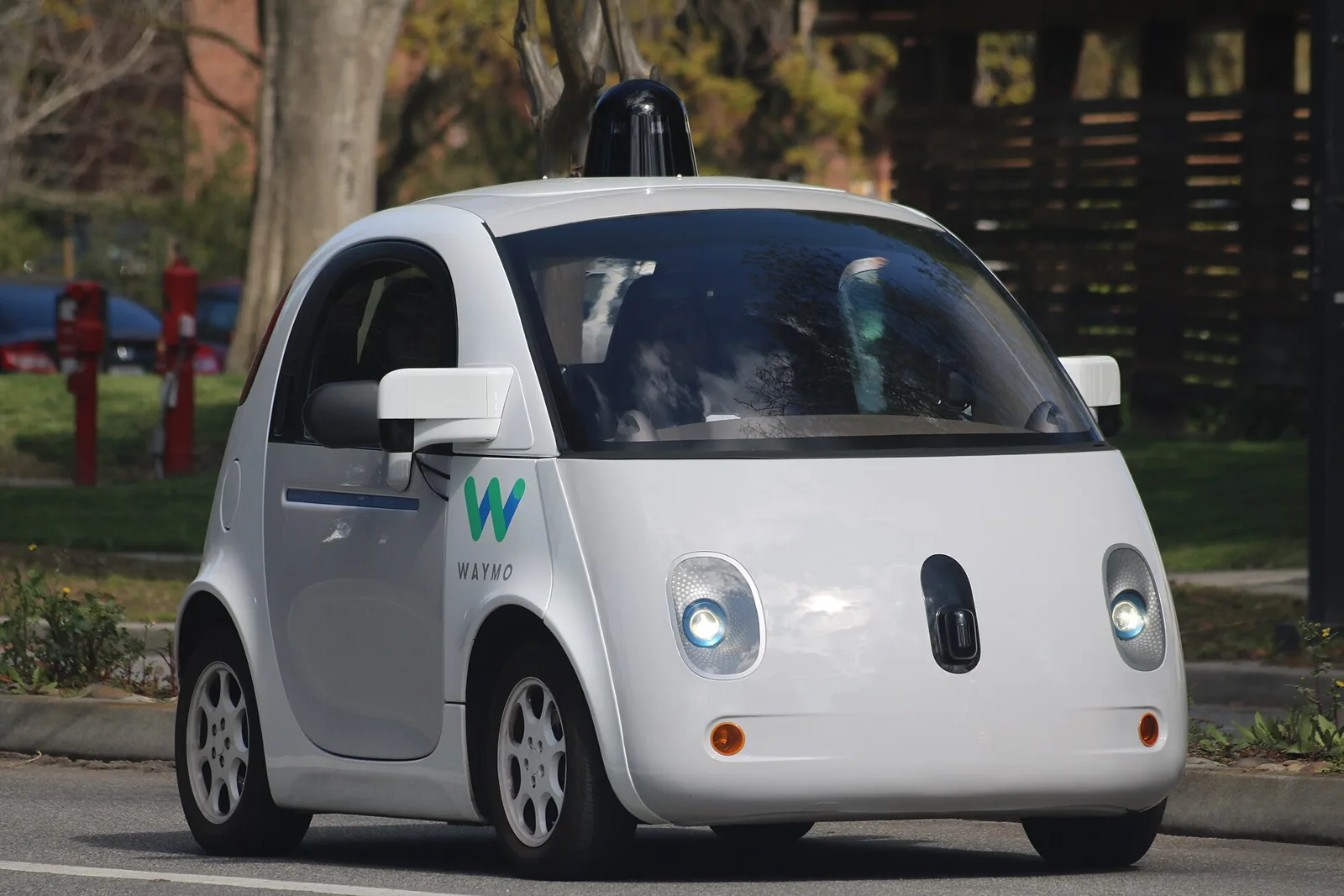
From SAE's six-level scale and Waymo robotaxis to the 2024 safety meta-analysis, a plain guide to what driverless cars can do today.
Self-driving cars are rated by how much of the driving task they handle without a person. The SAE scale runs from Level 0 to Level 5, and the best-known services are Waymo robotaxis operating in limited areas. The term is used loosely, so a feature's name may not match what it does.
Self-driving cars are being tested and sold in limited forms around the world, yet the term itself is used loosely. Marketing names, legal definitions and engineering levels do not always match, so the same feature can be described in very different ways.
What is a self-driving car?
A self-driving car, also called an autonomous or driverless car, is one that can operate with reduced or no human input. Robotaxis are self-driving cars run by ridesharing companies. As of 2026 the term has no agreed standard definition, and it is also shaped by commercial advertising.
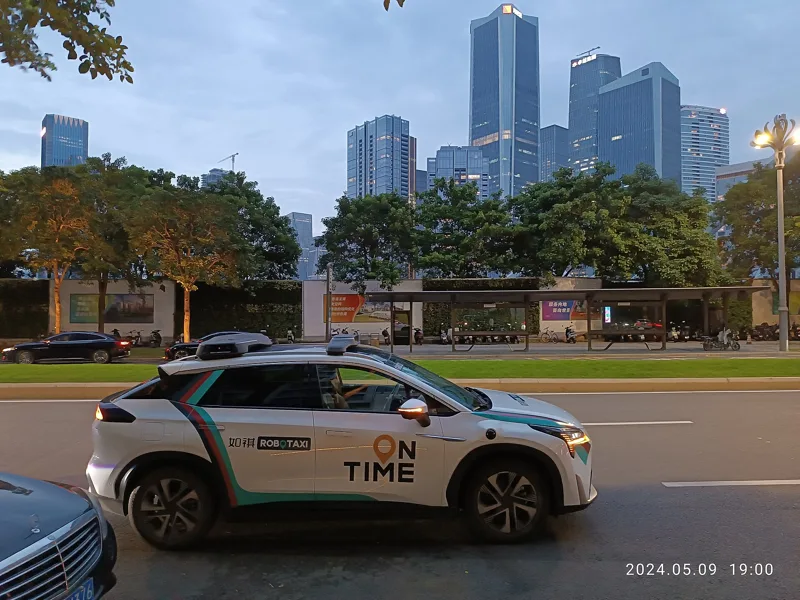
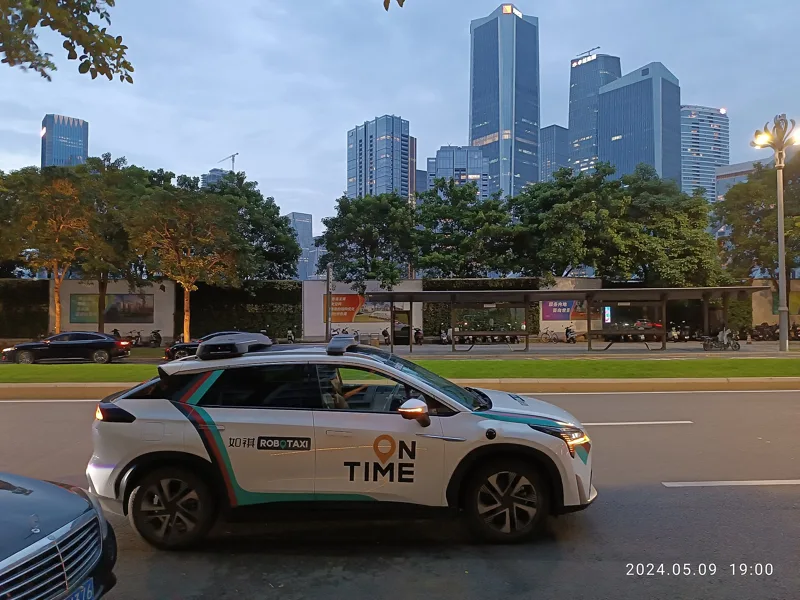
In 2020 Waymo became the first to offer rides in driverless taxis within a limited geographic area. By late 2025 no system had achieved full autonomy in all domains, which is the level known as Level 5 on the SAE scale of 0 to 5.
Engineers describe the conditions a system is built for as its operational design domain, or ODD. Systems are expected to work within those limits, and some can recognise when conditions take them outside the ODD and change how they behave, which matters on a rainy motorway or a roadworks zone.
Self-driving cars are safer in most circumstances, but software, mapping and public trust still decide how far they can go.
How do self-driving cars sense the road?
Two main technologies are now used: LiDAR, which stands for Light Detection and Ranging, and visual sensors, meaning cameras that capture images and video. They are combined with GPS, neural networks, artificial intelligence and established driver-assistance engineering, because each sensor type has strengths and gaps.
The perception system processes visual and audio data to build a local model of the vehicle, the road, traffic and other objects and how they move. The control system then acts on that model, the road map and the driving rules, and deep neural networks analyse the sensor inputs to identify objects and predict their paths.
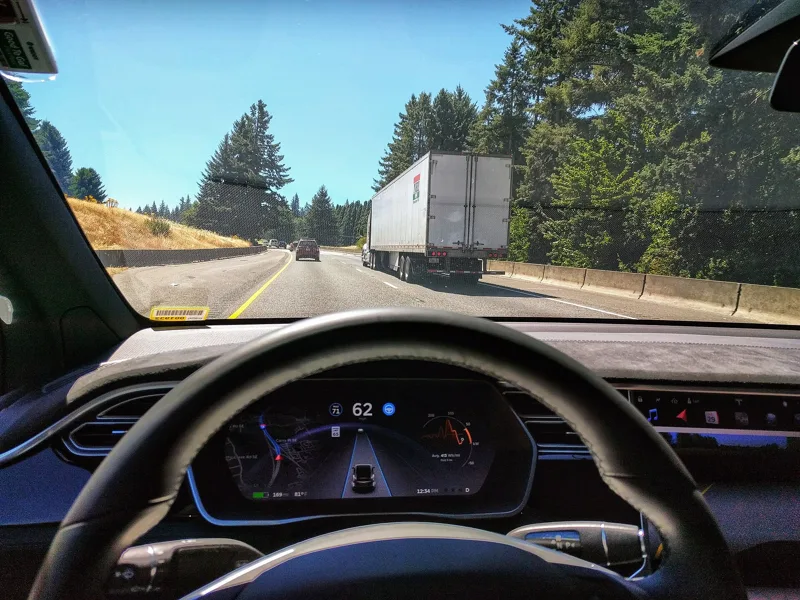
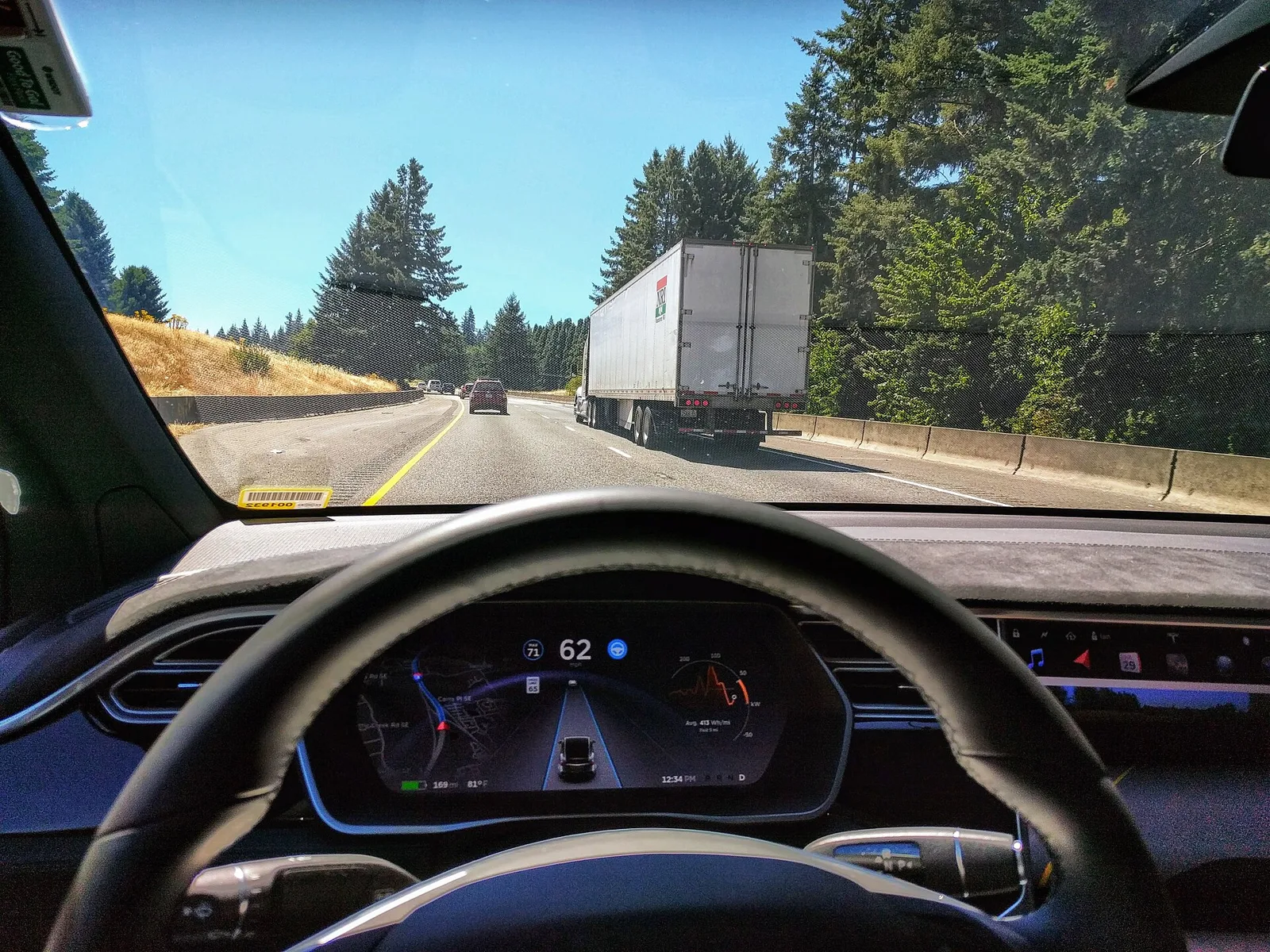
Tesla's vision-only approach uses eight cameras and no LiDAR or radar. The company moved to that approach after experimenting with radar and ultrasound, arguing that people drive using vision alone and citing the lower cost of cameras. Waymo instead uses the higher resolution of LiDAR and points to the falling cost of that technology.
Radar has a role of its own. Although it is less precise, it can still image a scene that defeats cameras and LiDAR, such as a nighttime snowstorm. Control systems typically combine data from several sensors so that each can cross-check the others.
How do self-driving cars use maps?
Maps define the path from origin to destination, and their detail varies widely. Some systems use simple road graphs that show which roads connect and whether they are one-way, while others need lane-level maps with traffic controls and roadworks. Researchers at the MIT Computer Science and Artificial Intelligence Laboratory built MapLite to let cars drive with simple maps.
MapLite combines the vehicle's GPS position with a sparse topological map such as OpenStreetMap, which has only 2D road features, and with sensors that observe road conditions. Keeping highly detailed maps up to date as the world changes is a recurring problem for the detailed approach.
Path planning uses graph-based search or variational optimisation. Graph-based methods handle harder decisions, such as how to pass another vehicle or obstacle, while optimisation methods need tighter limits on the path to prevent collisions.
What are the levels of automation?
The SAE International classification, published in 2014 as J3016, ranks automation from fully manual to fully automated across six levels, numbered 0 to 5. Each level depends on the operational design domain and the dynamic driving requirement, and a car can move between levels as conditions change.
Level 1 covers features such as adaptive cruise control and emergency brake assist, while Level 2 covers highway assist and automatic parking. At Level 3 and above, the system must recognise when it is leaving its ODD and fall back, including asking the driver to take over if necessary.
The UNECE adopted these SAE-based levels in UN Regulation No. 157, which came into force in January 2021 and is used in over 50 countries. The US National Highway Traffic Safety Administration also adopted the SAE standard after SAE's 2016 update.
The scheme has critics. It has been argued that it suggests automation rises in a straight line and that more is always better, and it does not account for changes to infrastructure or road-user behaviour. Mobileye's leaders proposed an alternative taxonomy based on how much engagement the driver needs.
Which systems are on the road today?
As of 2023 most commercially available driver-assistance cars were SAE Level 2, meaning the driver must keep watching the road. Tesla's full self-driving system is a Level 2 ADAS, Ford's BlueCruise and GM's Super Cruise work on specific roads, and Waymo runs robotaxis in limited areas.
| System | Maker | Level or type | Key detail |
|---|---|---|---|
| Full Self-Driving (FSD) | Tesla | Level 2 ADAS | Available on all Tesla cars since 2016; the driver must stay ready to take control |
| BlueCruise | Ford | Hands-free Level 2 | Operates on 130,000 miles (210,000 km) of US divided highways |
| Super Cruise | GM | Level 2 | Works on specific roads; coverage planned to grow from 400,000 to 750,000 miles (1,210,000 km) |
| Drive Pilot | Mercedes-Benz | Level 3 | Used in traffic jams under 40 miles per hour (64 km/h) until January 2026 |
| SuperVision | Mobileye | Hands-off, eyes-on | Hands-off use across all road types, up to 130 km/h (81 mph) |
| Robotaxi service | Waymo | Limited areas | Fully driverless rides in Phoenix and San Francisco |
Mercedes removed its Level 3 feature in January 2026 in favour of an upcoming Level 2 capability. As of April 2024, Honda in Japan and Mercedes in Germany, Nevada and California were the two manufacturers that had sold or leased Level 3 cars.
Are self-driving cars safer than human drivers?
A 2024 meta-analysis in Nature Communications compared US incident records, 2,100 for AVs and 35,133 for human-driven vehicles. It concluded that AVs are safer in most circumstances and much safer for pedestrians, although they were five times more vulnerable to collisions at dawn and dusk.
The study also found AVs were significantly less likely to crash in heavy rain or fog than an unassisted human driver. The dawn and dusk result is therefore an important caveat rather than a simple verdict on the technology.
A July 2026 study by the US Insurance Institute for Highway Safety compared Waymo vehicles with human drivers from 2021 to 2024 in Arizona, California and Texas. It found the total AV crash rate per vehicle-mile travelled was 68% lower, the single-vehicle crash rate 85% lower and the rate of injury or fatal crashes 81% lower.
Those figures include some periods when the AVs had no people on board to be hurt. Where a crash was serious enough to be reported to police, the Waymo vehicle was responsible in 8% of cases, and blame was unclear in another 8%. The AVs did not operate on interstate highways during the study period.
Which incidents shaped the debate?
The first of five known fatal Tesla Autopilot crashes occurred on 20 January 2016 in China's Hubei province. The car failed to take evasive action, and Tesla initially said the damage was so severe that its recorder could not show whether Autopilot had been engaged.
In March 2018 an Uber test car killed Elaine Herzberg in Arizona. She was crossing about 400 feet from an intersection, with a safety driver on board. The NTSB found the immediate cause was the driver's distraction by her phone, and it cited Uber's inadequate safety culture as a contributing factor.
The Arizona governor suspended Uber's ability to test autonomous cars, and Uber stopped testing in California until it received a new permit in 2020. The safety driver pled guilty to endangerment in September 2020 and was sentenced to three years' probation.
Tesla's own figures put one fatality every 94 million miles across all US vehicles, a comparison it said included motorcycle and pedestrian deaths. The NTSB's ultimate report concluded that Tesla was not at fault, and its investigation found the crash rate for Tesla cars dropped by 40 percent after Autopilot was installed.
Google's early testing also produced incidents. By June 2015 Google had confirmed 12 vehicles had suffered collisions, and on 14 February 2016 one of its cars struck a bus while trying to avoid sandbags. Google accepted that it bore some responsibility for that crash.
Since NHTSA began mandating incident reports from June 2021, the data show 3,979 AV and ADAS incidents up to 17 June 2024. Of those, 2,146 (53.9%) involved Tesla vehicles.
What are the main obstacles and public concerns?
The primary obstacle is advanced software and mapping that can work safely across the range of conditions drivers face. Other obstacles include cost, liability, consumer reluctance, ethical dilemmas, security, privacy and the legal framework. Experimental studies show trust drops sharply after system failures.
Marketing has drawn scrutiny. US senators asked the Federal Trade Commission to investigate Tesla's Full Self-Driving (FSD) Beta marketing in 2021, and in August 2022 California's DMV accused Tesla of deceptive marketing practices. In Japan the Consumer Affairs Agency punished Mercedes-Benz in December 2021 for misleading product descriptions.
Fairness is also in question. A 2019 Georgia Tech study found autonomous vehicle detection systems were generally five percent less effective at recognising darker-skinned people, a gap that persisted after adjusting for lighting and visual obstructions.
Jobs are another issue. US Bureau of Labor Statistics data for 2019 showed over two million tractor-trailer drivers, about 370,400 taxi and delivery drivers and over 680,000 bus drivers. Together they represent a conceivable displacement of nearly 2.9 million jobs, which is more than the losses of the 2008 Great Recession.
Public opinion is mixed. A 2022 survey found 27% of the world's population would feel safe in a self-driving car, and a July 2024 YouGov survey of British adults found 4% would feel very safe while 37% would feel very unsafe.
How are self-driving cars regulated and tested?
Testing can take place in digital simulations, in controlled test environments or on public roads, and road testing usually needs a permit. California requires manufacturers to report annually how often their vehicles disengage from autonomous mode, and New York requires a test driver to be in the vehicle, ready to override the system.
Standards are emerging. ISO 34502, a scenario-based safety evaluation framework, was published in November 2022, and the UNECE regulation on software update management was published in March 2021. Europe's L3Pilot tested SAE Level 3 and 4 functions on ordinary roads in Hamburg in October 2021.
The UK's Automated Vehicles Bill, introduced in November 2023, proposed definitions covering self-driving, autonomy, control, safety and legal behaviour. In the US, a proposed SAE J3134 specification has led to standard turquoise lights that show a vehicle is driving itself.
Disengagement figures are contested. Reporting companies use definitions that differ and can change over time, and some executives have criticised disengagements as a deceptive metric because they do not account for varying road conditions.
What about robotaxis and the cost of driverless service?
Waymo began offering robotaxi services in parts of the US in 2024, using fully autonomous vehicles without safety drivers. These services operated at a loss as of 2025, with operating costs of about $4.5-$5.5/km ($7-$9 per mile), against about $0.6/km ($1 per mile) for personal cars.
The consultancy McKinsey estimated that bringing costs below $1.2/km ($2 per mile) would take until 2035. Japan added a Level 4 protocol to its Road Traffic Act in April 2023, and Holon announced a Level 4 shuttle at CES in January 2023.
Level 4 automated valet parking has also reached the market. Mercedes-Benz introduced one in September 2020 on its new S-Class, and Germany's Federal Motor Transport Authority approved the system for use at Stuttgart Airport in November 2022.
Not every programme has survived. Cruise's Origin shuttle was put on indefinite hold in 2023 after the company lost its operating permit.
How do people feel about self-driving cars?
Public opinion has moved, but it remains divided. A 2011 online survey of US and UK consumers found 49% comfortable with a driverless car, and a 2013 survey of 1,500 consumers across 10 countries found 57% likely to ride in a car controlled entirely by technology.
Willingness can fall with price. A 2012 survey of vehicle owners found 37% interested in a fully autonomous car, but that figure dropped to 20% if the technology were to cost US$3,000 more.
Attitudes also vary by gender. A 2016 German survey of 1,603 people found men felt less anxiety and more enthusiasm than women, with the gap most pronounced between young men and women. A 2016 US survey of 1,584 people found 66 percent thought autonomous cars were probably smarter than the average human driver, while only 13% saw no advantages.
Preferences for driving persist. A 2015 survey of 5,000 people from 109 countries found average respondents rated manual driving as the most enjoyable, and 22% did not want to pay more for autonomy.