From a radio-controlled Chandler on New York streets to the first robotaxi service in Phoenix, the road to autonomy was long, uneven and full of forecasts that came late.
Self-driving cars trace back to radio-controlled demonstrations in 1925 and driver assistance such as cruise control in 1948. Waymo One launched a robotaxi service in Phoenix in December 2018, after decades of government projects, DARPA contests and regulatory work. The field moved from demonstrations to limited commercial service over that period.
Self-driving cars began as radio-control experiments in the 1920s and grew into serious research programmes after WWII. The first robotaxi service opened in Phoenix, Arizona, in December 2018, and the years between those two points are a record of bold demonstrations, slow funding cycles and forecasts that arrived late.
This history follows the field decade by decade, from early stunts and wire-guided highways to government challenges, long-distance road trips and the rules that now shape what automated cars may do.
When did self-driving cars first appear?
The earliest working demonstration was the radio-controlled car shown by Houdina Radio Control in 1925, and driver assistance dates back to the 1948 introduction of cruise control. Together these mark the two strands that later merged: remote guidance of a car and automatic help for the driver.
In July 1925 Houdina Radio Control demonstrated the American Wonder on New York streets. The car was a 1926 Chandler with a transmitting antenna, and the outing did not go smoothly. It barely missed trucks before crashing into a sedan, a reminder of how far the control technology still had to travel.
At the 1939 World's Fair, Norman Bel Geddes unveiled Futurama, a General Motors exhibit that showed radio-controlled electric cars. Bel Geddes went on to publish Magic Motorways in 1940, and he predicted self-driving reality by 1960. Forecasts of that kind would recur throughout the field's history.
Cruise control, invented in 1948, was an early driver assistance step after WWII. Assistance features grew from there, and each new feature moved a little more of the driving task from the person to the machine.
Radio-controlled stunts in 1925 and a robotaxi in Phoenix in 2018 bracket a long, uneven road to autonomy.
How did the 1950s and 1960s shape the idea?
In the 1950s and 1960s researchers tested cars that followed wires or cables set into the road. RCA Labs guided a miniature car in 1953 and showed a full-size system in Nebraska in 1957, with commercialisation expected by 1975. General Motors added experimental Firebird cars to the picture as well.
The 1957 test covered a stretch of public highway 400 feet long, a clear step beyond the laboratory floor. On 5 June 1960 reporters were allowed to drive the RCA cars at Princeton, a public showing that suggested the system was approaching practical use.
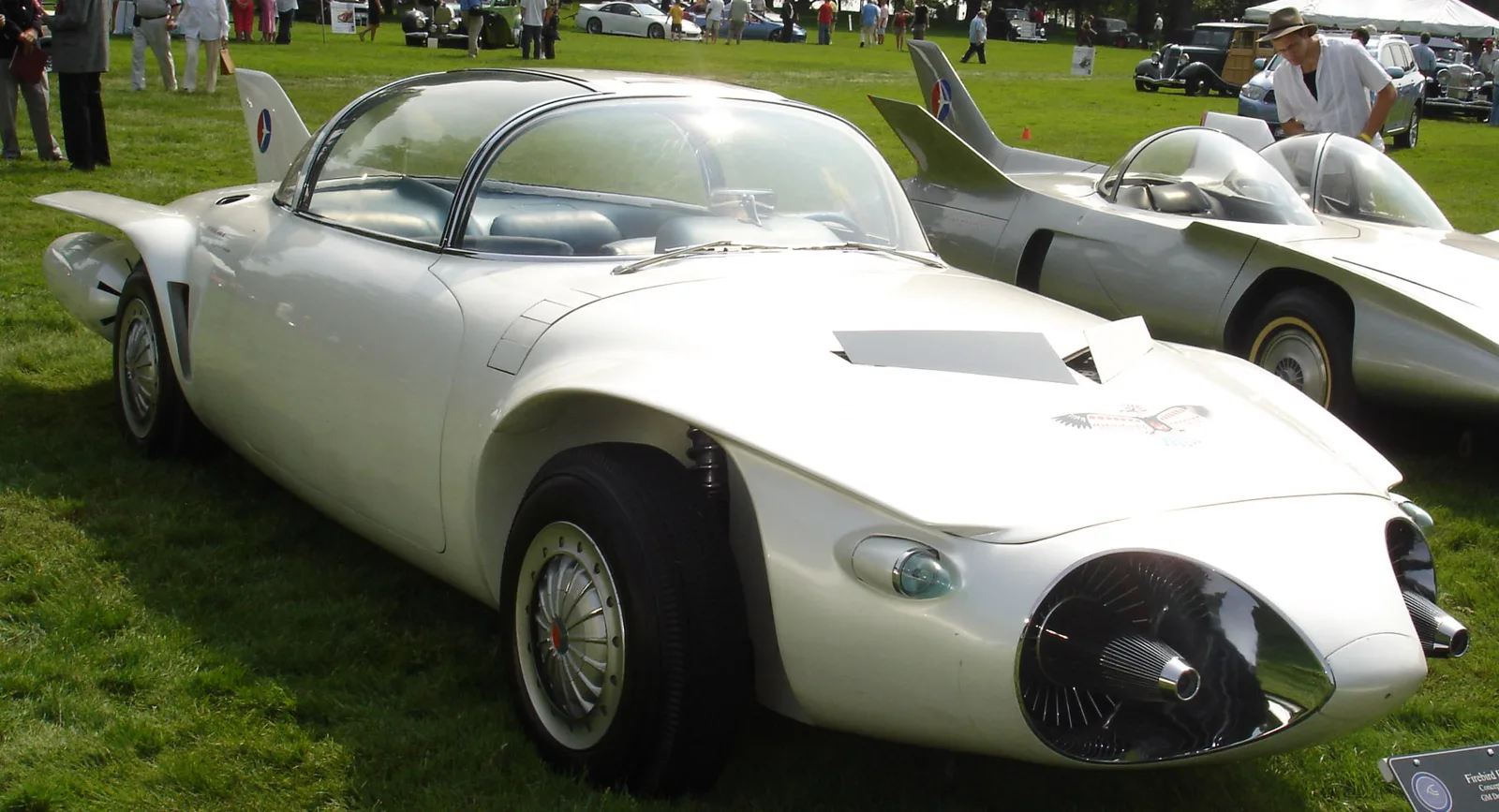
General Motors showed its Firebird experimental cars through the same decades, and they carried an electronic guide system that was meant to pair with an automatic highway. In 1959 GM demonstrated brake assist in a Cadillac Cyclone, an early sign that driver aids and guidance would develop side by side.
Ohio State University began a project in 1960 that relied on electronic devices embedded in the roadway. In 1966 Robert Cosgriff, who led the work, claimed the system could be ready for a public road within 15 years. In the UK a driverless Citroen DS was tested by the road research laboratory, and it reached 130 km/h (80 mph) on a test track.
What progress came in the 1970s and 1980s?
Japan's Tsukuba Mechanical Engineering Laboratory built a self-driving car in 1977 that did not depend on wires under the road. Through the 1980s Ernst Dickmanns's Mercedes-Benz van reached 95.9 km/h (59.6 mph), while the Eureka Prometheus Project ran from 1987 to 1995 in Europe.
The 1977 car topped out at 30 km/h (19 mph), relying on a pair of video cameras that read street markings. That made it a landmark for camera-based guidance, a theme that later systems would build on rather than abandon.
The ALVINN project, whose name points to a neural network, reached road-following speeds of 31 km/h (19 mph). In 1987 an HRL Laboratories vehicle covered 610 m (2,000 feet) off-road at 3.1 km/h (1.9 mph), and by 1989 Navlab had used neural networks to steer autonomous vehicles.
The Prometheus programme was funded at EUR 749,000,000 by one account. That sum shows how seriously European research funding treated the problem, even while results arrived slowly.
Which 1990s projects proved long-distance autonomy?
Several 1990s projects tested autonomy over long distances. VaMP and Vita-2 covered more than 620 miles (1,000 km) in 1994, while Navlab's No Hands Across America crossed 3,100 miles (5,000 km) in 1995. ARGO drove 1,200 miles (1,900 km) in 1996, running in automatic mode for 94% of the trip.
The United States took a different route through federal policy. The 1991 ISTEA bill ordered the Department of Transportation to demonstrate an automated highway by 1997, and the resulting Demo '97, staged on I-15 in San Diego, showed about 20 vehicles on the road.
That programme was cancelled in the late 1990s, with overall funding of roughly $90 million. Its legacy lay in the platooning and mixed-traffic concepts it explored rather than in a product that reached the public.
Mercedes-Benz's S-Class drove 990 miles (1,590 km) to Copenhagen and back in 1995, and it averaged 5.6 miles (9.0 km) between human interventions. Those results help explain the 98.2% and 94% figures: the trips were highly autonomous but not hands-off.
Smaller pilots also appeared. The ParkShuttle people mover, whose pilots began in the Netherlands in 1997, was one of the early examples of a vehicle running without a driver on a dedicated route.
What did the DARPA challenges change in the 2000s?
The DARPA Grand Challenges turned autonomous driving into a public contest. The 2004 race offered a $1 million prize for a 150-mile desert course, and no team finished it. Five vehicles completed the course in 2005, which proved the approach could work at all.
The first Grand Challenge was held in March 2004 in the Mojave Desert. David Hall of Velodyne competed in 2005 with a prototype lidar sensor, a choice that would shape the sensor market for years.
Lidar became central to the field. Five of the six 2007 Urban Challenge finishers used Velodyne lidar, and a Carnegie Mellon Chevy Tahoe won the urban race. The contests gave students and researchers a public proving ground for projects aimed at traffic congestion and accidents.
Industry arrived too. Rio Tinto began testing Komatsu's autonomous haulage system in 2008, billed as the first commercial autonomous mining haulage system. Google began developing its own self-driving cars in 2009, though it kept the work private for a time.
What happened in the 2010s?
The 2010s brought public road licences, robotaxi pilots and the first known fatal crash involving a self-driving car. Nevada licensed Google's modified Prius in 2012, Navia became the first self-driving vehicle sold commercially in 2014, and a fatal crash in Williston, Florida, in 2016 led to a formal NHTSA investigation.
In 2010 Braunschweig's control engineering institute showed Germany's first licensed autonomous car on public streets and highways. Long-distance testing continued as well. VisLab's intercontinental test covered 9,900 miles (15,900 km), with four electric vans leaving Parma on 20 July 2010 and reaching the Shanghai Expo on 28 October. Audi's TTS climbed Pikes Peak near race speeds in the same year.
Standards took shape in 2014. SAE published J3016, a taxonomy with six levels of automation, and Tesla announced its first Autopilot version in October 2014. Google's fleet had already logged 300,000 miles without a machine-caused accident, and it later reported 14 minor accidents over six years of testing.
Delphi's car drove from San Francisco to New York, with 99% of the distance under computer control. The NHTSA's Williston investigation, opened on 28 June 2016, looked at the systems that were active during that fatal crash on 7 May 2016.
Several other milestones followed. nuTonomy launched a self-driving taxi pilot in Singapore in 2016, NHTSA adopted the SAE classification that September, and Argo AI came into being in November 2016. Audi's A8 Level 3 system was never activated, despite earlier plans.
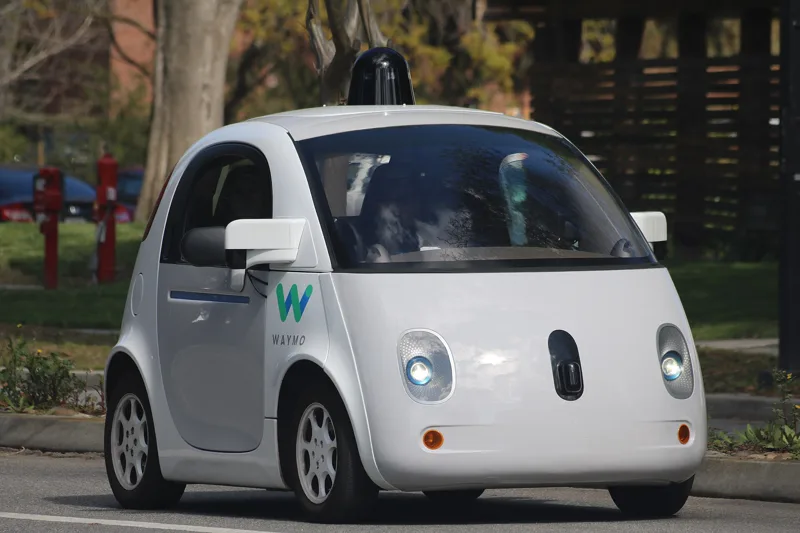
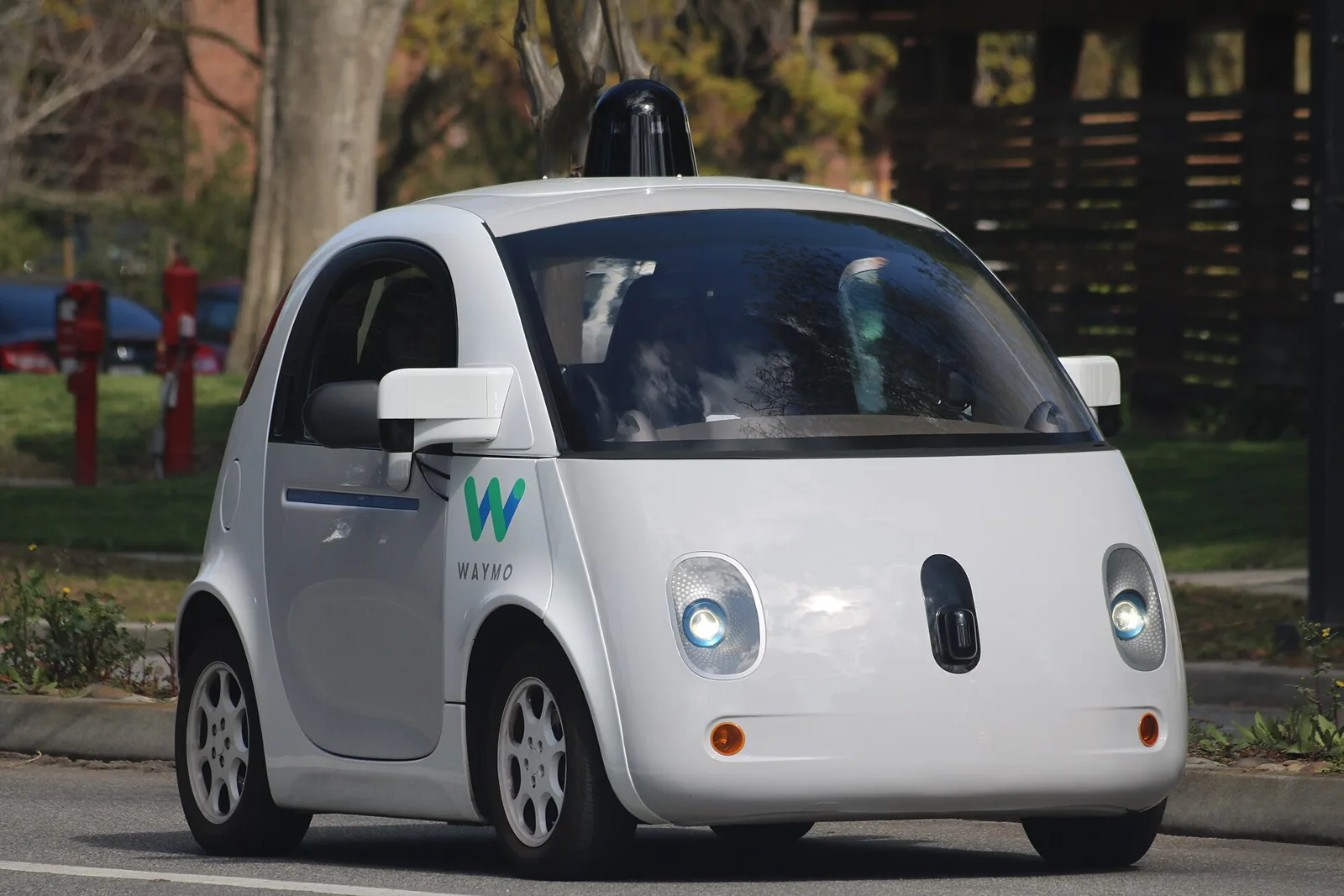
Waymo announced testing without a safety driver in November 2017. In March 2018 Elaine Herzberg died in Arizona in a crash involving a self-driving test car, a case that focused attention on how such vehicles should be tested. Waymo One then launched as a robotaxi in Phoenix in December 2018.
In 2019 Robocar set a record of 282.42 km/h (175.49 mph). By May 2019 twenty-nine US states had passed laws permitting autonomous cars. The decade ended with the technology moving from demonstration to commercial service, though still in limited settings.
Where does self-driving development stand in the 2020s?
In the 2020s regulators set the first international rules for automated features, and carmakers began selling Level 3 systems in some markets. Mercedes-Benz launched Drive Pilot in Germany in May 2022, and Sacramento issued it a permit in June 2023. The collapse of Argo AI in October 2022 showed how costly the business had become.
EU Regulation 2019/2144 applies to automated vehicles from 2022, and UNECE set a regulation on SAE Level 3 in June 2020. Honda leased 100 Legend Hybrid EX sedans in Japan in 2021, and Mercedes-Benz gained German approval for Level 3 in December 2021.
Drive Pilot works only on daytime highways at most 40 mph (64 km/h). That limit matters, because it means the system is designed for a narrow set of conditions rather than general driving.
Japan amended its Road Traffic Act on 1 April 2023 to allow Level 4 operation. The UK's Automated Vehicles Act, updated in May 2024, set a target of driverless motorways by 2026, a date later postponed to 2027.
Milestones at a glance
| Year | Milestone | Key figures |
|---|---|---|
| 1925 | Radio-controlled car in New York | American Wonder, 1926 Chandler |
| 1957 | Full-size wire-guided highway demonstration | 400-foot strip of public highway |
| 1977 | Car that did not need wires under the road | 30 km/h (19 mph), two video cameras |
| 1995 | Cross-country autonomous journey | 3,100 miles (5,000 km), 98.2% autonomous |
| 2004 | First DARPA Grand Challenge | 150-mile course, $1 million prize, no finisher |
| 2012 | Nevada licence for Google's modified Prius | Test licence for a self-driving car |
| 2014 | SAE classification published | J3016, six levels |
| 2018 | Robotaxi service launched | Waymo One, Phoenix, December 2018 |
| 2019 | Speed record | 282.42 km/h (175.49 mph), Robocar |
| 2023 | Level 3 permit in California | Sacramento, 8 June 2023, Drive Pilot |