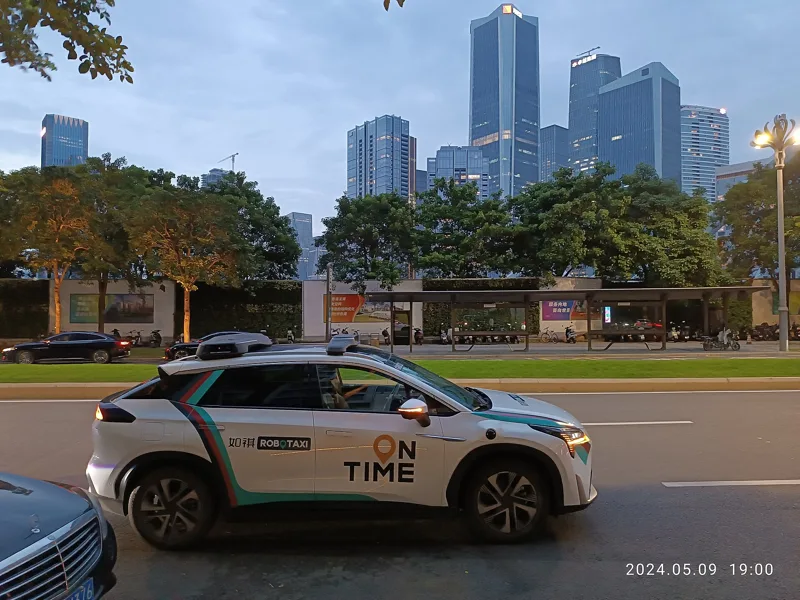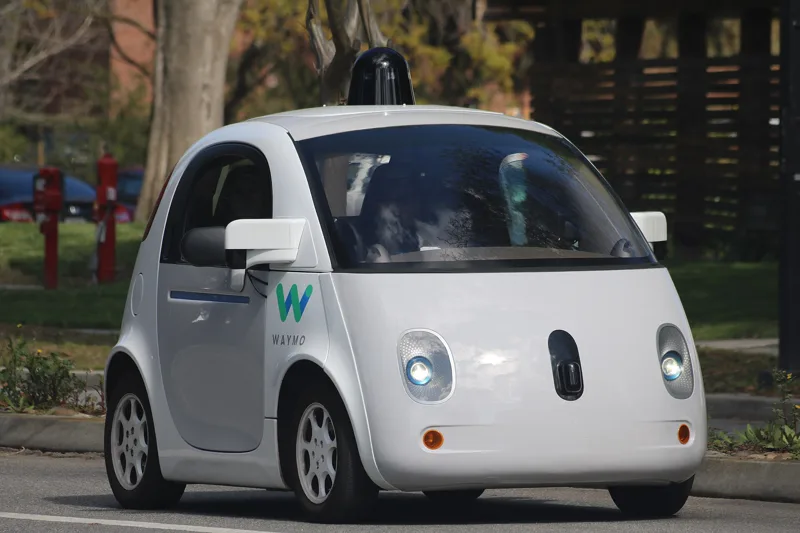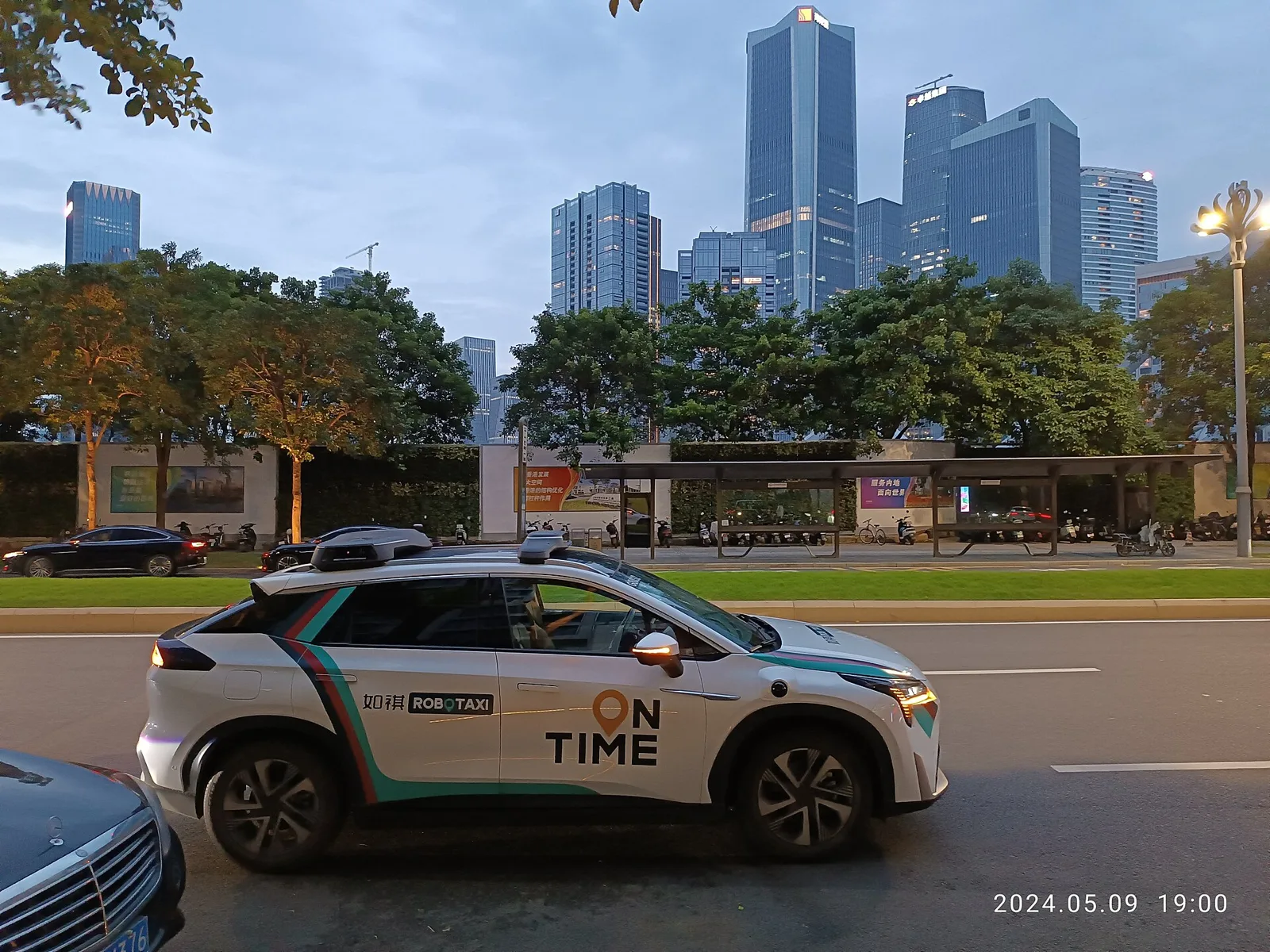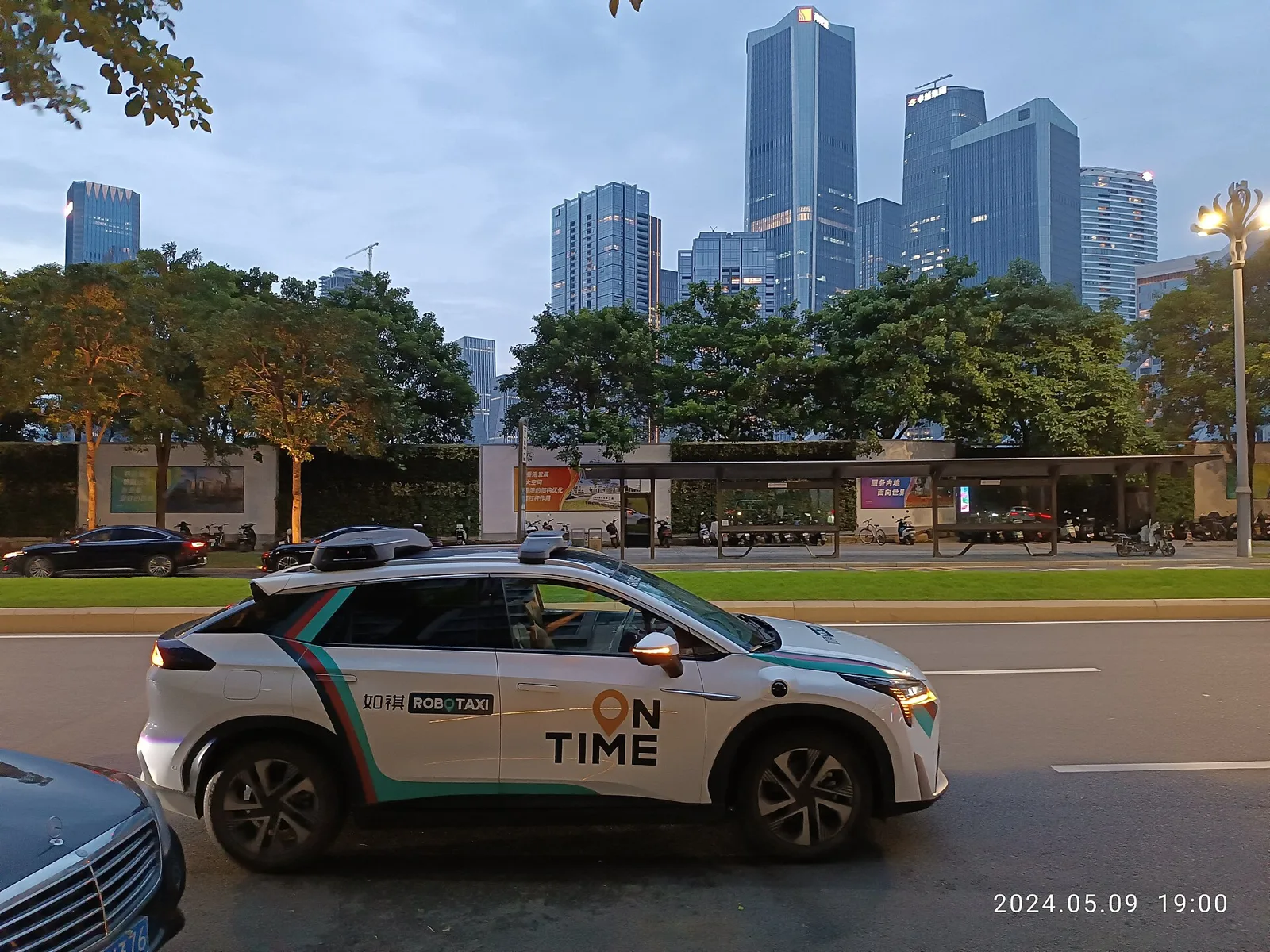
From Pittsburgh's first pilot in 2016 to driverless fleets in several US cities and China, how robotaxis operate, what they cost and where they still struggle.
A robotaxi is a driverless car, at SAE level 4 or 5, run for a ridesharing service. Waymo, Baidu, Tesla and others operate them in geo-fenced areas of the US and China. Costs remain high, with services running at a loss, and safety records and public trust are still developing.
A robotaxi is an autonomous car, operating at SAE automation level 4 or 5, that is run for a ridesharing company. The idea removes the human driver from a taxi, which could make the service cheaper and change how people think about owning a car. Several services now operate in parts of the world, but they remain geo-fenced and most still lose money.
What is a robotaxi and how does it operate?
A robotaxi is also known as a robo-taxi, self-driving taxi or driverless taxi. It is an autonomous car that takes passengers on demand within a ridesharing network. Consultancy firms expect autonomous mobility on demand (AMoD) to be one of the largest uses of autonomous cars at scale, particularly in urban areas.
Operating costs fall when the human driver is removed, which may make the service affordable and encourage transportation as a service rather than individual ownership. The expected reduction in the number of vehicles would also lower the energy embodied in manufacturing them, although energy spent moving empty vehicles between pick-ups must be counted.
Robotaxis could reduce urban pollution and energy consumption, since they need less weight and range than individually owned vehicles. Market forecasts suggest a positive effect on congestion and parking compared with private cars, although some firms, including Kearney, expect induced demand to make congestion worse.
The driver leaves the car, but the company that runs the service carries every question the driver used to answer.
What are the main concerns about robotaxis?
Studies of road safety are mixed. Some pilots have recorded crash rates higher than those of human drivers, and the wider social effects are still being debated. Such developments could also lead to job losses and raise new questions about the liability of the operators running the service.
Operating problems have already appeared. In 2023, some robotaxis caused congestion by blocking roads after losing cellular connectivity, and others failed to yield properly to emergency vehicles. As of 2023, one fatality had been linked to a robotaxi, a pedestrian struck by an Uber test vehicle in 2018.
Public confidence is another obstacle. Predictions of a rapid and widespread introduction, some made as early as 2018, have not been realised. An American Automobile Association survey in 2025 found that only 13% of respondents would trust a self-driving vehicle.
Which companies run robotaxi services?
Eight firms currently run active robotaxi services: Avride, Baidu, Motional, Pony.ai, Tesla, Waymo, WeRide and Zoox. Their services operate with varying degrees of automation in parts of the world, and the number and scope of these services has been expanding rapidly.
Most trials have involved specially modified passenger cars with room for two or four passengers behind a partition. LIDAR, cameras and other sensors feature on most vehicles, and in the United States and China each service operates only inside a geo-fenced area. That area is called the Objective Design Domain (ODD), and it defines where a robotaxi may pick up and set down passengers.
Separate trials have tested larger shared autonomous vehicles on fixed routes with designated stops, carrying between 6 and 10 passengers. These shuttle buses have so far operated at low speeds, which keeps them distinct from the on-demand cars.
Which automakers planned robotaxis?
Many automakers announced plans in 2015 to 2018 to develop robotaxis before 2025, and a series of partnerships followed between carmakers, technology suppliers and service operators. BMW and Fiat Chrysler Automobiles, for example, partnered with Intel and Mobileye in 2016 to develop robotaxis by 2021.
Other deals included Baidu working with Nvidia in 2016, and Daimler teaming up with Bosch in 2017 to develop software for a robotaxi service by 2025. The Renault-Nissan-Mitsubishi Alliance partnered with Transdev and DeNA the same year to develop robotaxi services within 10 years. Ford invested $1 billion in the startup Argo AI in 2017, but Ford disbanded the startup in 2022.
Some of the early plans changed hands. Delphi bought the startup NuTonomy for $400 million in 2017, and Google led a $1 billion investment in Lyft that year, a move that could back Waymo's plans. Lyft later sold its self-driving division to Toyota in 2021.
How much does a robotaxi cost to build and run?
Early vehicles were estimated in 2020 to cost as much as US$400,000, owing to bespoke manufacture and specialised sensors. The price of components such as LIDAR has since fallen significantly. In January 2021, Waymo stated that its vehicles cost approximately $180,000 each, with an operating cost of $0.30 per mile, which excluded fleet technicians and customer support.
Baidu announced in June 2021 that it would produce purpose-built robotaxis for 500,000 yuan ($77,665) each under its Apollo brand. Tesla has discussed a vehicle below $25,000 that relies solely on camera data rather than sensors, and it planned a purpose-built robotaxi, the Tesla Cybercab, for 2026.
| Item | Figure | Date or basis |
|---|---|---|
| Early vehicle cost | Up to US$400,000 | Estimate in 2020 |
| Waymo vehicle cost | Approximately $180,000 | January 2021 |
| Waymo operating cost | $0.30 per mile | Excludes technicians and customer support |
| Baidu Apollo vehicle | 500,000 yuan ($77,665) | Announced June 2021 |
| Robotaxi operating cost | $7 to $9 per mile | Operating at a loss, 2025 |
| Personal car | $1 per mile | Comparison figure |
Robotaxi services operate at a loss, with operating costs per mile of about $7 to $9, compared with $1 a mile for personal cars. The consultancy McKinsey estimated that bringing costs below $2 a mile would take until 2035.
How did the first robotaxi trials start?
On 18 August 2016, Uber's chief executive announced that the company would open its autonomous taxi fleet to the public in Pittsburgh within weeks. NuTonomy surprised the market by starting its own robotaxi service a week later. Access was limited to invited members of the public, within one district of Singapore.
Uber launched its public service in September 2016, with customers assigned human or autonomous cars interchangeably through the regular app. The initial fleet had 14 vehicles and a planned fleet of around 100, and the autonomous area covered 31 square kilometres of downtown Pittsburgh. Human drivers sat in the front seats for safety.
Cruise Automation, bought by General Motors in 2016, started a beta service for its staff in San Francisco in August 2017, using 46 Chevrolet Bolt electric vehicles. Waymo, which had become an independent company in 2016, began large scale tests in Phoenix in April 2017 over a geo-fenced suburb.
When did robotaxis begin carrying paying passengers?
Waymo One launched in Arizona in December 2018 as a self-driving taxi service for paying customers. The company had begun some driverless testing in November 2017. By November 2019, cars were running with no backup driver aboard, and Arizona had granted Waymo a Transportation Network Company permit in February 2018.
In China, Baidu's Apollo Go launched in September 2019 with an initial fleet of 45 autonomous vehicles, and the service has since expanded to more than 10 cities. In August 2022, Baidu became the first company in China to receive permits for fully driverless taxis, in Wuhan and Chongqing.
By August 2024, Apollo Go had 400 vehicles running with no safety staff aboard in Wuhan, a city where it offered round-the-clock service to 9 million residents. Baidu aimed for operational breakeven in Wuhan by the end of 2024. Base fares in Wuhan started as low as 4 yuan, compared with 18 yuan for a human-driven taxi.
How have California regulators shaped the market?
In February 2022, the California Public Utilities Commission (CPUC) granted Cruise and Waymo drivered deployment permits, which allowed rides while a safety driver sat in the vehicle. Those carriers also had to hold a valid California Department of Motor Vehicles deployment permit. In June 2022, Cruise was approved to run a paid robotaxi service in San Francisco.
In August 2023, the CPUC approved additional operating authority for Cruise and Waymo to conduct commercial passenger service without safety drivers in San Francisco, including fares at any time of day. Waymo's permitted area was later enlarged to airports, freeways and the wider Bay Area, and it was extended to Sacramento after an additional permit.
What went wrong for Cruise?
Cruise vehicles running autonomously could get in the way of emergency crews, and one had struck a fire truck. On 2 October 2023, a Cruise car with nobody supervising it hit a pedestrian. Rather than stopping, it misidentified the collision and dragged the pedestrian under the car for 20 ft (6.1 m) before coming to a stop at the roadside.
California regulators revoked the licence to operate these cars after the response was judged unacceptable and the company appeared to have withheld details from regulators. Cruise recalled all 950 of its vehicles in November 2023. Risks identified inside the company, concerning behaviour around children and construction sites, were also part of the picture.
How is Tesla approaching robotaxis?
Tesla's chief executive has predicted since 2019 that Tesla would have robotaxis on the road within years. The company announced its robotaxi plans on 10 October 2024, when it showed the two-seater Tesla Cybercab and the 14-seater Tesla Robovan, which can carry up to 20 passengers.
On 22 June 2025, Tesla launched its commercial taxi service in Austin, Texas, to a small group of invited users. Rides were priced at a flat rate of $4.20 inside a geo-fenced area, and a Tesla employee sat in the front passenger seat for safety. By July 2026 the service had expanded to Dallas, Houston, Miami, Orlando and Tampa, with some unsupervised vehicles.
How did Waymo and Uber's self-driving unit develop?
Waymo, which grew out of Google's self-driving car project and became an independent company in 2016, began a major public robotaxi test in Phoenix in early 2017. It used 100, and then 500 more, Chrysler Pacifica Hybrid minivans provided by Fiat Chrysler Automobiles. Waymo also signed a deal with Lyft in May 2017.
Uber's own programme suffered a setback in March 2018, when a pedestrian died after being struck by an Uber vehicle in Tempe, Arizona, while the onboard safety engineer was watching videos. Uber paused testing and later resumed it only during daylight hours and at lower speeds. In January 2021, Uber sold its Advanced Technologies Group to Aurora Innovation for $4 billion, and it kept a 26% stake after investing $400 million in Aurora.
By June 2026, Waymo operated public commercial robotaxi services in 10 US metropolitan areas, had 3,871 robotaxis in service and provided 500,000 paid rides per week. The company had logged 200 million fully autonomous miles and announced London as its first international base, starting in 2026.