Waymo reports 500,000 paid rides a week, Tesla has taken the wheel away in six cities and Zoox is still giving rides for free.
A robotaxi is a self-driving car, at automation level 4 or 5, run as a ride-hailing service. Waymo leads on scale, with 3,871 vehicles and 500,000 paid rides a week as of June 2026. Tesla runs unsupervised cars in six cities, and Zoox offers free rides.
In April 2019 Elon Musk predicted that Tesla would have one million robotaxis on the road by 2020. By September 2026 Tesla's driverless taxis had covered more than one million unsupervised miles in total, while Waymo reported, as of June 2026, 3,871 vehicles in service and 500,000 paid rides every week.
That gap is the story of the driverless taxi so far.
What is a robotaxi?
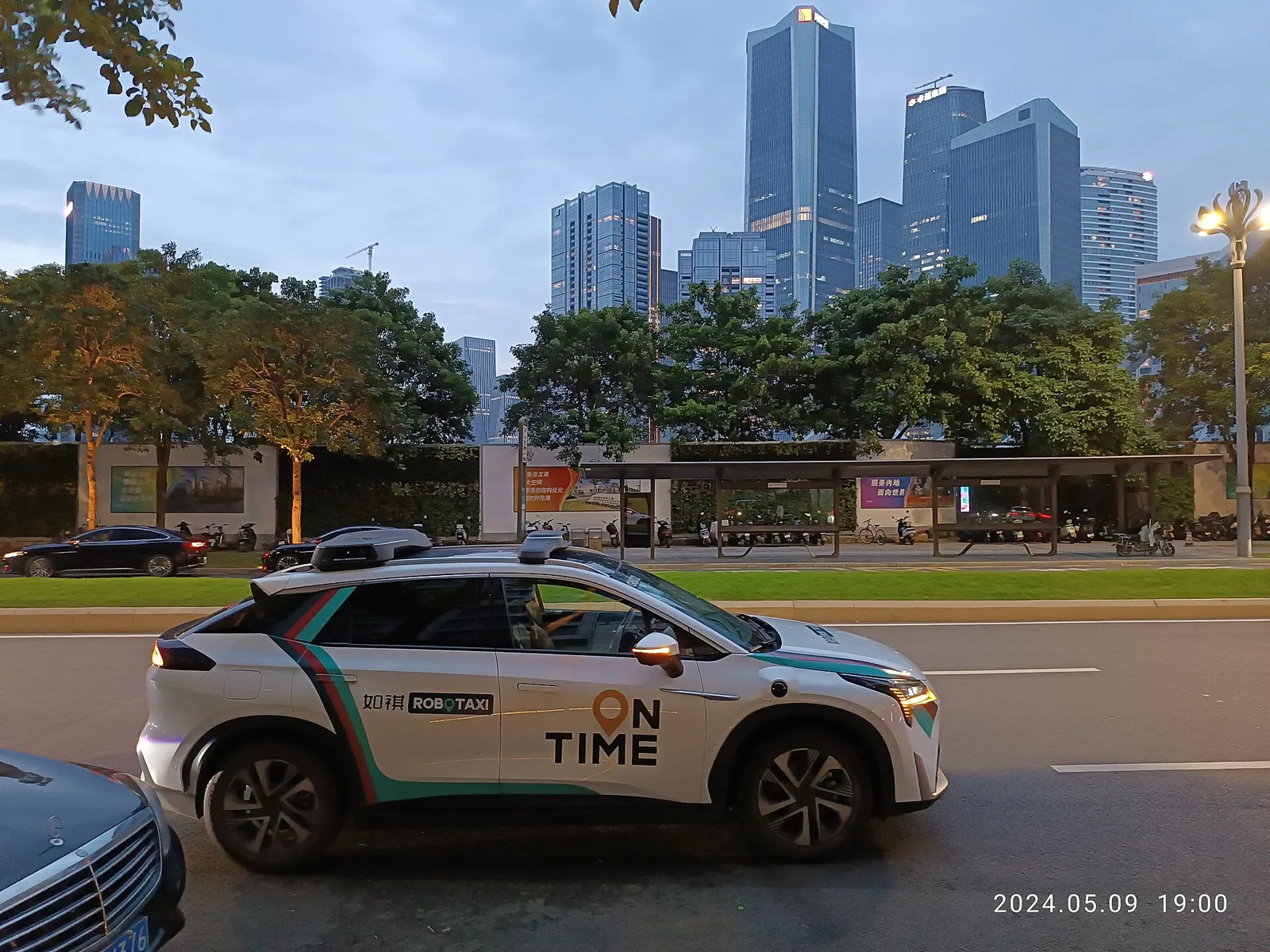
A robotaxi is an autonomous car, at automation level 4 or 5, operated for a ridesharing company. It goes by several names: robot taxi, self-driving taxi, driverless taxi. The companies with active services include Avride, Baidu, Motional, Pony.ai, Tesla, Waymo, WeRide and Zoox.
Every one of them operates inside a geo-fenced area, a specially designated zone where the service is allowed to run. Think of it as a map with a fence drawn round it: inside, the car drives itself; outside, it does not go. That fence is why the question "where can I ride one?" matters so much more than "how smart is the software?"
Most trials have used modified passenger cars with two or four seats behind a partition, plus lidar, cameras and other sensors. A different branch of the field uses larger shared autonomous vehicles, carrying between 6 and 10 passengers on fixed routes with designated stops. These shuttle buses have so far run at low speeds.
Every robotaxi service on the road today works inside a fenced-off map.
Three ways to build a driverless taxi
The leading companies have made different bets on sensors and vehicles. Waymo relies on lidar and has largely retrofitted existing models. Tesla uses eight cameras and artificial intelligence, with no lidar. Zoox designed its own vehicle from scratch. Baidu, in China, has pursued a cheap purpose-built car.
| Company | Approach | Where it runs | Scale |
|---|---|---|---|
| Waymo | Lidar-based sensors on retrofitted Jaguar I-Pace and Chrysler Pacifica vehicles, with a sixth generation built on Zeekr EVs | 10 US metropolitan areas (June 2026) | 3,871 robotaxis; 500,000 paid rides a week |
| Tesla | Eight cameras and AI; mostly Model Y, with the two-seat Cybercab added in Austin in September 2026 | Six cities without a supervisor, plus the San Francisco Bay Area with one (September 2026) | Roughly 420 vehicles in Texas, per reporting |
| Zoox | Purpose-built, symmetrical vehicle with no steering wheel or pedals | Las Vegas and San Francisco, free rides | About 50 robotaxis (January 2026) |
| Baidu Apollo Go | Purpose-built sixth-generation car, producible for under 30,000 dollars | More than 10 Chinese cities | 400 fully driverless cars in Wuhan (August 2024) |
Which services carry paying passengers?
Waymo's is the largest, charging fares in 10 US metropolitan areas, and Tesla now charges for driverless rides in Texas and Florida. Zoox so far offers free rides. In China, Baidu's Apollo Go carries paying passengers in Wuhan, where base fares started at 4 yuan.
Waymo's route to paying passengers was gradual. It launched Waymo One in Phoenix in December 2018, with safety drivers monitoring some rides. In August 2023 California regulators approved Waymo and Cruise to charge fares for driverless rides in San Francisco at any time of day.
Since then the map has grown. Waymo introduced freeway travel for select riders in November 2025, though it paused all freeway service from May to July 2026. California approved bigger permit areas that month, stretching from Santa Rosa and Sacramento to the Mexican border, and the operating area was slated to cover San Diego in mid-2026.
Cruise, the General Motors robotaxi unit, is the cautionary tale. It opened its driverless cars to the public in San Francisco in February 2022 and then, on 2 October 2023, a Cruise vehicle collided with a pedestrian and, misreading the impact, dragged the person under the car for 20 feet (6.1 m) before stopping. The company had to suspend operations after an accident that year.
How did Waymo get so far ahead?
Waymo started earliest and spent the most. Google began self-driving work on 17 January 2009, and spent 1.1 billion dollars on it between 2009 and 2015. It was renamed Waymo in December 2016. In October 2024, The New York Times described it as far ahead of the competition.
The origins are a good story. A team led by Sebastian Thrun, who had built Stanford's entries in the 2005 and 2007 DARPA challenges, was joined by Anthony Levandowski, who retrofitted a Toyota Prius as a self-driving pizza delivery car for a television programme in 2008. That stunt, which crossed the San Francisco Bay Bridge under police escort, convinced Google to approve its own programme in January 2009. The New York Times revealed the project on 9 October 2010, after almost two years of testing with seven vehicles.
Milestones came steadily. A modified Prius received the first United States licence for a self-driven car, from Nevada, in May 2012. In fall 2015 a blind man rode alone in a fully autonomous car in Austin, with no test driver or police escort. Waymo began testing minivans without a safety driver in Chandler, Arizona, in October 2017.
Hardware costs fell sharply. At the start, the programme used a lidar unit from Velodyne costing 75,000 dollars; in 2017 the cost fell by roughly 90% as Waymo moved to its own design. Its sixth-generation vehicles, based on Chinese-built Zeekr electric cars, began testing in July 2024, with the aim of cutting costs at a time when the company was operating at a loss.
Money follows momentum. Waymo closed a 5.6 billion dollar round in October 2024, and in February 2026 raised 16 billion dollars at a valuation of 126 billion dollars, to fund expansion into new markets. Tekedra Mawakana and Dmitri Dolgov have run it as co-chief executives since April 2021.
Why is Tesla's approach different?
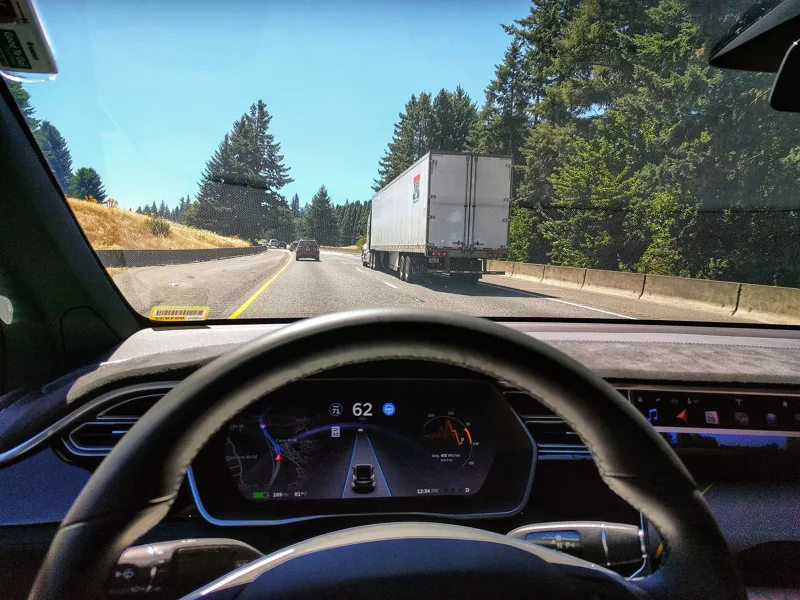
Tesla chose cameras over lidar, and its stated ambition is for owners to add their personal cars to a shared network. Its Robotaxi service uses the company's Full Self-Driving software and began limited service in Austin, Texas, on 22 June 2025, initially with human safety monitors in modified Model Y vehicles.
The promises came first. Musk first mentioned a car-sharing service for autonomous Teslas in 2016, and in 2018 said it would compete with Uber and Lyft. At the April 2019 Autonomy Day he predicted a million robotaxis by 2020, and said owners who let their cars join the network would face costs under 20 cents per mile, against 2 to 3 dollars for conventional ride-hailing. The Full Self-Driving beta reached a small group of users in October 2020; by July 2026 it was branded Full Self-Driving (supervised).
Reality arrived slowly. Early riders in Austin posted videos of the car driving on the wrong side of the road, braking for no reason and dropping passengers in intersections, and the National Highway Traffic Safety Administration (NHTSA) said the day after launch that it was in contact with the manufacturer. Reaction was polarised, with riders calling the experience smooth while analysts criticised the errors and the distance between the promises and a service still needing human oversight.
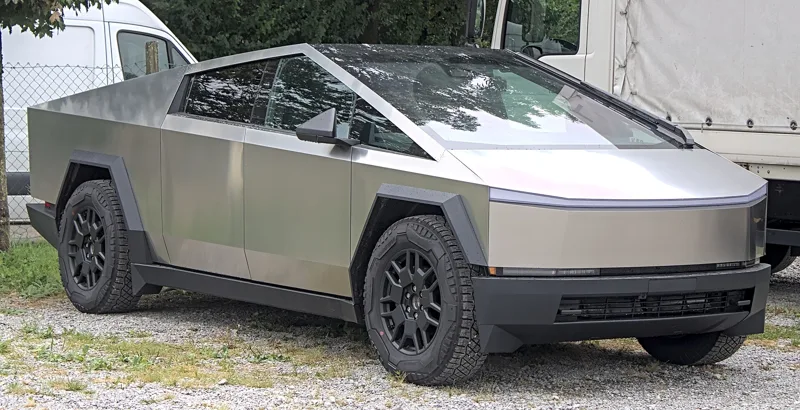
Progress since has been real. In January 2026 Tesla began adding unsupervised vehicles to the fleet in a limited manner. The service reached Dallas and Houston without supervisors in April 2026, and Miami, Orlando and Tampa in July, its first expansion outside Texas. The Cybercab, a two-seater with no manual controls, joined the service in Austin on 3 September 2026. Texas records listed about 45 Cybercabs registered to the operation, while The New York Times reported that Tesla was authorised to run 314 driverless vehicles in Texas.
The same day, NHTSA opened an audit query into Tesla's self-certification that the Cybercab meets federal safety standards. As of September 2026, Tesla's cars had driven more than 1 million unsupervised miles (1,600,000 km), which is small beside Waymo's 200 million fully autonomous miles.
What is Zoox doing differently?
Zoox, owned by Amazon, builds its own vehicle: a battery-electric, symmetrical, bi-directional car with no steering wheel or pedals. Its argument is that a retrofitted car is not optimised for autonomy. As of January 2026 it had approximately 50 robotaxis in service.
Zoox was founded in 2014 by Tim Kentley-Klay and Jesse Levinson, and Amazon bought it on 26 June 2020 for over 1.2 billion dollars. The company showed its purpose-built vehicle in December 2020, capable of up to 75 mph. In July 2022 it self-certified that the design met existing federal safety standards, and NHTSA granted it an exemption for its driverless vehicles on 6 August 2025.
Public service began in September 2025 as a free service to fixed destinations along the Las Vegas Strip, followed on 18 November 2025 by free rides for select users in San Francisco neighbourhoods such as SoMa and the Mission District, under the Zoox Explorers programme. A waitlist applied, and the company hoped to remove it entirely during 2026.
Safety scrutiny has followed. As of 17 August 2026, NHTSA had logged 156 accidents involving Zoox vehicles in autonomous mode, a small number of which resulted in injury or property damage. In 2024, two motorcyclists rear-ended Zoox vehicles that had allegedly braked unexpectedly, and the company issued a voluntary software recall; further recalls followed collisions with an electric bicycle, a passenger car and an e-scooter in 2025.
What is China's robotaxi story?
China is the other big arena. Baidu launched Apollo Go in September 2019 with 45 vehicles, and the service has since expanded to more than 10 Chinese cities. In August 2022 it won the first permits in the country to run fully driverless taxis, in Wuhan and Chongqing.
By August 2024 Apollo Go had 400 robotaxis operating fully autonomously in Wuhan, round the clock, serving 9 million residents. Base fares started at 4 yuan (0.55 US dollars), compared with 18 yuan (2.48 US dollars) for a human-driven taxi, and the cars recorded 899,000 rides in the second quarter of 2024 alone, taking the total to 7 million by 28 July. The rapid adoption rattled China's gig economy workforce.
What stands in the way of driverless taxis?
Trust, safety evidence, money and regulation. Predictions that robotaxis would arrive widely by as early as 2018 have not been realised. As of 2025 the services are expanding rapidly but all still lose money, and a 2025 American Automobile Association survey found that only 13% of respondents would trust a self-driving vehicle.
The safety picture is mixed. Studies on road safety are inconsistent, and some pilots recorded crash rates above those of human drivers. In 2023 some robotaxis blocked roads when they lost cellular connectivity, and others failed to yield to emergency vehicles. In March 2018 an Uber test vehicle killed a woman crossing a street in Tempe, Arizona, while its safety driver was watching videos. In January 2026 the National Transportation Safety Board and NHTSA opened investigations into Waymo vehicles for repeatedly passing stopped school buses, and for an incident in which one struck a child who emerged from behind a parked SUV near a school.
Costs and consumer doubts compound it. Early vehicles cost an estimated 400,000 dollars in 2020, and while Waymo put its cost at about 180,000 dollars per vehicle in January 2021, with operating costs of 0.30 dollars a mile, that excluded technicians and customer support. Many consumers also doubt that a robotaxi can cope with complex cities or severe weather.
Regulation is the other lever. Waymo spent 1.7 million dollars lobbying in the United States in 2024 and 2 million dollars in the first six months of 2026. In February 2026 its representatives asked the United States Senate for uniform nationwide standards, warning that without lighter regulation American companies would lose the global autonomous vehicle market to Chinese rivals.
What does it mean if you drive or buy cars?
One argument is about ownership itself. Removing the cost of a human driver might make rides affordable and push more people towards transport-as-a-service rather than owning a car. Market forecasts suggest less congestion and fewer parked cars, although Kearney predicts the opposite because cheaper rides would induce more trips.
A shared car needs less weight and range than a private one, which could cut energy use, though the energy spent repositioning empty cars has to be counted. Tesla's own vision goes the other way, with owners adding their cars to a network and earning from them. For drivers, the practical effect today is simply sharing the road with fenced-in fleets that sometimes behave in unexpected ways around buses, emergency vehicles and cyclists.
Where this goes next
Waymo's operating area was slated to expand to cover San Diego in mid-2026, and its 16 billion dollar round is meant to pay for further expansion into new markets. Tesla said in January 2026 that it planned seven additional cities in the first half of 2026, and says the network will work with all current Tesla vehicles, starting with the Model Y and Cybercab. The Robovan shown in October 2024 was given no timeline.
Cybercab rides began only in Austin, with plans to reach other cities within Tesla's network in the near future. Zoox hopes to remove its San Francisco waitlist and to serve further resorts and attractions in Las Vegas. Whether any of these timelines hold is the measure the next few years will apply, given that the earlier forecasts of one million Tesla robotaxis by 2020 and mass adoption by 2018 did not.