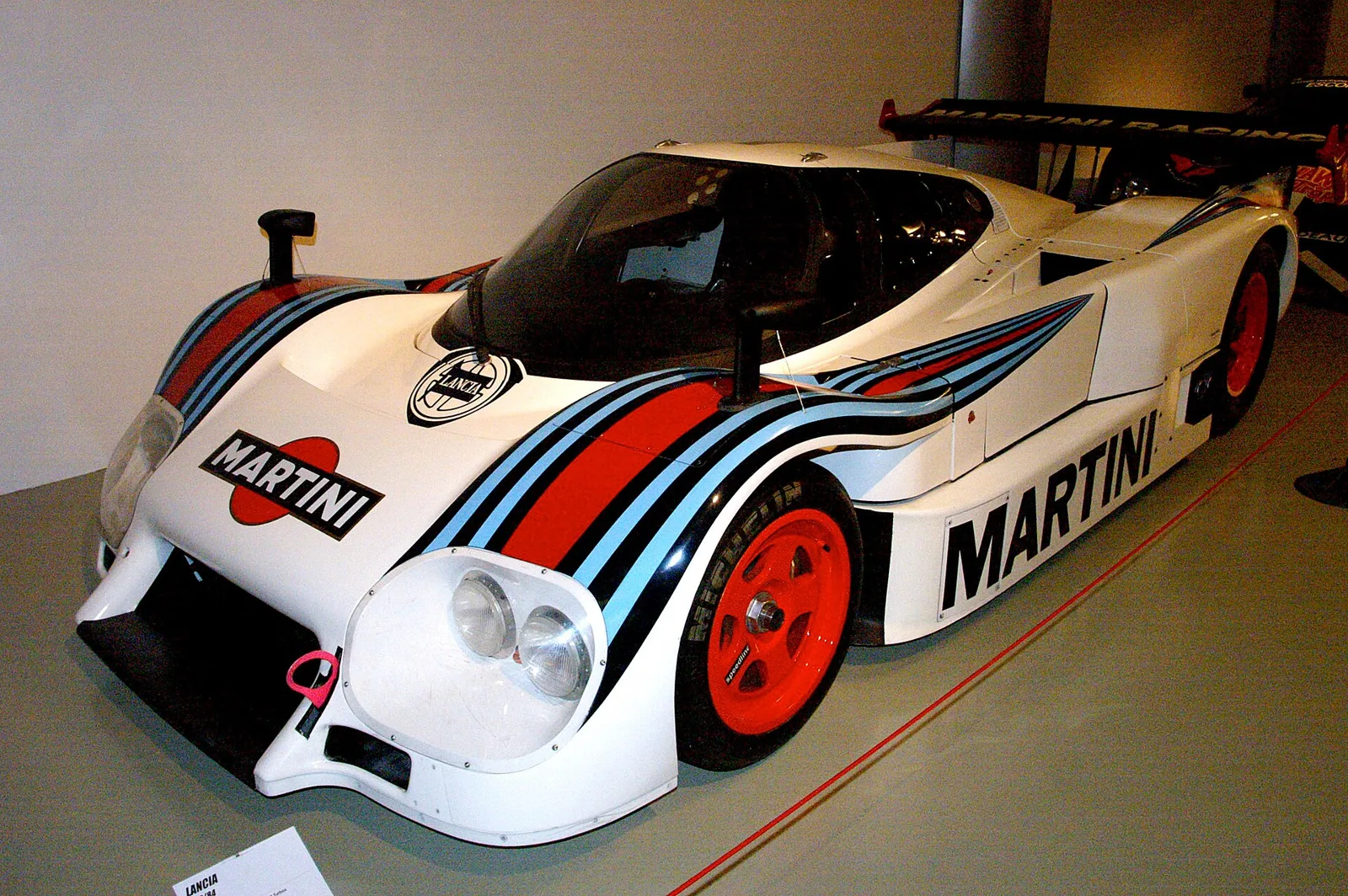
A Group 5 silhouette built on the Beta Montecarlo road coupe, with a turbo four that took the 1980 and 1981 championships.
The Lancia Beta Montecarlo Turbo was a Group 5 silhouette racer designed in 1978 for the World Makes Championship. Built on the Beta Montecarlo road coupe, it was powered by a turbocharged four-cylinder of 1.4259 litres and gave Lancia the 1980 and 1981 championships.
Lancia built the Beta Montecarlo Turbo to help promote sales of its small road coupe. A two-seat car with a rear-mounted engine became a racing silhouette, and it went on to give Lancia the 1980 and 1981 championships.
Why did Lancia build a racing Montecarlo?
Lancia wanted to promote sales of the small Beta Montecarlo coupe presented in 1975, so it developed two competition versions. The Montecarlo Turbo was built for the World Makes Championship in 1978, while the 037 followed in 1981 for the World Rally Championship.
The FIA and its sporting commission rewrote the World Makes Championship rules in 1973. From 1976 it was reserved for silhouettes, with cars built on production shells and free to modify engine, chassis and bodywork.
From 1978 there were two divisions, over and up to two litres. Every division scored the same points, so a car of any capacity could win the overall title, and prototypes could enter from 1978 without scoring points, aiming only at single-race wins.
Before the Turbo, Lancia had raced the Stratos through private teams in the seventies, with some category results and an outright Targa Florio victory that did not count towards the championship.
A turbo racer developed to promote a small road coupe, and winner of two world makes titles.
How was the Montecarlo Turbo built?
The body was made of composite materials and resins, designed by Pininfarina's engineers, with spoilers, side skirts and wings. Gian Paolo Dallara designed a steel and aluminium monocoque, and the body kept its resemblance to the road car while being exaggerated.
Independent suspension combined a front stabiliser bar with twin dampers at the back. Disc brakes were ventilated, and the alloy wheels measured 16 inches at the front and 19 at the rear.
Gianni Tonti of Abarth and Claudio Maglioli and Nicola Materazzi of Lancia oversaw the engine side, and the five-speed gearbox had a limited-slip differential and a twin-plate dry clutch. Engineers first experimented with the Lancia Gamma's flat-four, including a turbocharged variant, before dropping it for a new turbocharged four-cylinder.
How much power did the engine make?
The race engine produced 480 PS (353 kW; 473 hp) at 7,200 rpm. In endurance tests one reached 540 PS (397 kW; 533 hp) before giving way after five hours at maximum revs. Those durability figures came from tests, not race conditions. Its capacity was 1.4259 litres, equal to 1,996.3 cc (121.8 cu in) under the supercharging factor.
In 1980 some races used an engine of 1.4294 litres, equal to 2,001 cc (122.1 cu in), to move into the class above 2,000 cc and take points from the Porsches. A 1,773 cc (108.2 cu in) unit was tried in 1981 and increased power by 10 PS (7 kW; 10 hp).
Beta Montecarlo Turbo specifications
| Specification | Figure |
|---|---|
| Class | Group 5 silhouette |
| Debut | 6 May 1979, 6 Hours of Silverstone |
| Engine | Turbocharged four-cylinder, 1.4259 litres (1,996.3 cc (121.8 cu in)) |
| Race power | 480 PS (353 kW; 473 hp) at 7,200 rpm |
| Endurance power | 540 PS (397 kW; 533 hp) |
| 1980 engine | 1.4294 litres (2,001 cc (122.1 cu in)) |
| 1981 trial engine | 1,773 cc (108.2 cu in), plus 10 PS (7 kW; 10 hp) |
| Gearbox | Five-speed manual with reverse, limited-slip differential |
| Wheels | 16-inch front, 19-inch rear |
| Titles | 1980 and 1981 World Makes Championship |
When did the Montecarlo Turbo first race?
It was presented on 18 December 1978 in Pininfarina's wind tunnel, and Riccardo Patrese began test runs in February 1979. Its race debut came on 6 May 1979 at the 6 Hours of Silverstone, where Patrese and Walter Rohrl retired after four laps.
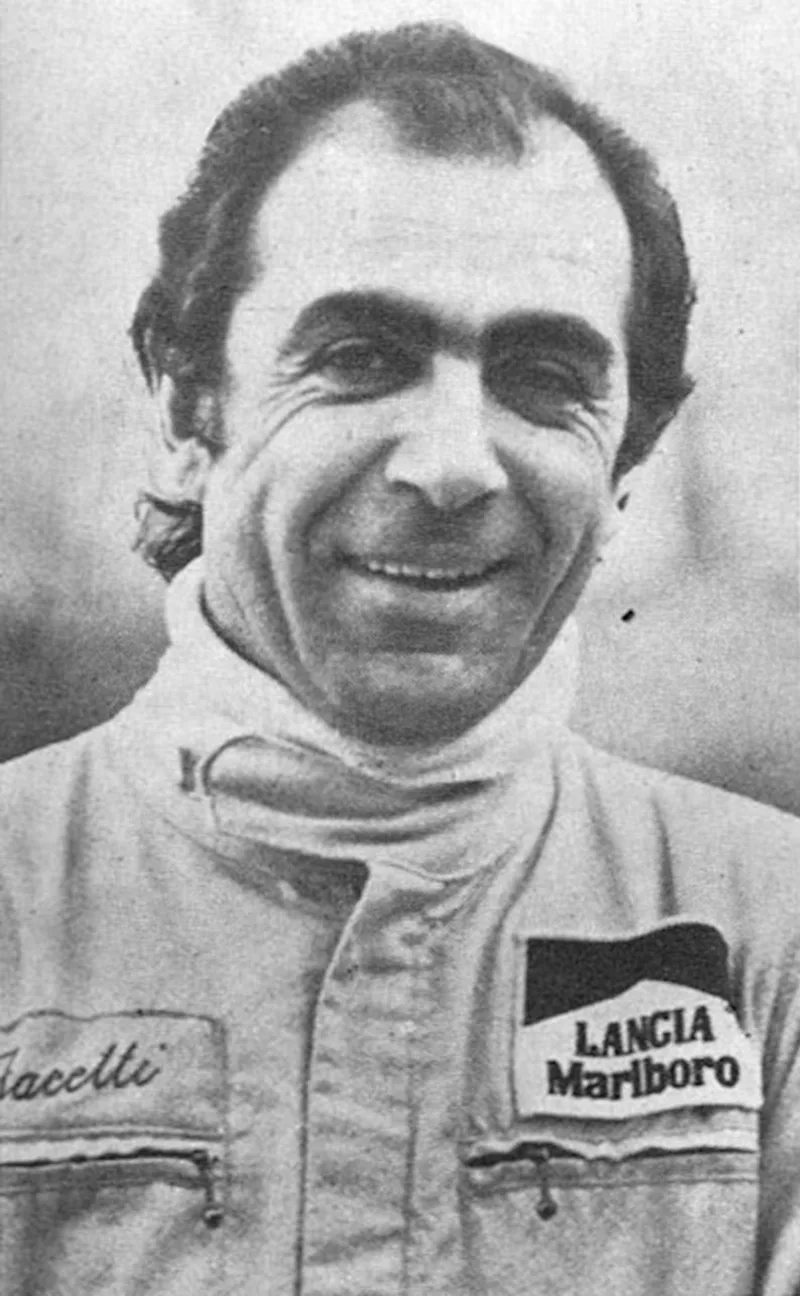
The team was first run by Daniele Audetto, a former Ferrari sporting director, and then by Cesare Fiorio, who had collected several titles for Lancia's and Fiat's rally teams. The 1979 drivers included Patrese, Rohrl, Carlo Facetti, Eddie Cheever, Giorgio Pianta and Markku Alen. They came from track and road competition.
In 1979 the car finished eighteenth at the 1000 km of the Nurburgring, took pole at the 6 Hours of Pergusa and finished second overall there, and came fifth overall at Brands Hatch. Lancia won the division title on 50 points, while BMW had 32 and Ford 30.
Lancia's rivals that year were BMW 320i cars in the up-to-two-litre division, and Porsche 935 and 911 RSR cars. Two more cars, crewed by Cheever and Rohrl and by Pianta and Alen, retired with gearbox trouble at the 6 Hours of Vallelunga. Two Montecarlos for the Abarth squad were disqualified from the Giro automobilistico d'Italia for driving a stretch of motorway during a transfer.
The cars were entered by the team ASA Corsa Marche 38, and Patrese also helped to develop them.
How dominant was the Montecarlo in 1980?
Very. Lancia contested ten of the eleven rounds and won each of them in the up-to-two-litre division, while the Porsche 935 had no rivals above two litres. The Montecarlo raced practically alone in its class.
Lancia fielded two official cars from Lancia Corse, managed by Cesare Fiorio, with Patrese, Rohrl, Cheever and Alboreto at the wheel, occasionally with stand-ins. A third car came from the Jolly Club, shared by Carlo Facetti and Martino Finotto.
The 24 Hours of Daytona went to Facetti and Finotto in the Jolly Club car, and the same pair won the 24 Hours of Le Mans. At Brands Hatch the six-hour race went to Patrese and Rohrl, who also finished first overall, while the six-hour race at Mugello fell to Rohrl and Alboreto. Patrese and Cheever raced a 2,001 cc car at Mugello and Vallelunga, winning the over-two-litre division and, at Mugello, the outright race.
Lancia's three outright wins matched Porsche's. The 935 won nine division races in the over-two-litre class, while Lancia took ten in the lower division and, on division wins, its first world makes title. Three Montecarlos were entered in the Giro d'Italia, with the two works cars taking first and second places.
Why did the Montecarlo's titles matter?
The car gave Lancia its first world makes title in 1980 and its second in 1981. In both years the championship turned on division wins, and in 1981 Lancia finished on the same points as Porsche but with one more division win, which settled the title.
How did the private Montecarlos fare?
Private teams ran Montecarlos in national championships and unlisted races, achieving outright and class victories. Heyer took a Deutsche Rennsport Meisterschaft win in 1980, and private cars won some races in the national sports car championships in 1981.
After 1982 older cars went to private operators, including Scuderia Vesuvio and Germano Nataloni, which managed only a few placings, while Toni Fischhaber earned a class win in a race without championship status.
What happened in 1981 and after?
In 1981 Lancia entered seven of fifteen rounds and won six division races. That gave it a third consecutive division title and its second overall world championship, with Patrese and Alboreto taking the only outright win of the season at Watkins Glen.
The 1981 Martini Racing cars were directed by Fiorio and driven by a changing list of drivers that included Patrese, Alboreto, Ghinzani, Cheever and De Cesaris. Private entries from Jolly Club and Germano Nataloni also raced.
The six division wins of 1981 went to Finotto, Facetti and Pirro at Daytona, Nataloni and Ricci at Monza, Gabbiani, Pianta and Schon at Silverstone, Ghinzani and Heyer at the Nurburgring, Cheever, Alboreto and Facetti at Le Mans, and Patrese and Alboreto at Watkins Glen.
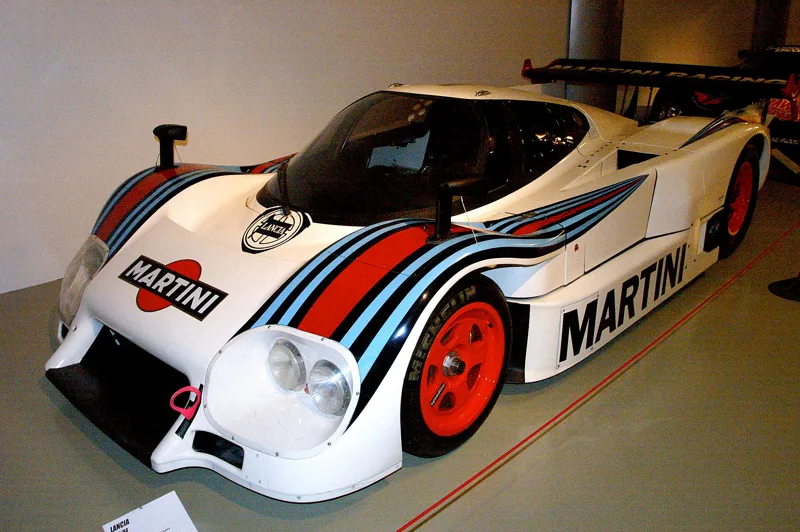
From 1982 the Group 5 cars were shut out of the series, which moved to Group C. Lancia and Martini Racing brought in the LC1, a Group 6 prototype that took over the Montecarlo's engine, placed between the axles in a central-longitudinal rather than transverse position. By 1983 the car was confined to unlisted events. One of these was held in Finland, where Keke Rosberg, then the reigning Formula One champion, took an outright win.