A workshop-trained engineer who became European Touring Car champion in 1979 and built his own turbocharged Ferraris and Alba prototypes.
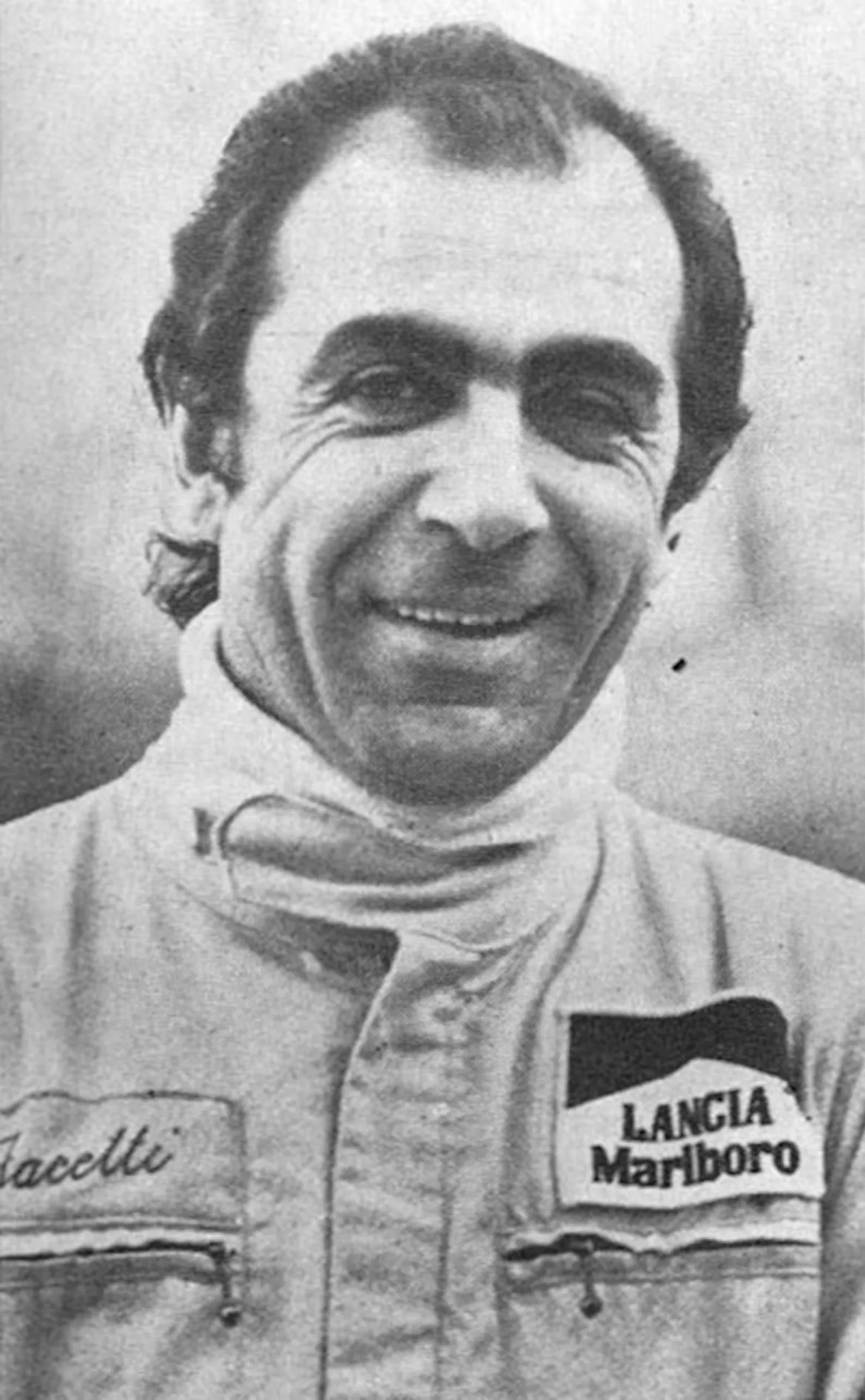
Carlo Facetti, born in Cormano in 1935, was a touring car and sports car racer. He partnered Martino Finotto to the 1979 European title after second place in 1977 and fourth in 1978. His single Formula One attempt in 1974 did not reach the grid.
Carlo Facetti was an Italian racing driver and engine builder best known for his touring car and sports car racing. He took the 1979 European Touring Car title with a BMW CSL, having finished second in 1977 and fourth in 1978. A single Formula One entry at Monza in 1974 ended without a place on the grid.
Who is Carlo Facetti?
Carlo Giovanni Facetti was born on 26 June 1935 in Cormano, in the Lombardy region of northern Italy. He is a former racing driver from Italy whose career combined driving with hands-on engineering. For nearly 40 years he ran a workshop, and on Sundays he put on his race overalls and helmet and went racing.
Facetti's success rested on that combination. He built and prepared engines for his own cars and for others, designed components, and moved between touring cars, sports prototypes and single-seaters as opportunities arose. His record shows a driver who was as comfortable with a spanner as with the steering wheel.
A workshop-trained engineer who could prepare the engine, build the chassis and then win the European title behind the wheel.
How did Facetti start racing?
Facetti learned to drive at the age of 11, with help from Alberto Ascari, a friend of his father Piero. Piero Facetti was a mechanic and racer who finished fourth in the 1947 Mille Miglia, and two of Carlo's brothers, Giuliano and Rosadelle, also became racing drivers. The family's motor sport roots ran deep.
His first event was the Giro di Calabria in 1953, where he shared a Fiat 8V 1100 with Elio Zagato. The car was Zagato-bodied, but Facetti prepared the engines. By 1960 he was building and racing Formula Junior cars powered by Lancia Appia engines, and he said that the early years took a great deal of passion, a racing seat and a reverse shift borrowed from a Fiat 600.
At Monza in those years he recorded times he considered good against experienced drivers such as Ludovico Scarfiotti, Lorenzo Bandini and Giancarlo Baghetti. His early pace in Formula Junior was enough to make him a serious proposition, and it led to the touring car work that followed.
What did Facetti achieve in touring cars?
Facetti moved into touring cars in 1963, when he joined Lancia's works team, HF Squadra Corse, for the inaugural European Touring Car Challenge. He drove a Lancia Flaminia against the best drivers in Europe at circuits such as the Nurburgring, Brands Hatch and the Nepliget Park in Budapest. At Budapest, paired with Luigi Cabella, he scored his first major international victory.
In 1964 he returned briefly to single-seaters in Argentina, racing a Lotus-Ford 22 for Scuderia Sant'Ambroeus in the four-race Temporada series. He finished fifth at the Gran Premio Internacional Ciudad de Buenos Aires, a series best, and he later recalled meeting Juan Manuel Fangio and competing with him in Buenos Aires and Mar del Plata.
Back in Italy in 1965 he took second in the Campionato Italiano in a Brabham-Ford BT16 for the same Sant'Ambroeus team. He was entering the period when his touring car work would become his main identity, and when his name would become most closely associated with BMW.
Why is the 1977 to 1979 BMW period important?
Facetti returned to the European Touring Car Championship in 1977 with Martino Finotto, driving a BMW 3.0 CSL. They finished second overall in the 1977 24 Hours of Daytona in a Porsche 935, which won their class, and the partnership carried on through a strong run of European results that season.
In 1977 they won at Enna, took a race at Estoril in the final round and finished second in the championship. The title went to Dieter Quester after a very tight finish, and Facetti finished the year as runner-up.
The 1978 season was not as easy. Finotto switched to an Alpina BMW CSL, and the car was affected by engine and clutch problems, but Facetti and Finotto still won in Austria, at the Salzburgring, in the Austria Trophy race. Facetti finished fourth in the championship that year.
The 1979 title came after a season of strong results. They won the RAC Tourist Trophy at Silverstone, which secured the championship, and they also took a fifth victory in six races at Zolder. Their Salzburgring race was a hat-trick of wins for the team, with Facetti on the top step of the podium at the end of the day.
Did Carlo Facetti race in Formula One?
Facetti made one Formula One attempt, at the 1974 Italian Grand Prix at Monza. He entered a Brabham-Cosworth BT42 run by the Scuderia Finotto team, taking over the entry of Helmut Koinigg, and the car carried the No. 31. The car could not be qualified for the race.
The attempt was overshadowed by the entry process, because a provisional entry for Jean-Louis Lafosse was received and rejected by the organisers, leaving the team to use the car for Facetti. The result did not change the outcome of the weekend, and it remains the only Formula One appearance on his record.
What was Facetti's role at Autodelta and Lancia?
From 1969 Facetti worked for Autodelta, the competition department of Alfa Romeo. He was hired to help develop the company's sports cars and to race in the European Touring Car Championship. He teamed with Ignazio Giunti and Nino Vaccarella during this period and finished third in the Spa 24 Hours twice.
In 1973 he raced an Alfa Romeo T33/TT in the World Championship for Makes. In 1974, partnered by Andrea de Adamich, he visited the podium four times, with a best of second at the 1000 km Osterreichring. Autodelta finished fourth overall that season, and Facetti won the Italian title before leaving the company.
His time at Lancia from 1975 to 1976 was more technical. He worked on a 24-valve version of the Dino V6 engine while racing, and he was leading the Giro d'Italia Automobilistico before gearbox problems ended his race. In 1976 Lancia entered the Silhouette Group 5 cars in the World Championship for Makes, and Facetti prepared a Stratos Turbo under the supervision of Mike Parkes.
The Stratos was not able to meet the challenge from Porsche and BMW. After Parkes died in August 1977, the collaboration between Facetti and Lancia ended, and the Silhouette programme came to a close. His last result for Lancia was a win in the Giro d'Italia with the Silhouette version.
What was the Carma FF project?
In 1980 Facetti and Finotto ran a business called Achille Motors in Milan, and they bought a brand-new Lancia Beta Montecarlo Turbo from the factory. For 1981 they decided to challenge the dominant Porsche 935 with a Ferrari, a car that Maranello was unwilling to race itself.
The base was a 3.0 litre Ferrari 308 GTB. Facetti designed his own cylinder heads, added two turbochargers and removed the front and rear subframes, which were replaced with lighter units built by Giorgio Stirano at Alba Engineering. The result was around 700 bhp, and he hoped to reach 840 bhp in qualifying.
The Carma FF started sixth on the grid at the 1981 24 Hours of Daytona. Facetti set the fastest lap of the race, but he pitted after only five laps with a cracked manifold and electrical failures. At Monza the car took pole before a fuel pump failure on the warm-up lap ended its weekend. Only Facetti seemed able to extract its full performance, and he crashed on the Nurburgring Nordschleife.
How did the Alba and IMSA years go?
In 1983 the Group C Junior category gave Facetti a route into sports prototypes. Finotto commissioned Stirano to build a car to the new rules, and Facetti designed a 1.8 litre four-cylinder turbocharged engine. The team was called Giannini-Alba and later Carma FF from 1985. The Alba AR2 was a class winner with Facetti and Finotto driving, and it helped the team win the Group C Junior Cup.
In 1984 the pairing was winless but still helped Alba win the Group C2 Prototype FIA Cup. The next season Facetti's engine powered the Alba AR6, although the team struggled with reliability while chasing the pace of Gordon Spice. For 1986 Finotto turned to the IMSA Camel Lights category in America, joining Gaston Andrey Racing with Ruggero Melgrati as the team's pace-setter.
The IMSA programme brought shared success. Melgrati and Facetti won at the Grand Prix of Palm Beach and at the Lowenbrau Classic, and Facetti prepared the overhead camshaft Ferrari engines. His last drive in an Alba was a non-championship Kyalami 500 km in 1988, after which he left full-time international competition.
| Years | Team or series | Notable result |
|---|---|---|
| 1963 | Lancia HF Squadra Corse, European Touring Car Challenge | First major international victory at Budapest with Luigi Cabella |
| 1965 | Scuderia Sant'Ambroeus, Campionato Italiano | Second in a Brabham-Ford BT16 |
| 1974 | Autodelta, World Championship for Makes | Four podiums; Italian title |
| 1974 | Scuderia Finotto, Formula One | Did not qualify the Brabham BT42 at Monza |
| 1977 | BMW 3.0 CSL, European Touring Car Championship | Runner-up in the championship |
| 1979 | BMW CSL, European Touring Car Championship | Champion, including the RAC Tourist Trophy win |
| 1981 | Carma FF, 24 Hours of Daytona | Sixth on the grid and fastest lap in the race |
| 1983 | Alba AR2, Group C Junior | Group C Junior Cup for the team |
| 1986 | Gaston Andrey Racing, IMSA Camel Lights | Shared wins at Palm Beach and the Lowenbrau Classic |
How is Facetti remembered in motor sport?
Facetti is remembered as a driver-engineer whose European title came in BMW CSLs, and whose Carma FF showed how far a privately built Ferrari could be pushed in Group 5. His career spanned more than three decades, from the Giro di Calabria in 1953 to his final Kyalami appearance in 1988.
His engineering work was as important as his driving. He designed cylinder heads and a turbocharged four-cylinder engine for the Alba programme, and his engines were run by other drivers. That habit of preparing the machinery himself helps explain why his results were so consistent across different categories.
Facetti returned to a car one more time after leaving full-time competition. In 1995 he finished fourth in a Coppa GT Special round at Mugello, driving a Ferrari F355. It was a one-off appearance, and it closed a career that had moved from early Formula Junior and Italian events to touring car, sports car and IMSA racing in Europe and America.