A pharmaceutical fortune, a 1979 European title with Carlo Facetti, and a Ferrari-based sports car that tried to beat Porsche.
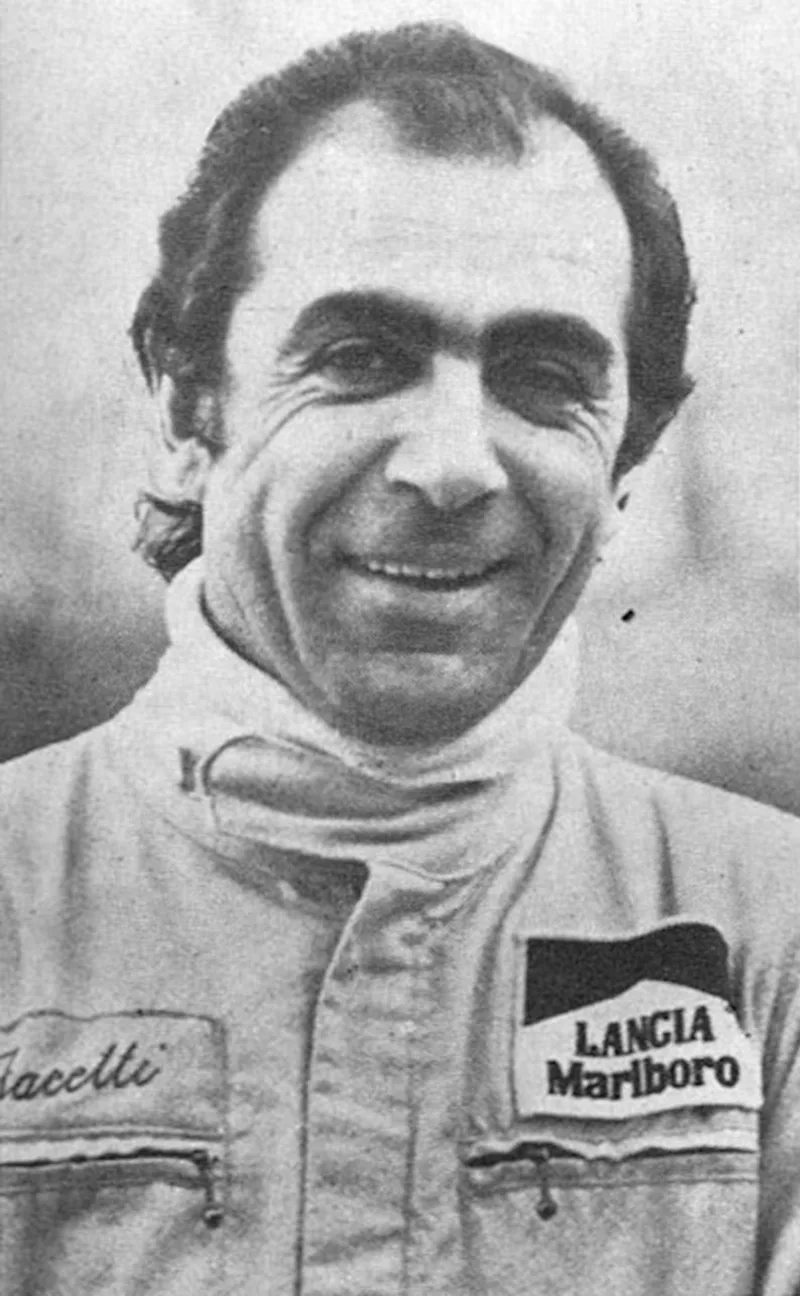
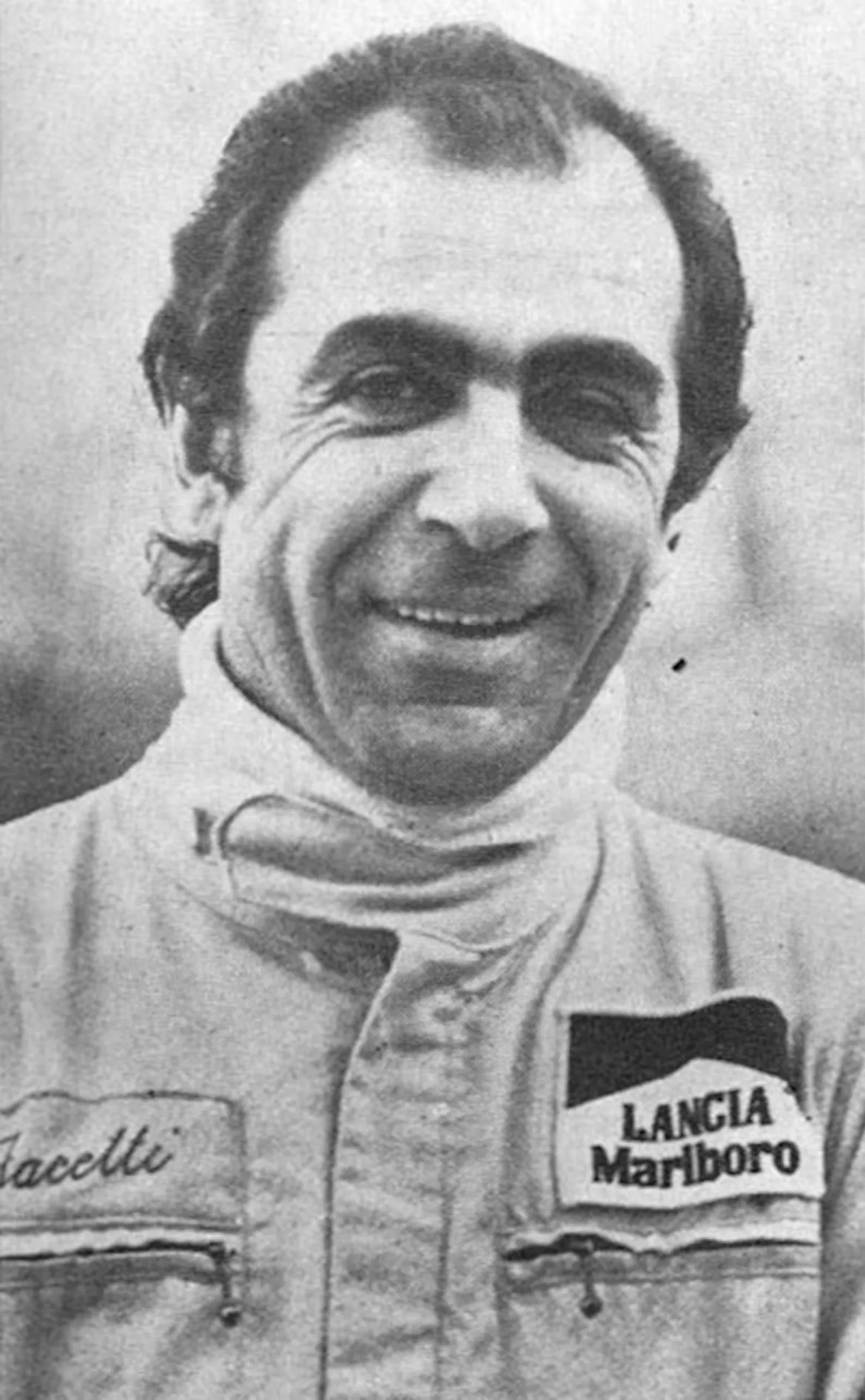
Martino Finotto was an Italian driver and team owner whose partnership with Carlo Facetti produced the 1979 European crown. He also built the Carma FF Ferrari, ran Alba's Group C Junior cars, and finished second in the 1990 IMSA Camel Lights series.
Martino Finotto was an Italian racing driver and team owner who became known for touring car and sports car racing. He won the European Touring Car Championship in 1979 with his long-time partner Carlo Facetti, and he later ran his own Group C team. Finotto died in Panama City in 2014, aged 80.
How did Finotto's racing career begin?
Finotto made his fortune in the pharmaceutical industry before he started racing internationally. He entered the Campionato Italiano di Turismo in 1971 and won two successive class titles, in 1972 and 1973. During that period he also began competing in the European Touring Car Championship, where his results gradually improved.
His first major international podium came in 1974, when he raced for the Jolly Club team in both a BMW 3.0 CSL and a Ford Escort RS 1600. In the BMW, an ex-works car, he finished second at the Austria-Trophaee at the Salzburgring alongside Manfred Mohr. Mohr and Finotto repeated that result in the next race, the 500 km Vallelunga, and he finished the 1974 championship seventh overall.
Finotto built his name on touring car titles, a Ferrari-based challenger and a Group C team that kept racing when the odds were against it.
Did Finotto try Formula One?
Finotto briefly considered Formula One. He bought a pair of Brabham BT42 cars, but after one test session at Monza he decided not to race them. The cars were instead leased to Jurg Dubler under the Scuderia Finotto banner, and several drivers used them through the 1974 season.
That decision kept him in sports car and touring car racing, where he was more competitive. In 1975 he moved to the German Castrol Team Zakspeed outfit to race its Escort RS 1600, and he returned to the podium at once. He finished second at the 4 Ore di Monza with Hans Heyer and again at Grand Prix Brno, and he scored points for third in class at the Zandvoort Trophy.
How did the Facetti partnership win the European title?
For 1977 Finotto returned to the European Touring Car Championship with Carlo Facetti and a BMW 3.0 CSL. Their first result together was a podium at the 1977 24 Hours of Daytona, where they finished second overall and won their class in a Porsche 935 run from a Jolly Club entry. The European season that year was a close fight for the title, and the pair won at Estoril in the final round.
Grano took the 1977 title by six points from Facetti, while Finotto finished fifth overall in the standings. The partners kept working together in 1978, when they took the Alpina BMW CSL to a Monza four-hour win by seven laps and a victory in the Austria-Trophaee. Their form built for the title tilt that followed.
The 1978 season opened at Brands Hatch, where two of the four BMWs entered never started after using up engines in qualifying. The pair led until three laps from the end, when Tom Walkinshaw took over. At Mugello a battle with John Fitzpatrick ended with the car overheating under Finotto, and he retired.
In 1979 the BMW teams dominated the European championship. Facetti and Finotto had a difficult run early on, with retirements at Brands Hatch and Jarama, but they won at the Nurburgring and then took a hat-trick of victories at the Salzburgring. The decisive moment came at Silverstone, where they won the RAC Tourist Trophy and with it the European Touring Car title. Their winning streak continued at Zolder, their fifth victory in the last six races.
What setbacks did the pair face in 1979?
The 1979 title run had several setbacks. At Brands Hatch they were comfortably ahead for 100 of the 120 laps before a broken gear lever ended their advantage, and fuel and cooling problems later cost them at Jarama and the Osterreichring, with a third retirement in a row.
Their chief rival was Grano in the Luigi BMW. At Brno both leading BMWs suffered blown head gaskets, and the Jolly Club car was salvaged to finish second. At Enna a spin by Finotto cost them ground, yet the team still ended second and kept its place in the title picture.
What was the Carma FF project?
By 1980 Facetti was running Achille Motors in Milan, a business he shared with Finotto. That year Lancia sold Finotto a new Lancia Beta Montecarlo Turbo, which the factory had run in World Championship Group 5. In 1981 the pair decided to take on Porsche's dominant 935 cars with a Ferrari of their own, using a standard 3.0-litre 308 GTB as the base for a silhouette racer.
They named the car Carma FF, from Carlo and Martino and the initials of Facetti and Finotto. Facetti designed his own cylinder heads and fitted two turbochargers, raising output from the road car's figure to 700 bhp. He replaced the front and rear subframes with lighter parts built by Alba Engineering, then joined them to the Ferrari centre tub. In qualifying he believed the boost could reach 840 bhp, and the car started sixth on the grid at the 24 Hours of Daytona.
Facetti set the fastest lap of that race, then retired after only five laps with a cracked manifold and electrical failures. The Carma later appeared at Mugello, where its electrics failed again, and it was on pole at Monza before a fuel pump problem on the warm-up lap ended its race. A gearbox failure stopped it at Silverstone. Finotto also shipped a Lancia Beta Turbo to Daytona, giving a young Emanuele Pirro his first major sports car outing.
What happened to the Carma FF in its later races?
The Carma did not finish its later races. It was on pole at Enna but retired after three laps, and at the Kyalami Nine Hour it expired after qualifying second fastest in practice. Its Nurburgring visit ended with Facetti crashing on the Nordschleife.
Only Facetti could extract a performance from the car that Finotto could not, yet both drivers dreaded a trip to the Nurburgring. The Carma's career ended on a run of mechanical and handling setbacks rather than a win, and the partners changed direction for 1982.
For 1982 the pair dropped the Carma and its twin-turbo 308 experiment in favour of a more conventional Osella-BMW PA9. That car was equally unsuccessful, and they failed to finish a race in it that season.
How did Finotto move into Group C and IMSA?
Facetti and Finotto judged that they could not match Porsche on level terms, so for 1983 they turned to the new Group C Junior category. Finotto commissioned Giorgio Stirano to build a car to the new rules, while Facetti designed a 1.8 litre four-cylinder turbocharged engine. The team had to run under a recognised manufacturer's name, so it became Giannini-Alba, then Carma FF from 1985.
The first car, the Alba AR2, won the Group C Junior Cup in 1983, and Finotto was credited as team owner for the inaugural World Group C Junior Championship. In 1984 the pairing was winless but still helped Alba win the Group C2 Prototype FIA Cup. Reliability problems hurt the AR6 in 1985, so Finotto shifted his attention to the IMSA Camel Lights category in America for 1986.
In America he joined Gaston Andrey Racing with Ruggero Melgrati, who proved fast in the Lights division. Finotto recorded a class win at Road America in 1986 and a class fifth at the Coca-Cola 600 in Charlotte. In 1988 the Alba AR6, adapted for a Ferrari engine, produced a win at the Miami Grand Prix Street Circuit with Melgrati and a further win at Road Atlanta, and Finotto finished the season sixth overall.
In 1989 Finotto moved to Bieri Racing with a Ferrari-powered Spice. In 1990 he and Melgrati took three class wins, at Lime Rock, Watkins Glen and Road America, to finish second in the IMSA Camel Lights series. His last outing was at the 1995 12 Hours of Sebring in a Ferrari 308 GTB.
How did Achille Motors support the racing?
Achille Motors, based in Milan, was the business that Facetti ran and shared with Finotto, and it carried their racing projects. Its facilities were hardly equal to Porsche's, yet the pair chose to take on the Porsche 935s anyway, with Facetti doing the engineering and Finotto paying the bills.
Group 5 was a silhouette formula, so Facetti could change a great deal provided the car still looked like its standard road-going Ferrari. That freedom let him rework the engine and chassis, and the partnership had already been built over years of touring car racing.
What did the late 1980s bring for the IMSA team?
Finotto's results in the late 1980s were steadier than the Carma years. In 1987 he earned 22 points, with a class fourth at Watkins Glen and a third on the Ohio Street Circuit in Columbus. The following season he was seventh in class at the Daytona 24 with Guido Dacco and Pieter Silva.
The Alba AR6 had used Facetti's engine in 1985, but it lost reliability while the team chased the pace-setter, Gordon Spice. The 1991 season was short and included one visit to the class podium before Finotto returned to the cockpit for one last outing in 1995.
How was Finotto remembered?
Finotto died in Panama City on 13 August 2014, aged 80, after a long illness. He had made his mark in motor sport as a driver, a team owner and an engine constructor.
Looking at the whole career, the highlights were the 1979 European title, the 1983 Group C Junior Cup and the IMSA class wins of the late 1980s. Each of those results carried the Facetti name as well as Finotto's, which is why the two are almost always remembered together.
Almo Coppelli, who drove for Finotto in Group C2 and later partnered him in IMSA Camel Lights, described him as passionate about motor sport but a hard taskmaster. Coppelli said Facetti handled the driving, management and engineering, while Finotto paid the bills and was a decent driver who was rarely far off the pace.