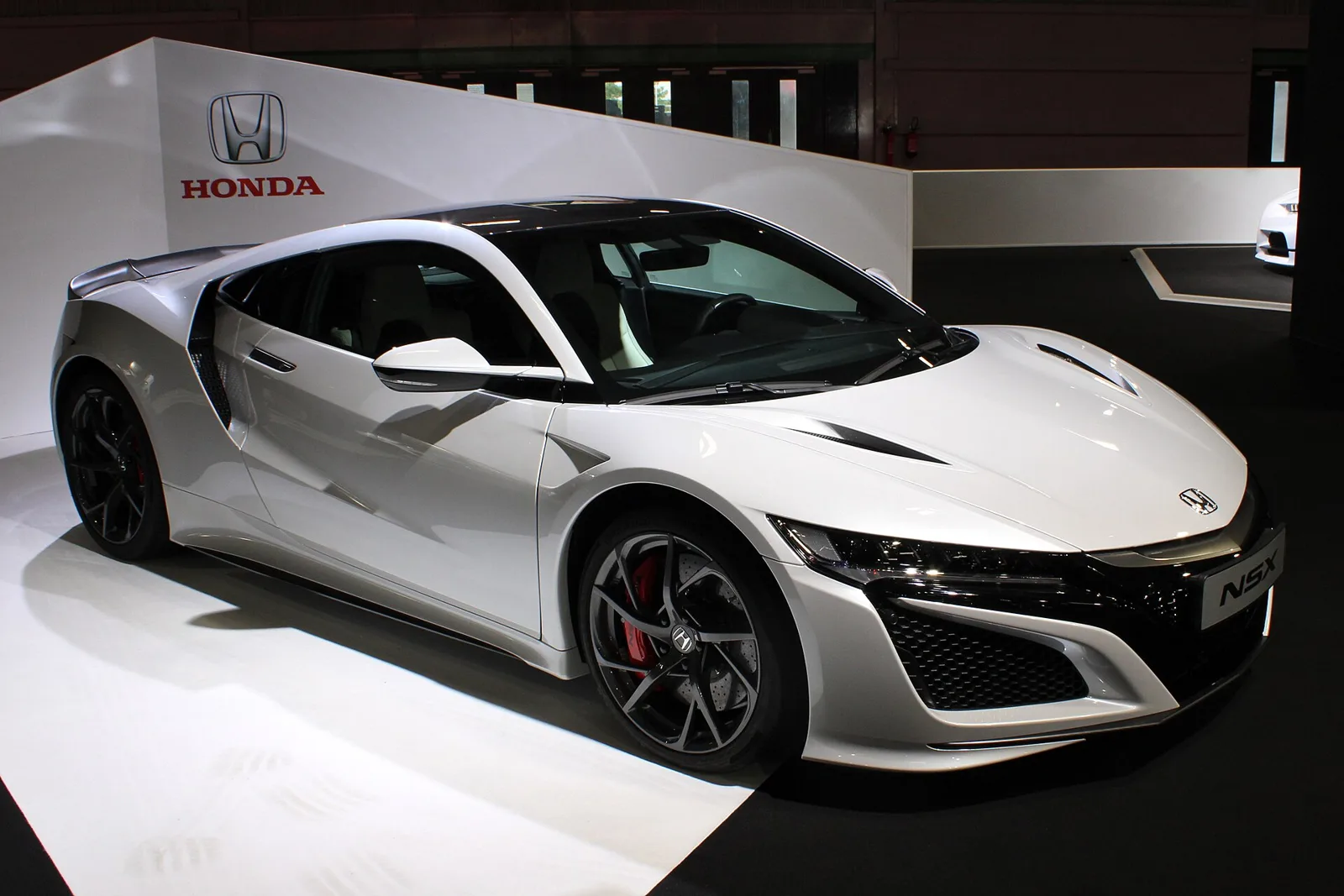
A twin-turbo V6 and three electric motors in a hand-built Ohio coupe, sold from 2016 to 2022 and raced in Super GT and IMSA.
The second-generation Honda NSX was a hybrid, mid-engined two-seat coupe built in Ohio from 2016 to 2022. It paired a twin-turbo V6 with three electric motors for 573 hp in standard form, and the final 2022 Type S reached 602 hp.
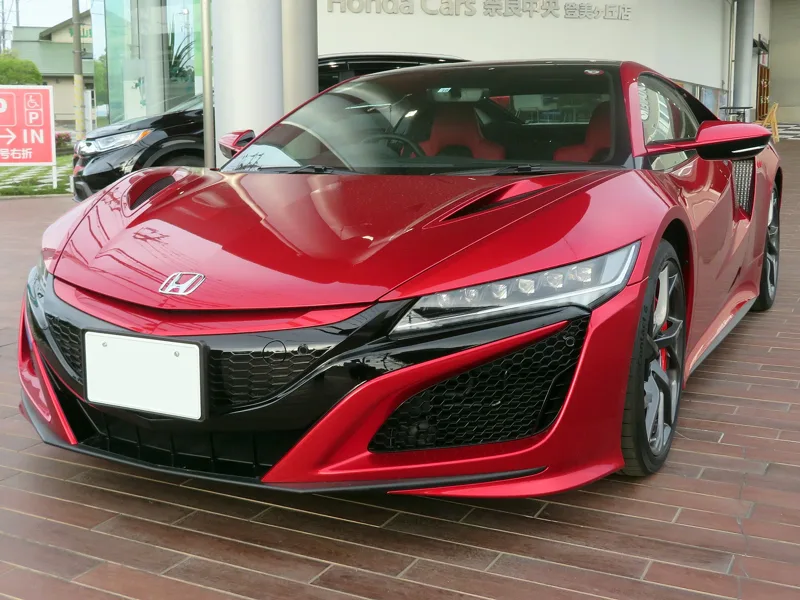
The second-generation Honda NSX was a two-seat, mid-engined hybrid coupe with all-wheel drive, sold under the Acura name in North America, China and Kuwait. It was developed in Japan and the United States, with every car hand-built in Ohio. Production ran from 2016 to 2022 and ended with a limited Type S model.
What was the second-generation Honda NSX?
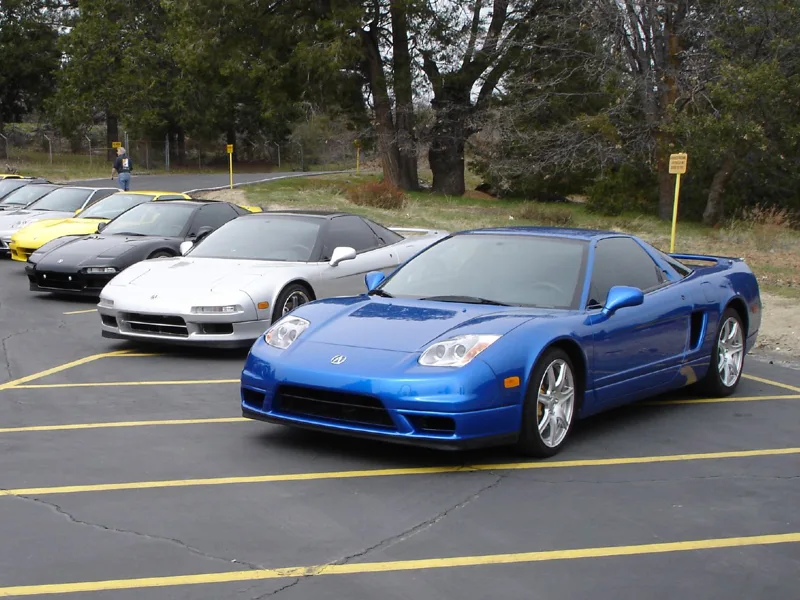
The NC1 NSX was a successor to the first-generation car built in Japan from 1990 to 2005. It combined a twin-turbocharged V6 with three electric motors, giving a system output of 427 kW (581 PS; 573 hp), and it was among the first sports cars to use hybrid technology in its performance class.
The development team aimed for a car that suited a wide range of conditions, from fast winding roads and racetracks to relaxed street driving. Its engine and motors were chosen to deliver torque vectoring, torque fill and instant response.
A hand-built Ohio coupe that combined a 3.5-litre twin-turbo V6 with three motors and sold until its Type S finale in 2022.
Why was the first plan for a new NSX cancelled in 2008?
Acura announced in July 2005 that a successor to the first NSX was in development, and the original was discontinued at the end of that year. In December 2007 Honda America's chief executive, Tetsuo Iwamura, said the new car would use a V10 and arrive by 2010.
Prototypes were tested at the Nurburgring in June 2008, and Honda's chief executive Takeo Fukui challenged the developers to beat the Nissan GT-R around the circuit. On December 17, 2008, Fukui announced that all plans for a next-generation NSX had been cancelled, because company profits had fallen 81% in the financial crisis.
The cancelled road car still had a life on track. Honda used the vehicle as the base for a racing car, the HSV-010 GT, which competed in Japan's Super GT series from 2010 to 2013 with a front-engined, rear-wheel-drive layout and a 3.4-litre V8.
How did the NSX project return after 2011?
Late 2010 and early 2011 brought magazine reports that Honda was planning a new sports car with electric motors alongside a petrol engine. Honda's chief executive Takanobu Ito confirmed in September 2011 that development had started, and Acura announced a concept for the next show season.
On January 9, 2012, the mid-engined 2012 NSX Concept was shown to the public. It confirmed that its SH-AWD layout used two motors on the front wheels and one driving the rear, to augment the petrol engine.
Who led the NSX development team?
Honda's Japanese and American divisions shared the work on the car. Planning began in Japan, a combined team was then formed, and engine, hybrid and transmission work went to the Automobile R&D Center in Tochigi.
Ted Klaus, who joined Honda as an engineer in 1990 and later led Honda Performance Development, was the global large project leader, while Ryoji Tsukamoto led the project in Japan. Many engineers had previously worked on Honda's motorsport programmes.
Development of the rest of the car was concentrated at Honda's R&D Americas centre in Ohio. After production started, development of future variants moved fully to Japan, and Satoshi Mizukami became the large project leader.
How did the team approach the car's character?
The core team met the original car's creators early on to understand its philosophy. The first car's development leaders encouraged the new team not to copy their work, and Shigeru Uehara, the original large project leader, gave the new team full freedom to design a new car.
The team wanted performance that was accessible to less experienced drivers while still rewarding a skilled one. It also kept usability, visibility and ergonomics as essential values, along with a real analogue sports car feel despite the technology.
Why did the NSX change its engine?
The original plan used a transversely mounted, naturally aspirated 60-degree SOHC V6 of 3471 cc, borrowed from the Acura RLX and Honda Legend. By 2013 or earlier the team decided that engine could not meet its performance targets.
Honda's Tochigi centre then built a new twin-turbo V6, with a 75-degree vee, 3493 cc and dry-sump lubrication. It was mounted longitudinally, which forced the rear of the car to be redesigned partway through development to fit the turbochargers and extra cooling.
Which rivals and test venues shaped the NSX?
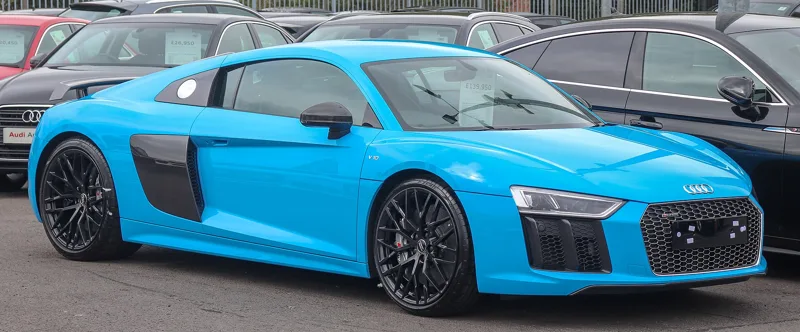
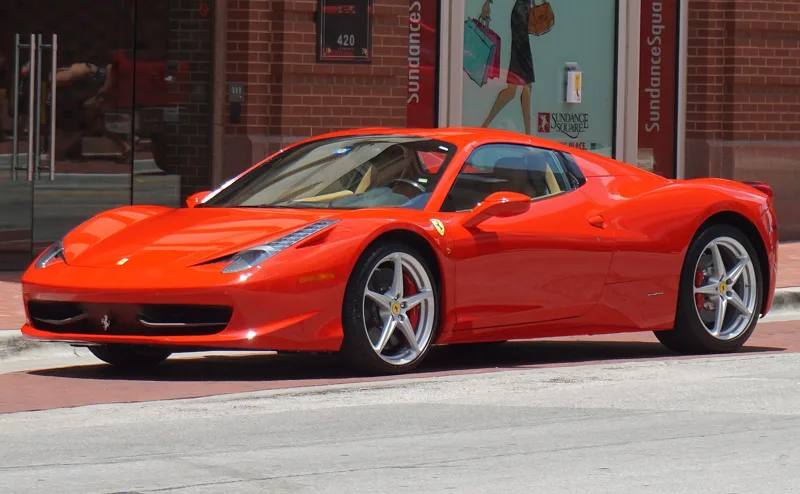
The team benchmarked several rivals, among them the 458 Italia from Ferrari, the R8 V10 from Audi, Porsche's 911 Turbo, the GT-R from Nissan and the 12C from McLaren. It then tested the NSX extensively on tracks such as Honda's Takasu test track, Suzuka Circuit, the Nurburgring Nordschleife, Virginia International Raceway and the Transportation Research Center.
Road tests were carried out on the mountain passes of the European Alps, and hot-weather checks took place at Sebring and on long runs in the UAE. Honda-affiliated drivers, including former Indianapolis race winners Dario Franchitti and Takuma Sato and Graham Rahal, gave feedback during the programme.
How did the NSX engine work?
The JNC1 engine was a clean-sheet design made only for the NSX. It was a twin-turbocharged 3,493 cc DOHC V6 with a bore and stroke of 91 mm by 89.5 mm, producing 373 kW (507 PS; 500 hp) at 6,500 to 7,500 rpm.
Its torque curve was broad, with 550 N m (406 lb ft) from 2,000 to 6,000 rpm, and the engine redlined at 7,500 rpm. The engine sat low in the chassis, with its top no higher than the top of the tyres, and it powered only the rear wheels.
The 75-degree V-angle was unusual, since most V6s use 60 or 90 degrees. Honda chose it for a low centre of gravity with fewer vibrations, because the wider 90-degree layout had vibration issues and the 60-degree angle made the engine too tall.
Dry sump lubrication lowered the engine further and stopped oil starvation in fast corners. The engine combined direct and port injection, and the turbochargers used electronic wastegates to give a peak boost pressure of 1.05 bar (15.23 psi).
How did the hybrid system and motors work?
Two electric motors drove the front wheels and one drove the rear. Each front motor produced 27 kW (36 hp), and the rear motor produced 35 kW (47 hp), so the three together added torque vectoring and instant torque.
Because the petrol engine and the motors reach peak output at different speeds, the total system peak of 573 hp (581 PS; 427 kW) was lower than the 619 hp (628 PS; 462 kW) that simply adding the figures would suggest. The motors could still send positive or negative torque to the front wheels within moments, which helped the car rotate in corners.
The Sport Hybrid SH-AWD system could create a yaw effect even with little or no throttle, because the motors work independently of the engine. Motors also filled in torque during gear changes and at low engine speeds, giving smoother acceleration.
A 1.3 kWh lithium-ion battery sits low in the chassis, improving the centre of gravity. This placement was part of the car's balance strategy alongside the dry-sump engine and the rear-biased weight.
What was the nine-speed gearbox like?
The gearbox was designed and built in-house by Honda. It was a longitudinal nine-speed dual-clutch transmission with paddle shifters, and it was the first nine-speed DCT fitted to a production car.
First gear was intended as a launch gear, and ninth was set for highway cruising. Eighth gave the car's top speed, while ninth dropped the engine to around 1,700 rpm at 60 mph (97 km/h). The gearbox was 120 mm (4.72 in) shorter than a seven-speed unit, and that shortened the rear overhang.
A limited-slip differential was integrated into the transmission. Honda said the seven middle gears were designed to make the best use of the power band.
How was the NSX chassis built?
The NSX had a multi-material space frame made mainly from aluminium, with body panels of sheet moulding composite and aluminium. Cast aluminium nodes held the suspension and engine, and the crush-zone nodes used ablation casting, a first for a car.
The A-pillars were steel, with ultra-high-strength steel tubes in the upper section, which let the pillars be thinner for visibility while remaining rigid. The floor was carbon fibre, and a carbon roof was available. Honda said the frame was three times as stiff dynamically, and twice as stiff statically, as the Ferrari 458 Italia.
The front used double wishbones and the rear a multi-link setup, with magnetorheological dampers at all four corners. Electric steering ran from 12.9:1 on centre to 11.07:1 off centre, becoming quicker away from the middle.
Brembo six-piston front and four-piston rear calipers worked on iron discs as standard, and a brake-by-wire system simulated pedal feel. The forged wheels measured 19 inches at the front and 20 at the rear, and the weight split was 42/58 front to rear, which improved turn-in response at the cost of some stability.
How did the NSX look and measure up?
The car was 4470 mm long on a 2629 mm wheelbase, with a height of 1214 mm and a width of 2217 mm. The first design was conceived at Honda's Wako design centre in Japan and refined in Los Angeles by Acura's studio.
The finished car came out 80 mm longer than the 2012 concept, with about 20 mm more in width, height and wheelbase, and it made roughly three times the rear downforce of the front. It carried ten radiators, including three at the front for the engine, and the air was routed through vents on the bonnet, fenders and wheel arches.
Acura quoted 2.9 seconds for 0-60 mph, with an electronic limiter holding the top speed at 191 mph (307 km/h). In a Car and Driver test the car reached 60 mph in 3.1 seconds, and the quarter mile took 11.2 seconds with 203 km/h (126 mph) at the finish.
In September 2021 Acura ran the Type S around the Long Beach street circuit with IMSA champion Ricky Taylor, who set a lap of 1:32.784. That was nearly three seconds faster than the 1:35.663 set by Peter Cunningham in a 2019 NSX, a lap record for road-legal production cars.
Where was the NSX built and how did it sell?
Assembly started in 2015 inside Honda's Performance Manufacturing Center, a US$70 million plant in Marysville, Ohio, housed inside a former logistics facility. The powertrain was assembled separately at Honda's engine plant in Anna, Ohio.
Honda began taking orders in summer 2015, and the North American price was set in December 2015 at a starting US$156,000. The first production car, VIN 001, sold at auction in January 2016 to Rick Hendrick for US$1.2 million, and the proceeds went to two charities.
The first NSX rolled off the Ohio line on May 24, 2016. Honda also ran an NSX Insider Experience for US buyers from 2017, with factory tours, a museum visit and track driving for packages from US$2,000 to US$6,000.
Sales were never strong. In 2019 and 2020 the car sold only 3 units in total and none in Australia, and Honda stopped production for Japan, Australia and Europe in 2020. Production ended for all other markets at the end of 2021, leaving only a limited Type S run for 2022.
What changed in the 2019 update?
Honda announced the 2019 model year improvements in August 2018. The larger front and rear stabiliser bars stiffened the front by 26% and the rear by 19%, and the rear toe link bushings were 21% stiffer.
New Continental tyres and optional Pirelli P Zero Trofeo R tyres were also fitted, and the software for the SH-AWD system, dampers, power steering and VSA was tuned. Honda said the car was 1.9 seconds faster than the earlier model around Suzuka Circuit, and the front grille garnish was painted body colour.
What was the NSX Type S?
Honda announced the NSX Type S on 3 August 2021 as a limited-production finale for the car. It was limited to 350 units, with 300 for the US, 30 for Japan and 15 for Canada, and it was the only NSX built in 2022.
The Type S reached 449 kW (610 PS; 602 hp) and 667 N m (492 lb ft) of torque. The engine made 389 kW (529 PS; 522 hp) and 601 N m (443 lb ft), with new turbochargers taken from the NSX GT3 Evo race car and a peak boost of 1.11 bar (16.1 psi).
The Type S also used a larger carbon-fibre rear diffuser, forged split five-spoke wheels, semi-slick Pirelli tyres and a new nose. An optional Lightweight Package removed 26 kg (57 lb), and a limited Gotham Gray Matte paint was offered on 70 vehicles.
Acura's own claim was that the Type S could reach 60 mph in under three seconds. In a May 2022 Car and Driver test it beat the standard car by 0.2 seconds, reaching 60 mph in 2.9 seconds and the quarter mile in 11.0 seconds, exiting at 203 km/h (126 mph).
How did the NSX perform in racing?
The NSX Concept-GT raced in the GT500 class of Japan's Super GT series from 2014. Its first pole and victory came at Fuji that year, and it finished third in the championship in 2015 after winning at Sportsland Sugo.
In 2017 Honda launched the NSX-GT, which was based on the production car and won the final Suzuka 1000km that year. The team Kunimitsu car won the 2018 championship with Jenson Button and Naoki Yamamoto, and it won the 2020 GT500 title after the rival TOM'S Toyota ran out of fuel on the final lap.
The GT3 version was announced in 2016 and entered competition in 2017. It scored its first win in the IMSA GTD class at Belle Isle that year, and it also took a round in Utah on the Pirelli World Challenge.
The GT3 Evo followed in 2019 with better aerodynamics, cooling and turbochargers, and it won the 2019 IMSA GTD drivers and teams titles. In 2022 the GT3 Evo22 won the Petit Le Mans with Gradient Racing, and Honda ceased factory support for the GT3 at the end of 2024.
What came after the second-generation NSX?
In August 2021 Jon Ikeda, a senior Acura executive, told The Drive that the second-generation NSX would be followed by a next-generation model. He hinted that the successor would be all-electric.
What are the Honda NSX specifications?
| Specification | Detail |
|---|---|
| Body | Two-door, two-seat coupe, mid-engined |
| Engine | JNC1 twin-turbo 75-degree 3,493 cc DOHC V6 |
| Engine output | 373 kW (507 PS; 500 hp) at 6,500-7,500 rpm |
| Engine torque | 550 N m (406 lb ft) from 2,000 to 6,000 rpm |
| Motors | Two front motors at 27 kW (36 hp) each; rear motor 35 kW (47 hp) |
| System output | 427 kW (581 PS; 573 hp) with a 1.3 kWh battery |
| Transmission | Nine-speed dual-clutch, first fitted to a production car |
| Length and wheelbase | 4470 mm long; 2629 mm wheelbase |
| Weight distribution | 42/58 front to rear |
| 0-60 mph (Acura claim) | 2.9 seconds; top speed 191 mph (307 km/h) |
| Type S output | 449 kW (610 PS; 602 hp), 667 N m (492 lb ft) |
| Type S build | 350 units, 2022 model year, the final NSX |
| US launch price | From US$156,000, announced December 2015 |
| Total built | 2,908 cars, including 350 Type S models |