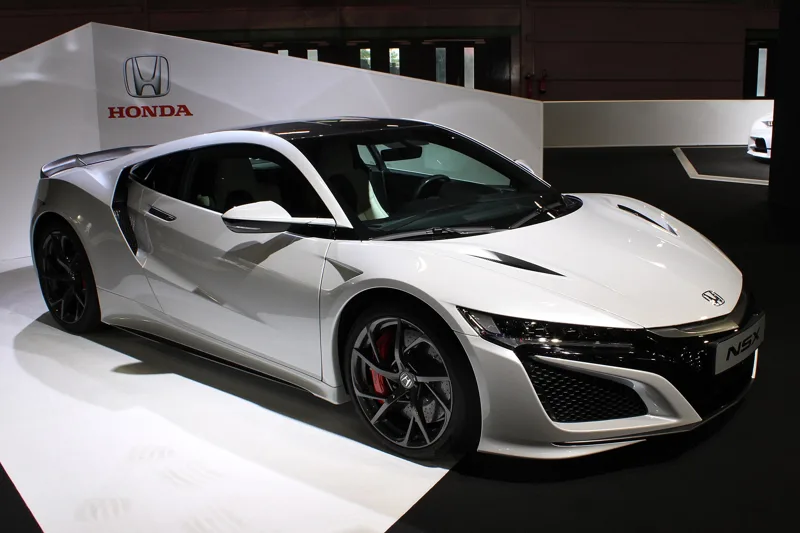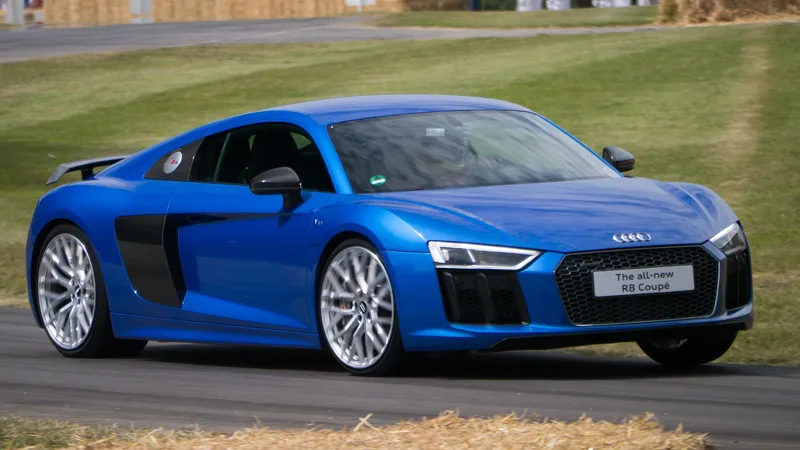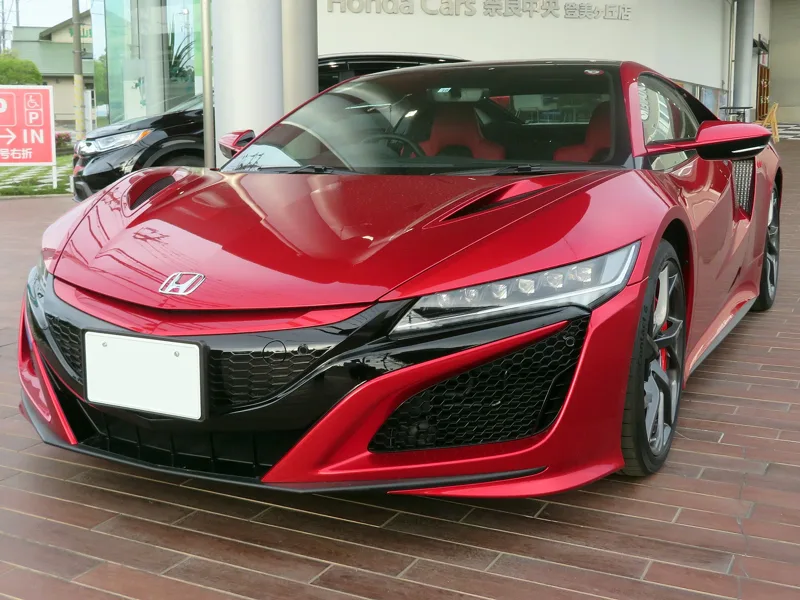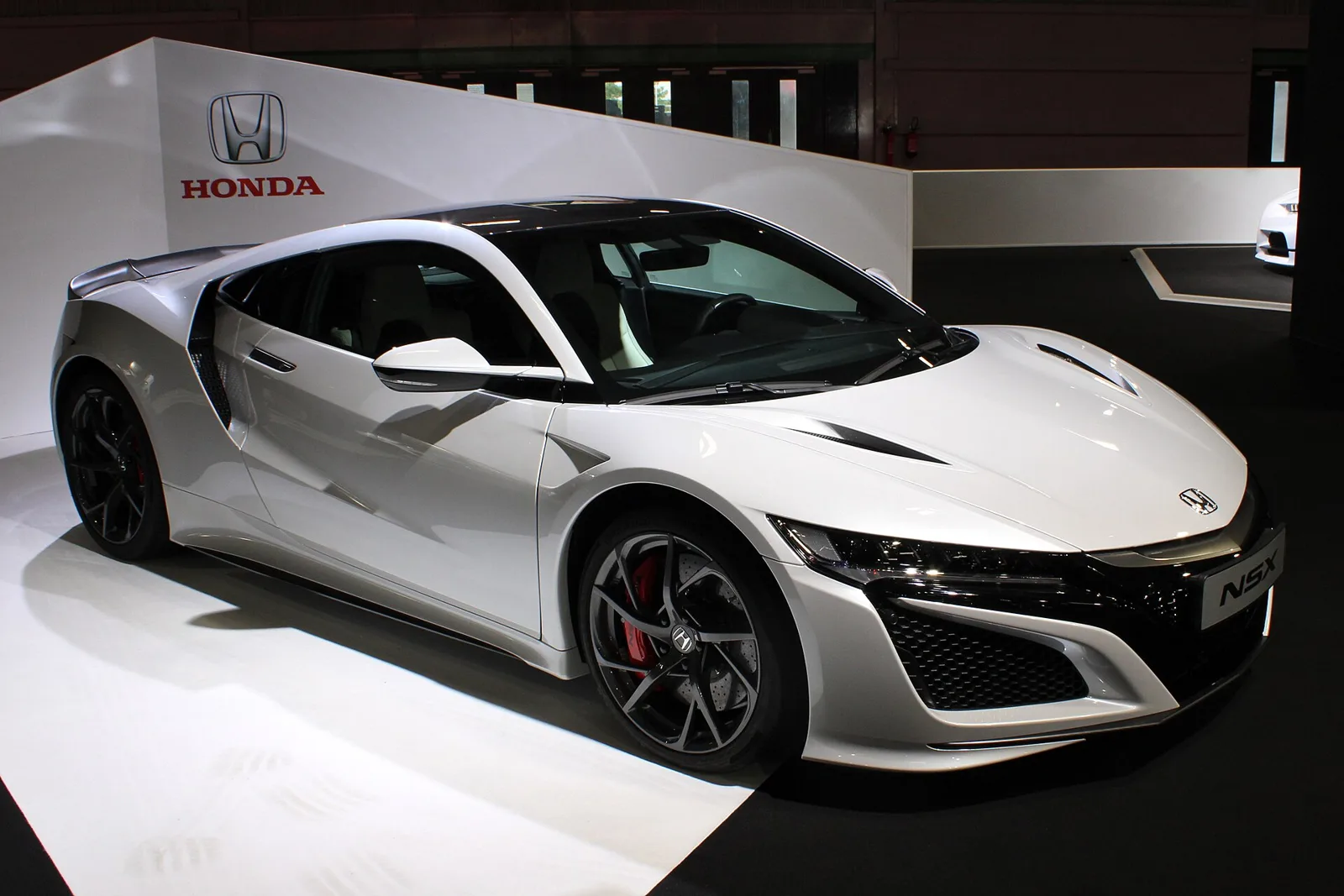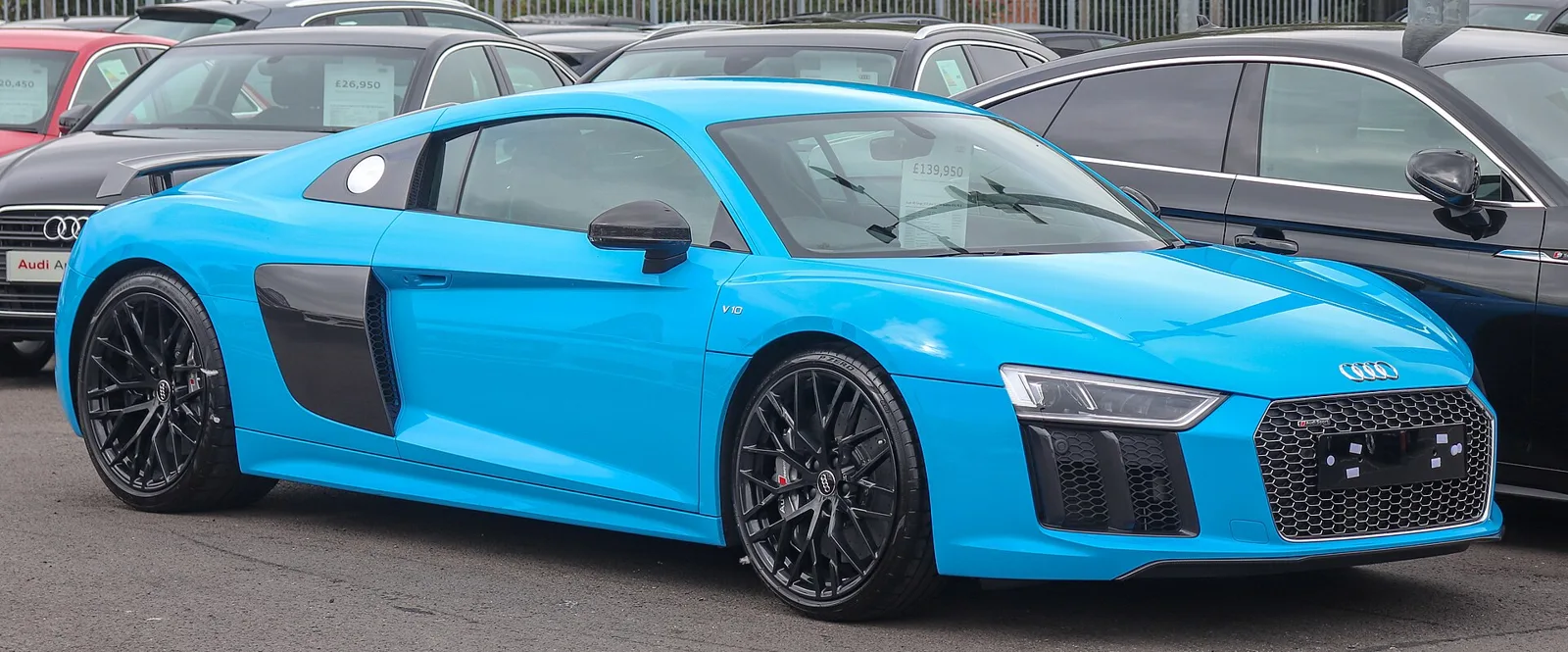
Audi's mid-engined R8 and Honda's second-generation NSX chased the same sports car buyer with very different engineering.
The Audi R8 is a mid-engined two-seat sports car with quattro all-wheel drive, introduced in 2006 and built until 2024. The second-generation Honda NSX is a hybrid mid-engined coupe with a twin-turbo V6 and three electric motors, built in Ohio from 2016 to 2022.
The Audi R8 and the second-generation Honda NSX were both mid-engined two-seat sports cars, but they took very different routes to the same buyer. The R8 went on sale in 2006 with a V8 or V10 and quattro all-wheel drive, while the NSX returned in 2015 as a hybrid with three electric motors and a twin-turbo V6. Set side by side, they show a German sports car built on V10 heritage and a Japanese supercar built around hybrid engineering.
Where did the R8 and NSX come from?
The R8 was introduced by Audi AG in 2006, and its road car debuted in Paris on 30 September 2006. Audi Sport GmbH built it at Neckarsulm, and it was inspired by the Lamborghini Gallardo, while the second generation later moved to the Huracan platform.
The second-generation NSX succeeds the original car, which Honda built in Japan from 1990 to 2005. Its earlier successor was never built, and the revived car was unveiled at a North American show in January 2015.
Audi's quattro V10 mid-engined sports car against Honda's hybrid twin-turbo V6, two very different routes to the same buyer.
Why did the NSX take so long to return?
Honda cancelled the successor on December 17, 2008, after the financial crisis hit its profits, which fell by 81 percent. Honda still wanted a new sports car, and it confirmed development in September 2011. The concept followed on January 9, 2012, with a more refined version a year later.
Before that, the planned car had been used as the base for a racing car, the HSV-010 GT, which raced in Super GT from 2010 to 2013. When the road car returned, development was split between Japan and Ohio, with the engine and hybrid system handled at Tochigi and the rest of the vehicle at an Ohio development centre.
How did the R8 and NSX layouts compare?
Both cars put the engine behind the seats, but their drivetrains differed. The R8 used Audi's quattro permanent all-wheel drive, with V8 and V10 engines at launch and an electric e-tron later on. Its second generation dropped the manual transmission and the V8 trim, and a rear-wheel-drive R8 RWS was added later.
The NSX used a hybrid all-wheel-drive setup with three electric motors, two at the front and one at the rear. That layout allowed torque vectoring for cornering, torque fill for acceleration and instant torque for response. The NSX was among the first sports cars to use hybrid technology, and the R8 offered a more traditional combustion route.
What engines powered each car?
The first-generation R8 offered a 4.2 FSI V8 and a 5.2 FSI V10, and the second generation kept the V10 while dropping the V8. The base car's power rose from 532 hp to 562 hp after the 2018 refresh, and the V10 Plus was renamed the V10 Performance Quattro with 612 hp. The V10 remained the signature engine of the second generation, while the NSX V6 was a new design rather than an existing unit.
The NSX engine was a clean-sheet 3,493 cc twin-turbo V6 producing 373 kW (507 PS; 500 hp). With the three electric motors, combined output reached 573 hp (581 PS; 427 kW). Combined peak torque was 476 lb-ft (645 N-m), and the engine's own torque of 406 lb-ft (550 N-m) arrived between 2,000 and 6,000 rpm before a 7,500 rpm redline.
How did Honda test the NSX?
The NSX was tested at Honda's Takasu test track and at the Suzuka Circuit in Japan, along with the Nurburgring Nordschleife in Germany and two American venues, Virginia International Raceway and the Transportation Research Center. Hot weather testing took place at Sebring and in the UAE, and the team drove the Alps to test the car on mountain passes.
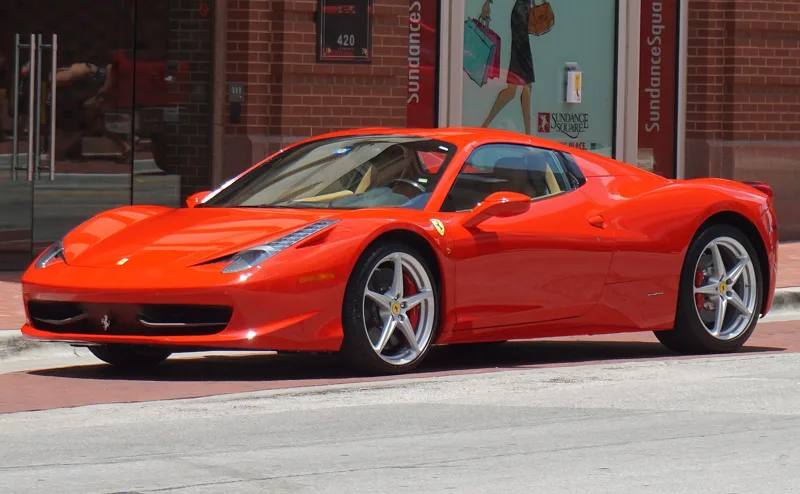
Honda also benchmarked rivals, including the Ferrari 458 Italia, the Audi R8 V10, the Porsche 911 Turbo, the Nissan GT-R and the McLaren 12C. Honda-affiliated racing drivers gave feedback too, among them Dario Franchitti, Takuma Sato and Graham Rahal, and some changes were made on the spot while others were handled by software updates from Japan.
What did the NSX team want the car to be?
The team wanted performance that was accessible to less experienced drivers, while still rewarding a skilled one. Everyday usability, visibility and ergonomics were also treated as essential, and the team kept what it called a real analogue sports car feeling despite the electronics.
Ted Klaus, who had been a Honda engineer since 1990 and led the project globally, argued that the car was never about a set of figures on paper. He said driver involvement and pleasure mattered more than the headline power number, and the first-generation NSX's team had encouraged the newcomers to build a fresh car rather than copy the original.
How did the two cars sell in different markets?
The R8 was sold across Asia, from India and Japan to Taiwan and South Korea, and it had been sold in China and several other Asian markets since 2008. European sales covered a long list of countries from Austria to Switzerland, which gave the car a broad footprint. Sales also reached Bahrain, Kuwait and Pakistan in the Gulf and South Asia.
The NSX sold far less well. Honda stopped producing it for Japan, Australia and Europe in 2020 because of poor sales. Sales in 2019 and 2020 totalled just 3 units, with none in Australia. At the end of 2021 Honda stopped production for all remaining markets, leaving a limited Type S run in 2022.
What did the first-generation R8 achieve?
The car grew out of the Le Mans quattro concept and shared its name with a Le Mans-winning prototype. Motorsport variants followed from 2008, and an electric prototype appeared in 2010, before the facelift and V10 Plus arrived in 2012. Six-time Le Mans winner Jacky Ickx called it the best handling road car of its time.
The Type 42 stopped in August 2015, after nearly a decade on sale. The convertible Spyder gave the model a second body style, and the car's V8 and V10 choices covered a wide range of buyers.
What did the R8's laser headlights add?
The 2017 R8 V10 Plus Exclusive Edition was limited to 25 units for the American market, and it brought laser headlights to an Audi sold in America for the first time. Laser high beams supplement the full LED headlights and switch on above 40 mph (64 km/h) to extend the visible range.
Because the lasers emit light that needs approval, the high-beam module required FDA approval for use in the US. The car wore Quantum Gray paint, Titanium Black-optic trim and an orange accent stripe on its carbon fibre sideblades.
Side-by-side specifications
| Specification | Audi R8 (second generation) | Honda NSX (second generation) |
|---|---|---|
| Introduced | 2015 Geneva Motor Show, Type 4S; first generation 2006 | Revealed January 12, 2015; built 2016 to 2022 |
| Layout | Mid-engine, quattro all-wheel drive; rear-wheel-drive RWS model | Mid-engine, all-wheel drive with a hybrid drivetrain |
| Engine | V10 5.2 FSI; V8 dropped in the second generation | 3,493 cc twin-turbo V6, 373 kW (507 PS; 500 hp) |
| Output | 562 hp base after 2018; 612 hp V10 Performance Quattro | 427 kW (581 PS; 573 hp) combined |
| Transmission | No manual transmission | No figure given |
| Electric version | e-tron, fewer than 100 units, 92-kWh battery | Three electric motors within the hybrid system |
| Special models | R8 GT, 620 hp, 333 units | Type S, 449 kW (610 PS; 602 hp), 350 units |
| Starting price | No figure given | US$156,000 in North America, December 2015 |
| Production | Type 42 ended August 2015; second-generation R8 output stopped in early 2024 | 2,908 cars built, including 350 Type S |
| Factory | Neckarsulm, Germany, eight to fifteen cars a day | Marysville, Ohio, hand-built |
How were the two cars built?
The R8 was built at Audi Sport GmbH's renovated factory at Neckarsulm, where 70 workers fitted 5,000 different parts by hand. The site was redeveloped at a cost of 28 million euros, and it normally turns out eight to fifteen cars a day, with a maximum daily output of 29. Ninety-five lasers inspect each car in five seconds.
Honda also ran an NSX Insider Experience for US buyers from February 2017, covering the 2017 to 2022 model years. Participants toured the assembly line, visited the Honda Heritage Center and drove at Honda's test track, with packages priced from US$2,000 up to US$6,000.
The NSX was hand-built in Ohio at Honda's Performance Manufacturing Center, a plant that cost US$70 million and sat inside a former North American Logistics facility. The powertrain was assembled separately at Honda's engine plant in Anna, Ohio, and the first production car was auctioned for US$1.2 million on January 29, 2016.
Which buyer suits each car?
The R8 suits a buyer who wants a quattro all-wheel drive mid-engined car with V10 power and a long run of models. The NSX suits a buyer who values hybrid performance, three electric motors and the torque-vectoring capability of its layout.
The figures here do not settle which car is better, so no verdict is given. Buyers would have weighed the R8's V10 heritage against the NSX's hybrid engineering and its far smaller production run.
What did each car leave behind?
The R8 became part of popular culture when it served as the personal vehicle of Tony Stark in six Marvel Cinematic Universe films. Its first-generation models appeared in the Iron Man Trilogy, and later Marvel films used 2016 V10 Plus cars.
The NSX left a racing legacy and a set of awards. Its use of hybrid technology also earned it a place in sports car history, which put it early in the sports car hybrid field. It won Road and Track's 2017 Performance Car of the Year, a GT500 class model competed in Super GT from 2014 to 2023, and a GT3 racing version debuted in 2017. Honda closed the second-generation story in 2022 with the Type S as its final model year.