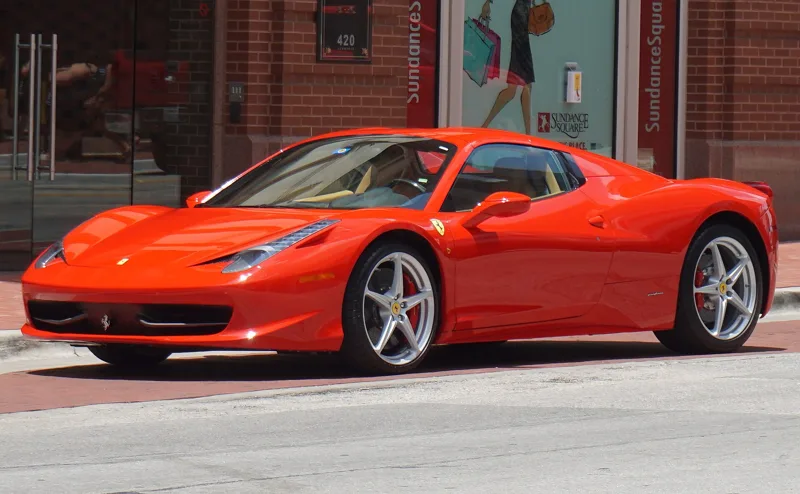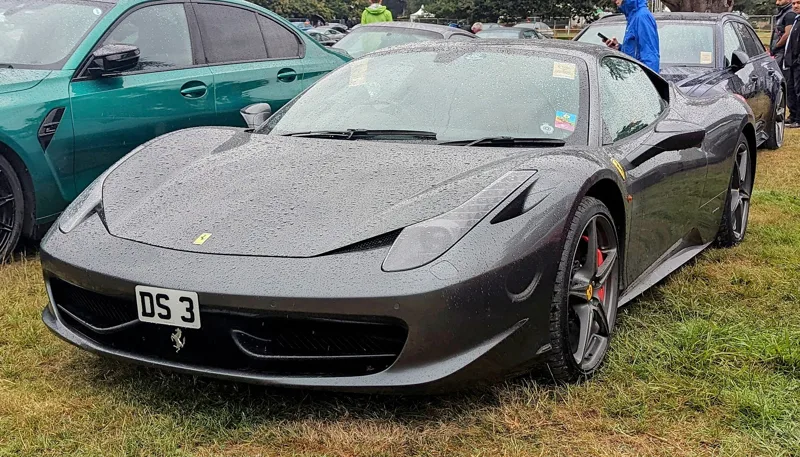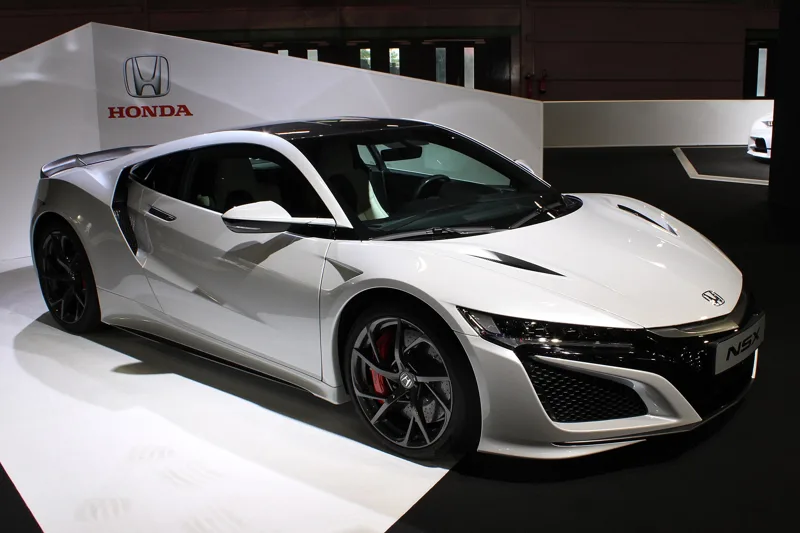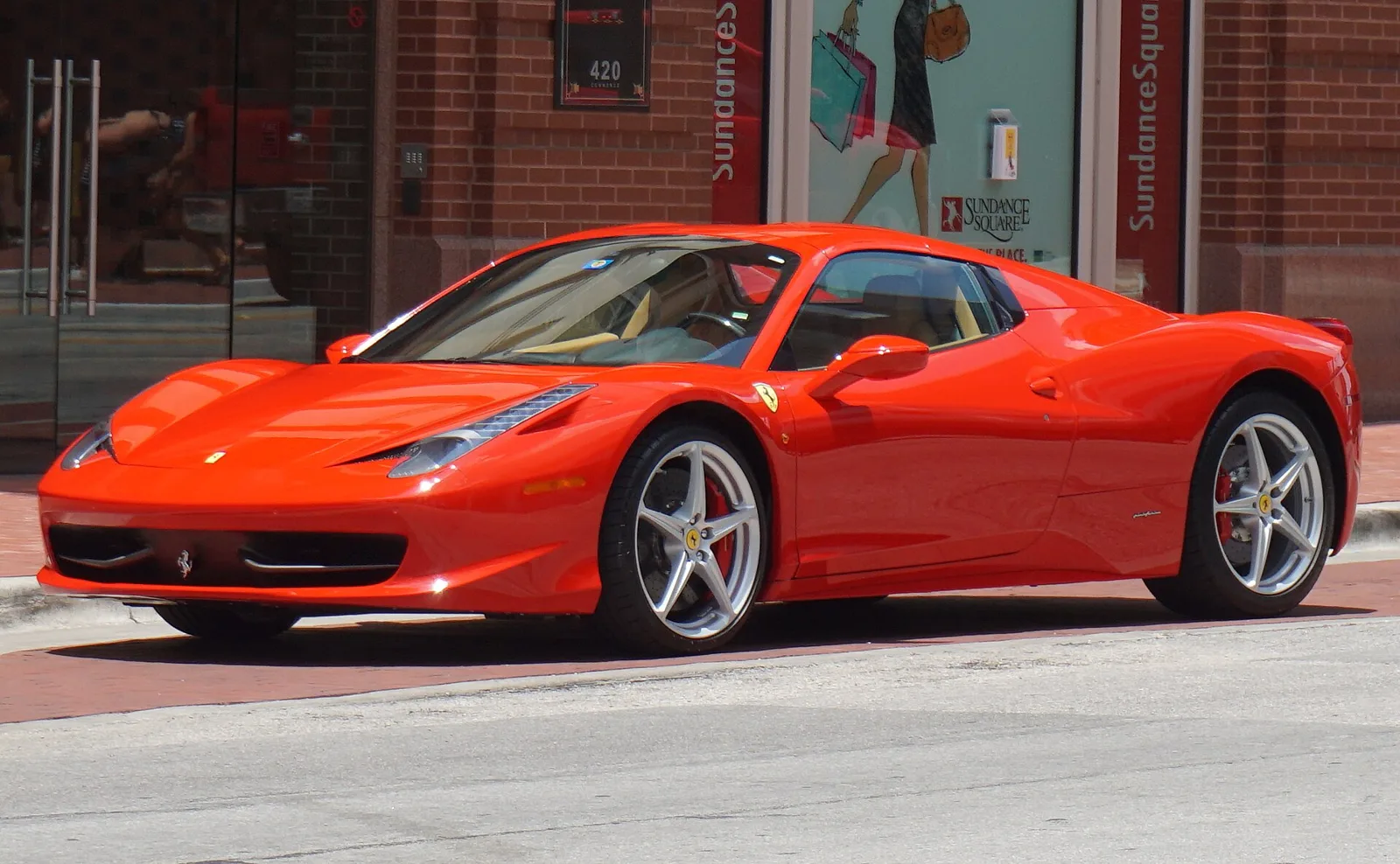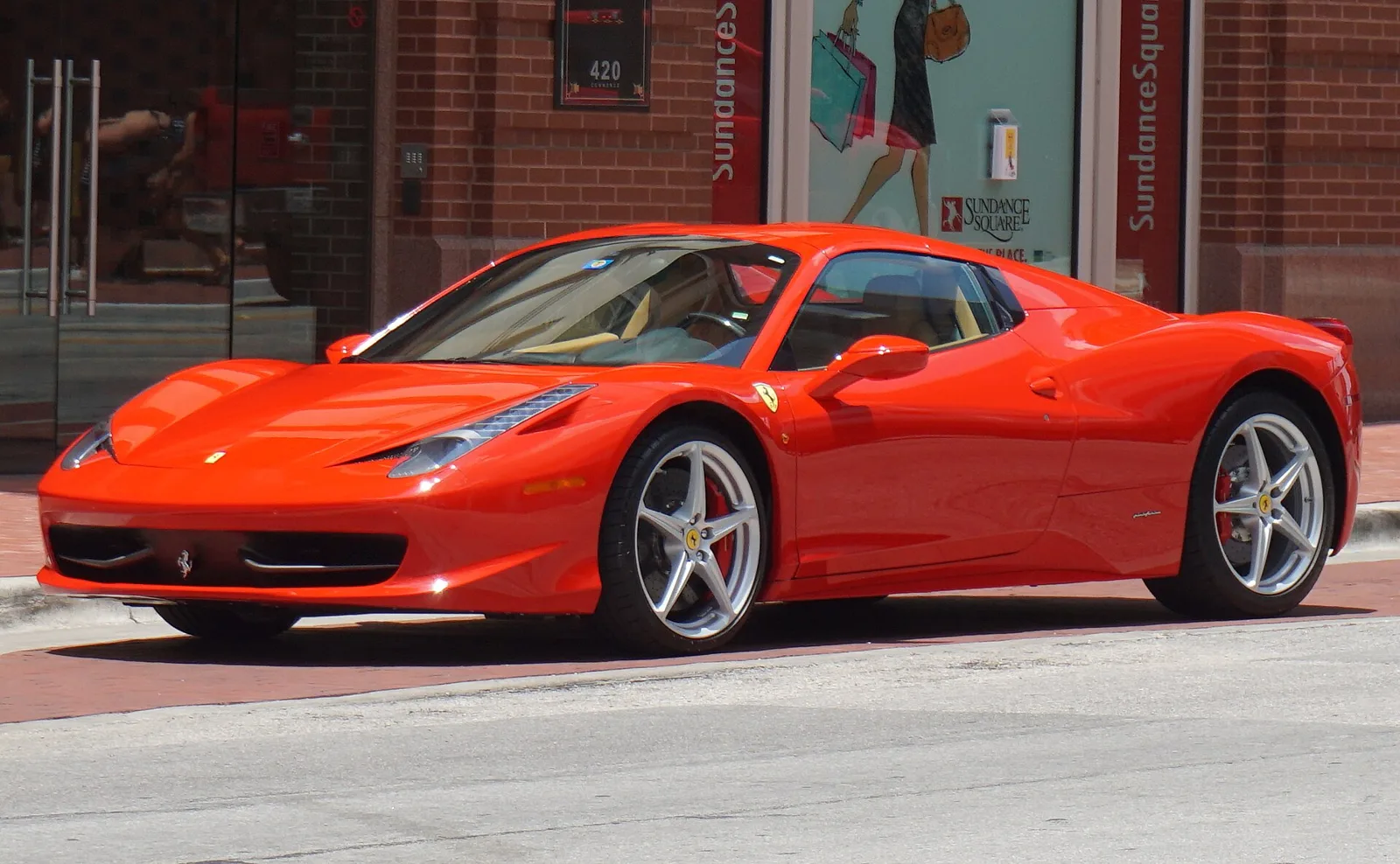
Ferrari's mid-engined 458 and Honda's second-generation NSX, the car Honda's engineers tested against it, offer two very different supercar philosophies.
The Ferrari 458 Italia is a mid-engined V8 sports car unveiled in 2009 and succeeded by the 488 GTB in 2015. The Honda NSX second generation is a hybrid coupe with all-wheel drive, built from 2016 to 2022.
The Ferrari 458 Italia and the second-generation Honda NSX were both mid-engined two-seat sports cars, and Honda's engineers benchmarked the Ferrari against their own car during development. The 458 arrived in 2009 with a naturally aspirated 4.5-litre V8, while the NSX returned in 2015 with a twin-turbo V6 and three electric motors. Set side by side, they show a traditional Italian approach against a hybrid Japanese one.
Why did Honda benchmark the 458 Italia?
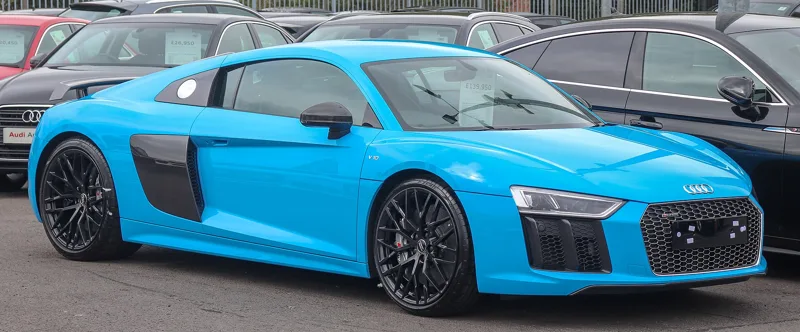
The NSX team tested and examined rival cars during development, and the Ferrari 458 Italia was on that list. Honda also looked at the R8 V10, the 911 Turbo, the GT-R and the 12C from McLaren, so the new car was measured against the leading sports cars of its time.
The 458 was itself a successor to the F430 and was first unveiled at the 2009 Frankfurt Motor Show. Ferrari described it as an entirely new design, using technology developed from its Formula One experience, and the 488 GTB replaced it in 2015.
A naturally aspirated Ferrari V8 and a hybrid Honda V6, one the benchmark the other was tested against.
How did the 458 and NSX engines compare?
The 458 used a 4,497 cc V8 of the F136 family with direct fuel injection, a first for a Ferrari mid-engined road car. Its peak was 570 PS (419 kW; 562 hp), reached at 9,000 rpm. Torque of 540 N-m, or 398 lb-ft, arrived at 6,000 rpm, and 80 percent of it was on tap from 3,250 rpm.
The NSX used a bespoke 3,493 cc twin-turbo V6 with 373 kW (507 PS; 500 hp), and three electric motors lifted combined output to 573 hp (581 PS; 427 kW). Peak combined torque was 476 lb-ft (645 N-m), and the engine's own torque arrived between 2,000 and 6,000 rpm before a 7,500 rpm redline. Honda had planned to use a naturally aspirated V6 first, but that unit was judged too weak.
What did the two cars' gearboxes offer?
The 458 had only one transmission, a 7-speed dual-clutch automatic by Getrag, in a tuning shared with the Mercedes-Benz SLS AMG. Buyers could not order a manual, which made it the first mainstream model without one. The NSX gearbox is not covered here, so the two cars cannot be matched on that point.
The NSX's three electric motors provided torque vectoring for cornering, torque fill for acceleration and instant torque for response, which is why the hybrid layout was central to its character.
How did the two cars handle and brake?
The 458 used double wishbones up front and a multi-link arrangement behind. Its E-Diff and F1-Trac systems helped cornering and acceleration, and Ferrari said these improved on its predecessors by 32 percent. The steering ratio was 11.5:1, and carbon ceramic brakes came as standard.
A prefill function moved the brake pads toward the discs when the driver lifted off, which cut the stopping distance from 100-0 km/h to 32.5 metres (107 ft). The adaptive dampers were developed alongside the BWI Group, a supplier that worked on the magnetorheological units.
Side-by-side specifications
| Specification | Ferrari 458 Italia | Honda NSX (second generation) |
|---|---|---|
| Introduced | 2009 Frankfurt Motor Show, Type F142 | Revealed January 12, 2015; built 2016 to 2022 |
| Layout | Mid-engine V8 coupe | Mid-engine, all-wheel drive, gasoline-electric hybrid |
| Engine | 4,497 cc naturally aspirated V8, F136 family, direct injection | 3,493 cc twin-turbo V6, 373 kW (507 PS; 500 hp) |
| Output | 570 PS (419 kW; 562 hp), peaking at 9,000 rpm | 427 kW (581 PS; 573 hp) combined |
| Torque | 540 N-m (398 lb-ft), arriving at 6,000 rpm | 476 lb-ft (645 N-m) combined peak |
| Transmission | 7-speed dual-clutch by Getrag; no manual | No figure given |
| 0 to 100 km/h | 3.4 seconds, official | No figure given |
| Top speed | Over 325 km/h (202 mph) | No figure given |
| Combined fuel use | 13.3 L/100 km combined | No figure given |
| Downforce | 140 kg of downforce at 200 km/h | No figure given |
| Special models | Speciale: 605 PS (445 kW; 597 hp), 1,309 built | Type S: 449 kW (610 PS; 602 hp), 350 units |
| Production | Not covered in this comparison | 2,908 cars built, including 350 Type S |
| Successor or end | 488 GTB from 2015 | Production ended in 2022 with the Type S |
What variants did each car spawn?
The 458 spawned a family of variants. The Spider arrived at the 2011 Frankfurt Motor Show with an aluminium retractable hardtop, 25 kg (55 lb) lighter than a soft roof, which took 14 seconds to operate. The Speciale followed at the 2013 Frankfurt show with 605 PS (445 kW; 597 hp), and the Speciale A convertible came at the 2014 Paris Motor Show with 499 examples built.
The Speciale accelerated from 0 to 100 km/h in 3.0 seconds and reached 200 km/h in 9.1 seconds. The Fiorano lap of 1:23.5 sat 0.5 seconds behind the F12 berlinetta, and only 1,309 Speciales were made. The NSX family, by contrast, grew through a 2019 update and the limited 2022 Type S.
What did the Speciale's side slip control add?
The Speciale was the high-performance 458, unveiled in 2013 at Frankfurt with forged wheels, a vented bonnet, finned side sills and a taller rear spoiler. Its engine was revised to 605 PS (445 kW; 597 hp), and Ferrari kept the 9,000 rpm peak while adding new electronics.
The biggest software change was side slip angle control, which analysed the car's side slip instantly and compared it with a target. It then managed torque through the F1-Trac traction control and split torque between the wheels through the E-Diff, which helped the car on the limit.
How did the 458 Challenge race car develop?
The 458 Challenge was presented on 14 July 2010, ahead of the 2011 Ferrari Challenge season. Its weight was cut with thinner body panels, carbon replacement panels and polycarbonate windows, and it had a racing cockpit with a Sabelt seat and a six-point harness.
According to Ferrari, the standard car lapped Fiorano in 1:16.5, two seconds faster than the F430 Challenge and just 0.2 seconds behind the FXX. An Evo version arrived for 2014 with a large rear wing, and Ferrari sold an upgrade kit for earlier cars. The 488 Challenge replaced it for 2017, and the whole Challenge run totalled just under 150 cars.
How did the 458 and NSX perform in racing?
The 458 Italia GT2 took the 24 Hours of Le Mans in 2012 and 2014 and won the 12 Hours of Sebring in 2012. Its engine was restricted to 470 PS (346 kW; 464 hp), with a red line of 6,250 rpm. The car was built by Michelotto, and it also won the Petit Le Mans in 2011 and again in 2012.
The NSX's racing record is different in kind, since the Ferrari raced in GT2 form while the Honda competed in Super GT and GT3. A GT500 class Super GT model competed from 2014 to 2023, and a production-based GT3 version debuted in 2017. The road car also won Road and Track's 2017 Performance Car of the Year.
How did each car's design come about?
The 458 body was designed by Pininfarina under Donato Coco, and its interior was done by Bertrand Rapatel. Its front grille featured winglets that lowered at speed to reduce drag, and its steering wheel was designed with input from Michael Schumacher. Ferrari intended it as the sportiest V8 car in its range, above the entry-level California.
The NSX's design came from a team split between Japan and Ohio. Ted Klaus, a Honda engineer since 1990, led the global project, while the team reviewed the original NSX's philosophy with the people who created it. The team wanted the car to be accessible to less experienced drivers while rewarding a skilled one.
How did the two cars sell?
Across its run, the NSX reached 2,908 cars, of which 350 were Type S models. Sales collapsed late in the run, with only 3 units sold in 2019 and 2020 combined. Honda stopped production for Japan, Australia and Europe in 2020, and ended production for all other markets at the end of 2021.
Honda also gave US buyers a behind-the-scenes look. The NSX Insider Experience, offered from February 2017, covered the 2017 to 2022 model years and included a tour of the assembly line, a visit to the Honda Heritage Center and track driving, with packages from US$2,000 to US$6,000.
Sales figures for the 458 are not covered in this comparison, so the comparison rests on what each car offered rather than how many were sold. What is clear is that the NSX was a low-volume car by the end of its life, while the 458 was part of a long Ferrari line that the 488 GTB continued.
Which buyer suits each car?
The 458 suits a buyer who wants a naturally aspirated Italian V8, a classic mid-engined layout and a wide choice of variants, including open-top and track-focused cars. The NSX suits a buyer who values hybrid engineering, all-wheel drive and the torque vectoring its three motors provide.
The figures do not settle which car is better, so no verdict is given. A buyer who prizes the Ferrari's engine character would look at the 458, while one who prefers the NSX's electric help and Japanese engineering would look at the Honda.
What did each car leave behind?
The 458 leaves a strong variant story, from the Spider and Speciale to the one-off SP12 EC built for Eric Clapton. Its successor, the 488 GTB, took the mid-engined line forward after 2015, and its racing record includes the GT2 Le Mans wins.
The NSX left a hybrid legacy, as one of the early sports cars to adopt hybrid power and the first in its performance class to do so. Its end in 2022 closed the second-generation story.