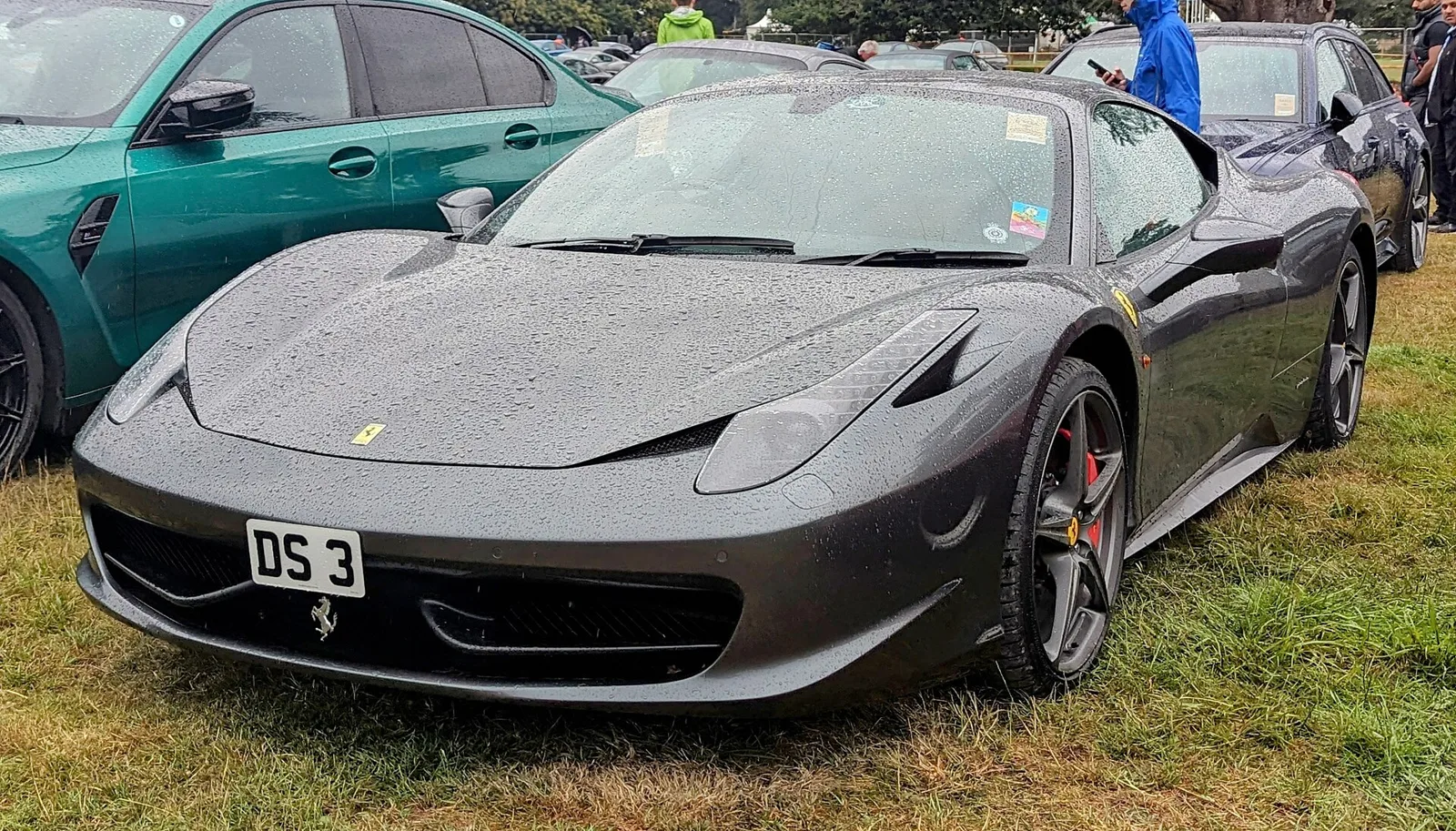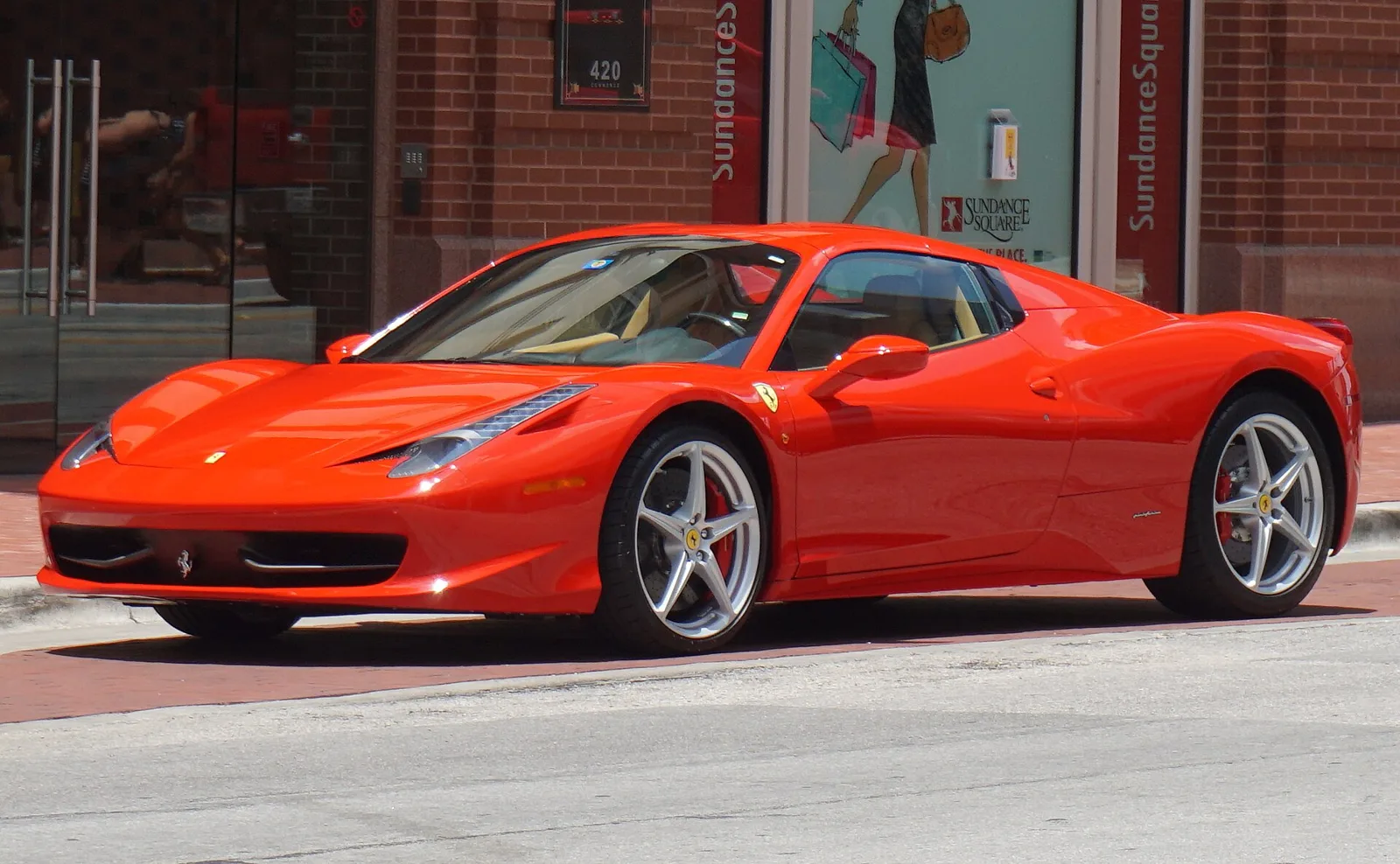
Two 2009-era sports cars with very different engines, production stories and racing records, compared on the figures that are available.
The 458 offered a mid-engined V8 that spawned open-top and track variants, while the LFA was a fixed 500-car V10 that ended production in December 2012. The 458 has the lower official 0-100 km/h time, though the LFA figure uses a different target speed.
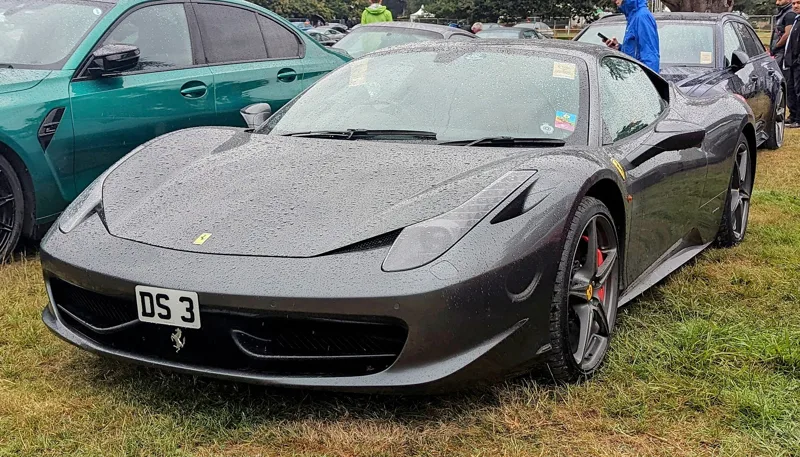
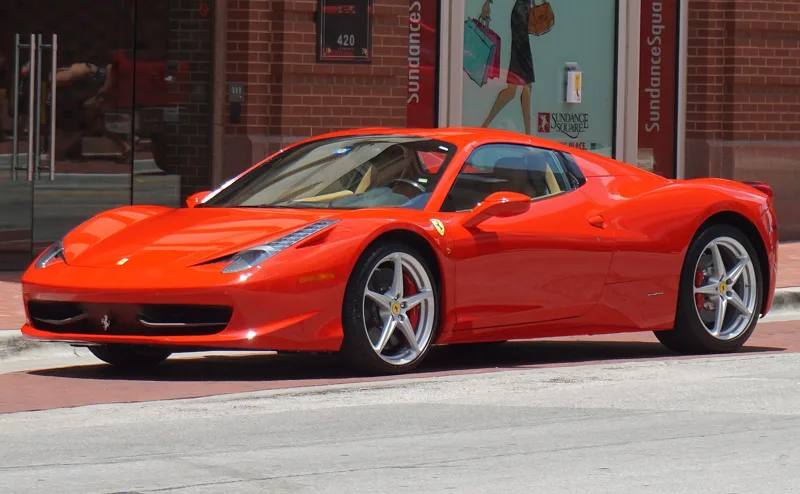
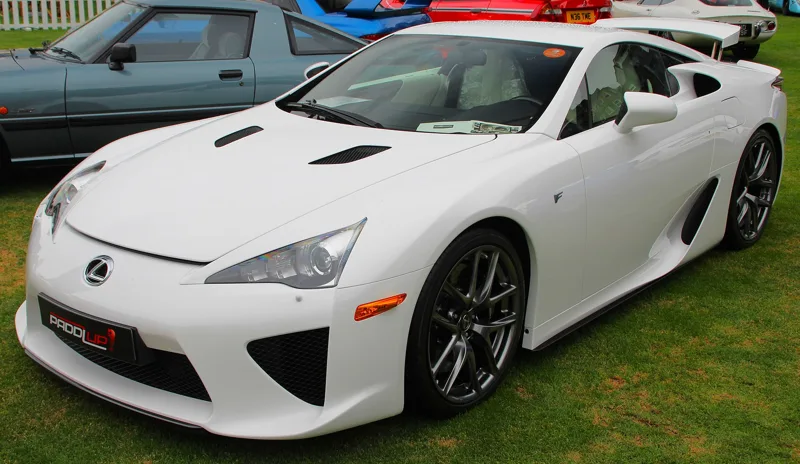
The Ferrari 458 and the Lexus LFA were both unveiled in the autumn of 2009, and both are two-door sports cars built around high-revving engines. The 458 was a mid-engined V8 from Ferrari with a seven-speed dual-clutch gearbox, while the LFA was a limited run of 500 cars from Lexus, powered by a 4.8-litre V10.
This comparison works through engines, performance, design, production and racing in turn. Where a figure exists for only one car, the gap is shown rather than estimated, and metric figures come first with imperial values in brackets.
Were the Ferrari 458 and Lexus LFA rivals?
Neither car is described as a direct rival of the other, and no shared market is named. They are placed side by side here because they arrived in the same season, each with eight or ten cylinders and a focus on high performance. Their makers approached the brief from different positions, and that shapes most of the differences below.
The 458 was presented as the successor to the F430, but as an entirely new design that drew on Ferrari's Formula One experience. The LFA had a longer road to production. Its codename was TXS, development started in early 2000, and the first prototype was completed in June 2003.
Both cars therefore reached the market at the end of a long engineering effort, but in different forms. The 458 was an evolution inside Ferrari's own range, with a V8 that became the base for a family of variants. The LFA was a new performance model for Lexus, presented in the brand's twentieth year.
Two V-engined sports cars from the same season, one a V8 that grew into a family and one a V10 built in a 500-car run.
How did their engines compare?
The Ferrari 458 used a 4,497 cc V8 from the F136 family, rated at 570 PS (419 kW; 562 hp) at 9,000 rpm. The Lexus LFA used a 4,805 cc V10 developed with Yamaha, rated at 560 PS (412 kW; 553 hp) at 8,700 rpm. The Ferrari made slightly more power, and both engines were designed to reach 9,000 rpm.
Lexus chose a V10 over an equivalent-capacity V8 because it could rev higher, and it rejected a V12 because the ten-cylinder layout had lower reciprocating mass, which gave quicker engine response. The LFA redlines at 9,000 rpm with a fuel cutoff at 9,500 rpm. Dry sump lubrication keeps oil in place through fast corners.
The 458 brought direct fuel injection to a Ferrari mid-engined road car, a first for that layout. Its torque peaked at 540 Nm (398 lb ft) at 6,000 rpm, with 80 percent available from 3,250 rpm. The LFA's 480 Nm peaked at 6,800 rpm, and 90 percent of that torque was available from 3,700 rpm.
The later Speciale raised the 458 engine to 605 PS (445 kW; 597 hp) at 9,000 rpm, with side slip angle control added to the electronics. The LFA's internals used forged aluminium pistons, titanium connecting rods and solid titanium valves.
Which one was quicker on paper?
The 458 has the lower official acceleration time, but the two figures use different target speeds, so the margin is not a clean win. Ferrari quoted 3.4 seconds for 0-100 km/h (62 mph), while Lexus quoted 3.6 seconds to 97 km/h (60 mph). Both were given top speeds of 325 km/h (202 mph) or more.
The Speciale, the high-performance 458, lapped Ferrari's Fiorano test track in 1:23.5, only 0.5 seconds slower than the F12 berlinetta, and reached 1.33 g of lateral acceleration. The only LFA lap time in the record is an unofficial 7:24 at the Nurburgring, reported by Auto Express in December 2007. Those results come from different cars and tracks, so they cannot be ranked against each other.
Chassis, handling and brakes
The 458 used double wishbones at the front and a multi-link arrangement at the rear. Its E-Diff and F1-Trac electronics were designed to improve cornering and longitudinal acceleration by 32 percent over its predecessors, and the steering ratio was 11.5:1. Carbon ceramic brakes came as standard, with a prefill function that moves the pads toward the discs on lift-off.
The quoted stopping distance from 100-0 km/h (62-0 mph) was 32.5 metres (107 ft), and tests cited for the car recorded a stop from 100 km/h (62 mph) in 90 feet (27 m). Adaptive magnetorheological dampers were co-developed with the BWI Group.
The LFA's production suspension, steering and brakes are not described in the record. Its only braking detail is that test cars seen before production carried carbon ceramic brake discs, along with automatic retractable rear spoilers. Those were prototypes, so they do not show what a production LFA carried.
How were the two cars designed?
Pininfarina designed the 458 body under design director Donato Coco, and Bertrand Rapatel led the interior. The LFA's first concept was a joint Toyota project with the Italian designer Leonardo Fioravanti. The production LFA body used carbon fibre reinforced polymer for sixty-five percent of its mass, with aluminium, titanium and magnesium used elsewhere.
The 458's exterior was shaped for aerodynamic efficiency. Its front grille has deformable winglets that lower at high speed to cut drag, and the body produced 140 kg (309 lb) of downforce at 200 km/h (124 mph). Autocar linked the design to the Millechili concept, and Michael Schumacher gave input on the steering wheel, which carries many controls normally found on the dashboard or stalks.
The LFA's design went through several stages. The first concept, shown in January 2005, had a glass roof, side cameras mounted in the mirrors and turbine-shaped wheels. A restyled concept in January 2007 switched from an aluminium frame to a carbon-fibre tub, a change reportedly made to improve the power-to-weight ratio.
Designers reportedly drew inspiration from the 1965 2000GT, although the record says no design features were taken directly from it. The production car was unveiled on 21 October 2009 at the Tokyo Motor Show, as the final vehicle of the press conference.
What open-top versions were built?
Ferrari built the 458 Spider, shown at the 2011 Frankfurt Motor Show, and the Speciale A, shown at the 2014 Paris Motor Show. The Spider's aluminium retractable hardtop took 14 seconds to operate and was said to weigh 25 kg (55 lb) less than a soft roof. Lexus cancelled a planned convertible LFA.
The Spider kept the coupe's 0-100 km/h time, with a top speed of 320 km/h (200 mph). The Speciale A was the convertible of the Speciale coupe, with 499 examples made, 49 of them right-hand drive. It matched the Speciale's 3.0 seconds to 100 km/h, reached 320 km/h (199 mph), and was the most powerful naturally aspirated Ferrari convertible until the 790 hp (801 PS; 589 kW) V12 of the LaFerrari Aperta arrived in 2017.
The record mentions two LFA units tied to the cancelled convertible programme, one white and one yellow. For a buyer who wanted an open-top car from this pair, the 458 is the only one with a series route to a convertible.
Special editions and one-offs
The 2012 China Edition was limited to 20 units and marked 20 years of Ferrari in China, which began when a 348 TS was ordered in Beijing. It came in Marco Polo Red with a golden dragon graphic on the bonnet and gold-painted wheels.
The SP12 EC was a one-off built for the English musician Eric Clapton under Ferrari's Special Projects programme. It was shown at the 2013 Goodwood Festival of Speed, and its bodywork drew on the 512 BB while it used the 458 Italia's 4.5-litre V8 and seven-speed dual-clutch transmission. The car reportedly cost 3,000,000 pounds sterling.
The Sergio, named in memory of Sergio Pininfarina, began as a barchetta with no windscreen. Ferrari built six production versions in 2015, with a targa top and the Speciale engine, and each reportedly cost US$3,000,000. The Speciale MM, a one-off for a British customer, paid homage to the 288 GTO.
On the LFA side, each car carried an individually numbered plaque, and each V10 engine bore the signature of its assembler. The last car was finished in white with the Nurburgring package.
How did racing shape each car?
The 458 has the deeper racing record. Its Challenge car raced in the Ferrari Challenge series from the 2011 season, and its GT2 version won the 2012 and 2014 24 Hours of Le Mans. The LFA's entries were prototypes at the Nurburgring in 2008 and 2009, with no class win recorded.
The 458 Challenge was presented on 14 July 2010 for the 2011 season. Ferrari said the standard Challenge could lap Fiorano in 1:16.5, two seconds quicker than the F430 Challenge and only 0.2 seconds slower than the FXX. An Evo version arrived for 2014 and was replaced by the 488 Challenge in 2017.
The 458 Italia GT2 was unveiled in 2011 as a GTE class car built by Michelotto. Restrictor rules cut its output to 470 PS (346 kW; 464 hp), with a red line of 6,250 rpm. It won the 2012 and 2014 24 Hours of Le Mans, and the 2012 12 Hours of Sebring.
The LFA's motorsport was testing and early endurance running. A single racing prototype entered Nurburgring VLN endurance races in May 2008, competing in the SP8 class, and two prototypes ran in the same series in mid-2009.
How many cars were built and sold?
The LFA was capped at 500 cars, with 20 built each month from December 2010 until production ended in December 2012. For the Ferrari, the record is split by version: 1,309 Speciales, 499 Speciale A convertibles, 20 China Editions and six Sergio cars. No total is given for the standard 458 coupe.
Lexus began taking orders on 23 October 2009 and selected its buyers in the second quarter of 2010. In North America, 150 cars were first sold through a two-year lease, a scheme meant to stop owners reselling for a profit. Lexus later allowed outright purchase, but gave the dealer a first right of refusal if an owner sold within two years.
European buyers could order through a single London dealer, and the base price was $375,000 (340,000 pounds sterling). The record gives no price for the 458, so the cost of the two cars cannot be compared directly. Analysts did not expect the LFA to be profitable.
How were the two cars received?
Reception details appear for one car only. The LFA received Road & Track's Best of the 2009 Tokyo Auto Show award and was named among Top Gear's 5 Greatest Supercars of the Year. No award is listed for the 458, so this part of the comparison is one-sided.
Points the record leaves open
Several points remain unsettled. The record gives no price for the 458, no LFA suspension or steering details, and no total for the standard 458 coupe. The LFA's production end is dated 14 December 2012 in one place and 17 December 2012 in another, and its torque appears as both 350 lb ft and 354 lb ft. Treat the imperial torque figure as approximate, since the metric figure is consistent throughout.
Side-by-side specifications
| Specification | Ferrari 458 | Lexus LFA |
|---|---|---|
| Launch | Unveiled at the 2009 Frankfurt Motor Show | Production version unveiled 21 October 2009, Tokyo |
| Production | Succeeded by the 488 GTB in 2015 | Orders from 23 October 2009; built December 2010 to December 2012 |
| Engine | 4,497 cc V8, F136 family, direct injection | 4,805 cc V10, 72-degree, developed with Yamaha |
| Power | 570 PS (419 kW; 562 hp) at 9,000 rpm | 560 PS (412 kW; 553 hp) at 8,700 rpm |
| Torque | 540 Nm (398 lb ft) at 6,000 rpm | 480 Nm at 6,800 rpm |
| Redline and cutoff | 9,000 rpm redline | 9,000 rpm redline, 9,500 rpm fuel cutoff |
| Transmission | 7-speed dual-clutch by Getrag, no manual | not given |
| 0-100 km/h | 3.4 seconds (official) | 3.6 seconds to 97 km/h (60 mph) |
| Top speed | Over 325 km/h (202 mph) | 325 km/h (202 mph) |
| Fuel use | 13.3 L/100 km (21.2 mpg-imp; 17.7 mpg-US), 307 g/km CO2 | not given |
| Body | Pininfarina design; 140 kg (309 lb) downforce at 200 km/h (124 mph) | sixty-five percent carbon fibre reinforced polymer by mass; aluminium, titanium and magnesium |
| Braking | Carbon ceramic standard; 32.5 metres (107 ft) from 100-0 km/h | Test cars had carbon ceramic discs; production not given |
| Open-top | Spider (2011); Speciale A (2014), 499 units | Convertible cancelled; two units recorded |
| Special versions | Speciale 1,309 built; China Edition 20; Sergio six | Each car numbered; 500 built in total |
| Price | not given | $375,000 (340,000 pounds sterling) base |
| Motorsport | Challenge series from 2011; GT2 won Le Mans in 2012 and 2014 | Prototypes in Nurburgring VLN, 2008 and 2009 |
| Reception | not given | Road & Track Best of the 2009 Tokyo Auto Show; Top Gear 5 Greatest Supercars of the Year |
Which buyer suits each car?
On the figures available, the 458 suits a buyer who wants a mid-engined V8 with an automatic-only gearbox and a choice of open-top and track versions. The LFA suits a buyer who wants a rare, hand-built V10 from a fixed 500-car run, and who accepts that no successor followed.
Neither car comes out ahead on the record alone. The 458 has more variants and more racing history, while the LFA offers a high-revving V10 and a body that was sixty-five percent carbon fibre. A buyer who values variety and racing heritage will look at the 458, and one who wants a rare, hand-built V10 will look at the LFA.