A Garage 56 Nissan, new slow zones and a Toyota stoppage shaped the 82nd running, won by a trio that had already won Le Mans together.
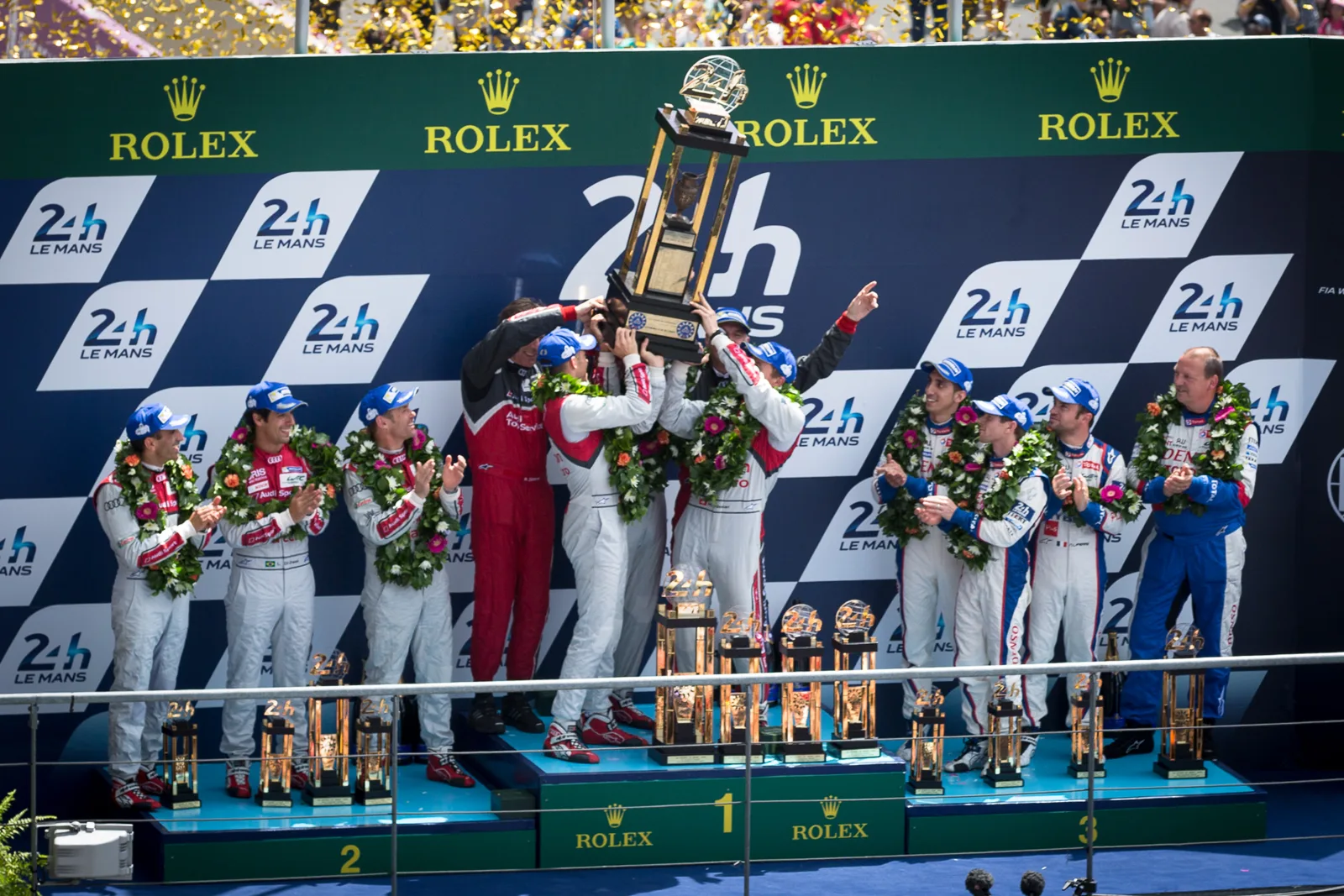
The 82nd 24 Hours of Le Mans, held at the Circuit de la Sarthe on 14 and 15 June 2014, went to the Audi crew of Fassler, Lotterer and Treluyer. A second Audi finished three laps back, and Toyota's car led half the race before it stopped.
The 2014 24 Hours of Le Mans was won by an Audi R18 e-tron quattro driven by Marcel Fassler, Andre Lotterer and Benoit Treluyer, the team's thirteenth win since its debut at the race in 1999. Toyota had led for half the distance before one of its cars stopped, and Porsche pressed hard when two Audis needed turbocharger replacements. The result came after a week of changes to the circuit, the field and the safety rules.
What was the 2014 race and why did it matter?
The 82nd running was the third round of the 2014 World Endurance Championship and its flagship race, from a calendar of eight rounds. It is run by the Automobile Club de l'Ouest, which has organised the race since 1923, and it drew about 263,000 spectators, the largest crowd since 1989.
Fifty-five entries were accepted, and about half of them contested the championship. The rest of the field was filled with one-off entries that were only running at Le Mans, which made the grid more varied than a pure championship field.
The schedule had been moved forward by a week to avoid clashes with other major motorsport series. That change alone made the event feel like a different weekend from the one most teams had planned for.
A stoppage for Toyota, a turbocharger for Audi and a trio that had already shared a win.
What changed on the circuit after the 2013 accident?
After Allan Simonsen was killed in the 2013 race, the organisers went through the circuit and changed several sections. Tertre Rouge received a new profile, along with barriers and tyre walls where it exits onto the Mulsanne Straight. The Corvette corners gained wider run-off areas.
Tecpro barriers went behind the tyre walls at the start of the Porsche corners, and the second Ford chicane received larger kerbs on its paved run-off, intended to stop cars cutting the corner. Each change aimed to keep cars away from the barriers when they left the racing line.
The most important new rule was the slow zone. It let the organisers put safety vehicles on one section of track without neutralising the whole race. Cars had to hold 60 km/h (37 mph) through a zone, GPS units fitted to every car monitored their speed, and an onboard marshalling system warned drivers where the zones were.
Rookies, and drivers who had not competed at Le Mans in the past five years, also had to complete a half-day simulator course. It covered night and wet running as well as the new safety car and slow zone procedures.
Who was in the field, and who dropped out?
Automatic invitations went to teams that had won their class the year before, or had won one of the Le Mans-based series such as the American and European series. Teams in the FIA World Endurance Championship also received invitations automatically. The ACO published the initial list on 20 December 2013.
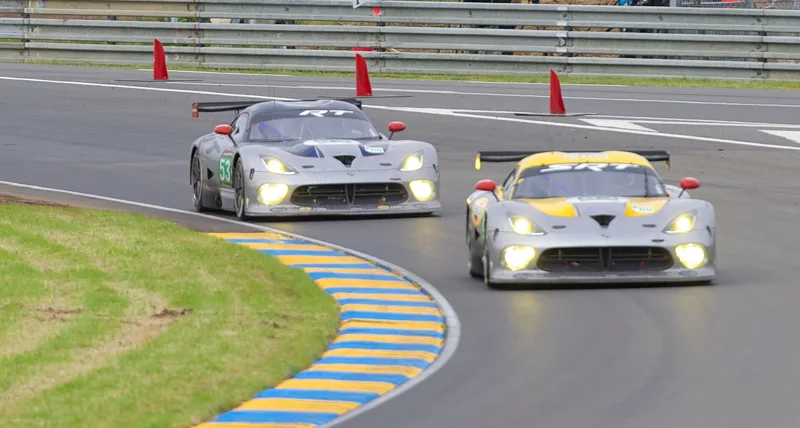
Several entries fell away before the race. Lotus withdrew its LMP1-L prototype because the car was not finished, leaving only Rebellion Racing cars in that class. SRT Motorsports withdrew its Vipers to concentrate on the United SportsCar Championship, reducing LMGTE Pro to four manufacturers.
Strakka Racing withdrew its Dome S103 after a testing accident damaged the car, and Krohn Racing replaced it. Millennium Racing pulled out for a second time on the day before scrutineering, and no replacement could be found for its place.
The ACO published a revised entry list on 28 April 2014, and some places were filled from the reserve list.JMW Motorsports and Team Taisan's Ferrari cars were promoted to the race, while Larbre Competition, Caterham Racing and Pegasus Racing also moved up from the reserves.
What was the Garage 56 Nissan?
Garage 56 is the slot the ACO reserves for an experimental entry, which uses the race to test new technology. The Nissan Motor Company's Nismo division received the 2014 Garage 56 entry, and it unveiled the car, known as the ZEOD RC, during the 2013 weekend.
The ZEOD RC was designed by Ben Bowlby, who had created the 2012 Garage 56 entry, the DeltaWing, with backing from Nissan. It used a hybrid drivetrain with lithium ion battery packs in a chassis similar to the DeltaWing, and it combined a turbocharged three-cylinder engine with two electric motors.
Nissan planned to drive a full lap of the Circuit de la Sarthe on electric power alone, and the team achieved that during the pre-race warm-up session. The car did not set a lap time in official practice, after mechanical failures on its first lap.
How did the test day and practice go?
A test day on 1 June gave teams eight hours of track time across two sessions, and Toyota's Sebastien Buemi set the pace at 3:23.014. Official practice on 11 June saw Anthony Davidson post 3:23.652, and Toyota led from the start once again.
Fifty-four cars took part in the test. Krohn Racing did not attend because it was not prepared, while AF Corse brought an extra Ferrari so its drivers could run more laps. After the test, several prototype teams ran an unofficial session on the shorter Bugatti Circuit to check their components.
Roman Rusinov led LMP2 testing for G-Drive Racing at 3:37.795, ahead of Karun Chandhok's Murphy Prototypes car. In LMGTE Pro, Frederic Makowiecki's Porsche was fastest at 3:57.260.
Practice had its own trouble. Loic Duval spun the No. 1 Audi in the Porsche Curves and it was destroyed, after which the medical teams did not clear him for the rest of the week. Audi brought in a spare chassis, and Marc Gene took over the car, while Oliver Turvey moved to Gene's seat at Jota Sport. Erik Maris hit the barrier at the first Mulsanne chicane, causing a second stoppage. Frankie Montecalvo then struck the wall at the second chicane, and the session was cut short once debris covered the track.
OAK Racing's Ligier JS P2 made its racing debut and led LMP2 in practice at 3:40.611. In LMGTE Am, Nicki Thiim's Aston Martin set 3:57.015, just ahead of the LMGTE Pro AF Corse Ferrari.
How did qualifying unfold?
Qualifying ran over three sessions, and the grid order came from each team's quickest driver. Porsche led early on through a flying lap from Jani in the No. 14 car, before Hartley set 3:23.157 to top the first session. The two Toyotas were two seconds back by the end, and the No. 7 car stopped with an oil leak. Nicolas Minassian's No. 37 SMP Racing Oreca-Nissan crashed in the Porsche Curves early on, which brought a red flag lasting half an hour.
Stoppages dominated the Thursday session. James Calado crashed his AF Corse Ferrari in the Porsche Curves, which brought out a half-hour red flag. Bret Curtis, in a Prospeed Porsche, hit the wall at the Dunlop Chicane and was knocked unconscious, and he was taken to hospital and missed the rest of the meeting.
When running resumed, Kazuki Nakajima improved provisional pole to 3:22.589, ahead of the Porsche entries of Romain Dumas and Bernhard. The third session was extended by half an hour to give the teams more track time, and Nakajima set a new fastest time of 3:21 fifteen minutes in.
Tristan Gommendy gave TDS Racing's Ligier debut the LMP2 provisional pole at 3:38.094. Fernando Rees crashed the second Aston Martin in the Porsche Curves, and the team withdrew the car afterwards, while Rees himself hurt a foot in the accident.
How did the race unfold?
Toyota led the early running and then lost its advantage. A Toyota TS040 Hybrid stopped after leading half the race distance, and Audi took the lead. Porsche challenged Audi when two of the Audi cars needed turbocharger replacements.
The second-placed car, from the Audi team, finished three laps behind the winners. Tom Kristensen, Marc Gene and Lucas di Grassi took that place, and their result kept the team on the podium behind the winning car.
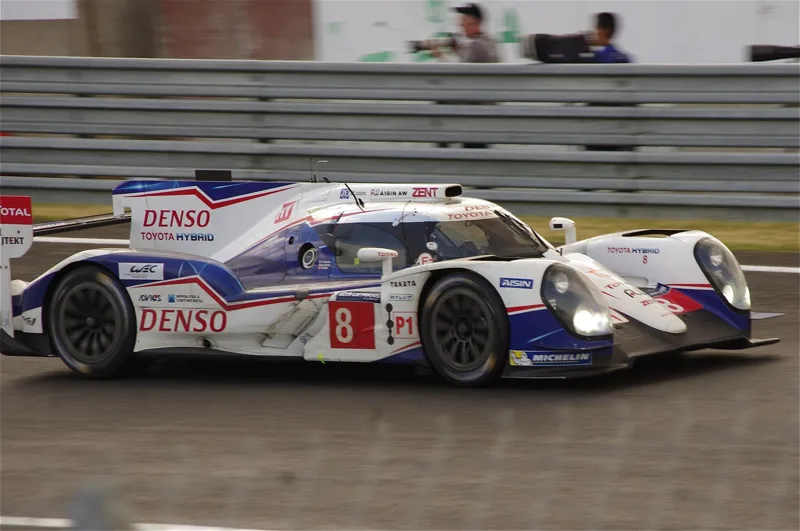
Anthony Davidson, Sebastien Buemi and Nicolas Lapierre brought the No. 8 Toyota home third after it recovered from an accident in the first hour. That recovery mattered for their championship lead, which they kept after the race.
Who were the winners, and what did they achieve?
The winners were Marcel Fassler of Switzerland, Andre Lotterer of Germany and Benoit Treluyer of France. Treluyer had won Le Mans as part of the same trio in 2011 and 2012, so the crew had already shared the top step twice before.
The victory was Audi's thirteenth at Le Mans since the company debuted at the race in 1999. The R18 e-tron quattro had been the car to beat across the season, and Audi's win kept its own title hopes alive against Toyota.
Class winners at a glance
| Class | Winning car | Winning drivers |
|---|---|---|
| Overall | Audi R18 e-tron quattro | Marcel Fassler, Andre Lotterer, Benoit Treluyer |
| LMP1-L | Rebellion Toyota, sole finisher in its class | Nick Heidfeld, Mathias Beche, Nico Prost |
| LMP2 | Jota Sport Zytek-Nissan | Simon Dolan, Oliver Turvey, Harry Tincknell |
| LMGTE Pro | AF Corse Ferrari 458 Italia GT2 | Gianmaria Bruni, Giancarlo Fisichella, Toni Vilander |
| LMGTE Am | Aston Martin Racing | David Heinemeier Hansson, Kristian Poulsen, Nicki Thiim |
In LMP2, the Jota Sport car finished ahead of the TDS Racing Ligier-Nissan by less than a lap. The LMP1-L class had only one finisher, which left the Rebellion car as the winner by default of the field.
In LMGTE Pro, the AF Corse crew won for Ferrari with a 458 Italia GT2, and in LMGTE Am the Aston Martin Racing trio, all three of them Danish, took the class.
How did the result change the championship?
Davidson, Lapierre and Buemi still led the drivers' championship on 80 points after the race, while Fassler, Treluyer and Lotterer moved up to second on 60. Di Grassi and Kristensen stayed third, six points further back.
Toyota kept the manufacturers' lead by a single point over Audi, with Porsche in third. Before Le Mans, Toyota had 84 points in the manufacturers' table, 48 ahead of Porsche, while Audi had 28. The gap had closed sharply in a single race.
With five races left in the season, the title was still open. Toyota had dominated the championship until then, winning the previous two rounds, so Audi's win at Le Mans changed the picture quickly.
What does the 2014 race leave behind?
The race is best understood through its safety changes and its experiments. The slow zones answered the 2013 death of Allan Simonsen, and the ZEOD RC showed that a Le Mans lap could be completed in electric mode. The Garage 56 concept had begun in 2012 with the DeltaWing, and the ZEOD RC carried it on in 2014.
The Audi win also showed the value of crew continuity. A trio that had raced together for several years took the flag, and their second Le Mans win as a crew reflected the stability that a long-running prototype team needs.