A wedge-shaped mid-size saloon sold under three badges and then as the Princess, with a Hydragas ride and a build-quality reputation that stuck.
The ADO71 was a wedge-shaped front-drive saloon from British Leyland, sold from 1975 to 1981 as Austin, Morris, Wolseley and Princess. It first used older B and E series engines, rode on Hydragas suspension, and built up a lasting reputation for poor build quality.
The British Leyland ADO71 was a front-drive, four-door fastback saloon that British Leyland sold from 1975 to 1981. It was first offered under the Austin, Morris and Wolseley badges, then renamed the Princess, and its wedge shape gave it the nickname The Wedge. Its first engines were older BMC designs, and its build quality earned a reputation that the maker spent years trying to shake off.
Why was the ADO71 created?
The ADO71 was meant to replace the ADO17, a design by Alec Issigonis for the British Motor Corporation. The ADO17 was clever and unusual, and it sold poorly. Its successor was planned only after British Leyland had been formed out of a series of mergers that had stalled product development across the British industry.
Planning began in spring 1970 under the code name Diablo. The team aimed the new car a little higher than the ADO17, against rivals such as the Vauxhall Victor, Opel Rekord, Peugeot 504 and Ford Granada. That meant more size, and it also meant paying attention to what buyers on the Continent wanted.
Its build quality earned a reputation that took years to shake off.
Who designed the ADO71's wedge body?
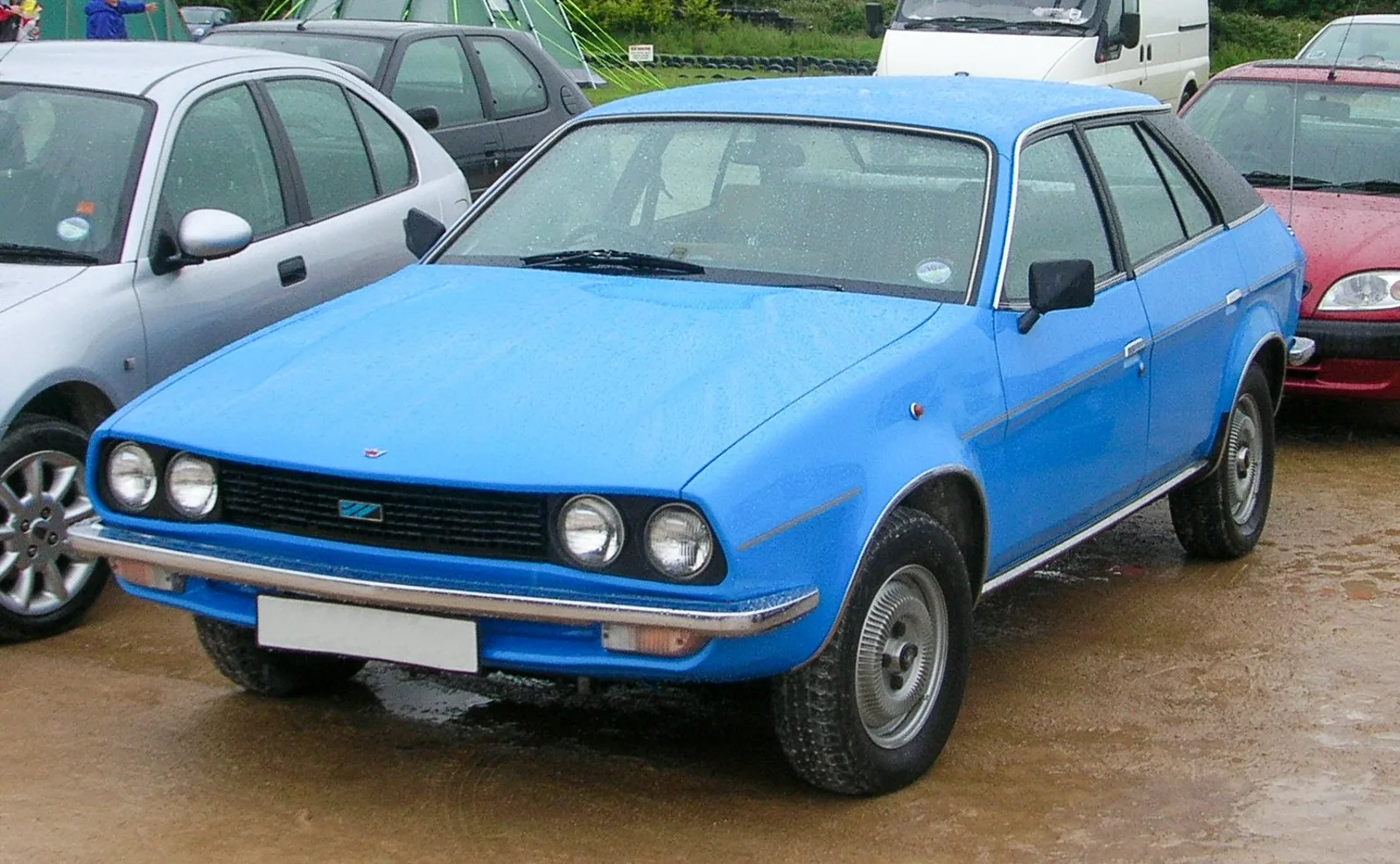
Harris Mann, who ran BLMC's design studio, took a series of older sketches, some made for smaller cars, and turned them into a wedge-shaped fastback that went into production largely unchanged. The car was low at the nose and high at the tail, a shape that gave the model its popular name, The Wedge.
At the launch Mann claimed the wedge drew on contemporary Formula One cars. The body itself was self-supporting steel, pressed by Pressed Steel Fisher in Oxford, and it seated five.
What was wrong with the ADO71's boot?
No large tailgate came from the factory. The boot was a small opening that dropped to the bumper at its centre, and its lid swung open at a shallow angle. Bulky loads were hard to fit, and a poorly placed spare wheel took up more room. A folding rear bench was not on the list either.
The press statement said a large tailgate would be out of place in the class. Other accounts suggest it was meant to stay the Austin Maxi's signature feature. A senior BMC figure later put it more bluntly: the aim was a deliberate break from the Rover SD, a car with a big tailgate, and Austin and Morris were meant to look as little as possible like the Rover products that had joined the group in 1967. The Princess successor, the Ambassador, which also took over from the Maxi that had been discontinued in the meantime, was the first in this line to get a large tailgate from the factory.
Which engines did the ADO71 use?
The first cars used two established engines from the BMC era. The base engine was a B-Series four-cylinder of 1,789 cc (109 cu in), bored 80.26 mm with an 89 mm stroke. That B-Series family had started with 1.2- and 1.5-litre versions in 1954, and the 1.8 had already been on sale for 13 years when the ADO71 arrived. Its 84 bhp (63 kW; 85 PS) was judged too little, and the car was considered underpowered with it.
The stronger choice was an E-Series six, displacing 2,227 cc (136 cu in) and making 110 PS (81 kW; 108 hp). From 1978 the Princess 2 gained new four-cylinder O-Series engines, a 1,695 cc (103 cu in) unit at 64 kW (87 PS; 86 hp) and a 1,993 cc (122 cu in) version at 68 kW (92 PS; 91 hp). The six continued at the top of the range.
How did the ADO71 drive and ride?
The ADO71 used front-wheel drive, much like its predecessor. Its engines sat across the car at the front, and a four-speed manual gearbox came as standard. A three-speed Borg-Warner 35 automatic could be ordered for an extra charge.
Each wheel had independent suspension and Hydragas units. This system developed Alex Moulton's Hydrolastic design, which had first been used as standard in the Austin Allegro in 1972. Reviewers judged the ride to be nearly as good as the Citroen CX's. Power steering came as standard on the sixes and was optional on the fours. Front discs and rear drums completed the brakes.
Austin, Morris and Wolseley: how did the three badges differ?
The first cars were sold under three names, which had only minor differences in appearance. The brands were meant to keep separate dealer networks, and the cars were built to match those divisions.
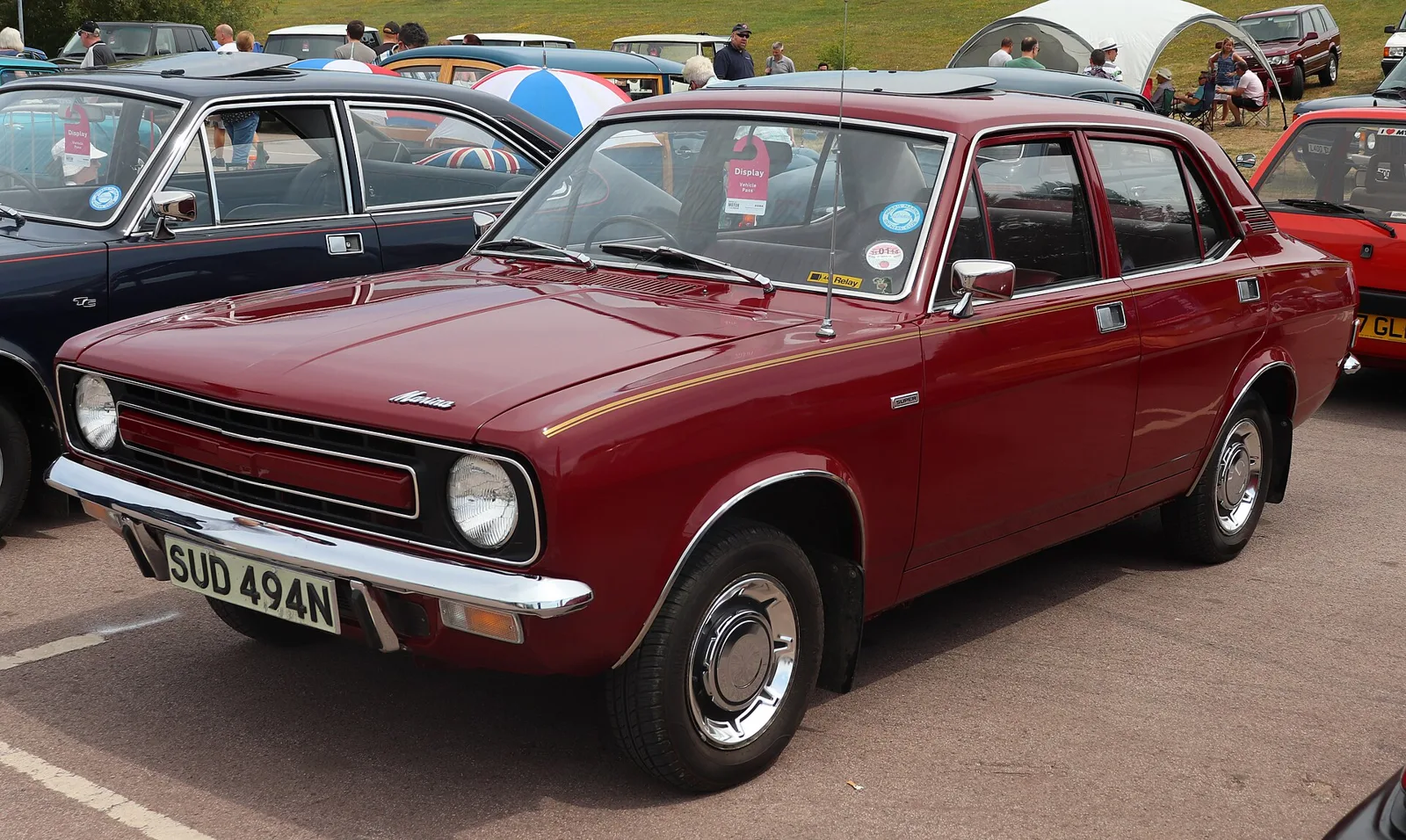
The Austin came in 1800 and 2200 forms, and it was the plainest version of the family, with wide-beam headlamps in a trapezoid shape, a flat bonnet edge and a grille with cross bracing. The Morris, also 1800 and 2200, was almost identical in construction. Its front was built around four round lamps and a bonnet lifted in the middle, with a moulded imitation grille, which broke with Morris tradition, and its trim matched the Austin.
The Wolseley, sold from March to September 1975, used no model number, and it was the final car to bear the name. It had only the 2.2-litre six. Its radiator mask took cues from earlier Wolseley models, and a lit badge sat in the middle of the grille. The dashboard was black plastic with wood inserts. It was also the priciest ADO71, at 2,838.42 pounds, which was 400 pounds more than the Austin and Morris.
Why did the Austin, Morris and Wolseley names disappear?
The Austin and Morris dealer networks had only been merged in September 1975, a process that had begun hesitantly seven years earlier. With that done, separate Austin and Morris versions had no purpose. The change came alongside the nationalisation of BLMC in October 1975.
From October 1975 the car was sold only as the Princess. The name had been used ten years earlier for a Vanden Plas saloon, and it turned the car into a brand of its own inside the group. Four-digit codes showed the engine size. The Princess looked like the earlier Austin, and the only outward difference was the lamps: the 1.8 had round headlamps, while the 2.0 kept the Austin's wide-beam units.
What were the Princess trim levels?
The Princess came in three trim levels: L for the base car, HL for 'High Line', and HLS for 'High Line Super'. As on the Austin and Morris, the base cars had a body-coloured C-pillar, while the HL and HLS had it covered in vinyl.
In July 1978 the revised Princess 2 arrived. It looked much the same, but it had the new O-Series engines, and its designations were Princess 1700, 2000 and 2200. A further facelift in November 1980 brought new door mirrors, bumpers, wheels and the Austin logo in the grille.
What replaced the Princess?
The Princess 2 stayed in the range for three years. In autumn 1981 it gave way to the Austin Ambassador, a heavily revised ADO71 with new styling and engineering changes.
The Ambassador also took over from the Maxi, which had been dropped in the meantime, and it was the first car in this line to be fitted with a large tailgate at the factory.
Which versions never reached production?
In 1974 BLMC considered a high-quality Vanden Plas version. The company built a prototype with changed lamps and a separate grille, but it decided against series production. The Vanden Plas trim only became available on the successor, the Ambassador.
In the mid-1970s about 50 diesel-engined ADO71s were also built, using the 1.8-litre B-Series petrol block as the basis. They were aimed mainly at taxi drivers. Selected customers tested the prototypes in daily use for several months, and every single one was returned to the factory afterwards. Cost and the low expected sales led BLMC to reject series production, and the diesel was soon used in the Leyland Sherpa van.
Why did the ADO71 gain a poor reputation?
From the start the ADO71 was known for poor build quality. Early cars had badly fitting parts, which let water into the interior and the boot, and their paintwork varied. The British car press covered these faults in detail, and the root cause was starting series production too early.
Over the first years BLMC put a lot of development work into fixing the problems, unlike with some of its other models. Toward the decade's end most of the problems were resolved, and the car was seen as far better built. Local importers also tried to help. The Swiss general importer Emil Frey offered a three-year multi-guarantee and a 110-point quality programme marketed as the Swiss Finish, but it had limited success, and the Princess stayed an outsider in Switzerland.
Where was the ADO71 built and sold?
Everything sold in Britain and on continental export markets came off the line at Cowley, the old Morris plant near Oxford. New Zealand's Leyland plant also assembled the model from kits between 1977 and 1982.
In nine years British Leyland built 214,031 examples, pre-production cars included. The best year was 1977, when almost 48,000 vehicles left the line between January and December. Most sales were in the British Isles, while the car played only a minor part on most export markets.
In West Germany in 1976 the Princess cost between DM 13,990 for the 1800 HL and DM 15,990 for the 2200 HLS. It competed with the mid-size Audi 100, the four-cylinder Ford Granada and the Opel Rekord.
What did the press make of the ADO71?
In September 1975 the British magazine Motorsport compared the Wolseley with a Citroen CX2000. The Citroen had just been named European Car of the Year, and BLMC had named the ADO71 its own car of the year. The Wolseley had the bigger interior, but the Citroen's futuristic design was more coherent, since the Wolseley mixed traditional touches with mass-produced plastic in a less than convincing way.
The two cars handled in a comparable way. The Citroen was slightly quicker, but its engine was judged less flexible. The reviewer chose the Wolseley as the better car, and called it the best car British Leyland had made since the Jaguar XJ6.
Who converted the ADO71 after launch?
The coachbuilders Torcars and Crayford offered revised ADO71s with a large tailgate fitted afterwards. Torcars also added a folding rear bench, so the luggage space could run into the cabin, and sold its Princess Estate through the official Leyland dealers.
Woodall Nicholson built stretched saloons on the ADO71 base, named Kirklees but better known as the Stretch Princess. They carried three rows of seats behind four doors, and were mostly used at funerals, and the firm also built hearses on the Princess base.
In 1978 the British styling firm Ogle built a five-door estate on the Princess 2200, with big glass side panels. Chris Humberstone was the responsible designer, and the estate went by the name Ogle Triplex 10-20 Glassback. One unit was on display at the British Motor Show in 1978.