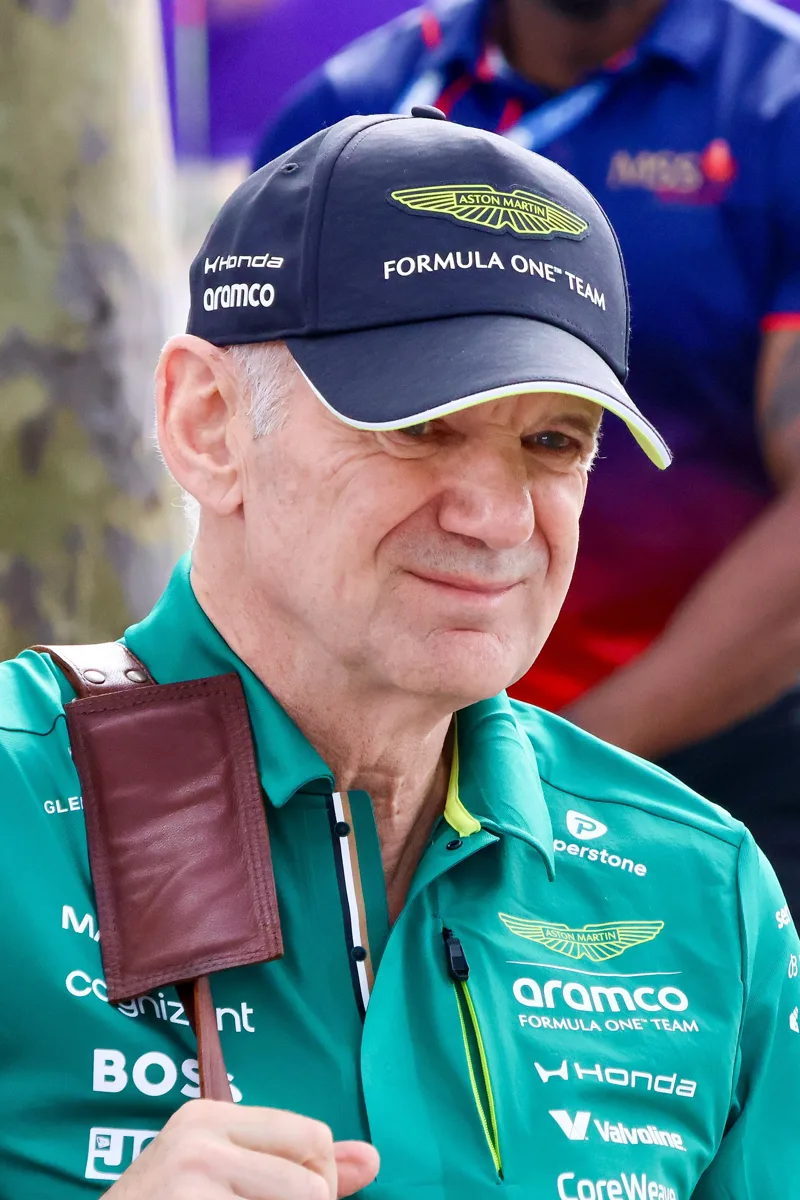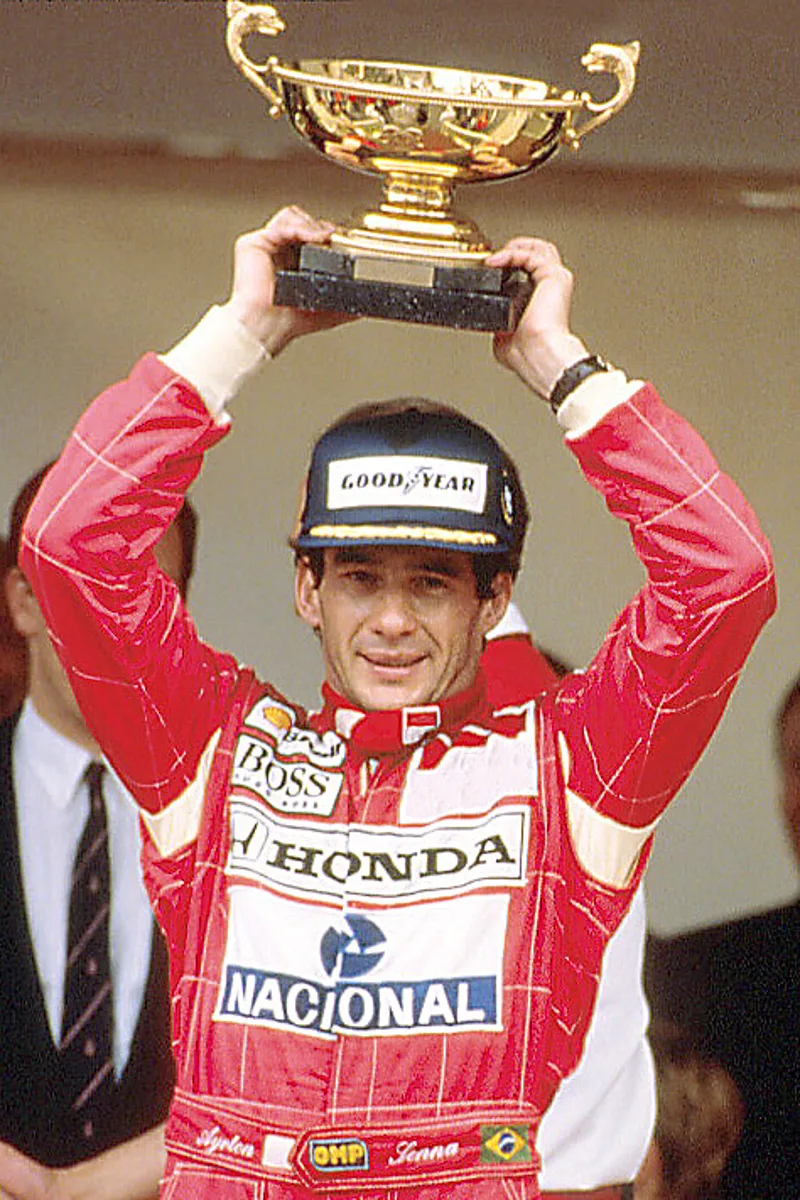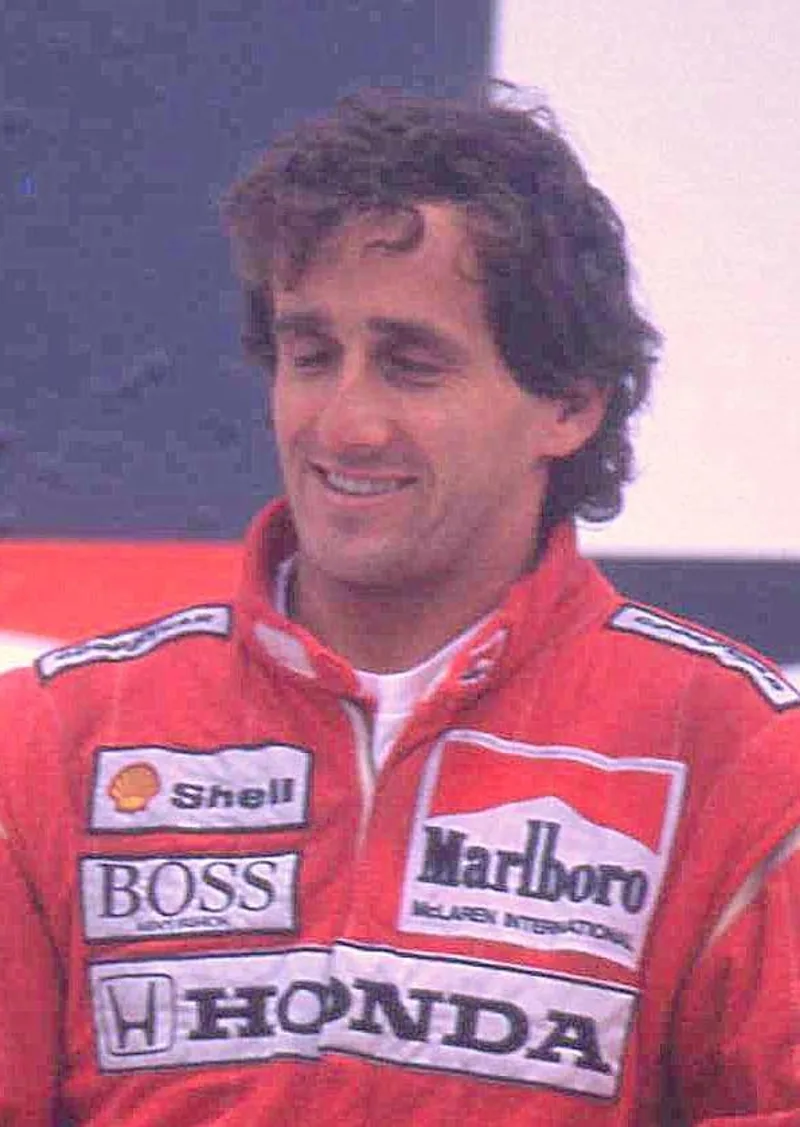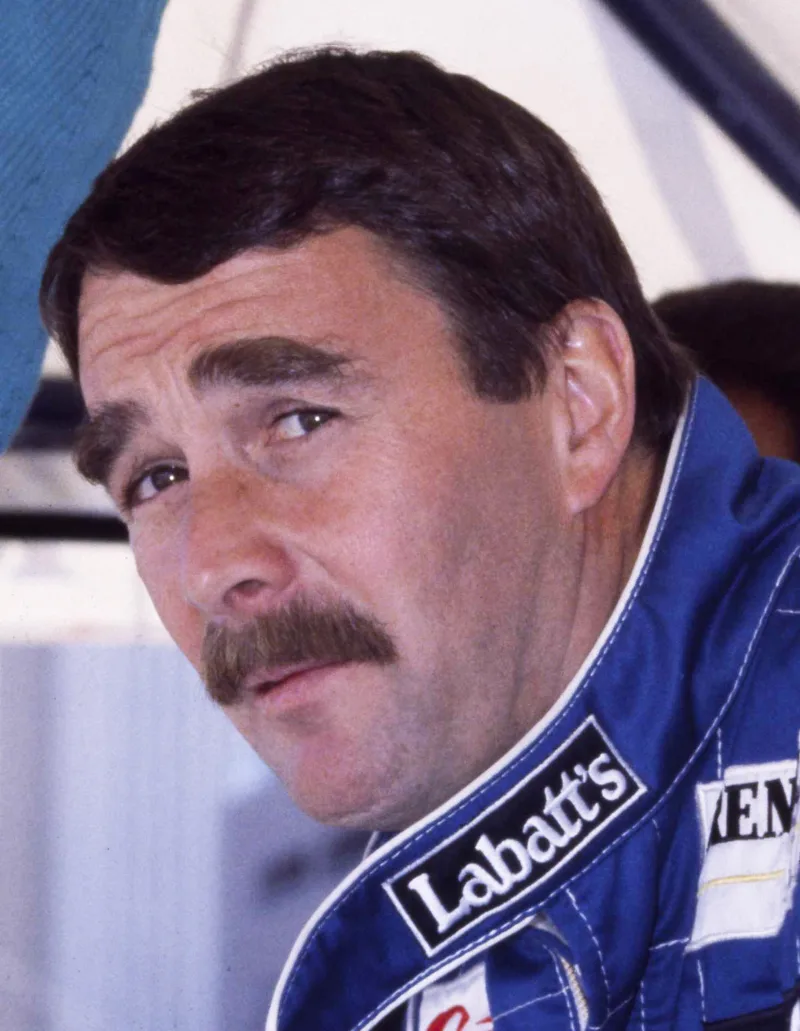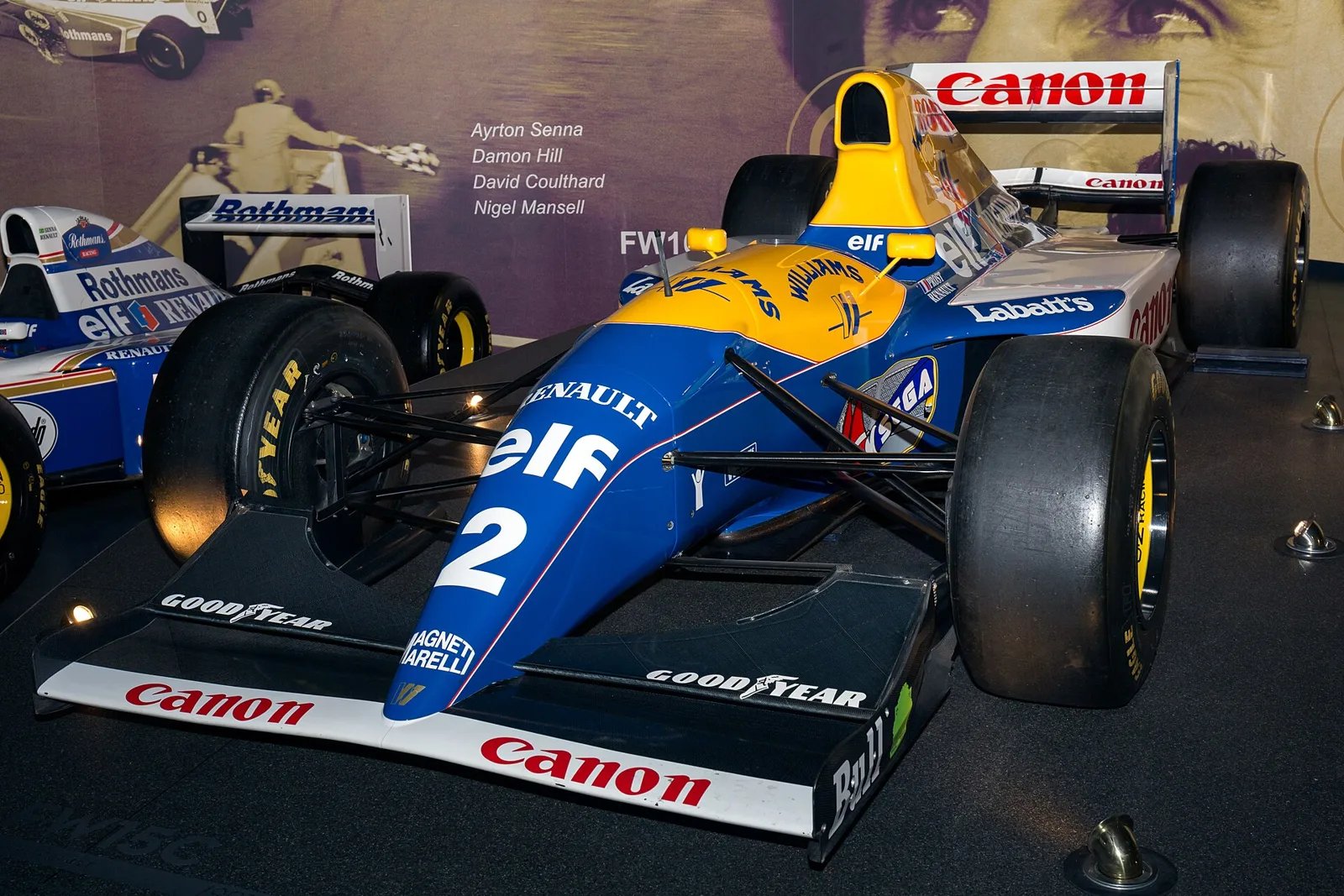
Adrian Newey's active-suspension Williams won the 1993 titles with Alain Prost and Damon Hill, then became the last car of the driver-aid era.
Adrian Newey's design won the 1993 drivers' and constructors' championships for Williams. Its electronic systems were among the most advanced in the sport, and it was the last car of its era before driver aids were banned.
The Williams FW15C was the Formula One car that Adrian Newey designed and Williams Grand Prix Engineering built for the 1993 world championship. It won both the drivers' and constructors' titles, in the final season before the FIA outlawed electronic driver aids. Its mix of active suspension, anti-lock brakes and traction control made it one of the most technologically sophisticated cars the sport has seen, a judgement still made about it today.
What came before the FW15C?
The FW15C grew out of the FW14B. The FW14B had been designed as a passive car and then pushed into active suspension, which left it heavier than its designers wanted. Frank Dernie's active suspension work was the foundation for the FW15 that Williams designed in 1991, which was lighter and tidier because it was active from the start.
The FW14B was successful enough to deliver the 1992 titles for Nigel Mansell and Williams, so the FW15 was not needed that year. Instead, a 1992 FW15 was hastily converted to the 1993 regulations as the FW15B, with narrower front suspension, narrower rear tyres, a raised nose and narrower wings for early testing.
The FW15C was the first all-new car produced by Patrick Head and Adrian Newey working together. Head had designed many of Williams's earlier cars, while Newey had previously worked on cars for the March and Leyton House teams. The car was ready in the August before its debut, but the team chose to race it from the start of 1993.
Active suspension, anti-lock brakes and a V10 that put Williams on top of the 1993 season.
What did Adrian Newey change in the FW15C?
Newey's aerodynamic input made the FW15 a clear step forward from its predecessor. The nose was narrower, the airbox and engine cover were sleeker, and the sidepods were carefully sculpted. A larger rear wing for high-downforce circuits added an extra element ahead and above the main plane, similar to the winglets that had appeared in Grand Prix racing years earlier.
The FW15C produced twelve per cent better downforce against drag than the FW14B, and its engine made thirty additional horsepower. Newey later said the FW14B's aerodynamics had been messy because of the switch to active suspension, and that the FW15C was a cleaner version of the same aero package.
Because the two drivers were very different in size, Williams built two slightly different tubs. Prost stood nearly half a foot shorter than Hill, and Hill, whose feet were size twelve, had complained of cramp in the tight space around the pedals.
How powerful was the Renault engine?
The Renault RS5 V10 was the class of the field in 1993, producing at least 760-780 bhp (570-580 kW). That was at least 80-100 hp (60-75 kW) more than the Ford V8s used by Benetton and McLaren, and the advantage was large enough that McLaren boss Ron Dennis had tried to buy 1992-spec Renault engines for his own team.
Renault also had a reputation for reliability. Williams did suffer three engine failures during races in 1993, but on each occasion the sister car went on to win. Ferrari's 041 3.5-litre V12 was powerful but thirsty, which cost it weight in extra fuel.
Renault's year included a PR high point at the French Grand Prix, where the team recorded its only 1-2 finish of the season with a French driver, Alain Prost, leading home. Hill's win at Spa was Renault's 50th Formula One victory.
| Element | FW15C detail |
|---|---|
| Chassis designer | Adrian Newey, with Patrick Head |
| Engine | Renault RS5 V10, at least 760-780 bhp (570-580 kW) |
| Power gain over FW14B | 30 additional horsepower |
| Aerodynamic gain | twelve per cent better downforce to drag than FW14B |
| Braking | Anti-lock brakes, not fitted to FW14B |
| Titles | Drivers' and Constructors' championships, 1993 |
How did the FW15C's electronics work?
By 1993 Formula One had become a high-tech arena, and the FW15C sat at its frontier. Among its systems were power steering, drive-by-wire throttle control, pneumatic valve springs, telemetry, traction control, anti-lock brakes and active suspension. It also carried a semi-automatic transmission, a fully automatic transmission and a continuously variable transmission, although the last of these was used only in testing.
Prost described the car as a little Airbus, which reflected how many systems the driver had to manage. Three laptops were needed each time the car started, serving the engine, the telemetry and the suspension.
The gearbox was similar in layout to the FW14B's, but its hydraulics had been changed. A press-button clutch start won the drivers' approval during tests, but they did not use it in races. They preferred to control the clutch pedal at the start.
The transmission also had an auto-up button, which made automatic changes at any point until the driver called for a gear with the paddles. The software handed control back to the driver at once when a manual change was requested.
The FW15C also had a push-to-pass system operated by the left yellow button on the steering wheel. It used the active suspension to lower the rear of the car and reduce the drag from the diffuser, while the engine was set for extra revs, giving a short burst of speed for overtaking. Hill and Prost both used it during 1993 passing manoeuvres.
The level of technology became too much for the governing body. The FIA banned several driver aids after the British Grand Prix, and a deal known as the Weikershof Protocol postponed the ban to the start of 1994.
Who drove the FW15C in 1993?
Alain Prost signed for 1993 after a year out of competition. Nigel Mansell left Formula One after a dispute with Frank Williams over money and the team's driver status, and he moved to the American CART series. Riccardo Patrese joined Benetton-Ford, having believed that Prost and Mansell would be Williams's drivers.
Mika Hakkinen was considered for the vacancy, but he was expected to sign for McLaren. Frank Williams and Patrick Head chose Damon Hill, the son of two-time world champion Graham Hill, even though Hill had made only two previous Grand Prix starts, both for Brabham in 1992.
Ayrton Senna wanted a seat at Williams, but a clause in Prost's contract stopped the team from signing him as Prost's team-mate. Senna stayed at McLaren, re-signing for the rest of 1993 just before the British Grand Prix. Once Prost announced his retirement, Senna was confirmed for Williams in 1994.
How did the 1993 championship unfold?
Williams quickly became the team to beat. Prost won in South Africa by almost a lap over Senna's McLaren, and the FW15C was so strong in qualifying that Prost and Hill often started 1.5 to 2 seconds ahead of their rivals. At Interlagos Prost out-qualified his team-mate by a whole second.
Prost retired midway through the race after someone else's accident, and Senna got past Hill to win at Interlagos. Hill finished second, his first podium and first points in Formula One. At Donington Park Senna produced his most dominant performance, with Hill second and Prost third after Prost's gearbox problems and seven pit stops for tyres in the changing conditions.
Senna led the title race by 12 points after three races, but it was already clear that even at his peak he would struggle against Prost and the Williams-Renault. Williams then strung together nine wins from ten races. Prost took Imola and Spain to move ahead, Senna won at Monaco for his sixth and final victory, and Prost's win in Canada put him back in front.
The car's rear end was also a regular topic. In the wet it tended to lock the rear wheels on downchanges, a problem that eased once a power throttle system was fitted at Imola to match revs when the clutch engaged.
Hill began to challenge his team-mate more consistently. In France he stayed close to Prost throughout, and in Britain an engine failure 18 laps from the end cost him what would have been his first win. In Germany a stop-go penalty for Prost helped Hill, but a puncture on the penultimate lap handed Prost the victory.
Hill finally won in Hungary, after Prost stalled on the grid and had to start from the back. Hill won in Belgium and then in Italy. At Spa, Hill and Prost finished first and third, which handed Williams its sixth Constructors' title.
Senna had a terrible run of luck, but he still had a mathematical chance when the teams met in Portugal. Prost's second place there was enough to take his fourth world drivers' title, and he announced his retirement at the end of the year. In the final two races, Prost followed Senna home in Japan and Australia, which dropped Hill to third in the final standings.
How did the livery and sponsors change?
1993 was the last year that Canon held title sponsorship, having backed the team since 1985. Camel had been on the car since 1991, but its logos were replaced by a Camel emblem or the word Williams at the French, British, German and European Grands Prix.
Sega joined as the team's major sponsor. Some of its decals showed Sonic's foot on the pedal, and race-winning trophies appeared on the rear wing, giving the car a bright new identity for a title-winning year.
What happened to the chassis after 1993?
The FW15 concept had been built around active suspension, so Williams had to adapt it for 1994. Two FW15C chassis were modified to run without electronic driving aids, becoming an interim car with passive suspension and no traction control.
Senna and Hill tested the car in January 1994. At the Estoril launch on 19 January 1994, Hill drove it with an onboard camera recorder, not Senna as is often assumed. The car was retired once the FW16 arrived, yet it was the quicker of the two chassis in early-season testing lap times.