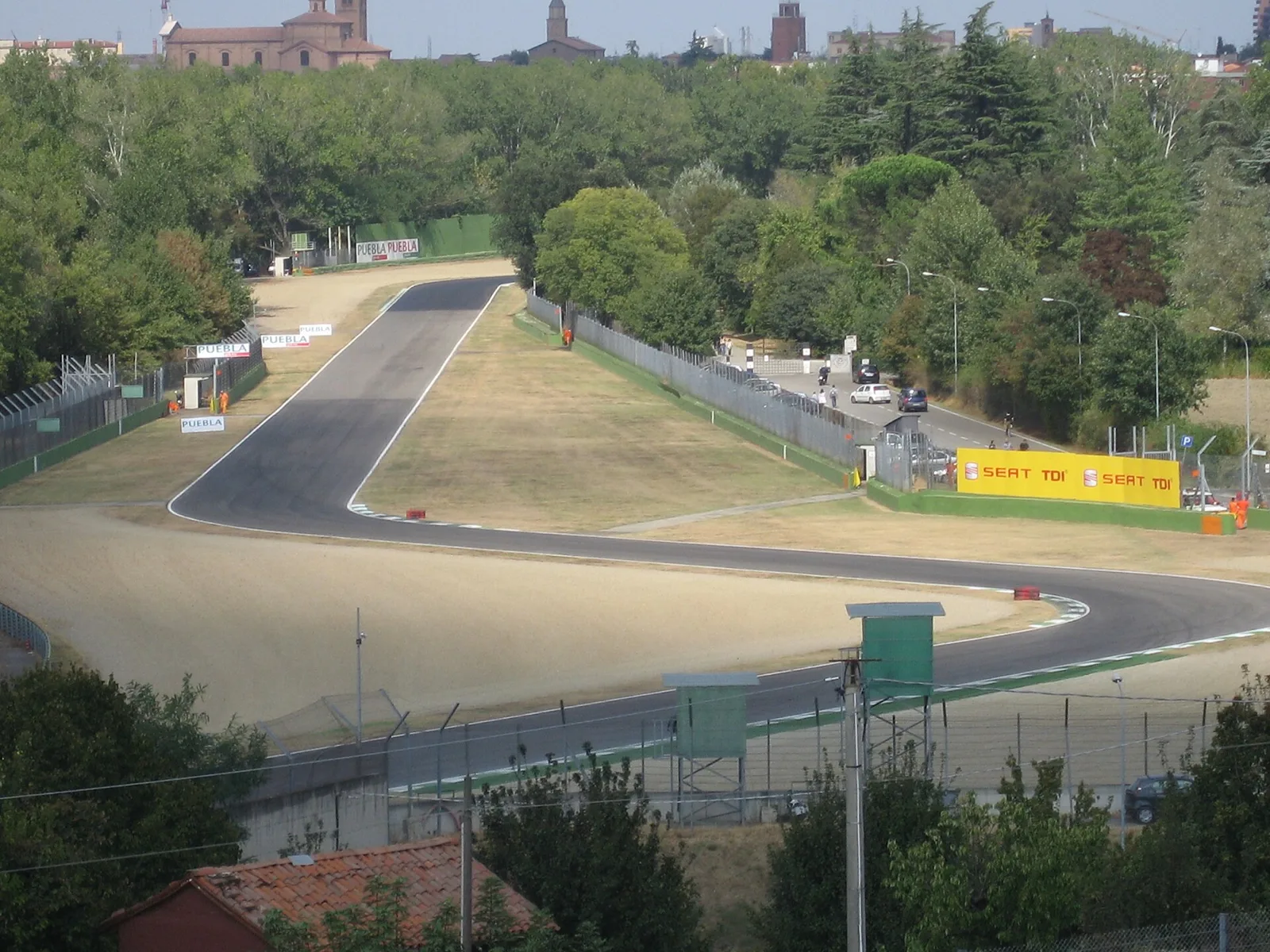
The 1922 Italian track built inside a royal park, where a banked oval once shared the stage with Formula One and the fastest lap still tests every engine.
The official race lap record at Monza is 1:20.901, a time set by Lando Norris at the 2025 Italian Grand Prix. Max Verstappen's qualifying lap that weekend was quicker on average, at 264.681 km/h (164.465 mph), but it does not stand as a race record.
Set just outside the town of Monza, north of Milan, the Monza Circuit measures 5.793 km (3.600 mi). Opened in 1922, it is the oldest racing circuit in mainland Europe and the home of the Italian Grand Prix, which has been held there every year since 1949 except 1980. The track is nicknamed the Temple of Speed because of its long straights and fast corners.
The site sits in a woodland setting inside the Royal Villa of Monza park. It was the fourth purpose-built motor racing circuit in the world, after Aspendale, Brooklands and Indianapolis. Only Silverstone, Monaco and Spa have featured on the Formula One calendar as consistently since the sport's first season.
How did Monza begin?
Some 3,500 workers carved the track out between May and July 1922, with funding from the Milan Automobile Club, whose SIAS company ran it. The track opened on 3 September 1922, and the second Italian Grand Prix was held there on 10 September 1922. Its official name, Autodromo Nazionale di Monza, reflects its national status, and the first race held on it was the second Italian Grand Prix.
The first design paired a paved 4.490 km (2.790 mi) oval with a 5.500 km (3.418 mi) road course. Joined at the front straight, the two made a 10.000 km (6.214 mi) run. Its closeness to Milan, the centre of Italy's economy, made it a convenient venue for racing and other events.
The early years were dangerous. The most serious Italian racing accident up to that point came in 1928, when Emilio Materassi and 27 spectators died at the Italian Grand Prix. Grand Prix races were then confined to the high-speed loop for several years.
A major rebuild in 1938-39 added new stands and entrances, resurfaced the track and removed the high-speed ring. The resulting Grand Prix lap of 6.300 km (3.915 mi) was used until 1954, and the Second World War then suspended racing for years.
A 1922 track inside a royal park, where a banked oval and a short, brutal lap still test every car that visits.
What does the modern circuit include?
Today three circuits share the grounds: the 5.793 km Grand Prix track, a 2.405 km (1.494 mi) Junior track, and the 4.250 km (2.641 mi) banked oval. The oval sat decaying for decades before it was restored in the 2010s.
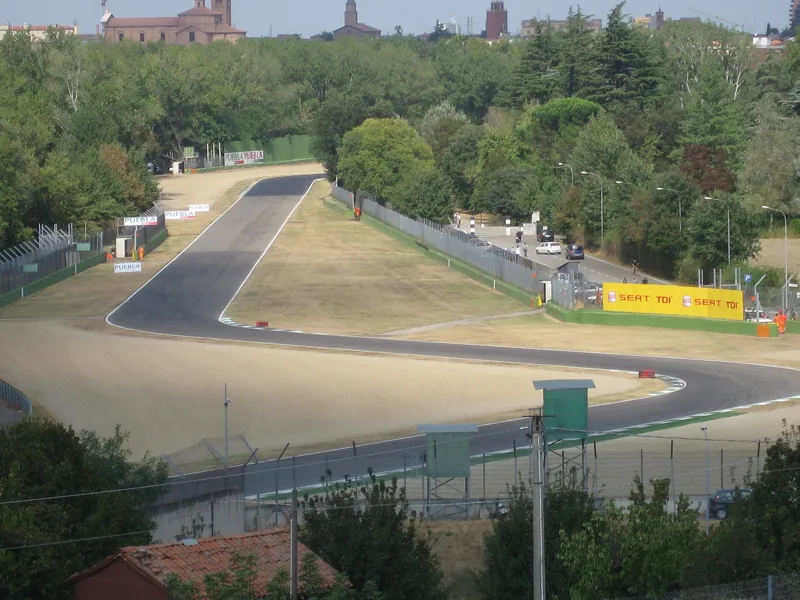
The Grand Prix track is the one used for Formula One and most major races. Landmarks on the Grand Prix track include the Curva Grande, the two Lesmo corners, the Variante Ascari and the Curva Alboreto, once known as the Parabolica. The banked oval is used once a year for the Monza Rally.
Why did the banked oval stop hosting Formula One?
Formula One used the combined 10.000 km course in 1955, 1956, 1960 and 1961. The 1961 accident that killed Wolfgang von Trips and spectators ended Formula One use of the oval, and the road circuit has been the only layout used for the sport since then.
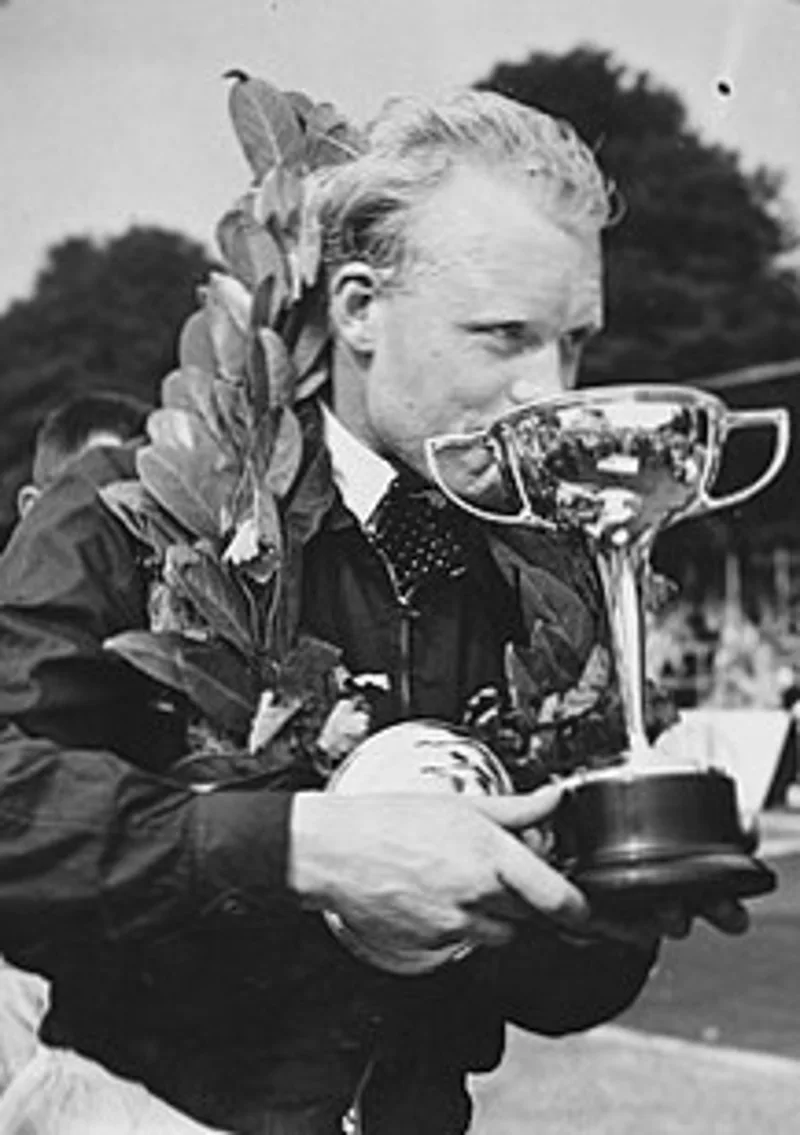
Some of the era's best-known results came on the combined course. Stirling Moss and Phil Hill each won twice in those years, and Phil Hill's Monza triumph was a first, because no American had won a Formula One race before it.
American cars were already a presence. The Race of Two Worlds exhibition series, nicknamed Monzanapolis, ran in 1957 and 1958, pitting US IndyCars against European cars on the oval.
Concern about flat-out racing on the banking grew, and in 1963 the teams refused to use the combined circuit because its concrete was so bumpy. Chicanes were added before the banked curves in 1966, and in 1969 permanent chicanes lengthened the track by 100 m (110 yd). That year's 1000 km of Monza was the last major race on the combined layout.
How has Monza been made safer?
Safety changes at Monza came in waves, starting with the 1972 chicanes that slowed the cars, followed by squeezed corners in 1994, a new chicane on the main straight in 2000 and an asphalt run-off in 2007. The circuit is still criticised for limited run-off in some places.
The 1972 chicanes, Variante del Rettifilo and Variante Ascari, reduced the length to 5.755 km (3.576 mi). Grand Prix motorcycles kept using the faster road track until two serious accidents in 1973 killed five people, including Renzo Pasolini and Jarno Saarinen. Motorcycle racing did not return until 1981.
The chicanes did not slow the cars enough, so further work followed. The Vialone was remade in 1974, Curva Grande was altered in 1976 and the lap settled at 5.800 km (3.604 mi). In 1979 new kerbs, wider run-off areas and tyre barriers were added.
After the deaths of Ayrton Senna and Roland Ratzenberger at Imola in 1994, the three main long curves were tightened so that bigger gravel traps could be fitted, cutting the lap to 5.770 km (3.585 mi). In 2000 a fire marshal, Paolo Gislimberti, was killed by debris after a first-lap crash at the second chicane.
Asphalt replaced gravel at the second chicane in 2007, and taller kerbs went onto the first two chicanes to discourage cutting corners. The current track length is 5.793 km (3.600 mi).
Spectator and pit facilities grew alongside the safety work. The stands were reworked in 1997 to expand capacity to 51,000, and after the 1979 programme the pits could accommodate 46 cars, with an upgraded paddock and scrutineering area.
How are Monza cars set up for the straights?
Teams run some of the smallest wing angles on the Formula One calendar, because the long straights reward low drag above almost everything else. Only cars with enough power or aerodynamic efficiency can challenge for the top places, since maximum power and minimal drag decide the speed on the straights.
The low downforce leaves grip poor, so understeer is a more serious problem than at most circuits. The second sector can also produce oversteer, which calls for a distinctive opposite-lock technique to keep the car under control.
What makes the Monza lap so demanding?
The Monza lap has few corners but long straights, so braking stability and traction matter most. Monza has long been the fastest circuit on the Formula One calendar, a position that reflects its long straights and the lack of slow corners. Formula One engines spend nearly 80 percent of the lap at full throttle, and the layout has only six corner complexes, which means reliability is a constant worry.
| Corner | Approach | Speed |
|---|---|---|
| Variante del Rettifilo | Entry 86 km/h (53 mph) in second gear | Exit 72 km/h (45 mph) |
| Curva Grande | Taken at 330 km/h (210 mph) in eighth gear | Leads down to the Variante della Roggia chicane |
| First Lesmo | Blind entry at 273 km/h (170 mph) in sixth gear | Apex 217 km/h (135 mph) |
| Second Lesmo | Entry 278 km/h (173 mph) in seventh gear | Apex 203.5 km/h (126.4 mph) |
| Parabolica | Entry 335 km/h (208 mph) in eighth gear | Apex 229 km/h (142 mph), exit 285 km/h (177 mph) |
The chicane that cuts the Variante della Roggia is probably the best overtaking chance on the lap, but drivers have criticised its lack of run-off areas. Current drivers have raised those concerns repeatedly.
Top speeds have moved with the engine rules. The mid-2000s V10 cars reached 372 km/h (231 mph), 2012 V8 engines rarely exceeded 340 km/h (210 mph), and the 2014 V6 hybrids reached up to 360 km/h (220 mph). A 2025 Formula One car reached 364.1 km/h (226.2 mph) and decelerated at up to 4.50 g.
Which lap records stand at Monza?
Norris's race mark averaged 257.781 km/h (160.178 mph), which is the fastest average lap speed ever recorded in a World Championship race. Max Verstappen's pole lap of 1:18.792, set in the same weekend, averaged 264.681 km/h (164.465 mph) in qualifying, the quickest average for a World Championship qualifying lap.
Motorcycle records are also notable. Max Biaggi set the fastest motorcycle lap in 2010 at 1:42.121 on an Aprilia RSV4 1000 F, and in the 2011 Superpole he improved it to 1:41.745, a speed of more than 330 km/h (210 mph).
Unusual records have been set too. Monza was the venue for the Nike Breaking2 attempt, in which three runners tried to break two hours for the marathon. Eliud Kipchoge ran 2:00:25 there.
How many people have died at Monza?
The circuit's history includes 52 drivers and 35 spectators killed, many of them in the early years of Formula One. Notable fatal accidents include the 1928 Italian Grand Prix, the 1933 Monza Grand Prix and the 1970 Italian Grand Prix.
On the 1933 Black Day of Monza, Giuseppe Campari, Baconin Borzacchini and Stanislas Czaykowski died in the supporting race on the south banking. In 1970 Jochen Rindt was killed in practice at the Parabolica, and in 1978 Ronnie Peterson died in hospital after a crash at the start of the Italian Grand Prix.
Losses have driven changes to the track. Run-off areas were added to the curves after a 1968 fatality in the 1000 km race, and drivers still criticise the limited run-off at the Roggia chicane.
Which events use Monza today?
The Italian Grand Prix is held at Monza each September, alongside Formula 2, Formula 3, GT, touring car and single-seater rounds. The banked oval is used for the Monza Rally Show, which has run for many years.
The 2020 World Rally Championship finale, ACI Rally Monza, ran ten of its 16 stages on the circuit. The World Endurance Championship 6 Hours of Monza was moved to the Imola Circuit in 2024, when the Monza track underwent significant changes including a full resurfacing.
The track has also hosted the WTCC, the TCR International Series, the Superbike World Championship and Formula Renault in earlier years. Today it supports local championships, including the TCR Italian Series, the Italian GT Championship and the Porsche Carrera Cup Italia.