The Emilia-Romagna track named for the Ferrari family, reshaped by the lessons of 1994 and by a long, uneven route back to Formula One.
Imola's 4.909 km (3.050 mi) layout sits in Italy's Emilia-Romagna region and carries the Ferrari family name. It opened in 1953 and hosted the San Marino Grand Prix from 1981 to 2006. The current Grand Prix layout's official record stands at 1:15.484.
The Imola Circuit, which carries the Ferrari family name, is a 4.909 km (3.050 mi) track in Emilia-Romagna, Italy, and it became famous for Formula One's San Marino Grand Prix between 1981 and 2006. It began in 1953 as a semi-permanent venue, grew into one of Europe's most important circuits and then became the scene of motor sport's most painful weekend in 1994. Its layout and safety rules still reflect that period.
The track sits about 40 km (25 mi) east of Bologna and carries an FIA Grade One licence. It is named after Enzo Ferrari, founder of the car company, and his son Alfredo, known as Dino, who lived from 1932 to 1956. The circuit's name has been part of the Ferrari story ever since the first races.
What is the Imola Circuit?
The Imola Circuit is a 4.909 km (3.050 mi) Italian motor racing venue with an FIA Grade One licence. It was first used for motorcycle racing in 1953, and it has since hosted Formula One, sports car, touring car and motorcycle championships. Its long association with the Ferrari team, whose base is in nearby Maranello, has made it a favourite of Italian fans.
The original track had no chicanes until 1972, so the stretch from Acque Minerali down to Rivazza, and onward to Tosa past the pits and Tamburello, was essentially a run of fast straights and gentle bends. The first motorcycle races took place in April 1953, and the first car race followed in June 1954.
The circuit's connection with motorcycles has lasted. The Superbike World Championship visited from 2001 to 2006 and again from 2009, and the Motocross World Championship has held its final round there since 2018.
A track named for the Ferrari family, shaped by one terrible weekend and rebuilt around the lessons it taught.
How did Imola become a Formula One circuit?
Imola first hosted Formula One as a non-championship race in April 1963, when Jim Clark won for Lotus. It entered the world championship calendar in 1980, when Nelson Piquet won the Italian Grand Prix there. The success of that race led to a San Marino Grand Prix created specifically for Imola, which ran every year from 1981 to 2006.
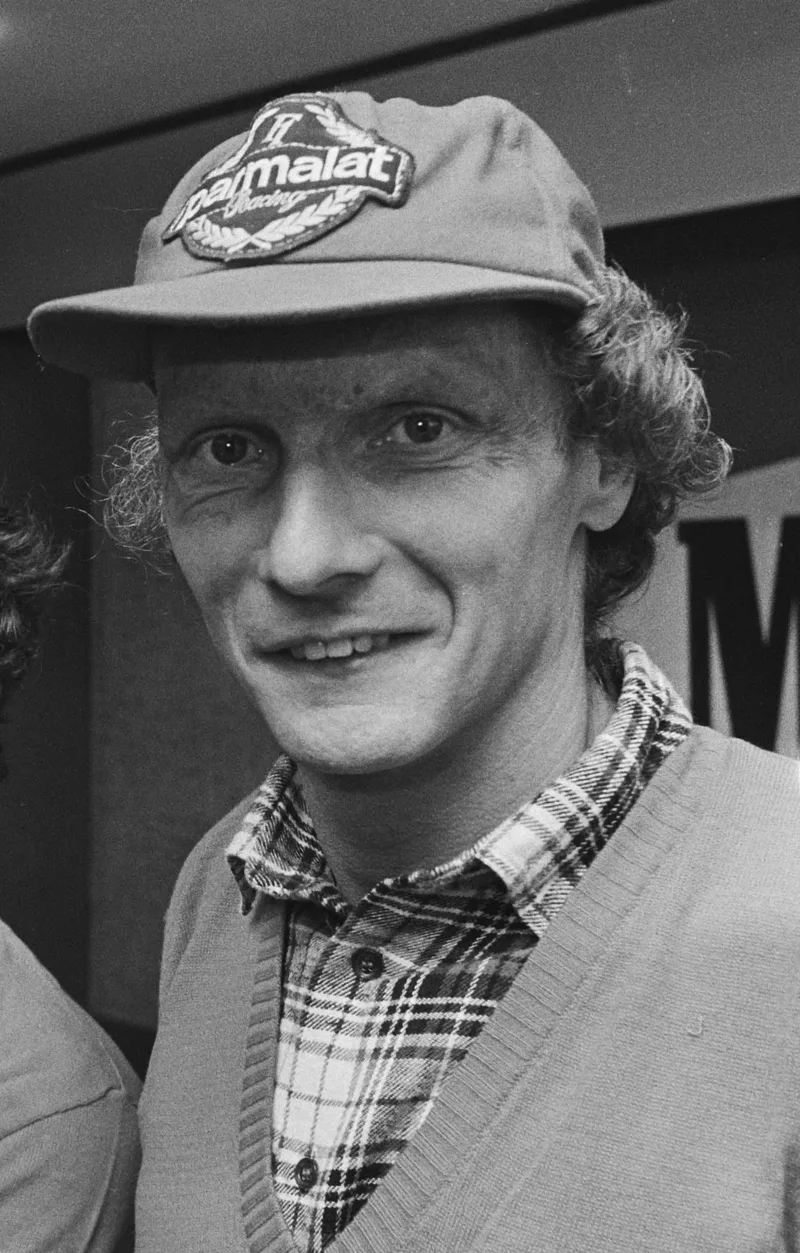
A 1979 non-championship event was won by Niki Lauda for Brabham-Alfa Romeo. The 1980 Italian Grand Prix was a landmark, because it was the first time since 1948 that Monza did not host the race, and Imola took the opportunity to show what it could offer.
Formula One stopped racing at Imola in 2007, and the owners of the circuit began a major rebuild. Work included new pit garages and a paddock, and the reconstruction was overseen by Hermann Tilke, the German track architect. The circuit later earned the rating it needed to host Grands Prix again.
Why was Tamburello so feared?
Tamburello was a flat-out corner with very little space between the track and a concrete wall, and the Santerno river ran alongside it. Drivers who lost control there had no tyre barrier to soften the impact. Crashes at the corner over more than a decade made it the most criticised point on the lap.
Nelson Piquet crashed heavily in practice in 1987 after a tyre failure and missed the race through injury. In 1989 Gerhard Berger's Ferrari lost its front wing at Tamburello at 300 km/h (190 mph) and ignited on impact. He survived, but burns to his hands kept him out of the 1989 Monaco Grand Prix, the only race he missed.
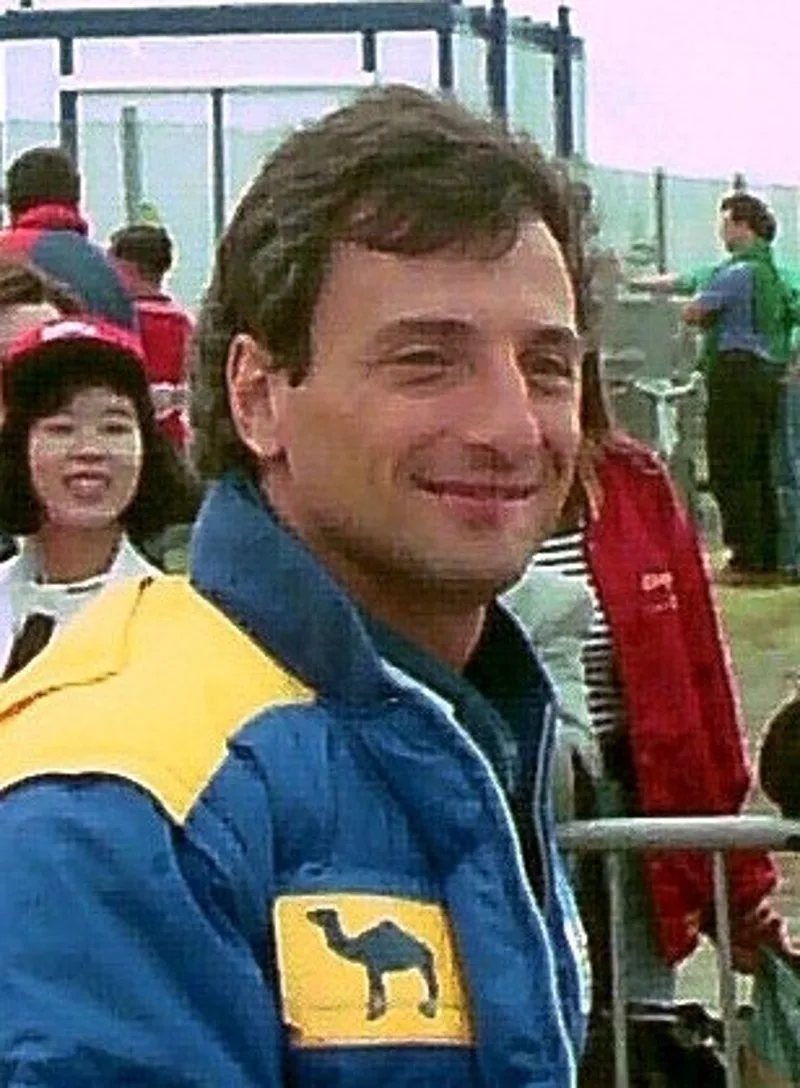
Michele Alboreto suffered a massive shunt while testing an Arrows there in 1991, and Riccardo Patrese crashed at the same corner while testing for Williams the following year. Each accident added to the pressure to change the corner, long before the events of May 1994.
What happened at the 1994 San Marino Grand Prix?
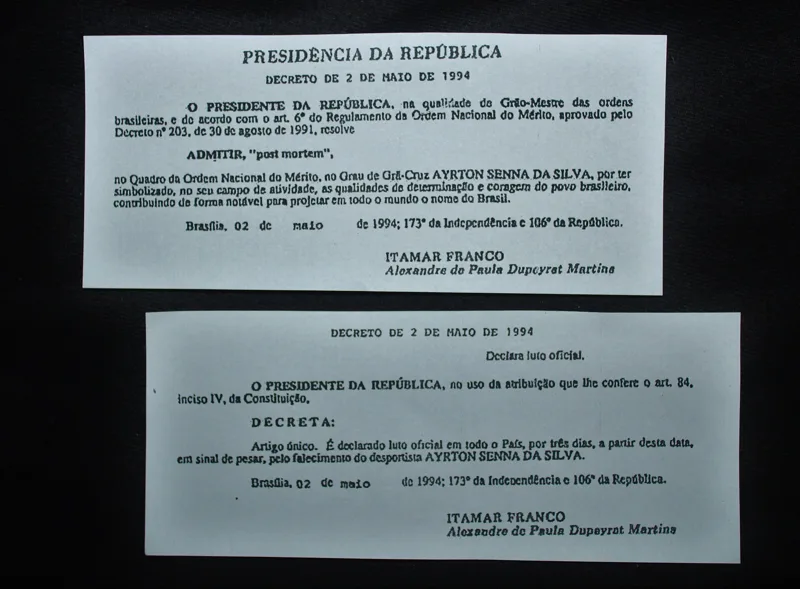
The weekend began with Rubens Barrichello being launched over a kerb and into a tyre barrier at Variante Bassa during Friday practice. On Saturday Roland Ratzenberger's Simtek lost its front wing at the Villeneuve corner, and he died instantly. On Sunday Ayrton Senna's steering column broke at Tamburello, and he died in hospital several hours later.
Barrichello was knocked unconscious but survived after rapid medical intervention. Ratzenberger hit a wall at over 310 km/h (190 mph) and died of a basilar skull fracture. Senna crashed into the concrete wall at Tamburello on lap 7. Several spectators and mechanics were injured in separate incidents during the same event.
The response was swift. Tamburello was altered so that it was no longer flat out, and a gravel trap went in on the narrow strip beside it. The Villeneuve corner became a fourth-gear sweeper with its own gravel trap. Many Grand Prix circuits were modified in the months that followed, with the aim of reducing speeds.
How has the layout changed since 2007?
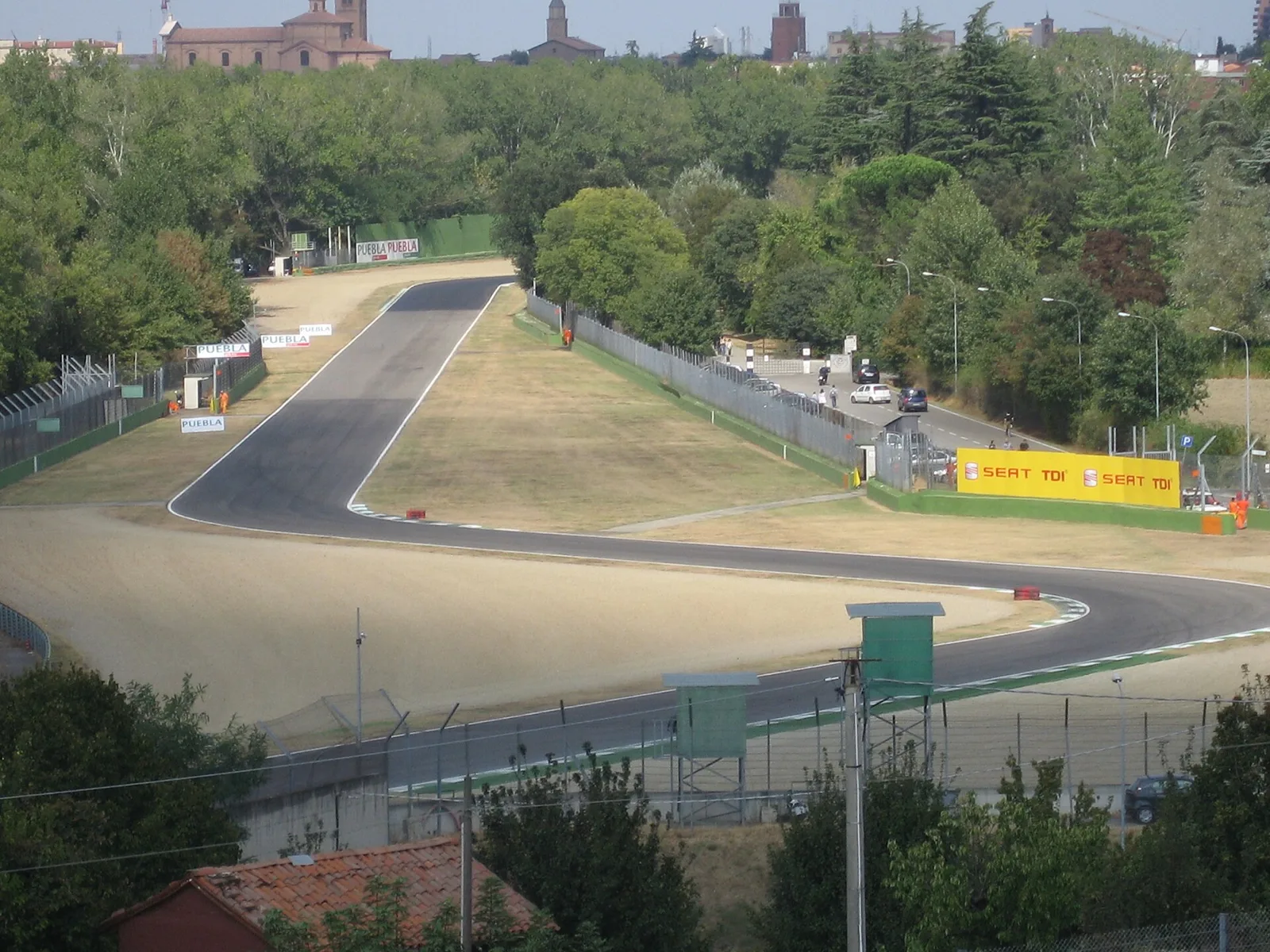
Since Formula One left, the circuit has rebuilt its garages, extended the pit lane and created a bypass that lets cars run the approach to the first Tamburello chicane flat out. Motorcycles still use the older chicane. The Variante Alta, which has the hardest braking point on the lap, has also been adjusted.
The Acque Minerali chicane was eliminated after 1994, and Variante Bassa was reduced to one chicane. The changes were intended to keep some of the old fast character while adding the safety margin that modern cars demanded. Many fans felt that the new chicanes at Tamburello and Villeneuve took away some of the circuit's original feel.
In June 2008 the FIA gave the track a 1T rating, which allowed an official Formula One test to be held there. The circuit received its '1' homologation in August 2011 after an inspection by Charlie Whiting, the rating that a track needs to host a Grand Prix.
When did Formula One return to Imola?
Formula One returned to Imola in 2020 under the name Emilia Romagna Grand Prix, after the owners submitted a bid to replace a cancelled race. The event was run over two days, 31 October and 1 November 2020, which broke with the usual three-day Formula One format.
The race stayed on the calendar for 2021 and 2022, and it continued until 2025. The 2023 Grand Prix had to be cancelled after the Emilia-Romagna floods also affected the circuit. A 2026 shortlist named Imola as a fallback if the Qatar or Abu Dhabi races fell through.
Earlier attempts to return had failed. In 2016 the circuit signed a deal to host an Italian Grand Prix from 2017, but Monza secured its own new contract on 2 September 2016, and Imola's officials took legal action over the funding awarded to Monza before withdrawing their case on 8 November 2016.
Which milestones shaped the circuit?
Imola's history can be told through a handful of dates. The table below lists the key moments, from its first races to its final Formula One years, showing how the venue changed hands and purpose over seven decades.
| Year | Milestone | Detail |
|---|---|---|
| 1953 | Track inaugurated | First motorcycle races in April |
| 1954 | First car race | Held in June |
| 1963 | First Formula One race | Non-championship, won by Jim Clark for Lotus |
| 1980 | Italian Grand Prix | Won by Nelson Piquet |
| 1981 to 2006 | San Marino Grand Prix | Held every year |
| 2007 | Formula One exit | Racing at Imola stopped |
| 2020 | Emilia Romagna Grand Prix | Held over 31 October and 1 November |
| 2023 | Race cancelled | Emilia-Romagna floods |
| 2025 | Last Emilia Romagna Grand Prix | Hosted at the circuit through 2025 |
Which racing takes place at Imola now?
Imola hosts a broad range of racing, from the Motocross World Championship and Superbike events to sports car and touring car series. Among them are the European Le Mans Series, the TCR series and several Italian championships.
The European Le Mans Series returned in 2022 with the 4 Hours of Imola, after the 6 Hours of Imola was revived in 2011 for the Le Mans Series. The 12 Hours of Imola was held in 2017 and 2018 as part of the 24H Series.
The circuit has also been a stage for cycling. Giro d'Italia stages used it in 2015 and 2018, and the 1968 UCI Road World Championships finished there, where Vittorio Adorni won by 10 minutes 10 seconds. The 2020 UCI Road World Championships also started and finished at Imola on 27 September 2020.
What are the lap records at Imola?
Lewis Hamilton's 1:15.484 from the 2020 Emilia Romagna race stands as the official mark for the Grand Prix layout. The unofficial all-time figure is 1:13.609, achieved by Valtteri Bottas in qualifying for the same event.
Official race lap records count only the laps completed during a race, and qualifying laps are typically quicker. That difference is why Bottas's qualifying benchmark sits as an unofficial record rather than an official one.
Why does Imola still matter to racing fans?
Imola matters because it combines a deep racing history with a layout that still rewards precise braking and bold lines. Its fans remember the San Marino Grand Prix years, the Ferrari connection and the lessons of 1994, which many people still discuss when they talk about track safety.
The circuit's management reflects its heritage. Giancarlo Minardi, who led the former Minardi Formula One team, is the president of the circuit. When Formula One visited, Imola was regarded as one of the home circuits of the Ferrari team, which is based in nearby Maranello, so the weekend was closely tied to the Ferrari name.
Its modern calendar keeps it busy. Motorcycle racing, sports cars and touring cars all use the circuit, and the bypass around the Variante Bassa means cars and bikes now run different versions of the same track. That arrangement lets one venue serve several series without losing its identity.
Does Imola host events beyond racing?
Yes. Since 1981 the circuit has hosted an early-September vintage market known as the Mostra Scambio, which focuses on vintage vehicles and their parts. The event is also popularly called CRAME, after the historical society that organises it.
Concerts have been a regular feature too. The Heineken Jammin Festival ran at the track from 1998 to 2006, Sonisphere appeared in 2011, AC/DC performed their Rock or Bust tour there in 2015, and Pearl Jam's Gigaton Tour played in 2022.