The fatal crash on 1 May 1994 came after a grim weekend, and it led to new rules, a revived drivers' association and a changed Tamburello corner.
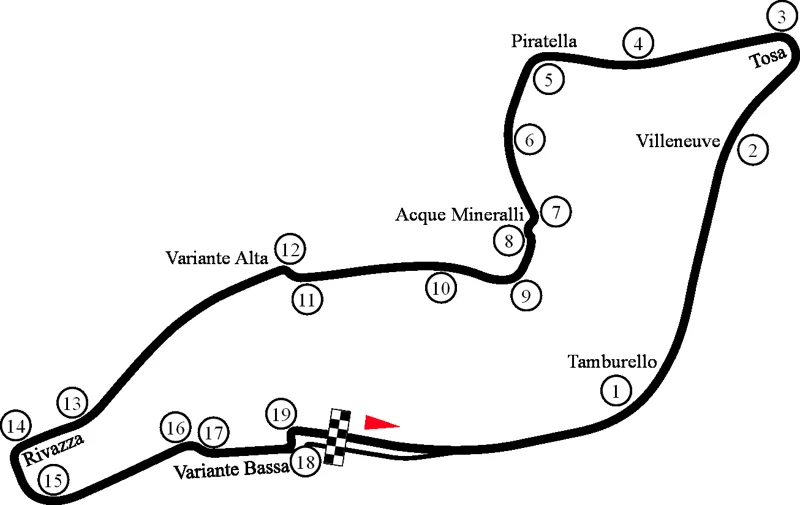
A crash at Tamburello on lap 7 ended Senna's race and his life in 1994. The FIA then introduced new safety rules in the months that followed, the drivers' association was revived, and the corner was rebuilt as a chicane at Imola.
Ayrton Senna died on 1 May 1994 after his Williams crashed into a concrete barrier at the Tamburello corner, during the San Marino Grand Prix at Imola. The death came a day after Roland Ratzenberger was killed in qualifying, and the weekend changed how Formula One treated driver safety for years to come.
What went wrong in the San Marino weekend before the race?
Rubens Barrichello crashed heavily in Friday practice at 225 km/h (140 mph), breaking his nose and arm. On Saturday Roland Ratzenberger hit the wall at 314 km/h (195 mph), and he died of his injuries. Qualifying was stopped, and Senna withdrew from the remainder of the session.
Senna had struggled all year with his Williams FW16, which was designed around active suspension that the regulations had just banned. He had retired from the first two races and trailed Michael Schumacher by 20 points before Imola, and Williams readied upgrades to help the car's handling.
After Ratzenberger's crash Senna went to the medical centre, where Sid Watkins suggested he withdraw from the race. Senna said he could not stop racing, and he went back to the Williams garage to speak with Patrick Head and Frank Williams about the situation.
A weekend that began with one death ended with new rules for every team on the grid.
How did the race start go wrong?
At the start Pedro Lamy and JJ Lehto collided, and debris and a loose wheel flew into the main grandstand, hurting eight fans and a police officer. A safety car, an Opel Vectra, led the field for five laps, but it was not fast enough and its brakes overheated.
Senna pulled alongside the Vectra to urge the driver to speed up, because his tyres were losing temperature and grip. Before the sixth lap began, David Brown told Senna by radio that the safety car was coming in, and Senna acknowledged the message.
What happened on lap 7 at Tamburello?
On lap 7 Senna's car left the racing line at Tamburello, ran straight on and struck an unprotected concrete barrier. Telemetry showed 309 km/h (192 mph) entering the corner and 211 km/h (131 mph) at impact, with the right front wheel and nose cone torn away.
Race officials stopped the race one minute and nine seconds after the crash. Fire marshals could not touch Senna until medical staff arrived, and the first responders included Professor Sid Watkins, who performed an emergency tracheotomy beside the track.
He was flown by helicopter to Maggiore Hospital, where doctors treated the injuries. Senna was pronounced dead at 18:40, when Doctor Maria Teresa Fiandri announced the death to the media gathered outside.
What did the investigations conclude?
The Supreme Court of Cassation of Italy ruled that mechanical failure caused the crash, and post-crash analysis showed that the steering column had failed as the car rounded Tamburello. Judicial investigators handed a 500-page report to Italian prosecutors in February 1995, blaming the failure on a pre-race adjustment.
Williams tested a rig in an attempt to reproduce the accident from the data, but the simulated mechanical failure was not conclusive. The question of the time of death also remained open, because Italian law required criminal investigation of fatal collisions, and the official time was later recorded as 2:17 pm.
How did Formula One respond to the deaths?
The FIA met on 3 May 1994 and announced measures for the next round at Monaco. Pit lane entry and exit were controlled by a curve, only team staff directly involved in a stop could be on the pit lane surface, and the order of pit stops was set by a draw.
The Grand Prix Drivers' Association was re-established. Niki Lauda announced the reformation at Monaco, and the elected representatives were Lauda, Michael Schumacher, Gerhard Berger and Martin Brundle. The GPDA then pressed the FIA for further safety work by the end of the season.
For the Spanish Grand Prix the diffusers were reduced, the front wing end plates were raised and the front wing was made smaller, cutting downforce by about 15%. For Canada the cockpit sides were raised, pump petrol was imposed and the engine airboxes were removed to reduce power.
Tamburello itself was changed. The FIA had the corner rebuilt as a left-right chicane at Imola, and a 3-litre engine limit was introduced among the wider changes to crash barriers, tyre barriers and cockpit sides.
How was Senna remembered in Brazil?
Senna's body went home to Brazil on 4 May 1994, flying in the passenger cabin of a VARIG MD-11 with his brother Leonardo beside him. Over 200,000 people filed past the coffin at the lying-in-state, and the funeral the next day brought out an estimated three million mourners, the biggest procession the city had seen.
Seven Brazilian Air Force jets flew over the procession as it made its way to Morumbi Cemetery. The inscription on his grave is Nada pode me separar do amor de Deus, a Portuguese line meaning roughly that nothing can separate him from God's love.
Many prominent figures attended the funeral, including Ken Tyrrell, Ron Dennis, Frank Williams and Jackie Stewart. Brazil dedicated its World Cup victory later that year to Senna, two and a half months after the race.
| Date | Event | Detail |
|---|---|---|
| 1 May 1994 | Senna's crash at Tamburello | 309 km/h entering the corner, 211 km/h at impact |
| 1 May 1994 | Death announced | Announced at 18:40 by Doctor Maria Teresa Fiandri |
| 3 May 1994 | FIA safety meeting | Pit lane and pit stop rules for Monaco |
| 4 May 1994 | Body returned to Brazil | Flown in the passenger cabin of a VARIG MD-11 |
| 5 May 1994 | Funeral in Sao Paulo | About three million people attended |
| 7 May 1994 | Ratzenberger's funeral in Salzburg | Max Mosley attended |
Who was Ayrton Senna before the 1994 season?
Senna joined McLaren-Honda in 1988 and won three world titles with the team between 1988 and 1993. By 1992 and 1993, however, Williams-Renault had the strongest package, and Nigel Mansell and Alain Prost each took a championship with the team in those years.
Williams' advantage came from electronic aids, including active suspension, traction control and anti-lock brakes, and from engineers such as Patrick Head and Adrian Newey. Max Mosley tried to ban active suspension midway through 1993, but he could not force through such an abrupt change, and the electronics were banned at the end of the season.
What was the Williams FW16 like to drive?
The FW16 was fast, and Williams won the 1994 constructors' title with it, yet Senna was disappointed by its handling. The car was designed around active suspension, so its set-up window was narrow and it was touchy at the limit, and Senna also felt the cockpit did not suit his body.
The car was not ready for the pre-season test at Estoril, where Senna drove a modified FW15D and said he had not felt comfortable on a single lap. The FW16 made its first run at Jerez on 25 February 1994, and it did not improve on what had gone before.
How did the Friday accident change the weekend?
On Friday Rubens Barrichello crashed heavily at the Variante Bassa chicane, breaking his nose and arm. Senna went to the scene, then returned to his car and set the fastest qualifying time, half a second quicker than Schumacher's. Barrichello later said Senna was the first person he saw on regaining consciousness.
Barrichello later said that Senna was the first person he saw when he came round. Senna then spent two more hours with his race engineer David Brown, which left his press interviewers waiting for an hour, and he reportedly called his girlfriend in tears that evening.
What were the stewards' concerns after qualifying?
Senna had taken a course car to Ratzenberger's crash site, and the stewards called him out of his motorhome the following day to discuss it. A row followed, and Senna walked away in disgust. The stewards decided to take no action against him.
What did Senna plan for the drivers' association?
On the Sunday morning Senna was fastest in the warm-up by nine-tenths of a second. He then filmed an in-car lap for French television, where he greeted Alain Prost on camera, and over breakfast he had encouraged Prost to help revive the Grand Prix Drivers' Association.
At the drivers' briefing Senna asked Gerhard Berger to raise concerns about the pace car, which had been on the grid mainly to promote a Porsche 911. Niki Lauda suggested that Senna should lead the drivers' group, given his standing in the sport.
How did Monaco and the sport remember the two drivers?
Before Monaco the FIA kept the first two grid slots vacant and coloured them with the Brazilian and Austrian flags. Juan Manuel Fangio, at home in Balcarce, switched off his television almost as soon as the crash happened. The gesture was the FIA's way of marking both deaths before that race.
Max Mosley chose Ratzenberger's funeral in Salzburg on 7 May, since he could attend only one service, and he later said he felt someone had to go to his. The Senna family would not let Bernie Ecclestone attend the funeral in Sao Paulo.
How did American and Brazilian broadcasters mark the death?
ESPN's booth at Talladega went silent for the restart on lap 112, the same afternoon, as a tribute to Senna. Dale Earnhardt offered his condolences to Senna's family in victory lane after winning the race. ESPN had carried the San Marino race in the United States, so both broadcasts were on the same channel that afternoon.
In Brazil the networks interrupted their programming, replayed Senna's last interview, and fans gathered outside Maggiore Hospital in such numbers that traffic jammed. Around 200 people left flowers at the Williams factory in Didcot.
What did Erik Comas's pit lane detour involve?
During the safety car period Erik Comas brought his Larrousse-Ford to the pit lane to fix a vibration caused by contact early in the race. He then tried to rejoin the red-flagged race, after a miscommunication with his crew, just as the helicopter had landed on the racing surface.
Marshals waved frantically as Comas neared Tamburello, and he braked in time to avoid a collision with the helicopter. John Watson, commentating for Eurosport, called the move the most ridiculous thing he had ever seen.
What did the medical team do at the scene?
Sid Watkins carried out the tracheotomy at the roadside, cleared the airway, stopped the bleeding and immobilised the neck. He then called for a helicopter and arranged for the intensive care anaesthetist Giovanni Gordini to travel with Senna, with the emergency physician Alessandro Misley joining them.
What happened to Senna's car after the crash?
The car was lifted onto a truck and returned to the pit lane, where officials impounded it. An unidentified person then insisted that the black-box data on the car should be removed. Officials impounded it in the pit lane, where it remained under their control.
How did Williams learn of the death?
Williams team manager Ian Harrison went up to race control after the crash, where many officials feared the accident had been serious. Later an Italian lawyer told him that Senna's death was being treated as a road traffic accident under Italian law.
The weekend's lessons reached the rule book quickly. The FIA responded within weeks, and the first races of the following season were run under the new safety measures.