A Formula One car designed after the electronic aids were removed, its early handling problems and the FW16B upgrade that brought Damon Hill close to the title.
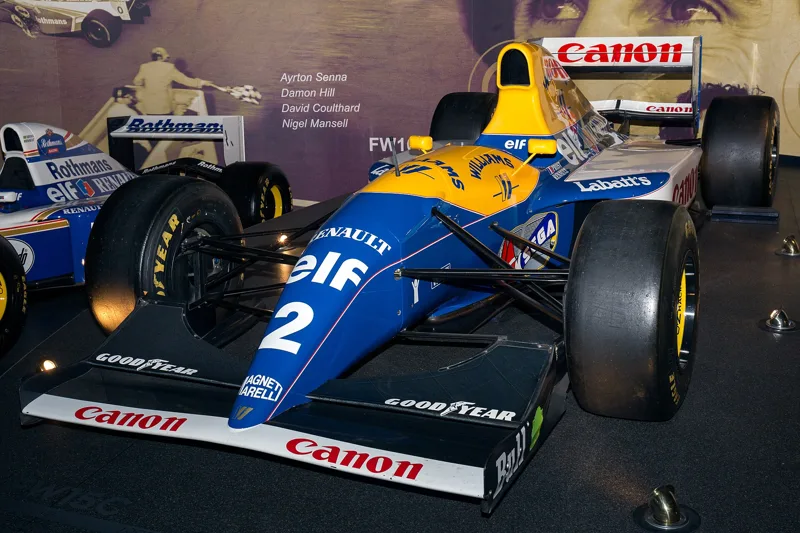
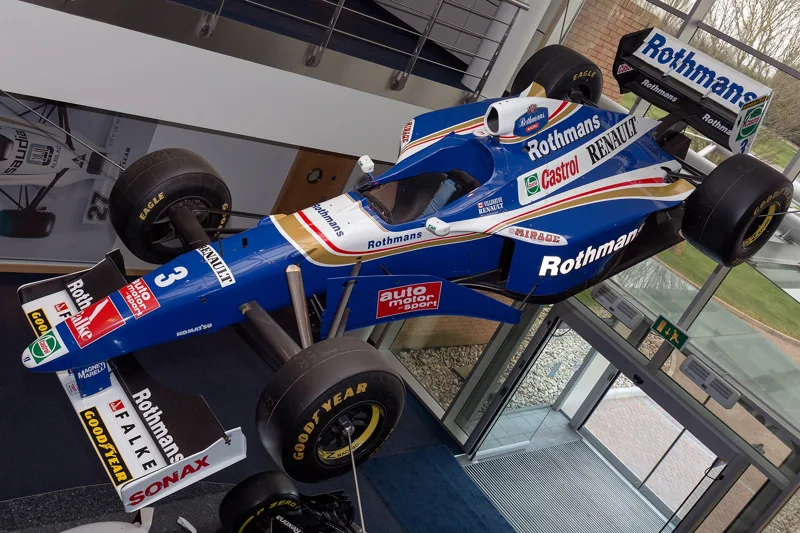
The Williams FW16 was a 1994 Grand Prix car from Adrian Newey's drawing board, built for the British Williams team. It used a 67-degree V10 from Renault Sport and a semi-automatic gearbox, and it was the last car Ayrton Senna drove before his fatal accident at San Marino. Williams won the Constructors' Championship with it.
Adrian Newey created the Williams FW16 for the British team's 1994 campaign. It was a passive car, built after the electronic aids of the previous seasons were removed, and its early handling problems were serious enough that a heavily revised version followed mid-season.
Why was the FW16 built without active suspension?
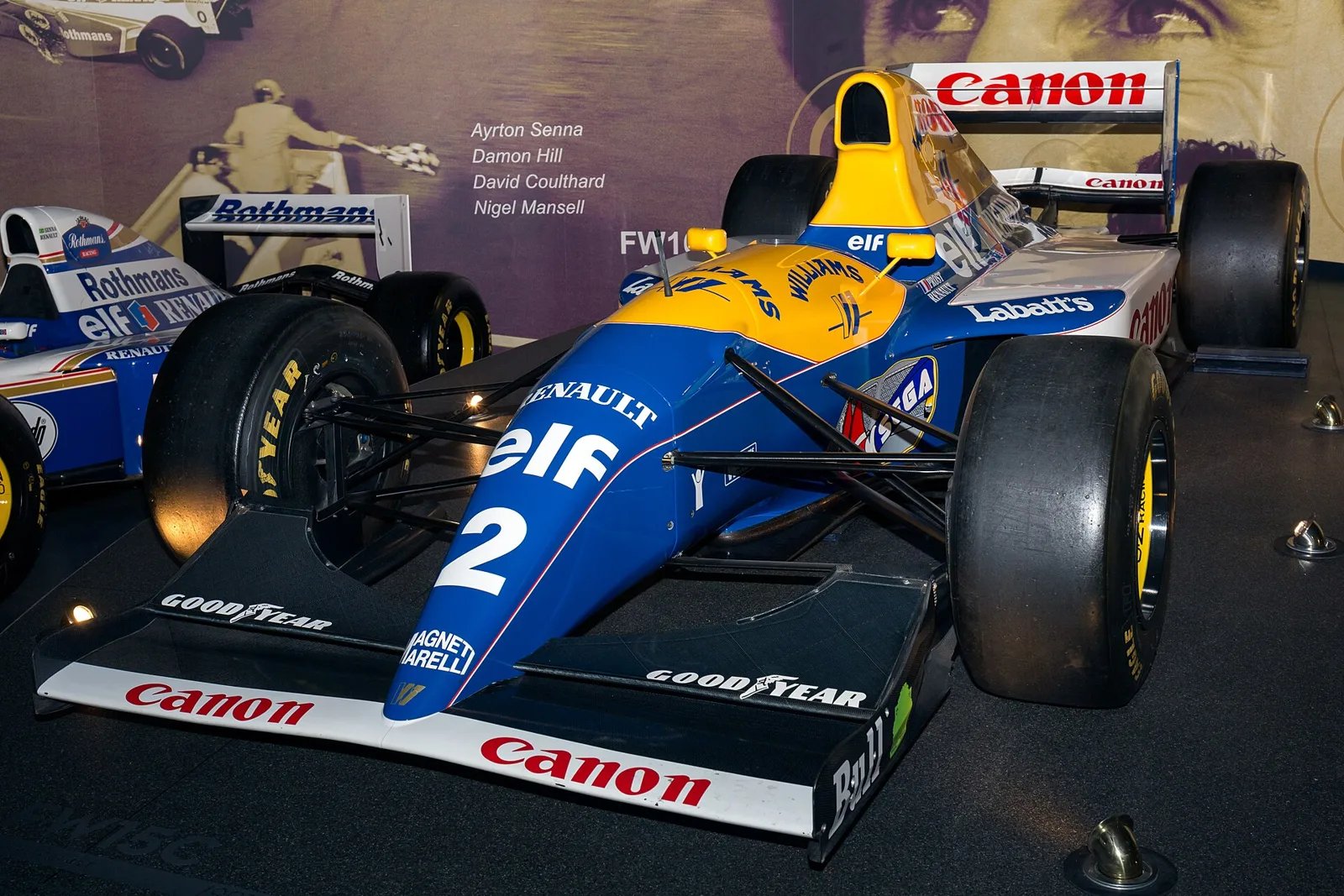
Rules introduced for 1994 banned the electronic devices that the front runners had used in the two seasons before. Built as a passive evolution of the FW15C, a car whose aerodynamics had grown up around active suspension, the FW16 forced the team to rethink its approach to a very different set of conditions.
Newey later explained that the team had concentrated on active suspension for two years, while most of its rivals had been away from it for far less time. Williams therefore had to relearn springs and dampers, which made the transition harder than it was for other teams.
The car also lacked the active suspension and traction control that had shaped the FW15C. Drivers had to adapt to a chassis that behaved very differently from the one that had won races the year before.
Built around active suspension but run without it, the FW16 was fast on paper and hard to tame until Imola.
What were the FW16 specifications?
The FW16 used a 67-degree V10 built by Renault Sport in its RS6 specification, producing approximately 830 hp. Its six-speed transverse sequential gearbox was a lighter, revised version of the unit used the previous year, and the car was limited to semi-automatic shifting.
The rear suspension used an innovative wishbone design, and the driveshafts were enclosed in carbon-fibre shrouds that also served as the upper wishbones. The rear wing's effectiveness hinged on a low outboard tail, something the shrouds made possible, and each shroud could be taken off if officials judged it illegal.
Other changes included a revised bodywork package with a low engine cover and taller sidepods, power-assisted hydraulic steering that reacted to electronic sensors, and the removal of the driver-adjustable anti-roll bar controls that the FW15C and earlier Williams cars had carried. A fuel valve was also fitted so the car could take on fuel during a race, a rule that returned for 1994.
| Version | Key details |
|---|---|
| FW16 | 67-degree V10, RS6 specification, approximately 830 hp; revised six-speed transverse sequential gearbox |
| FW16B | Longer wheelbase, revised front and rear wings, shortened sidepods, opened airbox rear, from the German Grand Prix |
| FW16C | Test car with a 3-litre engine for the 1995 F1 regulations, run on 20 and 22 December 1994 at Paul Ricard |
Why was the FW16 difficult early in 1994?
The FW16 had a very narrow setup window, so weather and track conditions had unusually large influences on how it behaved. Its front wing was too sensitive to ride height, and the car struggled for grip in slow corners. Senna spun out of second place at the Brazilian Grand Prix, and both he and Hill spun in practice at Aida.
Patrick Head explained the front wing problem through a bump in a corner. Over a bump the car could gain far more front downforce than rear, so a car that was balanced in a neutral state could quickly lose its rear end.
After the Pacific Grand Prix, Newey described the main issue as grip in slow corners, while medium and high-speed corners were good. Senna told the team he felt uncomfortable in the car and was not yet fully confident in its characteristics, which made him tense and left him stressed.
What changed at Imola?
The first comprehensive set of modifications came at Imola. The nose profile was revised, the wings sat slightly higher, the end plates were a little taller, and the wheelbase and cockpit surround were both reworked. The aim was to widen the window in which the car worked well.
Cockpit changes were also designed to suit Senna, who wanted more comfort. A steering column extension was welded on for Senna, and Patrick Head cut out part of the chassis to create extra room for him. Even so, the passive car remained springy and unstable, with aerodynamic deficiencies that its rear suspension could not hide.
The car kept shifting its handling balance between understeer and oversteer for the same setup. At a briefing Senna gave at Imola to Newey and his race engineer, David Brown, he described the car as worse than before, and a short account of that exchange appeared in the 2010 film Senna.
Drivers, numbers and the title fight
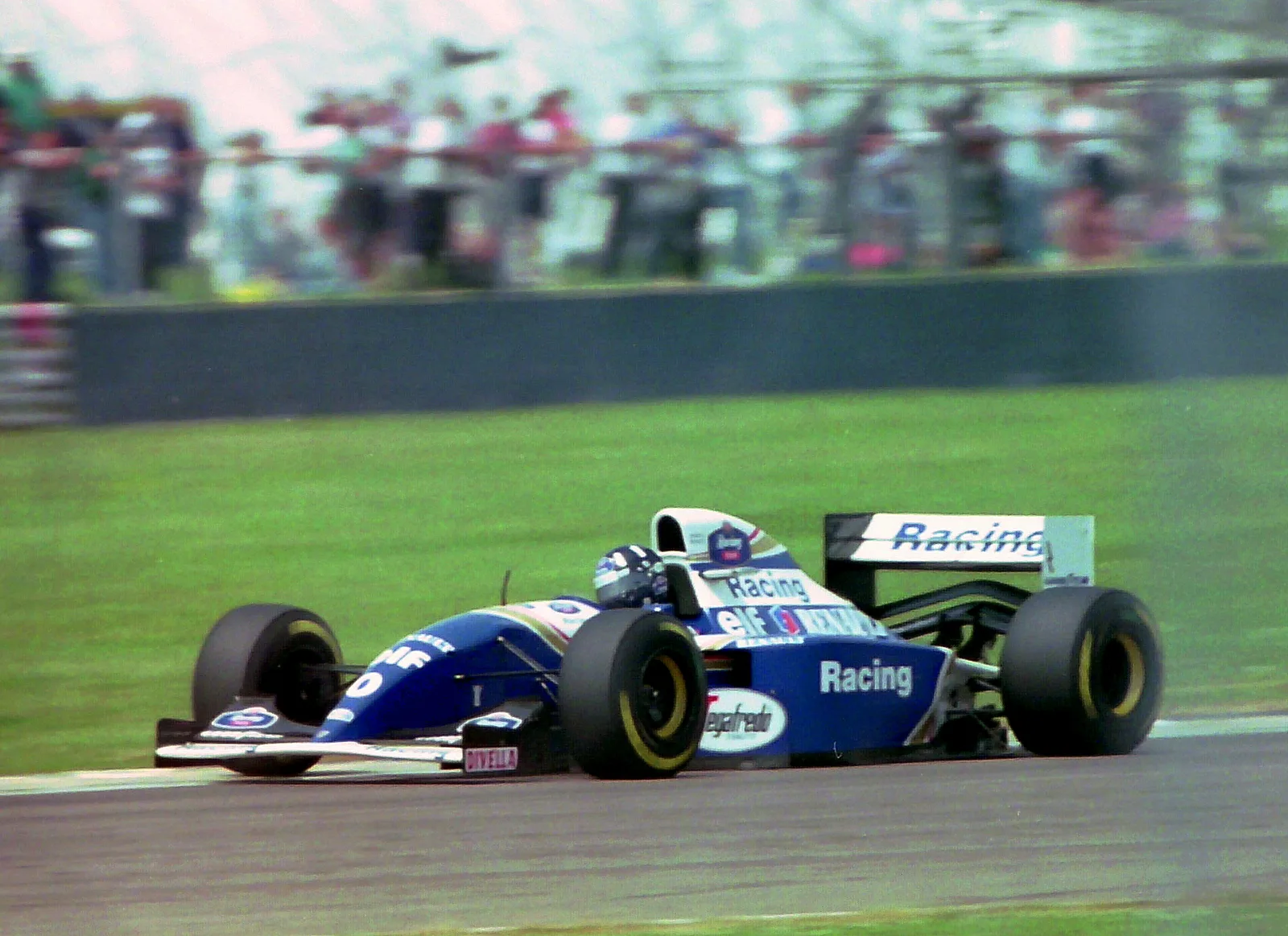
Only the defending champion could use number 1, and that champion, Alain Prost, had left the sport, so Damon Hill ran number 0 for the whole season. Ayrton Senna drove number 2. David Coulthard, a Williams test driver, filled in for most of the year, while Nigel Mansell returned when his Indycar commitments allowed.
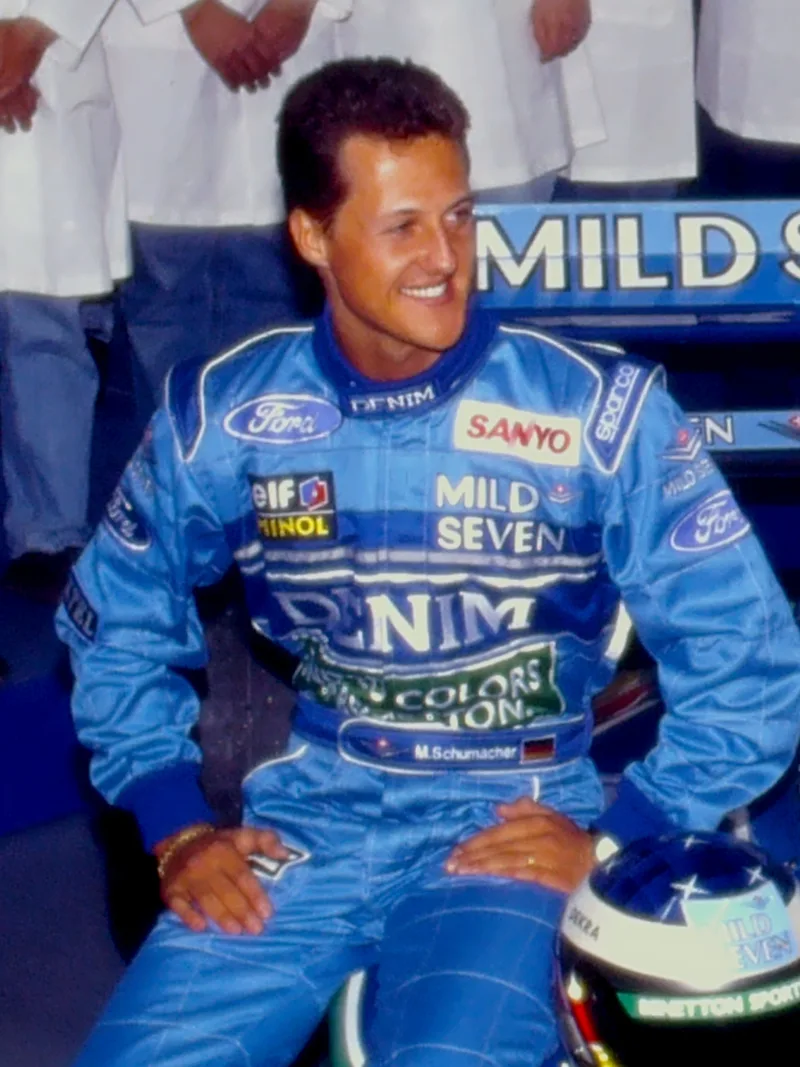
Benetton's B194 and Michael Schumacher dominated the first half of 1994. Hill battled Schumacher for the title and lost by a single point after the final race in Australia. Mansell won that race, which secured the Constructors' Championship for Williams, and Mansell had been the team's drivers champion in 1992.
How did the FW16B change the car?
The FW16B was the heavily revised version, labelled from the German Grand Prix onwards. It had a longer wheelbase, new front and rear wings, shorter sidepods and an opened airbox rear required by the FIA, and it proved very fast and competitive.
Once the front wing endplate diffusers were outlawed, the sidepods had to be shortened and larger bargeboards fitted instead. Hill developed the car himself, and it was much improved over the original design.
Earlier changes had already added bargeboards at the Spanish Grand Prix and FIA-mandated airbox modifications at the Canadian Grand Prix. Those small fixes showed how much work the team had put into making the car usable.
Livery and sponsorship
The car wore a distinctive blue and white livery after Rothmans took over as title sponsor at the end of 1993, replacing both Canon and Camel. The Rothmans logos were swapped at the French, British and German Grands Prix, where the car carried either the word Racing or a barcode-style graphic.
At the Canadian Grand Prix the Rothmans name appeared as Rothmans Ltd. on the bodywork apart from the rear wing, and the patch was swapped for a red and blue graphic of a Formula One car. At the Japanese Grand Prix the team ran one-off sponsorship from the Ueno Clinic on the front wing and the racing suits.
What did the designers say about the car later?
Newey later described the rear-end grip problem as purely a setup issue, and he admitted the front wing had been too low in the original car. Paddy Lowe, who left Williams for McLaren in 1994, said the wind tunnel work of the period did not model how sensitive the aerodynamics were to ride height.
Newey was blunt in a 2014 interview, calling the original car a serious mistake. A 1994 test at Nogaro had already confirmed the sidepods were too long, with the aerodynamics splitting from the diffuser when the nose dipped, and Newey's comments on that test were published in 2015.
The design argument also set Newey and Senna at odds. Senna wanted to develop and race the FW15D in 1994, while Newey favoured the FW16. Gerhard Berger later recalled Senna predicting that the problems would be solved in two or three weeks, and the FW16 did become more competitive after that period.