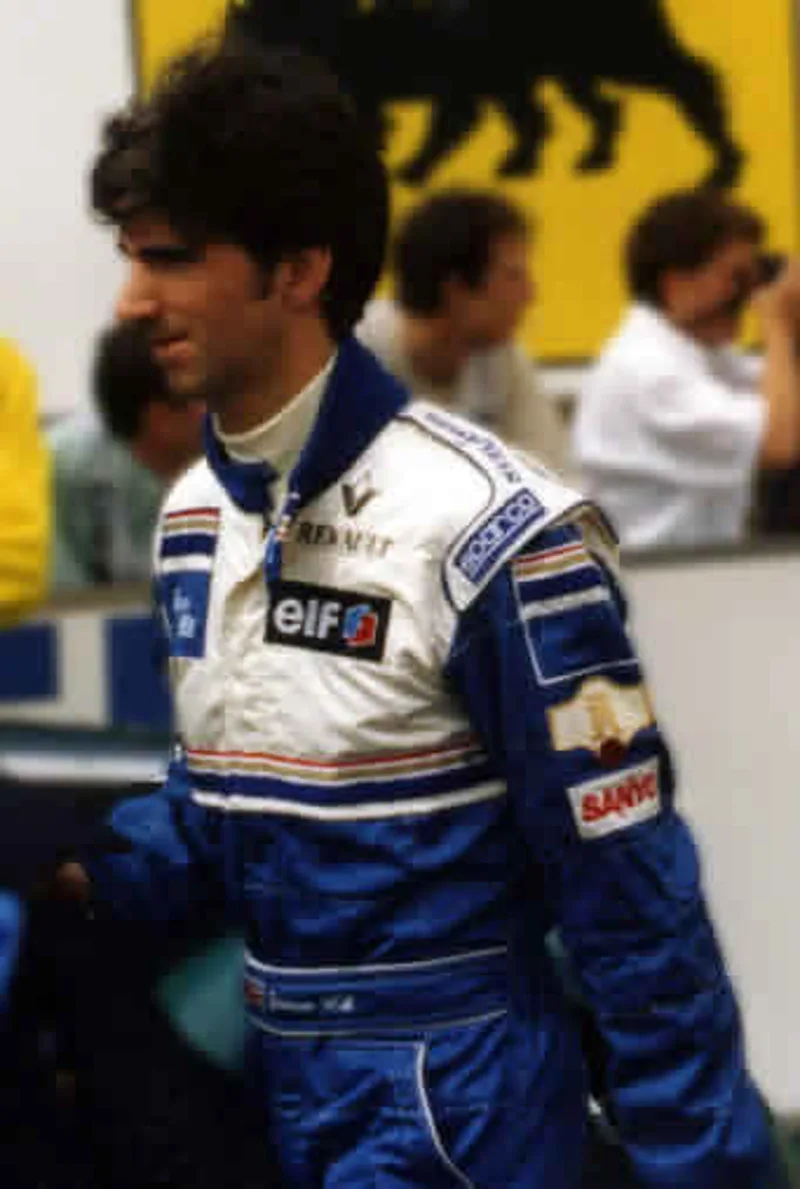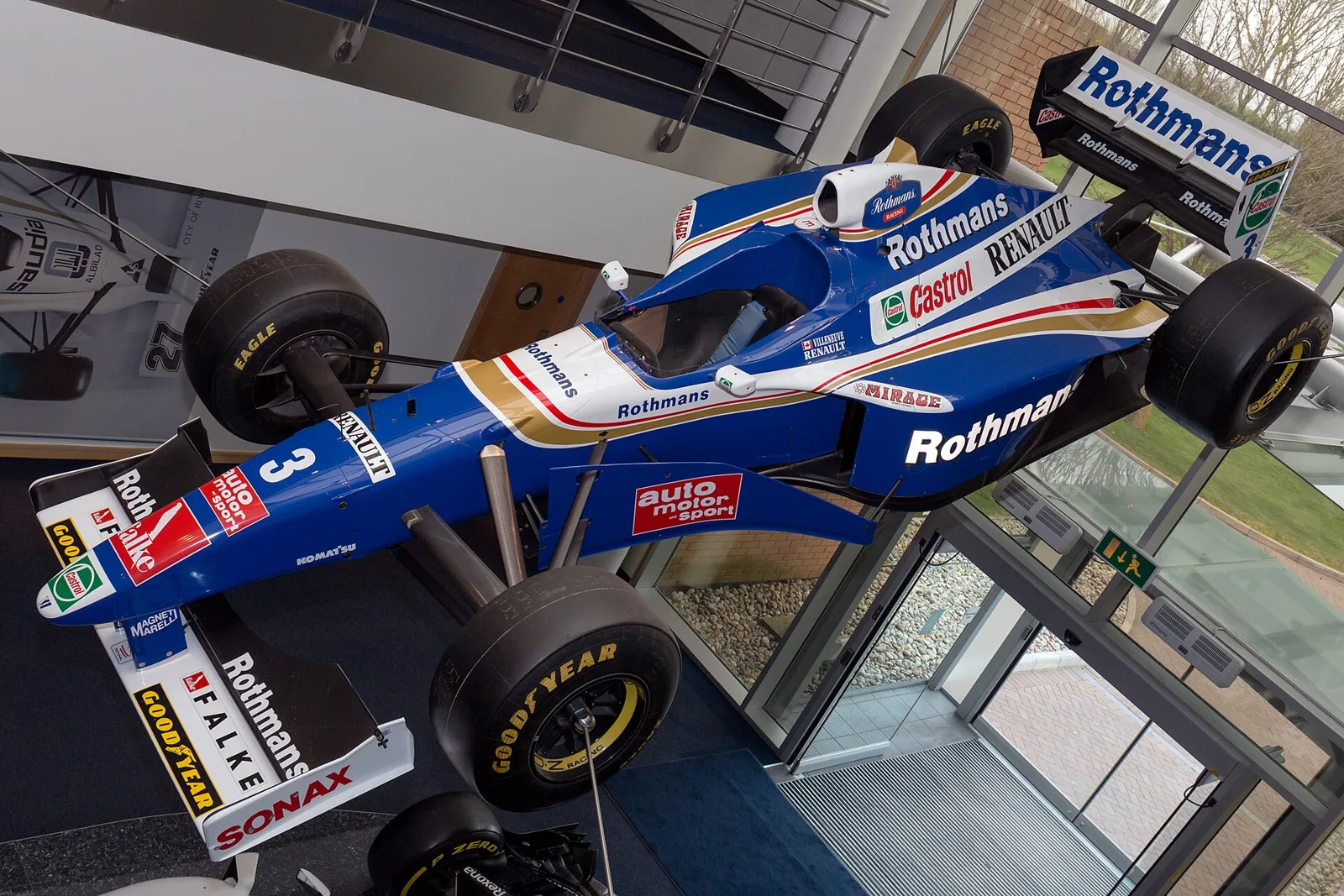
A Renault V10 in its last works season, a Villeneuve-Frentzen pairing and a title decided by a collision at Jerez.
The Williams FW19 was the team's 1997 Formula One car, driven by Jacques Villeneuve and Heinz-Harald Frentzen. Powered by a Renault V10, it gave Villeneuve the drivers title with 81 points and Williams the constructors title with 123 points.
Villeneuve and Frentzen drove the Williams FW19 through the 1997 campaign. It used the last works Renault engine that Williams ran before the manufacturer's temporary withdrawal, and it helped Villeneuve take the drivers title while Williams secured the constructors crown. No later Williams car has won either title since.
What was the FW19 and who drove it?
The FW19 replaced the FW18, which had won both titles in 1996. Villeneuve returned for a second season with the team, while Frentzen arrived from Sauber after Damon Hill was let go. Williams also kept Jean-Christophe Boullion and Juan Pablo Montoya on as test drivers.
Hill moved to Arrows, and his departure opened the second seat that Frentzen filled. For Frentzen it was a fresh start after his time at Sauber, and he joined a team that had just dominated the previous year. The car itself was a development of its predecessor rather than a new concept.
A car that rewarded precision above all else, carried Villeneuve to the title and gave Williams its last Renault-era crown.
How was the FW19 designed?
Adrian Newey, who had shaped the earlier cars, left for McLaren before the season, so the FW19 was the last Williams chassis to carry his input. Geoff Willis took over the remaining design work, and Patrick Head added his own input. Together they targeted a chassis that was more rigid and lighter than the FW18.
The car ran the naturally aspirated Renault RS9 V10 with an in-house Williams gearbox. Its fuel, oil and brake partners were Elf, Castrol and AP Racing, with Penske supplying the shock absorbers. The FW19 was therefore the final Williams to run a works Renault before the manufacturer stepped back for a time.
How did the FW19 feel to its drivers?
Villeneuve called the FW19 his favourite Formula One car, but he said it worked in only a narrow operating window. Once the tyres and set-up were in that window, the car rewarded a driver willing to push it to the limit, particularly in qualifying.
Villeneuve found the car difficult in wet conditions and disliked its tendency to understeer. He compared the grip to driving on ice, though the car always had plenty of it. Frentzen had a harder time, finding the car difficult to drive and struggling to set it up the way he wanted for the whole season.
How did the 1997 season start?
Villeneuve took pole in Australia, 1.7 seconds quicker than Frentzen and 2.1 seconds ahead of Michael Schumacher. A collision with Eddie Irvine at the first corner ended his race. Frentzen then led on a two-stop strategy until his brakes failed three laps from the finish.
Brazil went much better. Villeneuve started from pole and led almost the whole race, while Frentzen, who qualified eighth, finished ninth without points. Argentina gave Williams a 1-2 start, with an early safety car after a Coulthard and Schumacher collision. Villeneuve won again, while Frentzen's clutch broke after five laps.
At San Marino Frentzen beat Michael Schumacher to his first Formula One victory as Villeneuve dropped back with gearbox problems. Villeneuve retired on lap 41, yet he still held the championship lead. Frentzen's season was tough, and the San Marino win and Japanese second place were his best results.
Why did the team slump in the middle of the year?
Monaco and Montreal exposed the car's limits. Frentzen took pole at Monaco, but rain on race day caught the team on slick tyres, and Villeneuve retired after accident damage. At Montreal Villeneuve crashed out early, while Frentzen could only finish fourth.
Frentzen's Monaco ended on lap 40 when he drifted wide at the seafront chicane, bounced over the kerbs and hit the wall, damaging both front suspensions. Villeneuve had also damaged his left rear suspension at Sainte-Devote in qualifying, and the problem returned in the race. At Montreal Villeneuve had lost pole to Schumacher in the final minutes of qualifying, then hit the Wall of Champions on lap two. That handed Schumacher the win and the championship lead, and Frentzen had a poor start and three pit stops.
Schumacher won at France by 23 seconds, with Williams taking second and fourth. Silverstone then brought Villeneuve a win from pole, while Schumacher retired with a wheel bearing problem. Frentzen had stalled on the parade lap and started from the back.
How did the title race swing back?
Silverstone gave Villeneuve a win from pole and Williams its 100th Formula One victory. Hungary followed with his fifth win of the year, his second in succession at the Hungaroring, as Schumacher's advantage began to shrink. Those wins brought the title fight back to life.
Hockenheim was the low point of this stretch. Frentzen's suspension broke after contact with Irvine on the first lap, and Villeneuve spun off on lap 34 under braking for the Jim Clark chicane. The team's championship hopes depended on the next round.
In Hungary Frentzen led on a one-stop strategy until his fuel valve detached on lap 29 and he was forced out. Hill's hydraulic pump failed late on, leaving him stuck in third gear, and Villeneuve passed him on the final lap to win.
Belgium opened in heavy rain, and the race began behind the safety car, the first such start in Formula One. Villeneuve was on the wrong wet tyres and later the wrong slicks, falling to sixteenth before recovering to fifth with the fastest lap. Frentzen pitted for slicks and inherited third after Mika Hakkinen's disqualification.
Austria brought another late run. Villeneuve took pole on his final qualifying run, and Hakkinen's Mercedes engine failed early in the race. Schumacher received a stop-go penalty, and Williams moved ahead of Ferrari in the Constructors' table, 12 points clear.
What happened in Italy and Luxembourg?
Italy was a step back. Williams qualified second and fourth, with Frentzen ahead, but the high-speed Monza layout did not suit the cars. They finished third and fifth, again with Frentzen in front, while Schumacher took sixth. Villeneuve was warned in Friday practice for failing to slow for yellow flags, and he closed to within ten points of Schumacher.
Luxembourg brought Villeneuve's seventh win of the season. He and Frentzen touched on the run to the first corner, which dropped Villeneuve to third, while Frentzen's ignition switch briefly cut out his engine. The two McLarens then suffered engine failures on laps 42 and 43, and Villeneuve inherited the lead. The win left him nine points clear of Schumacher, and Williams extended its Constructors' lead over Ferrari to 26 points.
Did the FW19 win the Constructors' title?
Yes. Japan was the penultimate round, and Frentzen's second place there was enough to clinch the Constructors' championship. Villeneuve was excluded for a third offence of ignoring yellow flags, though the team appealed and he raced under appeal from pole.
Villeneuve finished fifth but later lost the two points after the team withdrew its appeal. He left Japan one point behind Schumacher with one race remaining, and the Constructors' crown was already secured.
| Race | Result |
|---|---|
| Australia | Villeneuve pole, out at the first corner; Frentzen retires |
| Brazil | Villeneuve wins; Frentzen ninth |
| Argentina | Villeneuve wins again |
| San Marino | Frentzen wins, his first career victory |
| Monaco | Frentzen pole; both drivers out |
| Canada | Frentzen fourth; Villeneuve crashes on lap 2 |
| Britain | Villeneuve wins from pole; Williams 100th victory |
| Hungary | Villeneuve wins his fifth race of the year |
| Belgium | Frentzen third after Hakkinen's disqualification |
| Austria | Villeneuve pole; Williams overtakes Ferrari in the standings |
| Japan | Frentzen second; Constructors' title clinched |
| Jerez | Villeneuve third, champion; Frentzen sixth |
Read down the table and the pattern is clear: strong pole positions early on, a difficult middle and a late surge that decided the title.
What happened at the Jerez title decider?
Schumacher arrived at Jerez on 78 points, one more than Villeneuve on 77, and the title showdown was decided in the final round. Villeneuve claimed pole there with the same time as Schumacher and Frentzen, 1:21.072, and the race was settled by a collision on lap 48.
Villeneuve dropped to third at the start after too much wheelspin, letting Frentzen and Schumacher ahead. He worked his way back into contention, and on lap 48 he dived down the inside of Schumacher at the Dry Sac hairpin. The two cars touched, and Schumacher went into the gravel. Villeneuve, with damage to his car, finished third.
Schumacher was disqualified from second place for his manoeuvre, which promoted Frentzen to second in the drivers table on 42 points. Frentzen had sacrificed his own race to support Villeneuve and finished sixth. Villeneuve took the title with 81 points, and Williams took the constructors crown with 123 points.
Sponsorship and later use
The FW19 was the last car to carry Rothmans title sponsorship, which ran for four seasons in total. The blue on the engine cover was reversed for 1997, and in countries with tobacco advertising bans the name was covered by a question mark, a barcode or a Ro? logo.
New backers such as ProSieben and Snap-on were showcased on the bargeboards during the year. Winfield took over as title sponsor for 1998. The FW19 also took part in testing that year: in April 1998 Tommi Makinen and Mick Doohan drove it in FW20 livery at Barcelona-Catalunya.
What is the FW19's legacy?
No Williams car has won either championship since the FW19, and it was the last Renault-powered title winner until the Renault R25 in 2005. Its record of eight victories, eleven poles and fifteen podiums in seventeen races stands as a clear marker of Williams's late nineties form.
Villeneuve called it his favourite car, yet the same car asked a lot of its drivers. Its narrow operating window rewarded precision and punished anything less. The title it helped win also closed the Rothmans era, which made way for Winfield from 1998. The car is remembered most for Villeneuve's title, which was decided in the final race.