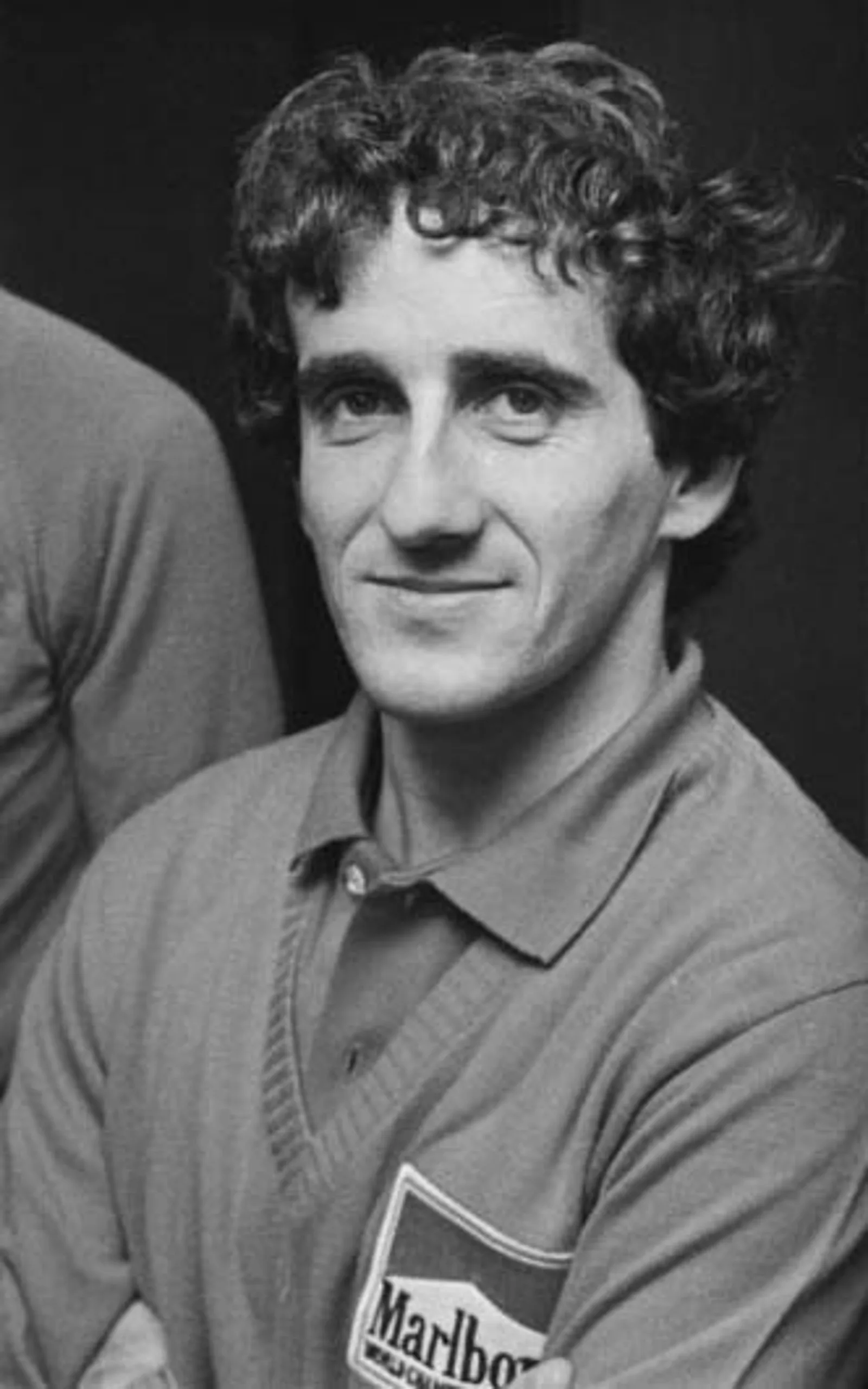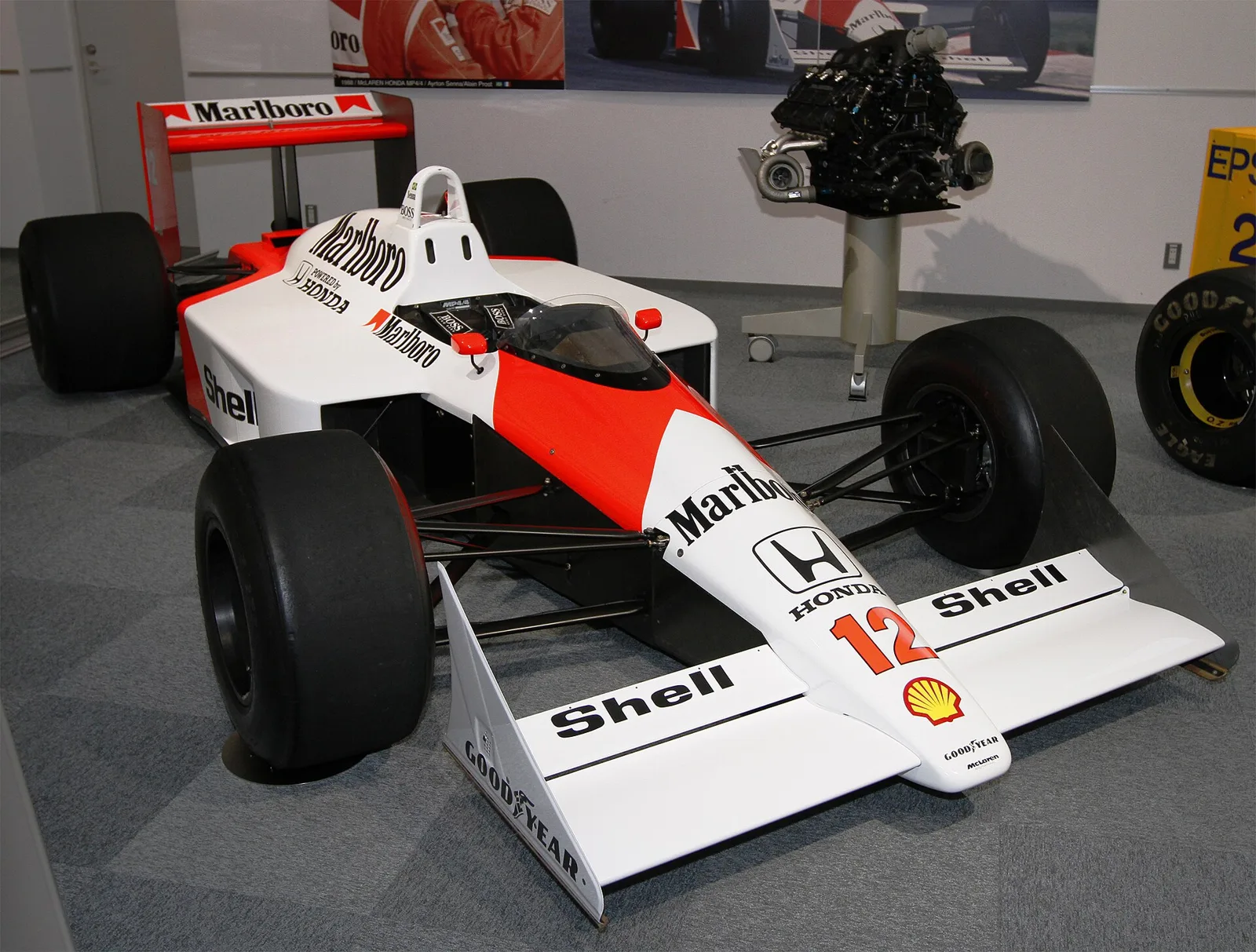
A low, reclined-driver chassis, a Honda turbo V6 with a 150-litre fuel allowance and a season that nobody else could match.
The McLaren MP4/4 was the car McLaren and Honda used to win the 1988 Formula One season, driven by Alain Prost and Ayrton Senna. It took 15 wins from 16 races and 15 pole positions, powered by a 1.5-litre Honda V6 turbo engine.
Few Formula One cars have dominated a season the way the McLaren MP4/4 did in 1988, when Honda's turbo V6 carried Alain Prost and Ayrton Senna to 15 wins from 16 starts. The car was built for a year many teams treated as a transition, and it handled the fuel limit of that era with unusual skill. Its record still comes up in nearly every discussion of the greatest race cars.
Who designed the McLaren MP4/4?
Steve Nichols, an American engineer, led the design team. Matthew Jeffreys, Dave North, Bob Bell and other McLaren staff worked with him, and the car was a fresh design rather than an update of the previous year's machine. On the Honda side, Osamu Goto led the engine development that produced the RA168E.
Nichols later said he felt honoured to lead the group, and he described the MP4/4 as proof that teamwork could produce a winning design. Its drivers were Prost and Senna, and the chassis was shaped as much by the test team and mechanics as by the drawing office.
A turbo V6, a 150-litre fuel allowance and a season that gave McLaren 15 wins from 16 races.
Why did McLaren switch to Honda turbo power?
McLaren moved to Honda for 1988 after four years of TAG-Porsche engines. Honda had powered the Constructors' champions of 1986 and 1987, and its 1.5-litre V6 turbo had been the strongest unit in the sport since mid-1985. Ron Dennis had also approached Honda years earlier for his Formula 2 team.
The timing carried a risk. Rival teams were preparing naturally aspirated machinery for 1989, while McLaren's car had to run within a fuel allowance that normally aspirated engines did not face. Honda and McLaren had to balance boost and consumption with great care across a full race.
How was the MP4/4 built and shaped?
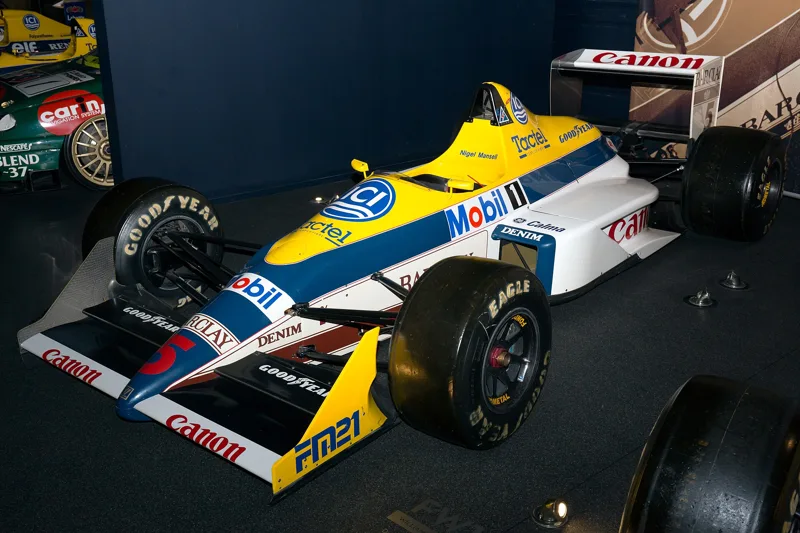
The chassis sat much lower than the MP4/3 that preceded it, which forced the drivers into a reclined posture. A safety regulation meant the highest point of each helmet had to sit under a notional line running between the roll bar and the cowling. Teams launching new cars in 1988 also had to put the driver's feet behind an imaginary front axle line.
Six chassis were moulded from carbon fibre with help from Hercules Aerospace. The car appeared early in 1988 as one of the few genuinely new designs that year, while several rivals ran updated versions of their 1987 cars.
What did the 1988 season look like?
McLaren won 15 of the 16 races and took 15 pole positions, scoring a record 199 points. The team finished 134 points clear of Ferrari in the Constructors' Championship. Senna earned 13 of the poles, and Prost took the other two.
The early signs came in Brazil, where Senna took pole by half a second from Nigel Mansell's naturally aspirated Williams-Judd, despite very little pre-season running. Prost found the right balance only in the morning warm-up and qualified third.
Imola showed the gap most clearly. Senna and Prost both lapped in the 1:27s, while no other driver got below 1:30. Nelson Piquet, in a Lotus with the same Honda engines, qualified 3.352 seconds slower than Senna. By lap 55 the two McLarens had lapped the whole field in a 60-lap race.
The car retired only four times in the year. Prost went out at Silverstone with handling problems and at Monza with an engine failure, the one in-race engine failure McLaren had all year. Senna crashed out of a 50-second lead at Monaco, then crashed again at Monza while lapping Jean-Louis Schlesser, which let Gerhard Berger win for Ferrari.
Even the weaker finishes were strong. Senna's sixth in Portugal and fourth in Spain came with fuel readout problems that forced him to slow down, while Prost won both races. Under the best 11 scores rule Senna could drop both results, whereas Prost had to drop three of his second places.
How fast was the MP4/4 in a straight line?
The fastest speed trap of 1988 belonged to the McLarens at Hockenheim, where both drivers reached 333 km/h (207 mph) on the long straight leading into the forest. Berger's Ferrari managed 328 km/h (204 mph), the best from a rival. The car was still 19 km/h (12 mph) below the quickest speed recorded in 1987.
Silverstone brought a change: McLaren removed the turbo snorkels from the top of the side pods. The first day of qualifying showed an imbalance, so the snorkels returned for the rest of that weekend. Testing the following week traced the problem to suspension settings, and the snorkels stayed off for the rest of the season.
How did the fuel rules shape the car?
The fuel allowance was 150 litres per race, while naturally aspirated rivals had no such cap. The team had to turn boost down and manage the engine maps closely. The RA168E was designed around a reduced boost level, cut from 4.0 bar to 2.5 bar, instead of simply upgrading the 1987 unit.
Shell supplied a special fuel blend. Neil Trundle, Senna's chief mechanic in 1988, said it was around 84% toluene and 16% methanol for qualifying, and about 60-40 toluene to methanol for racing. Officials checked the tanks closely after each race, because the car was an obvious target.
Where does the MP4/4 rank in the record books?
The car led 97.3% of the laps in 1988, or 1,003 of 1,031, the highest share recorded in a season. It also held the highest win rate until 2023, when the Red Bull RB19, another Honda-powered car, took it with 95.45%. The MP4/4 remains a reference point for every dominant season that followed.
Its engineers and designers named it the finest Formula One car ever built, and Autosport readers named it the greatest race car of the 20th century. It was the last turbo-powered McLaren to win the Constructors' title until the MCL38 of 2024.
What did the MP4/4 lead to?
In 1989 the team moved on to the Honda V10 powered MP4/5, which delivered another Constructors' title and a Prost and Senna one-two in the standings. A modified car, the MP4/4B, was used to test Honda's new 3.5-litre V10 and was reportedly faster than the MP4/5 in some tests.
Chassis number 1 is usually at the McLaren Technology Centre, while number 6 has been shown at the National Motor Museum in Beaulieu in the Prost livery. Honda keeps a car at its collection hall in Motegi, and the MP4/4 has appeared in video games and in a Lego Icons set.
Season summary
| Measure | 1988 result |
|---|---|
| Race wins | 15 of 16 |
| Pole positions | 15 (Senna 13, Prost 2) |
| Front row lockouts | 12 races |
| Fastest race laps | 10 |
| Laps led | 97.3% (1,003 of 1,031) |
| Retirements | 4 (Prost 2, Senna 2) |
| Constructors' points | 199 |
| Fuel allowance | 150 litres per race |
| Top speed | 333 km/h (207 mph) at Hockenheim |
How consistent was qualifying through 1988?
Qualifying was dominated but not perfect. Prost failed to reach the front row four times, in Brazil, Detroit, Britain and Hungary, and at the Hungaroring he qualified only seventh. Senna took pole there by 0.108 seconds from Mansell's Williams.
Six races saw both McLarens more than a second quicker than the rest of the field: San Marino, Monaco, Germany, Portugal, Japan and Australia. Britain was the only race without a McLaren on the front row, where Ferrari's Michele Alboreto qualified second. Across the season the team took 15 pole positions, 13 for Senna and two for Prost.
Where are the six MP4/4 chassis now?
All six chassis survive. Chassis 1 and Chassis 6 remain with the McLaren Group. Chassis 1 featured in a demonstration by Sergio Perez during the Goodwood Festival of Speed in 2013, and Chassis 6 took Bruno Senna around Goodwood in 2009 in the Senna livery.
Chassis 2 belongs to a private collector in Chicago and took Bruno Senna around Interlagos in 2019. Chassis 4 is part of the Audrain Collection in Newport, Rhode Island, and Alain Prost demonstrated it at Goodwood for the 75th anniversary of the championship. Chassis 5 belongs to Honda and appears at the Honda Collection Hall in Motegi from time to time.
Was there a secret power boost?
A persistent claim said that Honda had found a way round the FIA's pop-off valves, giving the McLarens around 100 bhp more than the often quoted 650 bhp. Steve Nichols rejected the idea. The 150-litre fuel allowance meant that extra power could not be used for a full race, and the scrutineers checked the fuel tanks closely because the team kept winning.
What did the MP4/4 change for 1989?
The MP4/5 was designed by Neil Oatley for the Honda V10 and was followed by the MP4/5B. Together those two cars brought the team two Drivers' titles, two Constructors' titles, 16 wins, 27 poles and 12 fastest laps over the 32 races of 1989 and 1990, with 36 podium finishes.
The MP4/4B test mule was, according to several people at the team, quicker than the new car. Several McLaren personnel, including the designers and the chief mechanic, said it was arguably a better car than the 1989 machine.
How did Imola test the fuel rules?
Imola was notoriously hard on fuel, particularly for turbo cars that had seen late-race retirements in recent years. Lapping the whole field at that pace showed the efficiency of the McLaren, as well as the fuel work Honda had carried out on the RA168E.
Six MP4/4 chassis were built, and the numbers 1 to 6 were used throughout the year.
What did the Silverstone aero change cost?
Ron Dennis estimated that the aerodynamic research behind the Silverstone change had cost the team around 150,000 pounds. Steve Nichols considered the gain minimal, and it gave no extra horsepower to the Honda engine.
The episode shows how closely the team tracked every change. Testing the week after the British Grand Prix traced the imbalance to suspension settings rather than to the snorkels, which is why the snorkels were never seen again that season.
The 1989 car was planned as an evolution of the MP4/4, which gave Honda and McLaren more development time for the new rules.