An all-British Grand Prix project from 1945 that wrestled with complex engines for years before Graham Hill and the 1962 title made it briefly the country's champion.
British Racing Motors was a Formula One team set up in 1945 that raced from 1951 to 1977. It won seventeen of its 197 Grands Prix and took the 1962 constructors' title when Graham Hill became world champion, despite engines that were often unreliable.
British Racing Motors, usually called BRM, was a British Formula One team that raced from 1951 to 1977. It was founded in 1945 at Bourne in Lincolnshire, and it won the constructors' championship in 1962. Its ambitious engines, including a V16, a flat-eight pair and a V12, made it famous for both genius and frustration.
The team's story is one of national pride, heavy engineering and repeated setbacks, broken up by a championship and a handful of race wins. This guide follows the path from its postwar origins to its eventual collapse.
Where did BRM begin?
The team came into being in 1945, created by Raymond Mays, a builder of pre-war ERA machines, and his longtime partner Peter Berthon. Mays wanted an all-British Grand Prix car that would show what the country's industry could achieve, and money flowed in from car makers and suppliers through a trust fund.
The trust structure proved unwieldy. As some backers withdrew, disappointed by slow progress, the project fell to Alfred Owen of the Rubery Owen group, a manufacturer of car parts who took over the team outright. From 1954 to 1970 the works cars ran under the Owen Racing Organisation name, and Louis Stanley, Owen's brother-in-law, later took charge.
Production moved into a building called The Maltings on Spalding Road in Bourne, a former ERA plant abandoned in 1939. Former ERA staff, Harry Mundy and Eric Richter among them, returned to BRM. Testing took place at a facility on Folkingham aerodrome.
An all-British national project that spent years fighting its own engines before a world title brought it briefly to the top.
Why did the V16 hold BRM back?
The first post-war rules allowed either a 1.5-litre supercharged engine or a 4.5-litre normally aspirated one. BRM chose a 1.5-litre supercharged V16, a layout with few precedents in road cars. Rolls-Royce supplied the centrifugal superchargers, and the engine did not fire until June 1949.
Tony Rudd, lent by Rolls-Royce, worked on the supercharging and stayed with BRM for almost twenty years. The engine produced enormous power over a narrow band of revs, so the throttle had to be handled with care to stop wheelspin through the narrow tyres of the day. The Type 15 won its first two starts at Goodwood in September 1950, with Reg Parnell at the wheel.
Those were its last good days. The engine proved unreliable and hard to develop, and the team could not solve the problems fast enough. By 1952 the governing body had announced a 2.5-litre atmospheric formula for 1954, and the V16 was left behind.
How did BRM's mid-engined cars reach the top?
The Type 25 came next, with a 2.5-litre four-cylinder engine designed by Stewart Tresilian. It arrived late and needed a long development process, and it did not win a race until the 1959 Dutch Grand Prix. Colin Chapman helped improve the car in 1956, and Stirling Moss ran one briefly in 1959 for the British Racing Partnership.
Cooper's rear-engined cars were becoming dominant, so BRM built the P48 in a rear-engined layout using major parts of the P25. The P48 was later revised for the 1.5-litre rules in 1961, but its own engine missed the deadline, so the cars ran a Coventry-Climax four-cylinder unit and achieved little.
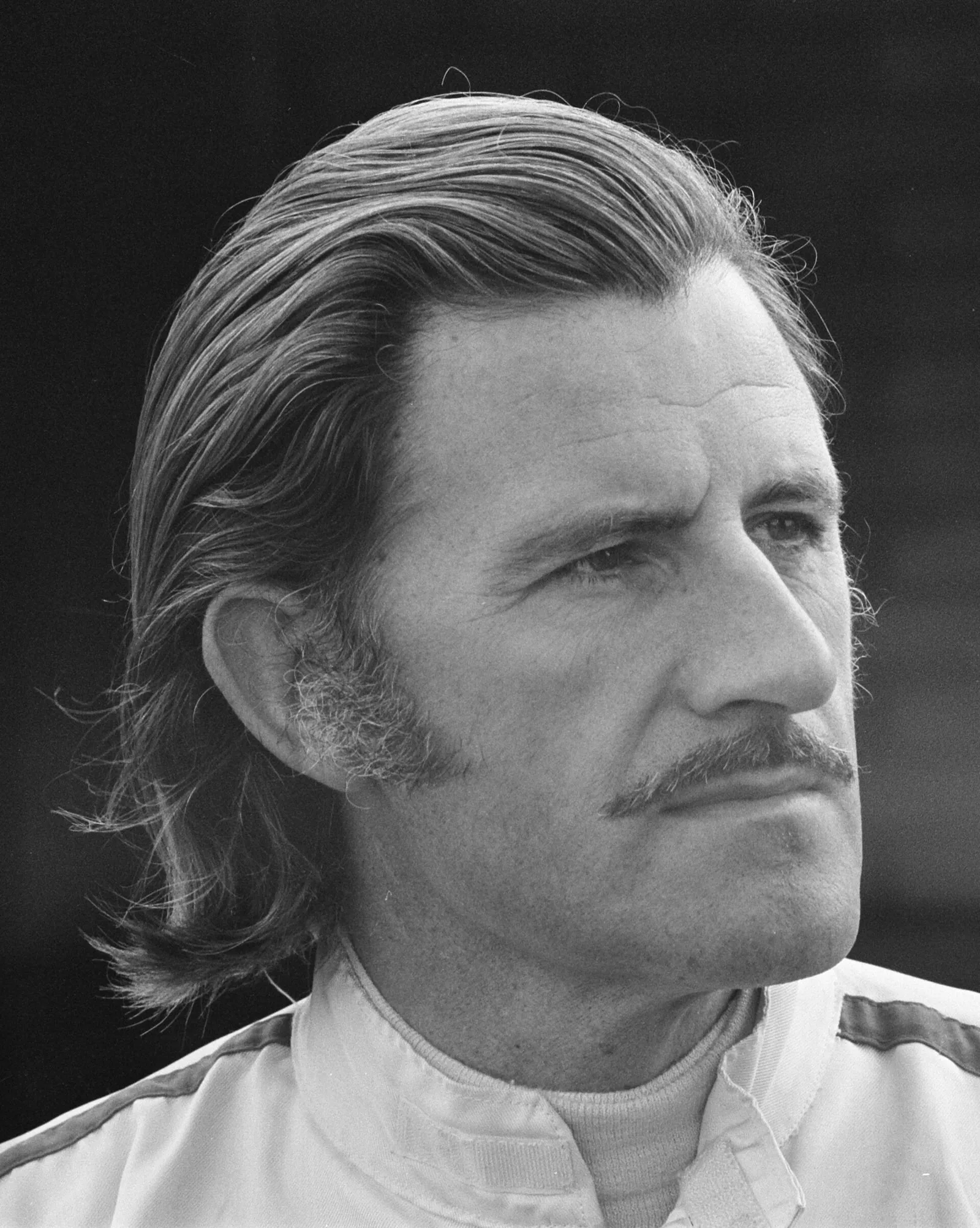
By the end of 1961 BRM had an engine of its own, a V8 designed by Peter Berthon and Aubrey Woods that could match the Ferrari V6 and the Coventry Climax V8. Tony Rudd, promoted to chief development engineer, brought the basic engineering and reliability problems under control. He was given full executive authority in early 1962, after Graham Hill and Dan Gurney had gone on strike over the team's problems.
How did BRM win the 1962 championship?
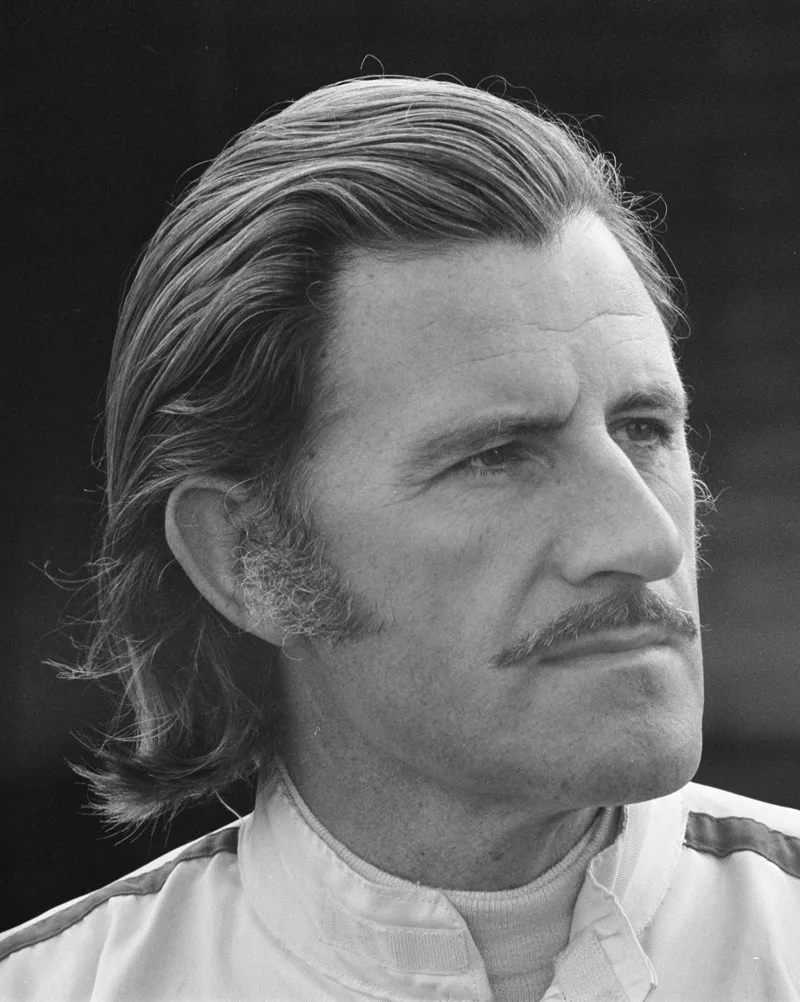
BRM's mid-engined P57 carried Graham Hill to the World Drivers' Championship in 1962, the team's only title. The V8 power had risen to 210 bhp at 11,000 rpm by 1965, and a faster version was used briefly at Monza that year. A planned four-valve version with Weslake Engineering never materialised.
Alfred Owen wanted the team to pay its way, so the V8 was sold to privateers. It appeared in many 1.5-litre cars, including private Lotus and Brabham chassis, and enlarged Tasman versions of 1.9 to 2.1 litres helped competitors in 1966 before full three-litre engines arrived.
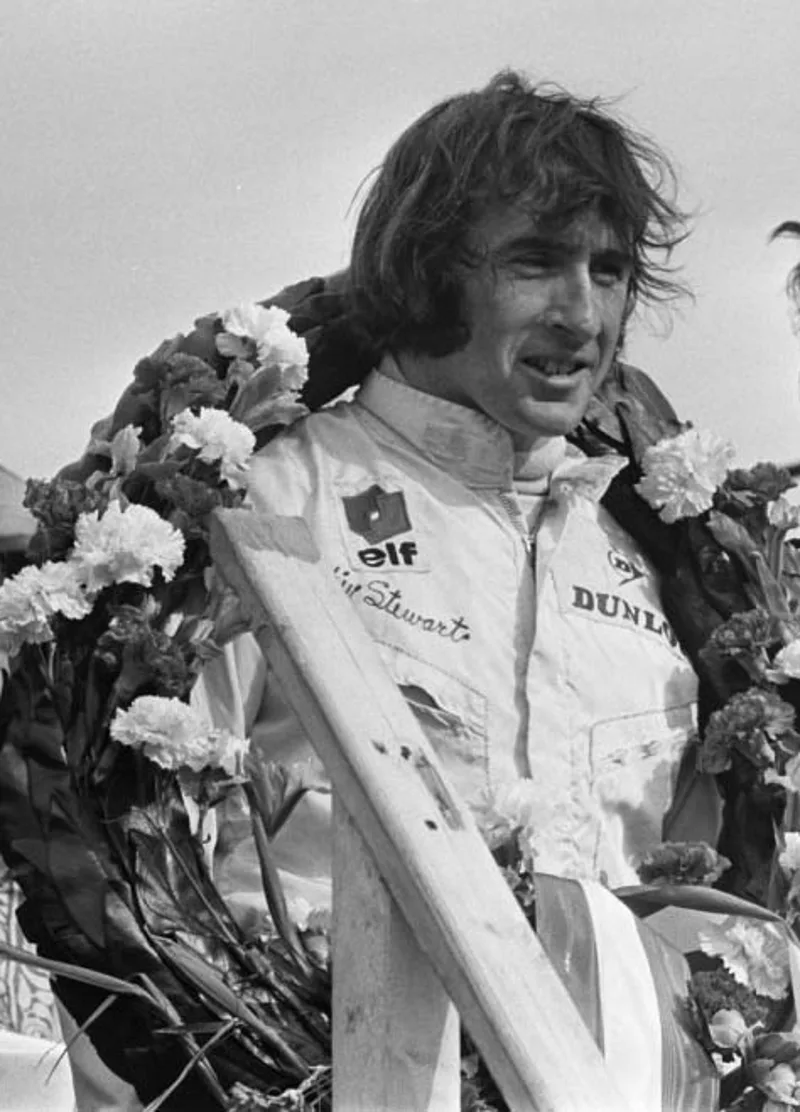
The monocoque P261 V8 car followed, and it saw useful service early in the three-litre formula. Jackie Stewart joined Hill in 1965 and won his first Grand Prix at Monza in his debut season. BRM was again late to a new formula, and older cars kept running even after the next engine was ready.
What was the H16 engine and why did it fail?
The 1966 regulations allowed three-litre atmospheric engines, and BRM turned down a proposal for a V12 in favour of the H16. Designed by Tony Rudd and Geoff Johnson, it was effectively two flat-eight engines stacked one above the other, with their crankshafts geared together.
The H16 was powerful but heavy and unreliable. Rudd said the castings were made heavier than his drawings specified, and the first unit delivered to Lotus needed six people to lift it from the van into the workshop. The engine earned the team the nickname British Racing Misery. Lotus fitted it to the Lotus 43 as an interim measure, and Jim Clark won the United States Grand Prix at Watkins Glen with it, the only world championship victory the H16 ever achieved.
A redesigned H16 with a narrow-angle four-valve head was never raced. BRM chose instead the V12 that was already being sold to other teams with good results.
How successful was the BRM V12?
Originally drawn for sports cars, the V12 made its Formula One debut in McLaren's M5A. In 1967 the two-valve version produced about 360 bhp at 9,000 rpm. A four-valve head borrowed from the H16 layout raised output to 452 bhp at 10,500 rpm, and a claimed 465 bhp arrived in 1969.
The first V12 chassis, the P126, was designed under contract by Len Terry's consultancy. Bruce McLaren drove a version to victory in a Tasman round at Teretonga but was unimpressed by the car. For 1969 BRM developed the four-valve engine in a slimline car, the P139, and John Surtees joined as lead driver. Surtees stayed for a single season, while Tony Rudd left for Lotus and Geoff Johnson headed for Austin Morris.
The team recovered under designer Tony Southgate. Pedro Rodriguez took a P153 to victory at Spa in 1970, and Jo Siffert and Peter Gethin added wins in 1971 with the P160. Those victories marked the team's last strong peak before a bad period.
What went wrong for BRM in the 1970s?
Siffert and Rodriguez died before the 1972 season began, and the team faced another complete rebuild. Its last world championship race win came when Jean-Pierre Beltoise dominated a wet Monaco Grand Prix in a P160. He also won the non-championship race later in the year.
The 1972 season was chaotic. Louis Stanley had secured Marlboro as a major sponsor, and he initially planned to run up to six cars for a mix of established and paying drivers. The team ran as many as five before the sponsors insisted on cutting back, and only three cars were entered in 1973 for Beltoise, Lauda and Regazzoni. Marlboro then moved to McLaren for 1974.
The final notable result came when Beltoise finished second in the 1974 South African Grand Prix, driving the P201. That car, designed by Mike Pilbeam, had a pyramid-shaped monocoque. The Owen Organisation then ended its support, and the team ran on a lower-key basis as Stanley-BRM until 1977. Its P207 failed entirely, and the team folded.
What colours did BRM cars wear?
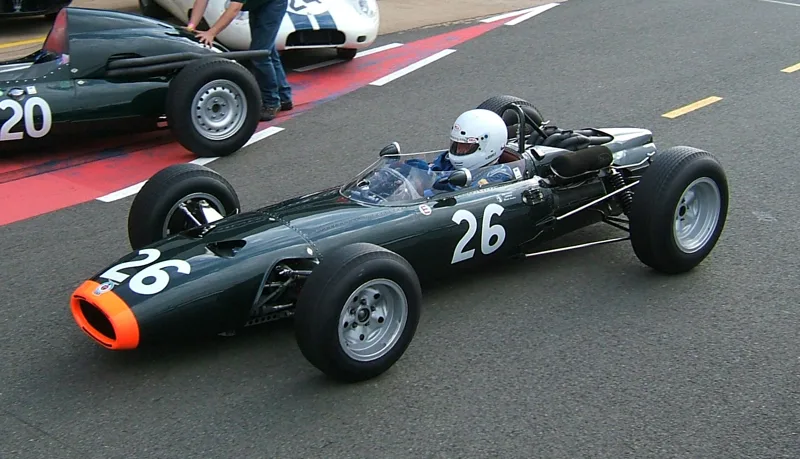
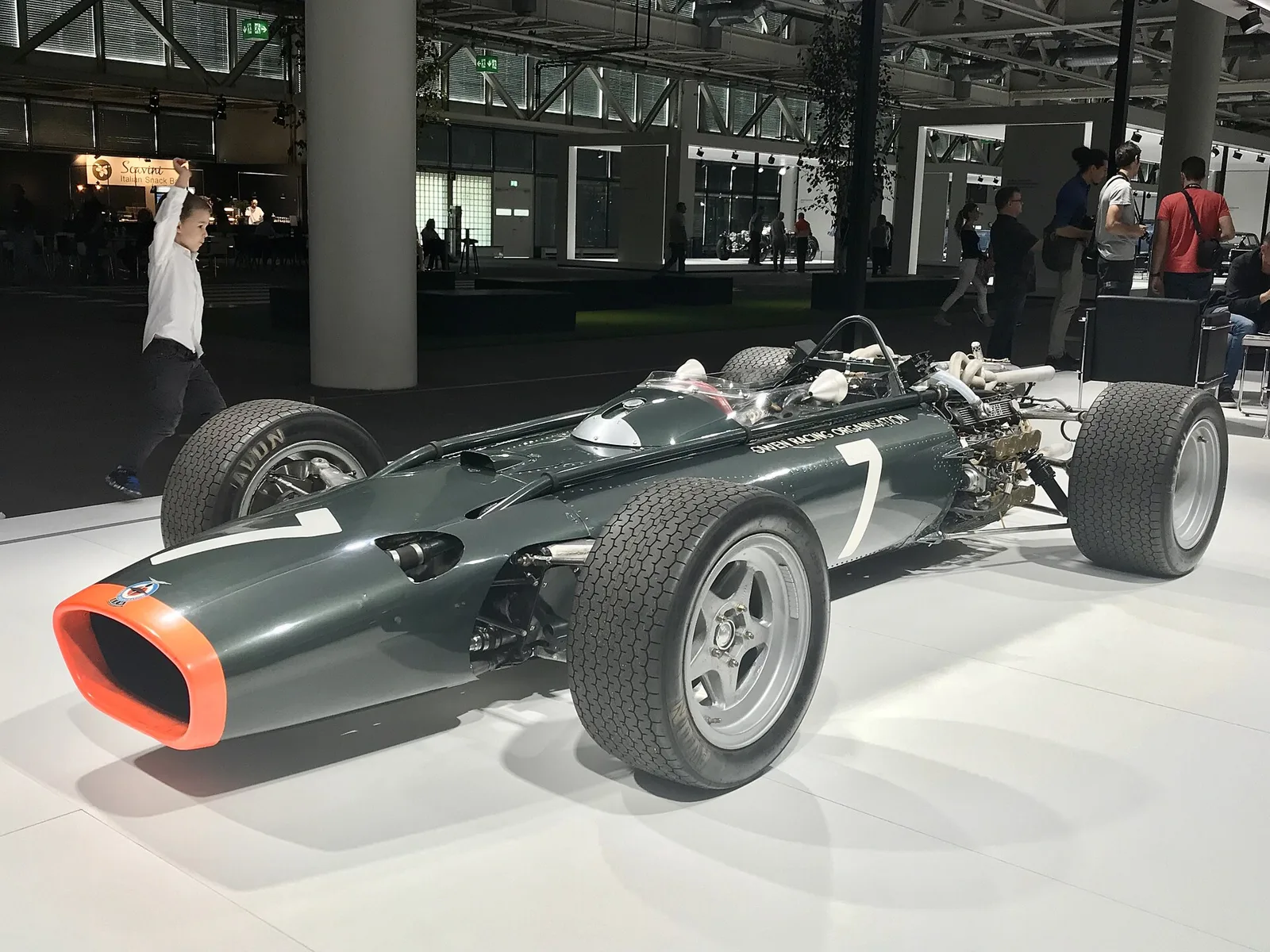
The first works cars were a pale duck-egg green, which was later replaced by a very dark metallic grey-green. Under Owen ownership the cars carried plain Owen Racing Organisation lettering, and orange bands ran around the nose in most of the 1960s. Tony Rudd disliked the orange, arguing that the Dutch had made it their own racing colour.
Yardley backed the team for 1970 with a white car striped in black, gold and ochre around a stylised Y. Marlboro's familiar red and white followed in 1972, then Motul in a pale green and silver scheme in 1974. Stanley-BRM briefly ran red, white and blue, and its final car was sponsored by Rotary Watches in pale blue and white.
What side projects did BRM work on?
BRM was involved with Rover's gas turbine programme, and the Rover-BRM car ran at Le Mans in 1963 and 1965. The car was damaged during testing and missed the 1964 race. The company also worked on Donald Campbell's Bluebird-Proteus CN7 gas turbine project and later built an unsuccessful Can-Am car.
Within the Owen Organisation, BRM tuned road engines for Ford, Chrysler and other makers. It tuned a 1557 cc Lotus-Ford Twin Cam, which became a popular option on the Lotus Elan, and Tony Rudd carried that know-how with him to Lotus. A sixteen-valve head developed for the Hillman Avenger proved unreliable and could not match the Cosworth-powered Escorts of the Ford rally team.
Is the BRM name still in use today?
The name returned several times. A Group C sports car called the P351 was built with Owen family backing, and in 1997 Pacific Racing revived the name for the P301. In 2008 a Bee Automobiles project announced an all-electric car called the BRM Bee Four ERV, although it had not left the drawing board by 2011.
For the company's 70th anniversary, John Owen, son of the team's original owner, commissioned three new 1950s-style V16 race cars. Engineers at Hall and Hall worked from an original engine, using three unused chassis numbers from the racing programme that had never been built. The first car was expected to be presented in public in 2021.
Key milestones at a glance
| Year | Milestone |
|---|---|
| 1945 | Team founded by Raymond Mays and Peter Berthon |
| 1949 | V16 fires for the first time |
| 1959 | P25 wins its first race at the Dutch Grand Prix |
| 1962 | Constructors' and drivers' championships with the P57 |
| 1966 | H16 arrives under the new three-litre rules |
| 1970 | Rodriguez wins at Spa in a P153 |
| 1972 | Beltoise wins at Monaco, the last world championship race win |
| 1977 | Stanley-BRM activity ends |