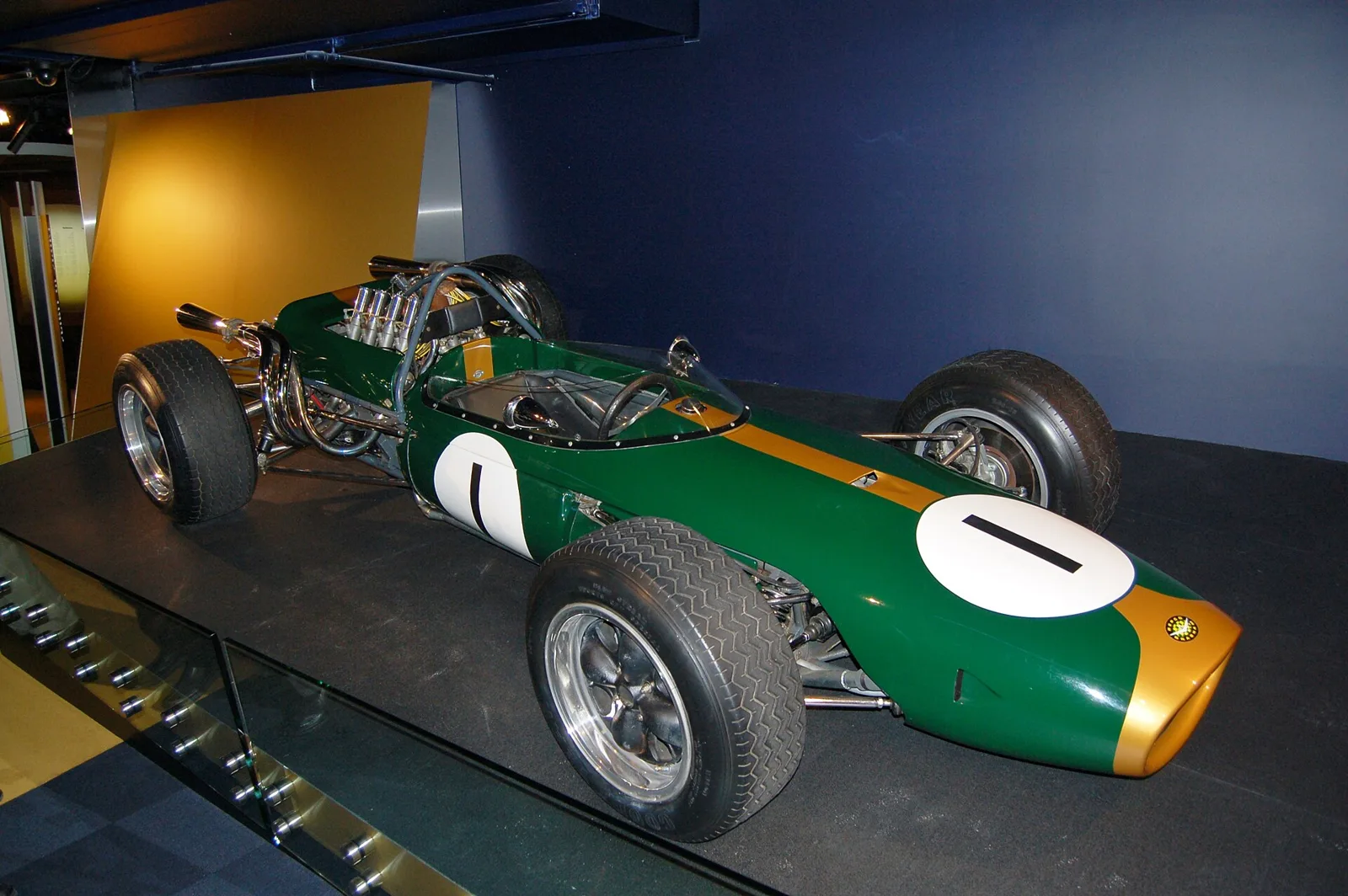
A spaceframe car drawn up for an engine that never arrived, pressed into service with a Repco V8 and driven to four wins in 1966.
Ron Tauranac's BT19 was drawn for a Coventry Climax engine that never reached it, then fitted with a Repco V8 for Jack Brabham in 1966. Four championship wins gave Brabham his third world title, and the car remains a museum piece in Melbourne.
The Brabham BT19 was drawn up by Ron Tauranac for a Formula One engine that never reached it, then pressed into service for 1966 with a new Repco V8. The car won four championship races and carried Jack Brabham to his third world title. Only one was built, and it was the first car to carry its driver's name to a world championship win.
What was the Brabham BT19?
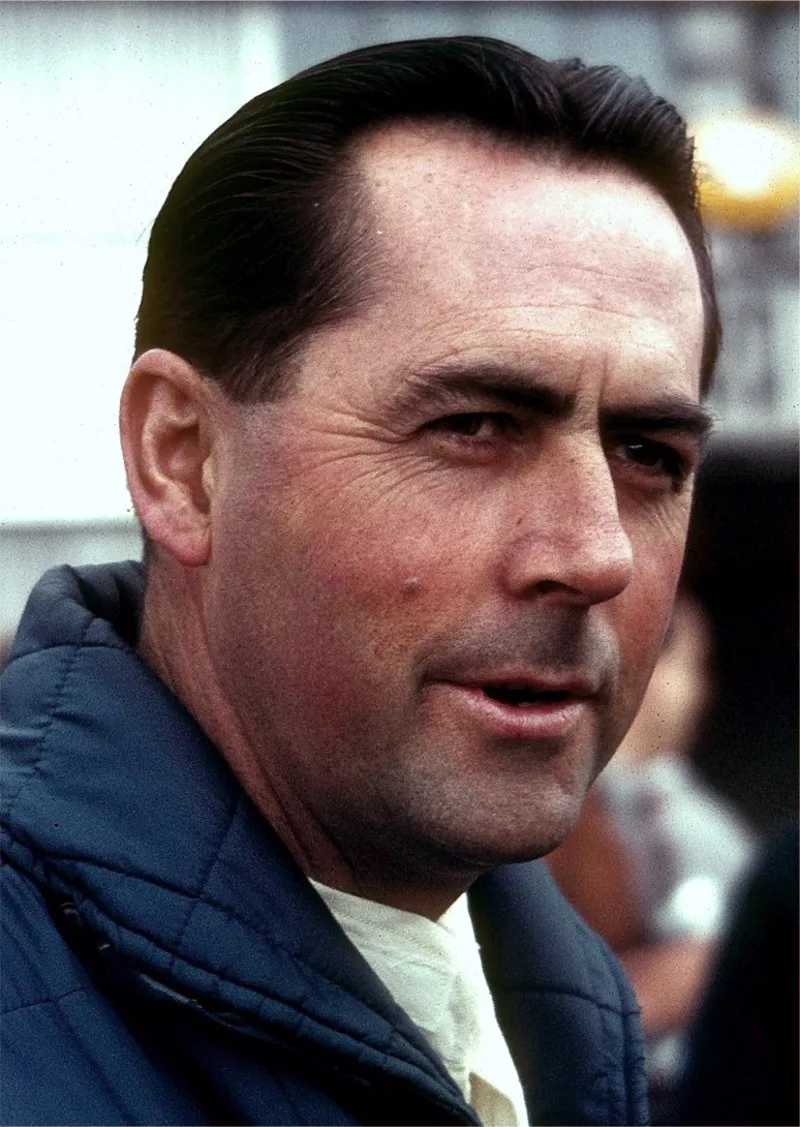
The BT19 was the work of Australian designer Ron Tauranac, who built it for the Brabham Racing Organisation, the Formula One team run by Jack Brabham. Its frame was a mild steel spaceframe, and at the start of 1966 it was among the lightest machines on the grid. Jack Brabham called it his Old Nail, a name Tauranac later put down to its age and its good manners.
The sole car was first conceived for a 1.5-litre Coventry Climax engine, and it never ran in that form. It was then fitted with a completely different power unit, which changed its racing life.
A car drawn for an engine that never arrived went on to win four championship races and carry Jack Brabham to his third world title.
How did the BT19 come to be built?
The car was drawn for the 1965 season and sat alongside the Lotus 39, since both cars were meant to use Coventry Climax's new flat-16 FWMW engine. Climax dropped that engine before 1965 was out, because its existing V8s were already strong enough to deliver seven wins and the drivers' crown to Jim Clark's Lotus 33.
The rule-makers then doubled the engine size allowed in 1966, from 1.5 litres to 3 litres. Climax would not build a new 3-litre unit, which left many teams short of engines. Ferrari was developing a 12-cylinder, but Jack Brabham chose another path and persuaded Repco to build a 3-litre eight-cylinder engine from common components.
Brabham's cars came from Motor Racing Developments, a firm owned jointly by Tauranac and Jack Brabham. The race outfit, BRO, belonged entirely to Jack Brabham and bought its cars from MRD. By November 1965 the two men had agreed that MRD would take over the Formula One operation completely.
Why was the BT19 used for the Repco engine?
The first Repco unit arrived at the team's base in Britain in late 1965, only weeks before the South African event held on 1 January 1966, which did not count towards the title. With no time to design a new car around the engine, the team put the existing chassis, number F1-1-1965, into service.
That chassis was the only BT19 ever built, and it had sat unused. Tauranac had drawn it for another engine, but the Repco unit went in instead, and the car was ready to race when the season opened.
How was the BT19 chassis built?
Tauranac kept to a spaceframe of mild steel tubes, which was a conservative choice by 1966. Most rivals had moved to monocoques, a design Lotus had introduced in 1962. Tauranac did not think monocoques were much stiffer in practice, and he argued that spaceframes were far easier to repair, which mattered to a company that sold racing cars to many customers.
He used oval-section tubing around the cockpit, a detail that stiffened the area where a spaceframe loses strength. The car weighed about 1,250 lb (567 kg), roughly 150 lb over the minimum limit, yet it was still among the lightest machines racing.
All four corners carried outboard suspension, which ran against the approach Lotus had taken with the Lotus 21 in 1961. Tauranac accepted the drag penalty because his wind tunnel tests suggested an inboard layout would save only about 2% in drag, and he judged that setting it up at the track would cost more time than the gain was worth. The front used double wishbones of unequal length, and the rear used one top link, a lower wishbone fitted in reverse, and two radius rods.
The body was made of glass-reinforced plastic and painted Brabham's usual green, with gold trim around the nose. Tauranac had been testing shapes at the MIRA facility since 1963, and in 1967 small winglets were added to the nose to reduce front lift.
What was the Repco engine like?
The Repco 620 was designed by the motorcycle engineer Phil Irving and built at a Repco subsidiary in Maidstone, Australia. Its block came from an aluminium Oldsmobile 215, a unit that General Motors had dropped after production trouble, and Repco added cast iron liners and magnesium castings to the structure.
In 3-litre form the engine produced around 300 bhp (220 kW) below 8,000 rpm. That was less than the 330 to 360 bhp of the Ferrari and Maserati V12s, but its torque held up across a wide band of revs, and it was far lighter than its rivals. The comparison below sets it against the V12s of the day.
| Item | Repco 620 (3-litre) | Rival V12s |
|---|---|---|
| Layout | Eight cylinders in a V | Twelve cylinders |
| Weight | About 340 lb (154 kg) | About 500 lb (227 kg) for the Maserati |
| Power | Around 300 bhp (220 kW) below 8,000 rpm | 330 to 360 bhp (250 to 270 kW) |
| Peak torque | 233 lb ft (316 N m) at 6,500 rpm | - |
| Fuel economy | About 7 mpg (40 L/100 km) | About 4 mpg (70 L/100 km) |
| Race fuel load | 35 gallons (160 L) | About 55 gallons (250 L) in the Cooper-Maserati rivals |
The fuel figures counted as much as the power. A car that carried less fuel could start a race lighter, and the Repco's thriftiness gave the BT19 an edge over more exotic machinery.
How did the BT19 start out in non-championship races?
The car's first outings came in non-championship events. At East London on 1 January 1966 it was the only new 3-litre machine present, and it took pole. It led most of that race until a fuel injection pump seized, and a similar fault ended its run on lap two of the Syracuse Grand Prix in Sicily.
The turning point came at the International Trophy at Silverstone. Brabham took pole, set a new lap record and then led every lap to beat John Surtees, who was driving a 3-litre works Ferrari. The result showed that the Repco car was a serious proposition.
How did the 1966 championship open for the BT19?
The world championship began at Monaco. Brabham was ill with a cold, qualified poorly and retired when his gearbox gave out. Surtees led until his differential failed on lap 15, and Jackie Stewart took the win in a 2-litre BRM P261.
At Spa Brabham survived a slide at about 217 km/h (135 mph) on the first lap in heavy rain, an incident that eliminated half the field. His Goodyear tyres were ill-suited to the conditions, and the BT19 came home fourth of the five classified finishers, while Surtees won for Ferrari.
How did the BT19 win at Reims?
At Reims-Gueux, a fast French circuit, Brabham tucked in behind race leader Lorenzo Bandini and used the Italian's slipstream to gain up to 13 km/h (8 mph) on the straights. Bandini's throttle cable broke on lap 32, and Brabham cruised home. That win made him the first driver to take a world championship race in a car carrying his own name.
Why did Brabham keep racing the BT19 after Reims?
The BT20 was ready by then and was on show at Reims, but Brabham kept the older car and won the next three championship rounds in it. Ferrari were not at the British Grand Prix, and the Brands Hatch surface was greasy from leaking oil and light drizzle. Brabham took pole and led throughout.
At Zandvoort, Jim Clark's 2-litre Lotus 33-Climax passed Brabham for the lead, but overheating held Clark back, and Brabham won. The German Grand Prix on the Nurburgring Nordschleife was a harder fight. Brabham took the lead from Surtees on the opening lap and won after a long duel in the rain on a circuit he called Brands Hatch on steroids.
How strong was Brabham's grip on the 1966 title?
By the German Grand Prix Brabham had four wins and more finishes than any rival, which put him 22 points clear in the drivers' standings. Only Surtees or Stewart could still catch him, and only if one of them won all three remaining races.
At Monza a second BT20 had been built for the Italian round. Brabham tried it in practice but chose the Old Nail, which he believed had the stronger engine. He again used slipstreaming early on, but an oil leak stopped the car after eight laps. Surtees and Stewart both failed to finish, and so Brabham secured his third world championship.
What did the BT19 do after the 1966 title?
Brabham used the car once more that season, taking pole and victory at the Oulton Park Gold Cup, a non-title event, before switching to a new BT20 for the last two championship rounds. In 1967 the BT19 appeared in three of the first four championship races. It debuted the 740 version of the Repco engine at Monaco, where it took pole, and finished second at the Dutch Grand Prix.
The 740 unit had a lighter block, redesigned heads and centrally placed exhausts that bypassed the spaceframe and rear suspension. It made 330 bhp (250 kW) at most. The gearbox also had to change, because the original Hewland HD had been designed for 2-litre engines and could not take the power of the 3-litre Repco. Brabham learned to make gentle starts to protect it.
Did the BT19 race outside the world championship?
It did. The car ran the closing two rounds of that year's Tasman Series in Australia, a formula using pre-1961 Formula One rules and a 2.5-litre limit. The Tasman was the original reason the Repco engine was built, and the smaller unit was meant to promote that formula. With it, the BT19 retired once and finished third in the series.
Where is the BT19 now?
The car saw no serious competition after 1967. Brabham retired at the end of 1970 and returned to Australia, keeping the car until 1976, when it went to Repco, which restored it through its engine parts division. A management buyout created Automotive Components Ltd in 1986, and the car passed to the new company.
The car has made many public appearances since. At the 1978 Australian Grand Prix at Sandown, Brabham drove it in a demonstration against Juan Manuel Fangio's Mercedes-Benz W196. It also took part in the first Australian Grands Prix on the Adelaide and Melbourne street circuits in 1985 and 1996, and it appeared at the 2004 Goodwood Revival. Repco bought the car back in 2004, and in 2008 it went on loan to a museum at the Melbourne Cricket Ground, the Australian National Sports Museum.
What is the BT19's legacy?
The BT19 is remembered as a car that succeeded despite its origins. It was drawn for an engine that never came, converted to a new power unit in a matter of weeks, and went on to win four championship races for its driver's own team. Its nickname reflects how dependable it proved to be.
The design choices also show Tauranac's priorities. A spaceframe, outboard suspension and simple engineering favoured repairs and reliability, and those qualities kept the car running in demonstrations for decades. At a Murwillumbah event in 2002, Brabham said he had never tired of driving it.