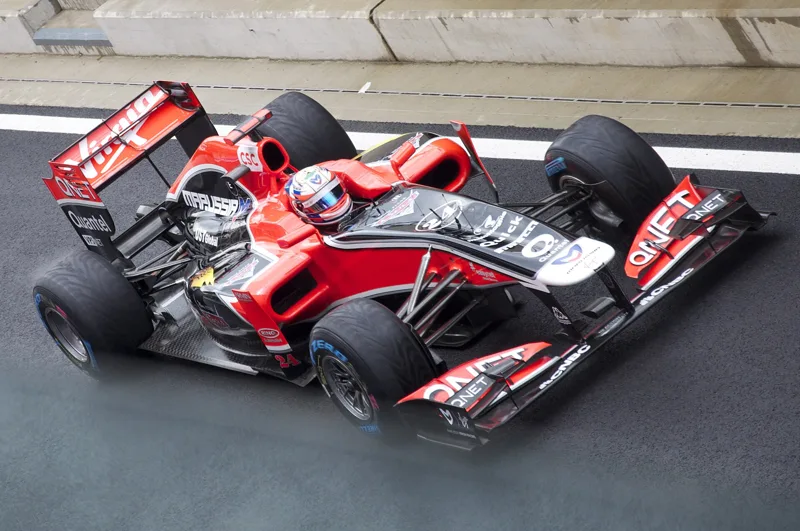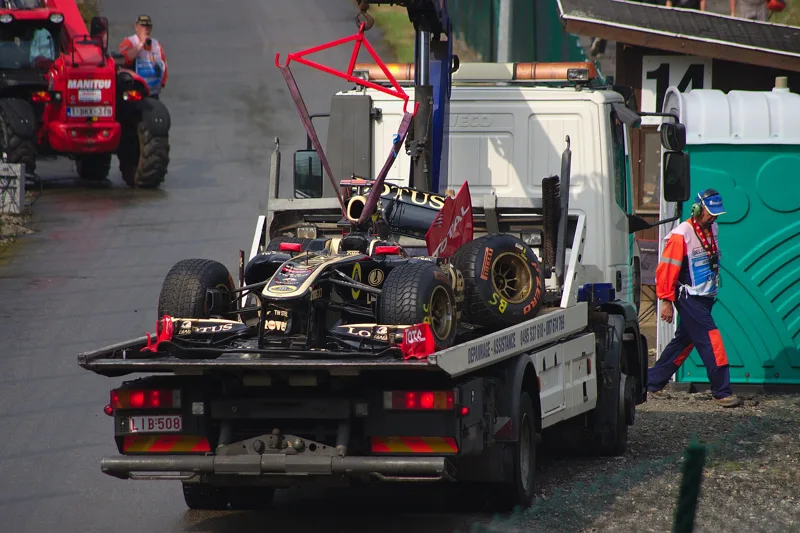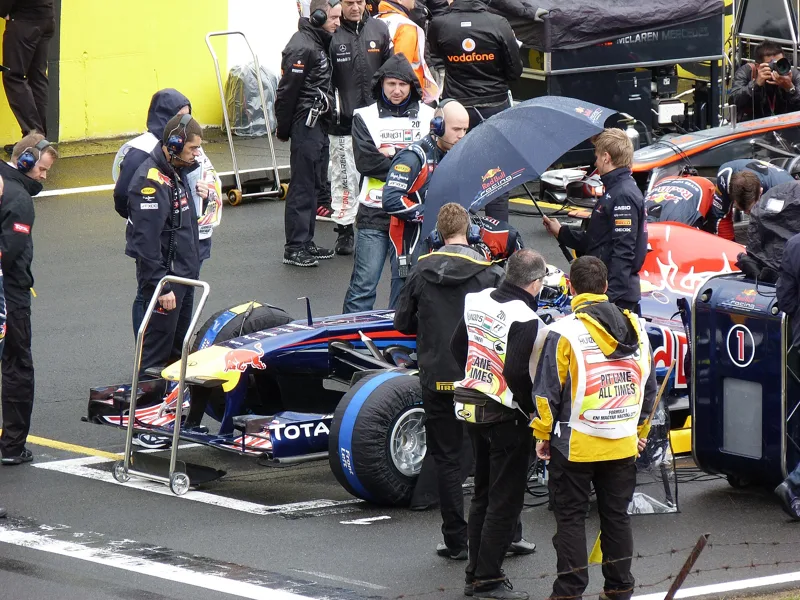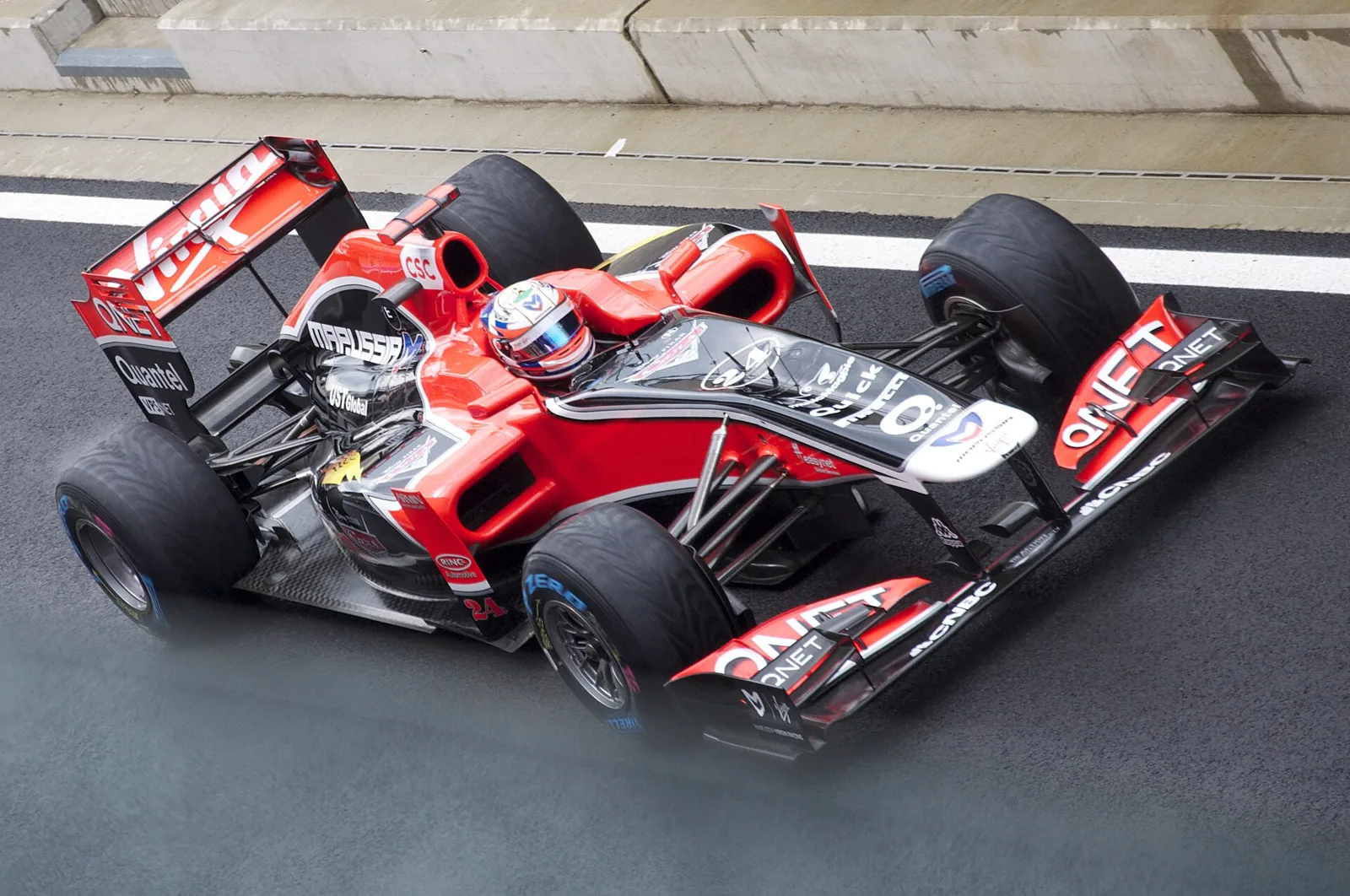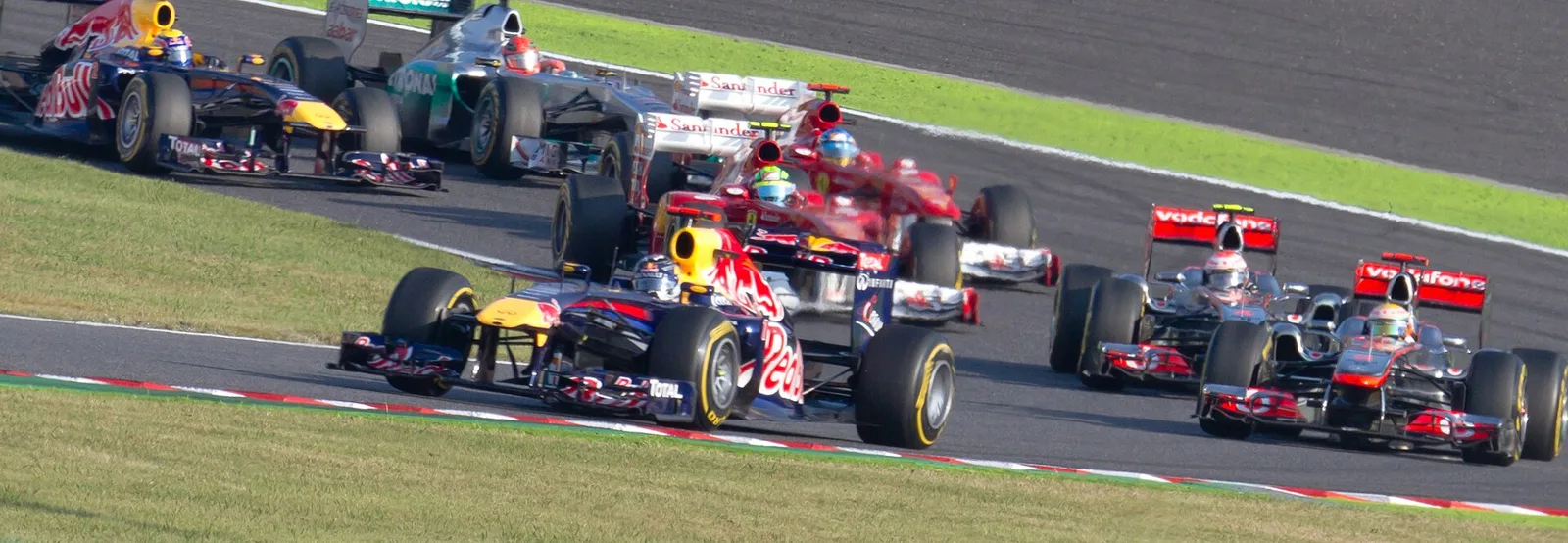
Jenson Button converted second on the grid into victory at Suzuka, while Sebastian Vettel finished third and became the youngest double world champion.
Jenson Button won the 2011 Japanese Grand Prix at Suzuka for McLaren from second on the grid, on 9 October 2011. Fernando Alonso was second for Ferrari, and Sebastian Vettel's third place for Red Bull secured his second world title, with four races still to run.
The 2011 Japanese Grand Prix was held at Suzuka on 9 October 2011, the fifteenth round of the season. Jenson Button won the 53-lap race for McLaren from second on the grid, with Fernando Alonso second for Ferrari. Sebastian Vettel finished third for Red Bull, which was enough to secure his second world title and make him the youngest double champion in the sport's history.
Who won the 2011 Japanese Grand Prix?
Jenson Button won from second on the grid, a result that gave McLaren a memorable home-straight celebration on the Suzuka asphalt. The win was his third of the year, and his fifth podium in a row.. The win came after a race in which his pace was judged more reliable than the leading Red Bulls over a long stint.
Alonso finished only 1.1 seconds behind Button at the flag, and Vettel completed the podium in third. Mark Webber took a solid fourth place, eight seconds off the lead, which gave Red Bull Racing more points than it had scored in its previous world title year. Lewis Hamilton finished fifth for the second race in a row.
Button's win also lifted him to second in the championship, where he was ahead of Alonso by eight points after the race. The result was a clear sign that McLaren had found its best form at the right time of the year.
A McLaren win from second on the grid and a Red Bull title clinched on a day that tested every driver's patience.
What did Vettel need to take the title?
Vettel entered the race knowing that either a points finish or a Button failure to win would make him champion. He led the championship on 309 points, 124 ahead of Button, with 125 points still available. Alonso and Webber were within three points of Button, on 184 and 182 points, and Hamilton occupied fifth place on 168 points.
In the Constructors' table Red Bull had 491 points to McLaren's 353.. Ferrari were no longer in the title hunt after Singapore. Vettel's third place was enough to take the title, and the team's constructors' lead was secure.
Vettel also became the youngest double champion, a distinction few drivers have matched in defending a crown. successfully. He had already taken his 14th podium from 15 races that year, which underlined how consistent his season had been.
What did Button's new deal and helmet mean at Suzuka?
Button had signed a new multi-year contract with McLaren shortly before the weekend, ending speculation about his future. He wore a special helmet in the style of the Japanese flag, and he planned to auction it afterwards to raise money for people affected by the tsunami earlier that year.
The Japanese round was personal for Button in other ways too. Honda had been his earlier team, and the crowd gave him a warm reception throughout the weekend. Those ties made the win feel bigger for the team than a single result would normally suggest.
Button was also in strong form across the weekend. He was fastest in the Saturday practice, half a second ahead of Hamilton, and he was second in qualifying. The front-row start he gained was his first since Monaco, and the result also left McLaren close to the top of the constructors' table. Button's form came at a useful moment, with four rounds still to run. Button had also been quick in qualifying, and he finished the weekend as one of the strongest drivers on track. It was a useful result for the team as the season moved towards its close.
How did practice and qualifying unfold?
The first practice session was held under clear skies, with the track at 30 C (86 F). Pastor Maldonado skidded off the track, and Vettel crashed at Degner while attempting to set the fastest time. Button topped the session by a tenth of a second ahead of Hamilton, and Vettel finished third.
In the second practice Button again topped the timesheets, ahead of Alonso and Vettel. Barrichello crashed at the first Degner curve, and Hamilton, Schumacher, Buemi, Kovalainen and Senna were called before the stewards for ignoring yellow flags, although no penalties were issued. In the Saturday session Button was half a second faster than Hamilton, while Vettel was almost nine tenths behind Button.
In qualifying Kamui Kobayashi topped the first session to the delight of his local fans, having used soft tyres to reach the second part. Nico Rosberg failed to set a lap because of a hydraulics failure and started from 23rd, and Vitantonio Liuzzi also had technical problems. Hamilton set the fastest time of the second session.
The final session was the decisive one. Vettel took his 12th pole of the season, and Button lined up second, 0.009 seconds behind. It was Button's first front-row start since Monaco. Hamilton was third, and Massa beat Alonso for only the third time that year. Webber was sixth after an error in not opening his DRS, and Kobayashi took seventh, his best qualifying position ever.
How did the race start?
Button made a better start than Vettel, but he tried to pass on the inside at turn one. Vettel covered the move aggressively, and Button was pushed onto the grass. Hamilton took advantage to pass Button on the outside and move into second, which cost Button his position.
Button asked his race engineer whether Vettel should get a penalty for the move. Martin Brundle thought it was harsh but not worth a penalty, while Vettel said he had not seen Button because Button was behind him. Kobayashi slipped to twelfth at the start after his anti-stall system kicked in, and Paul di Resta made a good start to take eighth.
On lap six Alonso took Felipe Massa for fourth at turn one, and Massa made no attempt to defend. Button passed Hamilton on lap nine, after the McLaren team believed Hamilton had a right-rear puncture. Hamilton later discovered it was heavy tyre degradation rather than a puncture, and he slowed through 130R before pitting for the option tyres.
What happened in the first pit stops?
The other front runners pitted over the following laps, and Vettel stayed in the lead after the first phase of stops. Both Red Bulls pitted together for their second stop on lap 20, and Vettel left the pits as soon as Webber began to enter them.
On the same lap Hamilton and Massa made contact for the fourth time that season, after Massa went down the outside into the chicane. Hamilton blamed his wing mirrors, which he said vibrated too much on the straights. Hamilton then made a poor pit stop, which dropped him behind Massa and Webber.
Debris from the Hamilton-Massa collision brought out the safety car on lap 24. Button slowed the pack on the exit of 130R before the restart. Vettel pitted on lap 34 for his final stint on the prime tyres, and within three laps Webber, Massa, Hamilton and Button had all made their stops without losing position.
How did the strategy battle develop?
On lap 38 Hamilton overtook Massa in the DRS zone for net fifth. Heavy traffic had slowed Vettel on his out-lap, and Alonso moved into net second after his own stop. Michael Schumacher led the race for three laps in total, his first time in front since the 2006 Japanese Grand Prix.
Vettel began to close on Alonso and diving down the outside of turn one on more than one occasion. He showed his frustration after losing two places in the pits, and he gesticulated after a Virgin got in his way while he chased Alonso. The team reminded him that he did not need to win the race to take the title, so he held position.
From lap 46 a large battle developed for the final points places. Adrian Sutil passed Kobayashi for ninth on the approach to 130R. Vitaly Petrov then took eleventh from di Resta and passed both Sutil and Kobayashi to finish ninth. Nico Rosberg overtook Sutil around Dunlop on the penultimate lap to claim the last points place.
Kobayashi was overtaken by both Force Indias and finished thirteenth. His teammate Sergio Perez used a two-stop strategy to save tyres, and he climbed from seventeenth to eighth. Force India just missed out with eleventh and twelfth. Lotus had a good day, with both cars on the lead lap for the first time since Bahrain in 2010, which made it the most cars on the lead lap in a Formula One race.
How did the race finish?
Button took his third victory of the season and his fifth consecutive podium. Alonso crossed the line 1.1 seconds behind him, and Vettel took third, his 14th podium from 15 races. Webber's fourth place was eight seconds off the lead, and it left Red Bull with 518 points.
Hamilton finished fifth for the second race running. He was followed by Schumacher, Massa, Perez, Petrov and Rosberg, who completed the ten points-scoring positions. Vettel's title was confirmed with four races still to run, which gave his win a special meaning for the team.
What did the drivers and commentators say?
Button was delighted to win in Japan, a place that held special meaning for him. His girlfriend Jessica Michibata was born there, and he had driven for the Japanese Honda team during his career. He said it felt like a home win and an emotional one, and he thanked his small team.
Button called Suzuka one of the finest circuits in racing, with an unusually devoted crowd.. Martin Brundle praised his form across the weekend, and 1996 world champion Damon Hill said Button had entered the sweet spot of his career. Hamilton, by contrast, called his own race shocking and said he was gobsmacked by what had happened. Brundle criticised the number of collisions Hamilton had been involved in.
Many drivers congratulated Vettel on his second title. Jackie Stewart described him as the most mature 24-year-old he had ever seen. Niki Lauda said Vettel could break Michael Schumacher's record of seven titles, while Damon Hill felt that the record was very unlikely to fall. Adrian Newey, Red Bull's chief technical officer, was also congratulated by David Coulthard.
What did the points table look like afterwards?
Red Bull The Red Bull cushion over McLaren stood at 130 points, with the constructors' title still to be settled over the remaining rounds., Red Bull would clinch the constructors' title at the Korean Grand Prix if it scored more than McLaren, or lost to them by no more than a single point.
| Position | Driver | Team | Note |
|---|---|---|---|
| 1st | Jenson Button | McLaren | Third win of 2011; fifth consecutive podium |
| 2nd | Fernando Alonso | Ferrari | 1.1 seconds behind Button |
| 3rd | Sebastian Vettel | Red Bull | Pole-sitter for the sprint to the title; secured the championship |
| 4th | Mark Webber | Red Bull | Eight seconds off the lead |
| 5th | Lewis Hamilton | McLaren | Fifth for the second race running |