The first race on the reshaped Arena section, a Red Bull row over one front wing, and an Alonso penalty that changed the afternoon.
Webber took his third win of 2010 for Red Bull at Silverstone on 11 July, with Hamilton second for McLaren and Rosberg third for Mercedes. The race used the reshaped Arena layout, after Donington Park failed to fund its own redevelopment and Silverstone took the event on a 17-year deal.
Mark Webber won the 2010 British Grand Prix at Silverstone on 11 July 2010, his third victory of the season. It was the first race on the reshaped Arena section of the circuit, and the weekend was dominated by an argument inside Red Bull over a front wing. Lewis Hamilton was second for McLaren, while Mercedes returned to the podium in third.
Who won the 2010 British Grand Prix?
Mark Webber won the 2010 British Grand Prix for Red Bull, just over a second ahead of Lewis Hamilton's McLaren. Nico Rosberg took third for Mercedes, and Jenson Button missed the podium by half a second. Webber's win was his third of the season and came from second on the grid.
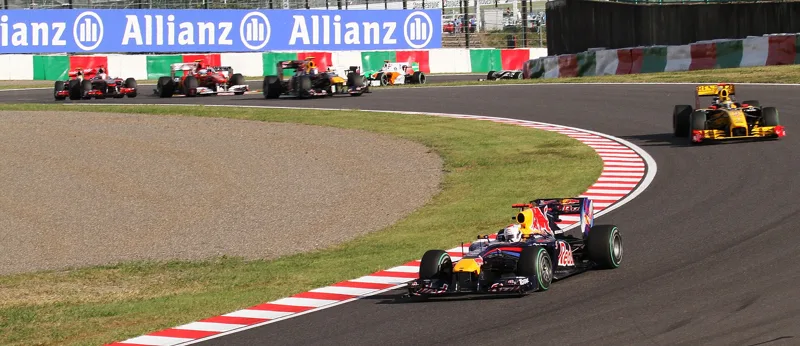
Webber made the better start and claimed the lead into the first corner. Sebastian Vettel, who had started from pole, was not so fortunate. He ran wide after contact with Hamilton, and a puncture that seemed to come from that contact left him struggling for control through Maggotts-Becketts. He had to pit and dropped to the back of the field.
Felipe Massa also suffered a puncture on the first lap, after contact with his Ferrari teammate Fernando Alonso, and he too had to pit. Lucas di Grassi retired early with a hydraulics failure, once again leaving his Virgin crippled. Ahead of them, Hamilton stayed in touch with Webber on the softer tyre, while Button worked his way forward from fourteenth on the grid.
A reshaped corner complex, one front wing in dispute and a penalty that decided where Alonso finished.
Why was the race held at Silverstone?
Donington Park was due to host the British Grand Prix from 2010, but it could not raise the money to redevelop its circuit. Bernie Ecclestone confirmed on 29 October 2009 that Donington would not host the race. Silverstone then agreed a 17-year deal to stage it from 2010 onwards.
The arrangement was confirmed on 7 December 2009. The 2009 race was due to be the last held on the old layout, and work on the pit lane and paddock was due to start soon after Christmas 2009, with completion planned for 2011. The change was not only about the venue, because it also reshaped the lap itself.
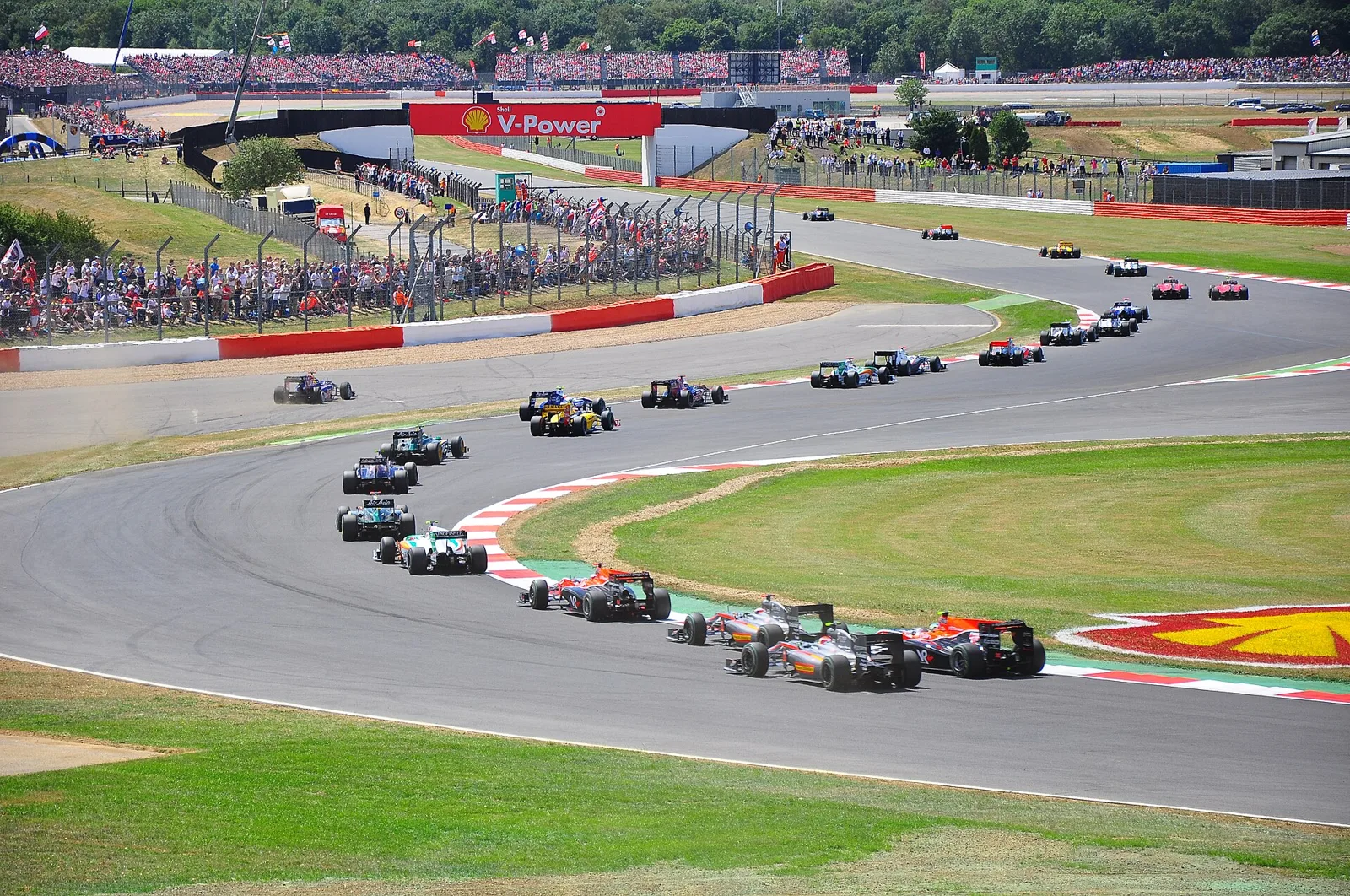
Silverstone took the event with a new section after Abbey, in place of the old corners. The new corners were named Farm, Village, The Loop and Aintree, and the lap then led onto the Wellington Straight towards Brooklands, which still followed the familiar route. The pit complex between Woodcote and Copse was used for the last time in 2009, and its replacement, whose basic structure was visible between Club and Abbey, was first used the following year.
What was the Arena layout?
The Arena layout was a reshaped section of Silverstone that replaced the corners after Abbey with a new complex. It introduced Farm, Village, The Loop and Aintree, before the Wellington Straight led back to Brooklands on the old route. The new complex gave the venue a different character from the circuit that had hosted the race before.
Drivers gave the new section a mixed reception in Friday practice. Webber and Alonso were enthusiastic about it, while Robert Kubica and Heikki Kovalainen said they preferred the older circuit. Almost every driver mentioned a large bump on the approach to the reprofiled Abbey, and some said it might be better than Copse corner.
The high kerbs through Maggotts-Becketts, one of the fastest combinations on the Formula One calendar, also drew requests for changes from several drivers. The new layout was generally well received, but the kerbs were a concern for anyone carrying speed through that sequence.
How did practice go on the new layout?
Red Bull set the pace on Friday, with Vettel fastest in the first session and Webber in the second. Hamilton and Michael Schumacher ran wide at Abbey, and the Ferraris of Alonso and Massa struggled to find real pace in the first session. In both sessions only four drivers were within a second of the leader.
Sakon Yamamoto, who had returned to a race seat in place of Bruno Senna at Hispania, ranked last of the twenty-four drivers, a gap of seven and a half seconds. Jarno Trulli was hampered by reliability problems, and Kovalainen's car expired late in one session. Virgin brought their most significant upgrade of the season, while Lotus brought their final update of 2010.
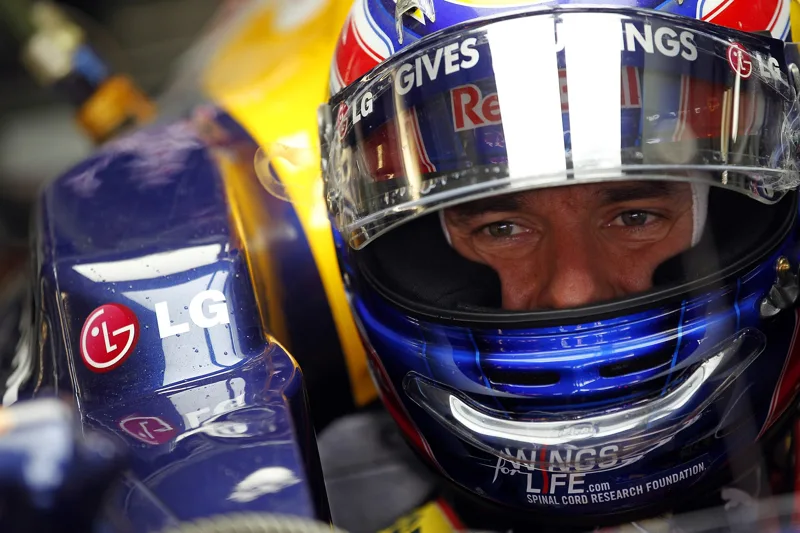
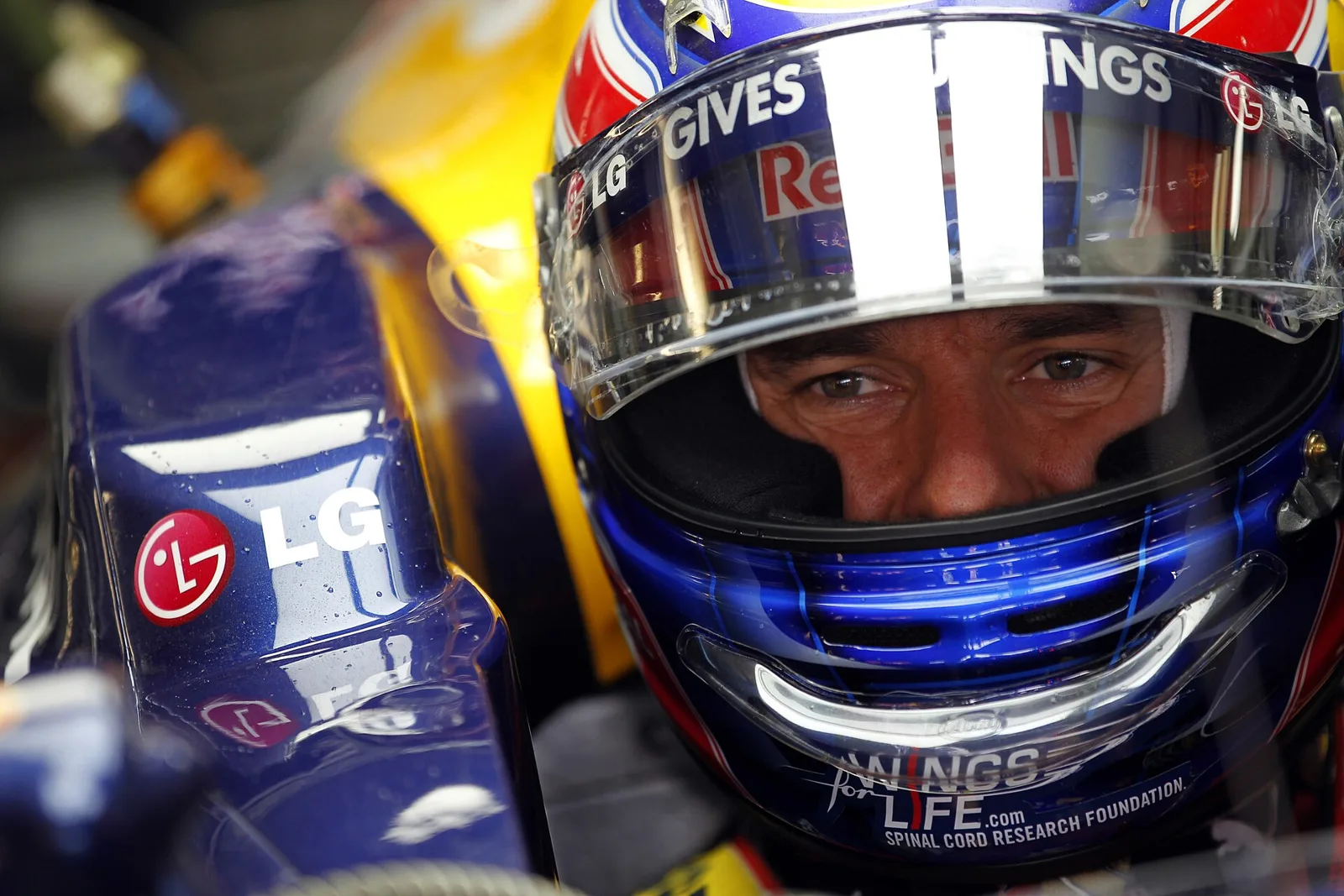
Saturday morning belonged to the Red Bulls again. Vettel topped the times with Webber close behind, and the two were the only drivers to break the 1min 31sec barrier all weekend. Late in that hour, Vettel's front wing came loose on the high-speed approach to Abbey. He slowed the car in time to avoid an accident, and his best time was not beaten for the rest of the session.
Trulli lost more time to hydraulics problems, as did Adrian Sutil, and Timo Glock had little track time after a throttle fault on his VR-01. The Friday and Saturday sessions showed how much the new layout had caught out even experienced drivers, with several cars running off line at the reprofiled corners.
What caused the Red Bull row in qualifying?
Vettel's front wing failed in practice, and Red Bull team principal Christian Horner removed the new front wing from Webber's car and gave it to Vettel. The decision prompted an angry reaction from Webber. Public perception was that Red Bull had favoured Vettel, particularly after the pair's collision in Istanbul.
The first part of qualifying was largely routine. Alguersuari, both Lotuses, both Virgins and both Hispanias were eliminated, while Glock briefly edged out Kovalainen before losing his place. In the second part Jenson Button was knocked out, and Martin Brundle noted that the McLaren MP4-25 was rough over the bumps, especially on the approach to the new section.
Kubica just made it through to the final part, while Petrov's session ended early with a fuel problem that left him sixteenth. Schumacher, after the worst qualifying performance of his career in Valencia, set the fifth-fastest time of the session. Liuzzi was penalised five places for impeding Nico Hulkenberg at Abbey, and Sutil qualified eleventh.
In the final part, Vettel beat Webber by a tenth of a second, and Webber made his anger clear about lining up on the dirty side of the grid. Alonso qualified third, ahead of Hamilton in fourth, and Rosberg was fifth. Kubica was sixth, with Massa, Barrichello and de la Rosa completing the final session. De la Rosa's place was his first in the final part of qualifying all season.
Schumacher started tenth after completing only one lap, because he had only one set of tyres left. Alguersuari was fined five thousand dollars over an unsafe pit release, and Yamamoto was warned for slowing other drivers during qualifying.
Why was Alonso given a penalty?
Alonso went off the track to pass Kubica at Vale, and he then failed to give the place back. He received a drive-through penalty, which the stewards kept in place even after a safety car bunched the field. Ferrari and Alonso accepted the decision.
The early laps produced several incidents. Sutil and de la Rosa came together on the main straight and scattered debris across the racing line. De la Rosa's rear wing began to disintegrate as the Sauber ran down the Hangar straight, and he pitted before retiring. The debris brought out the safety car, which bunched the field back up.
Alonso could not serve his drive-through while the safety car was out, so he took the penalty as soon as it was withdrawn. The bunched pack then dropped him down the order. Some commentators thought the penalty harsh, because Kubica himself retired soon after the overtake with a driveshaft issue. Charlie Whiting, the FIA race director, later said that Alonso and Ferrari had been advised to yield to Kubica more than once.
How did the race unfold after the restart?
Vettel charged through the field after the restart and made several quick overtakes that carried him into the points. Alguersuari's retirement at Luffield and yellow flags at the end of the Wellington Straight complicated his recovery. Sutil was under pressure from Schumacher, who was in turn being chased by Hulkenberg.
Vettel's recovery was full of battles. Alonso and Liuzzi banged wheels, and Vitaly Petrov threatened Hulkenberg's tenth place until the Russian developed a slow puncture and had to pit. Vettel eventually passed Sutil at Aintree, several laps after he had first tried.
Webber won just over a second ahead of Hamilton, with Rosberg third for Mercedes. That was Mercedes' first podium since the Chinese Grand Prix. Button missed the rostrum by just half a second, and Barrichello crossed the line ahead of Kobayashi before Vettel, Sutil, Schumacher and Hulkenberg completed the points.
Alonso and Massa crossed the line fourteenth and fifteenth, a minute adrift and the final cars on the lead lap. Jarno Trulli was the first finisher from the new teams, with Kovalainen next and Timo Glock the only surviving Virgin. Two Hispania cars also finished behind him.
What did the result mean for the championship?
Hamilton extended his lead in the Drivers' Championship to twelve points over teammate Button, while Webber moved into third, trailing Hamilton by 17 points. Vettel and Webber swapped places in the standings, and McLaren were 29 points clear of Red Bull in the Constructors' Championship.
Webber's win came with a sharp edge. His first words after the finish were a sarcastic remark about being a number two driver, and Horner responded with a jibe of his own. Webber also asked for his race engineer to join him on the podium, but Red Bull sent a member of the chassis design team instead.
In the press conference Webber said he would never have signed his 2011 contract had he known how the team would treat him. Ferrari and Alonso accepted the penalty for the pass on Kubica, arguing that if harsh penalties had to be handed out, Silverstone showed how they should be applied.
Results at a glance
| Finish | Driver | Team | Notes |
|---|---|---|---|
| 1st | Mark Webber | Red Bull | Third win of the season |
| 2nd | Lewis Hamilton | McLaren | Just over a second behind the winner |
| 3rd | Nico Rosberg | Mercedes | Mercedes' first podium since the Chinese Grand Prix |
| 4th | Jenson Button | McLaren | Started 14th; half a second from the podium |
| 7th | Sebastian Vettel | Red Bull | Recovered from an early puncture and pit stop |
| 14th | Fernando Alonso | Ferrari | Drive-through penalty for the Kubica pass |
| 15th | Felipe Massa | Ferrari | One minute down, last on the lead lap |
| Retired | Robert Kubica | Renault | Driveshaft issue shortly after the overtake |