From a four-cylinder born in the early 1930s to a turbocharged Cosworth V8 that took ten straight Indianapolis wins, the engines that powered Indy cars.
The Offenhauser, or Offy, was a four-cylinder racing engine behind a record 27 Indy 500 victories from 1935 to 1976. Ford V8s fitted behind the driver began winning in 1965, and the turbocharged Ford-Cosworth DFX then took ten straight Indianapolis wins from 1978.
Versions of one engine design won the Indianapolis 500 a record 27 times between 1935 and 1976. The Offenhauser, known to everyone as the Offy, was a four-cylinder with its roots in the early 1930s, and it went on dominating American championship car racing for more than fifty years. Then Ford arrived, first with a V8 of its own and later in partnership with Cosworth, and the engine story of the Brickyard changed for good.
What was the Offenhauser engine?
The Offenhauser was an overhead-cam, four-stroke racing engine with a one-piece cylinder block, developed by Fred Offenhauser and Harry Miller. It began as a marine engine. Over the decades it appeared in many sizes, in four-cylinder and V8 form, both naturally aspirated and turbocharged.
The roots go back to Miller. In 1930 a four-cylinder Miller engine of 151 cubic inches (2.47 litres), fitted to a race car, set an international land speed record of 144.895 mph (233.186 km/h). Miller then developed it into a twin-cam, four-valve-per-cylinder racing engine of 220 cubic inches (3.6 litres). Midget and sprint cars used variants of that design into the 1960s, with a choice of carburettors or Hilborn fuel injection.
In 1933 Miller and the company that had bought much of his equipment went bankrupt. Fred Offenhauser opened a shop a block away and bought the rights, special tooling and drawings at the bankruptcy auction. He and other former Miller employees, among them the draftsman Leo Goossen, took over production and developed the Miller engines into the Offenhausers.
In 1946 the name and designs were sold to Louis Meyer and Dale Drake, and the engines formally became Meyer-Drake units, though the old name stayed the one everybody used. Meyer was bought out in 1965 by Drake, his wife Eve and their son John, and the Drake family refined the engine until its last racing days. A final derivative, the DGS (Drake-Goossen-Sparks), arrived in 1975 and is considered the last engine in the original Offy line. It had modest success.
An engine from the early 1930s was still winning at Indianapolis in 1976.
Why did the Offy dominate the Indianapolis 500?
The Offy won because it combined power with reliability. A naturally aspirated four of 251.92 cubic inches (4,128.29 cc) with a 15:1 compression ratio produced 420 hp (310 kW) at 6,600 rpm, and other variants reached 3 hp per cubic inch (137 kW/L), figures that were unmatched for an engine of that size.
Reliability came from the monobloc construction, which made the engine immune to head gasket and cylinder stud problems and let it run higher cylinder pressures.
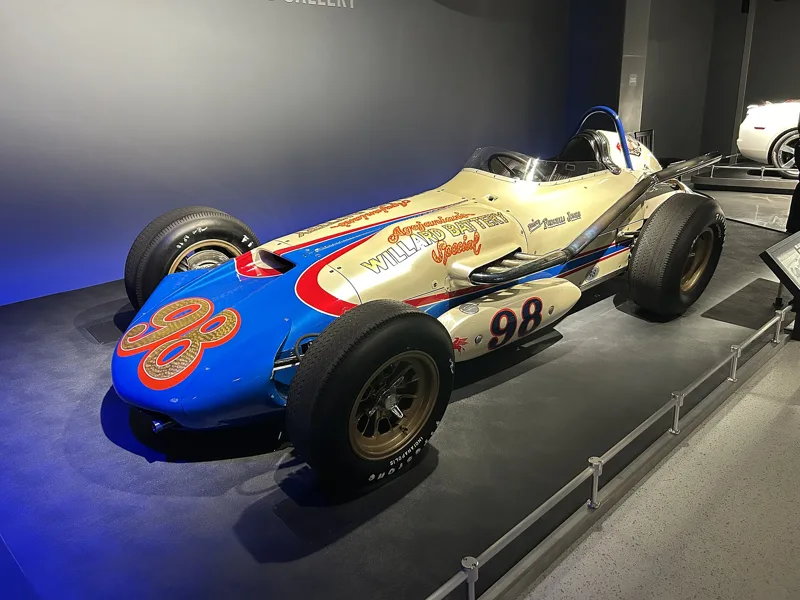
From 1934 through the 1970s the engine ruled American open-wheel racing. From 1950 through 1960, Offenhauser-powered cars won the Indianapolis 500 every year and filled all three podium places, taking pole position in 10 of those 11 seasons. In those years the race counted as a round of the World Drivers' Championship, and the Meyer-Drake Offenhauser was used by 35 constructors across the 11 years.
The Offy as a giant killer
The Offy's reputation travelled. At a famous Formula Libre race at Lime Rock Park in 1959, Rodger Ward shocked an expensive and exotic field of sports cars by beating them in an Offenhauser-powered midget car, a machine usually thought competitive only on ovals. Encouraged, the team entered the car in the 1959 United States Grand Prix at Sebring, where it was totally uncompetitive, qualifying at 3:43.8 against a pole time of 3 minutes dead and ending up the slowest Formula One starter.
Wartime and ownership
As the build-up of arms for the coming war began, the Offenhauser shop took on machine work for Lockheed in 1940. It shipped its last prewar engine on 17 July 1941 and, after the attack on Pearl Harbor, turned to hydraulic systems. Goossen became a full-time employee in 1944, and Fred Offenhauser sold the company two years later.
What sizes did Offenhauser engines come in?
Offenhauser built blocks in several sizes, which could be bored out or sleeved and paired with crankshafts of different strokes, so displacements varied widely. The company, and later Meyer-Drake, often made blocks, pistons, rods and crankshafts to a customer's request. Even so, a few sizes became standard, each set by a rule:
- Midgets: 97 cu in (1.59 L), which suited the capacity limit in many series.
- Sprint cars: 220 cu in (3.6 L), the limit for AAA and later USAC.
- Indianapolis under AAA: 270 cu in (4.4 L).
- Indianapolis in the 1930s, when fuel consumption was regulated: 255 cu in (4.18 L).
- Indianapolis under USAC: 252 cu in (4.13 L).
- Turbocharged cars up to 1968: 168 cu in (2.75 L).
- Turbocharged cars from 1969: 159 cu in (2.61 L).
How did Ford try to beat the Offy at Indianapolis?
Ford designed its own Indy V8 from 1963 to be mounted in the rear of Lotus chassis, with the aim of ending the dominance of the Offenhauser-powered front-engine roadsters. The Ford won the Indianapolis 500 in 1965, 1966 and 1967, and again from 1969 to 1971.
The Offy had ruled the 500 since the 1930s with the engine up front. Then came a so-called British invasion of nimble rear-mid-engined Formula One cars, starting with World Champion Jack Brabham at the 1961 race. Mickey Thompson entered three rear-engined cars in 1962 with a Buick V8 that lacked power. Dan Gurney then arranged for Team Lotus, which would win its first F1 title in 1963, to build the Lotus 29 for the 1963 race with a Ford engine.
That first engine was a 4,195 cc (256.0 cubic inch) pushrod V8 with Weber carburettors, making 376 bhp (280 kW) through a Colotti T.37 gearbox. Jim Clark finished second and Gurney seventh, and Clark went on to win the Tony Bettenhausen 200, which proved the design was competitive.
For 1964 double overhead camshafts went into the Lotus 34, installed the opposite way round to usual, with the exhausts inside the V and the intake trumpets on the outside. Hilborn fuel injection and a ZF gearbox helped this 4,195 cc DOHC engine reach 425 bhp (317 kW). Clark qualified on pole, but Dunlop tyres caused him to crash and Gurney retired. The team switched to Firestone.
A. J. Foyt took three USAC wins in a Lotus 34 during 1965 and was runner-up in the championship, and Parnelli Jones took second place at Indianapolis behind Clark's improved Lotus 38. Clark's victory was the first for a rear-mid-engined car and for Ford, and the first by a foreign-born driver for many decades. The DOHC engines were also sold to other teams: Graham Hill won the 1966 race in a Lola 90 and Foyt the 1967 race in a Coyote 67.
How did the turbo era change the Ford Indy V8?
By 1968 the Offenhauser itself was turbocharged and more powerful, and it took that year's race. Ford answered with a smaller, Garrett-turbocharged 159 cubic inch (2.61 L) V8 introduced in 1968. It won the 1969 race for Mario Andretti in a Brawner Hawk and was used through 1971, Ford's last season, before the company withdrew from the series for 1972.
A turbocharger uses exhaust gas to spin a compressor that pushes extra air into the engine, so a smaller engine can make as much power as a bigger one. Indianapolis rules set a smaller displacement limit for turbocharged engines: 168 cubic inches until 1968 and 159 from 1969.
The 1969 Lotus 64 project shows how ambitious this period was. The earlier gas turbine Lotus 56 had been banned, so Lotus needed a new engine for the 1969 race. Ford and STP funded the Lotus 64, which paired a turbocharged 2.65-litre V8 of more than 700 horsepower with four-wheel drive. A wheel hub assembly overheated and Andretti crashed the STP car in practice, and the cars of Graham Hill and Jochen Rindt were withdrawn before the race.
The Ford V8 had a Formula One cousin too. The Ford 406 was a 3.0-litre downsized variant commissioned by Bruce McLaren, who had been involved in the Ford GT40 programme that won the 1966 Le Mans race outright. It powered the McLaren M2B in three races in 1966, but an oil leak ended the first race at Monaco.
The Foyt engine
Factory support from Ford for Indy car racing ended after the 1972 USAC season. A. J. Foyt acquired the rights to the turbocharged DOHC V8 and had it rebadged as the Foyt V-8. The Foyt team developed the 161 cubic inch (2.64 L) engine from 1973 to 1978, a handful of other teams bought it, and Foyt won the 1977 Indianapolis 500 in his Coyote with it.
What did the last Offy engines achieve?
The turbocharged Offenhauser won the 1968 Indianapolis 500 with Bobby Unser, making 750 hp (560 kW) at 9,500 rpm from only 168 cubic inches (2,750 cc). The Offy stayed a competitive winner through the mid-1970s, even as Ford's arrival in 1963 brought tougher opposition and rule changes.
With around 44.3 psi (3.05 bar) of boost, outputs over 1,000 bhp (750 kW) could be reached. The last 2.65-litre four-cylinder Offy, held to 24.6 psi (1.70 bar) of boost, made 770 bhp (570 kW) at 9,000 rpm. Gordon Johncock's Wildcat gave the engine its final win at Trenton in 1978. An Offy-powered car last raced in the 1982 Domino's Pizza Pocono 500, with Jim McElreath in an Eagle, and in 1983 two Vollstedt cars with Offenhauser engines missed the cut for the Indianapolis 500.
What was the Ford-Cosworth DFX engine?
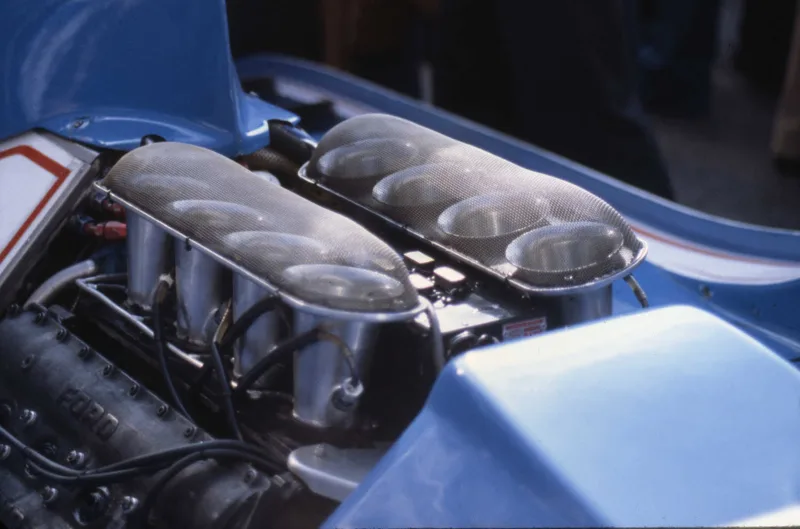
The Ford-Cosworth Indy V8 was a family of related turbocharged 2.65-litre V8s, the joint work of Ford and Cosworth, built for American open-wheel racing. Production lasted more than 30 years, with engines raced in USAC, CART and Champ Car events from 1976 to 2007.
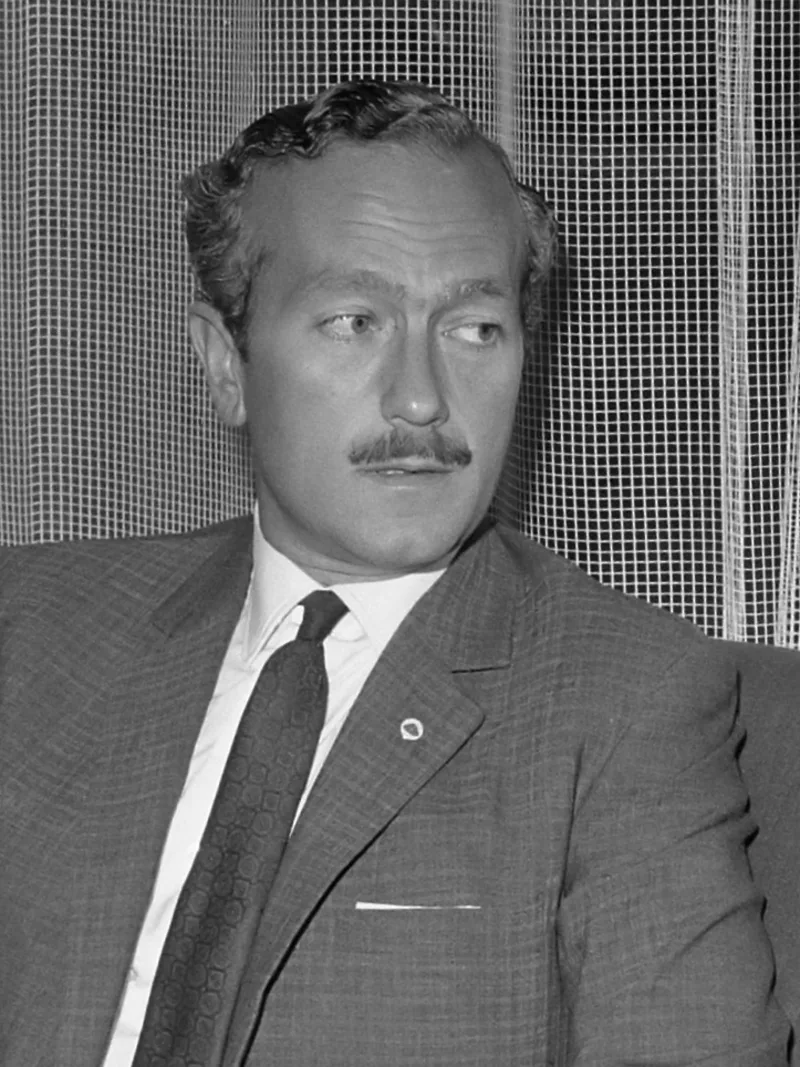
The DFX was the Indy version of the Ford-Cosworth DFV, the 3-litre Formula One engine developed by the former Lotus engineer Keith Duckworth with backing from Colin Chapman and Ford for the Lotus 49 in 1967. The DFV won 155 F1 races between 1967 and 1985. The Indy version had its stroke shortened to 2.65 litres and a turbocharger added. The Vels Parnelli Jones team developed it privately for the 1976 USAC season, in the face of opposition from Duckworth.
Al Unser won the fifth race of that season, the 1976 Pocono 500, in the Parnelli-Cosworth car, then added wins in Wisconsin and Phoenix and ended the year fourth in the championship. Duckworth had been a guest of the team at Pocono because Jones and Vel Miletich hoped to become North American distributor for the engine. But soon after the victory Cosworth lured two key engineers, Larry Sluter and Chikie Hirashima, away from the team and opened a base in Torrance, California, to build and market the engine itself. From then on it was called the DFX.
It dominated Indy car racing much as the DFV had ruled Formula One. The engine won the Indianapolis 500 ten years running from 1978 to 1987 and won every USAC and CART championship from 1977 to 1987 bar one. It powered 81 consecutive Indy car victories from 1981 to 1986 and 153 in all. For a short time in the early 1980s some DFX engines were badged as Fords. By the time it was replaced it was making over 840 bhp (630 kW).
What came after the DFX?
Ilmor came next. In 1986 GM financed the British firm to build a rival to the DFX, and the Ilmor Indy V8, designed by Mario Illien, soon became the engine to beat. Ford asked Cosworth to rework the DFX, and in 1989 it introduced a short-stroke version called the DFS.
Kraco Racing with Bobby Rahal and Dick Simon Racing with Arie Luyendyk ran the DFS in its first season. Neither car made the front two rows at the 1989 Indianapolis 500, though both started in the top ten, and both then dropped out with engine failures. Rahal won the Meadowlands Grand Prix, but Kraco merged with Galles at the end of the year and switched to Chevrolets. Factory development carried on in 1990 with Scott Brayton and Dominic Dobson without a win, other CART teams used the engine in 1991 and 1992, and it retired with Rahal's single victory.
Ford-Cosworth then designed a new line of engines, the X-series, to replace the ageing DFX and DFS. It debuted in 1992 with the XB, which won eight poles and five races in its first season, with Michael Andretti second in points. Nigel Mansell won five races in 1993 on the way to the CART title, the first for the XB. Jacques Villeneuve took both the Indianapolis 500 and the championship in 1995, a year in which the XB won 10 of 17 races, its best in CART.
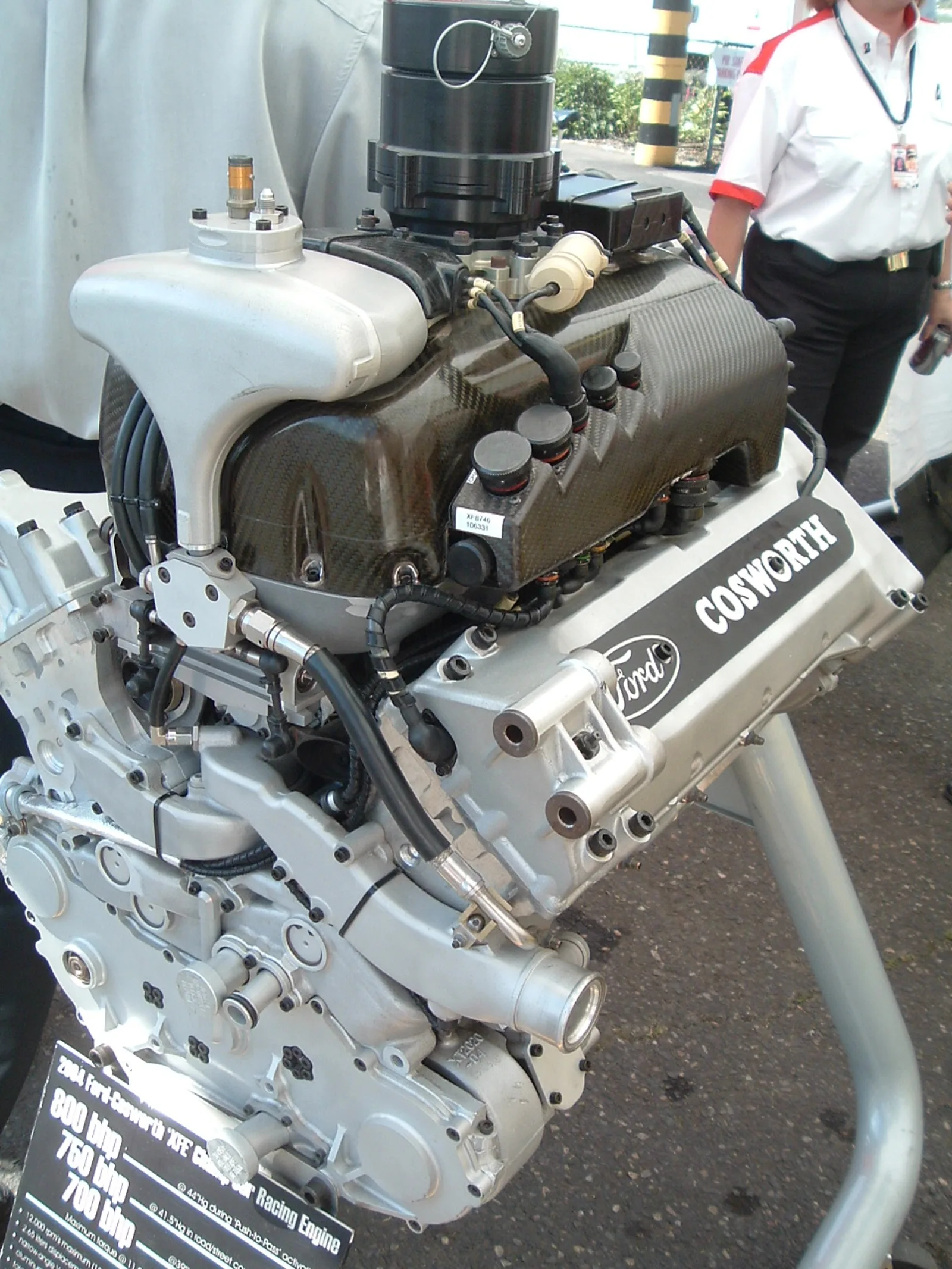
The XD replaced the XB in CART in 1996. The XB lived on in the Indy Racing League, winning all five IRL races it entered, the 1996 Indianapolis 500 among them. The XF arrived for 2000, and in 2003 it became the single engine every Champ Car World Series team had to use. Its derivative, the 2.65-litre XFE, kept that role through 2007. Champ Car set a rev limit of 12,000 rpm, down from over 15,000 rpm in 2002.
The 2004 XFE had a rated power of 750 horsepower (559 kW; 760 PS), with 800 bhp (597 kW; 811 PS) available during push-to-pass, and torque of 490 N.m (361 lbf.ft). It burned methanol, had a steel crankshaft and aluminium alloy pistons, weighed 120 kg (264.6 lb) and measured 539 mm (21.2 in) long.
In 2007 the Ford name was dropped from the engine because the manufacturer chose not to continue its sponsorship. The calibrated pop-off valve that limited boost was replaced by engine electronics, and the rated life between rebuilds was 1,400 miles (2,300 km), with engines sent back to Cosworth. Champ Car then merged into the IndyCar Series before the 2008 season, and Cosworth no longer supplies engines to any American open-wheel series.
Chevworth and the NME XB
In mid-2003 Cosworth supplied a 3.5-litre V8, the XG, badged as a Chevrolet Gen 4 engine to IRL teams after the Ilmor-built Gen 3 proved inadequate against Honda and Toyota rivals. Teams that stayed with Chevrolet saw a big improvement with the so-called Chevworth. On 27 July 2003 the XG came second at Michigan in its first race, and Sam Hornish Jr. won 3 races with it that season. It was cut to 3 litres for 2004 and won one race in 2005, the last year Chevrolet raced in the IRL. The NME XB, built by Nicholson McLaren since 2003, is a naturally aspirated V8 based on the Champ Car XB without its turbocharger. It powered every car in the short-lived Grand Prix Masters series and has also been fitted to LMP2 cars.
How do the Indy engines compare?
| Engine | Layout | Output | Notable result |
|---|---|---|---|
| Offenhauser, naturally aspirated | DOHC four, 252 cu in | 420 hp (310 kW) at 6,600 rpm | Record 27 Indianapolis 500 wins in all |
| Offenhauser, turbo 1968 | Four, 168 cu in (2,750 cc) | 750 hp (560 kW) at 9,500 rpm | Won the 1968 Indianapolis 500 for Bobby Unser |
| Ford V8, 1963 | Pushrod V8, 4,195 cc | 376 bhp (280 kW) | Jim Clark second at Indianapolis |
| Ford V8, 1964 | DOHC V8, 4,195 cc | 425 bhp (317 kW) | First Indianapolis win for Ford in 1965 |
| Ford-Cosworth DFX | Turbo V8, 2.65 L | Over 840 bhp (630 kW) | Ten consecutive Indianapolis 500 wins, 1978 to 1987 |
| Ford-Cosworth XFE, 2004 | Turbo V8, 2.65 L | 750 hp (559 kW; 760 PS) rated | Spec Champ Car engine through 2007 |
Where do these Indy engines stand today?
The Offenhauser remains popular in vintage racing, and the NME XB keeps the Cosworth XB line alive in sports car racing. Cosworth no longer provides engines to any American open-wheel series.
The Offy's last win came at Trenton in 1978 and its last race at Pocono in 1982. The Ford-Cosworth V8 family ran from 1976 to 2007, and its last Ford badge came off in 2007.