A sports car race at Mosport, two dangerous circuits that swapped the Formula One date and a council decision that handed Montreal the lot.
The Canadian Grand Prix began in 1961 as a sports car race at Mosport Park, joined Formula One in 1967 and alternated with Mont-Tremblant in 1968 and 1970. Safety worries ended that, and after Toronto council rejected a street race, it moved to Montreal's Circuit Gilles Villeneuve in 1978.
Toronto city council turned down a plan to host the Canadian Grand Prix on its streets by a margin of two votes. Within a few hours Montreal's mayor, Jean Drapeau, had struck a deal to bring the race to his city instead, and the race has been based in Montreal since 1978.
That 1977 vote ended a long search for a permanent home. The race began as a sports car event, moved into Formula One in 1967, then alternated between two scenic but dangerous circuits, Mosport in Ontario and Mont-Tremblant in Quebec, before landing on an island built for a world's fair.
How did the Canadian Grand Prix begin?
The Canadian Grand Prix has been held since 1961, and it first ran as a sports car event at Mosport Park, in Bowmanville, Ontario. It was one of the headline races of the new Canadian Sports Car Championship, created alongside it, and for the first five years the winners were drivers with Formula One experience or men who joined the series after winning it. The 1966 running belonged to the Can-Am series, and Mark Donohue won it.
| Circuit | Location | Canadian Grand Prix years | Character |
|---|---|---|---|
| Mosport Park | Near Toronto, Ontario | From 1961; Formula One in 1967, 1969, 1971 to 1974, 1976 and 1977 | 3.957 km (2.459 mi), 10 turns, many ups and downs |
| Circuit Mont-Tremblant | About 130 km (81 mi) north of Montreal | Formula One in 1968 and 1970 | Fifteen corners, big elevation changes, 4.265 km after its 1965 extension |
| Circuit Gilles Villeneuve | Notre Dame Island, Montreal | 1978 onwards, with a handful of cancelled years | Temporary track built from the island's roads |
Mosport was only the second purpose-built road racing circuit in Canada, after Westwood in British Columbia. Its design and construction date to the closing years of the 1950s, and its first race was a local meeting in June 1961. On 25 June came the Player's 200 sports car race, which drew drivers from around the world, and Stirling Moss won the two-heat race in a Lotus 19, ahead of Joakim Bonnier and Olivier Gendebien.
The track's proposed hairpin was split into two separate corners at Moss's suggestion, to challenge drivers and entertain spectators, and it became Moss Corner. That explains the common mix-up in which people call the place "Mossport"; the real name is a portmanteau of Motor Sport. Unlike most historic circuits the layout has stayed largely unchanged, a 3.957 km (2.459 mi) road course of 10 turns about 75 km (47 mi) east of Toronto.
Two votes in Toronto and a few hours of Montreal's mayor decided where Canada's Grand Prix lives.
What was Formula One racing at Mosport like?
Formula One took over the event in 1967, and the first championship race was held on 27 August between the German and Italian rounds. Jack Brabham won with his New Zealand teammate Denny Hulme second, a Brabham one-two. The Canadian Grand Prix then alternated between Mosport and Mont-Tremblant.
In 1969 Jackie Stewart climbed from fourth to the lead, but Jacky Ickx was closing, and on lap 33 they reached the privateer Al Pease, by now lapping him a fourth time. Ickx made a move on Stewart, they collided, and Stewart's Matra could not restart while Ickx's Brabham carried on to win. Stewart, furious, took his grievance to team boss Ken Tyrrell, who raised it with the organisers, and Pease, aged 48 and driving an outdated Eagle-Climax, was shown the black flag after completing less than half the laps of the leaders. He remains the only driver in Formula One history to be disqualified for being too slow.
Ickx won again in 1970, with Clay Regazzoni making it a Ferrari one-two. In 1971 rain and fog flooded the circuit, a fatal crash in the Formula Ford support race delayed the main event, and Stewart won easily in a Tyrrell from Ronnie Peterson's March. Mosport received new safety features in 1972 and Stewart won again.
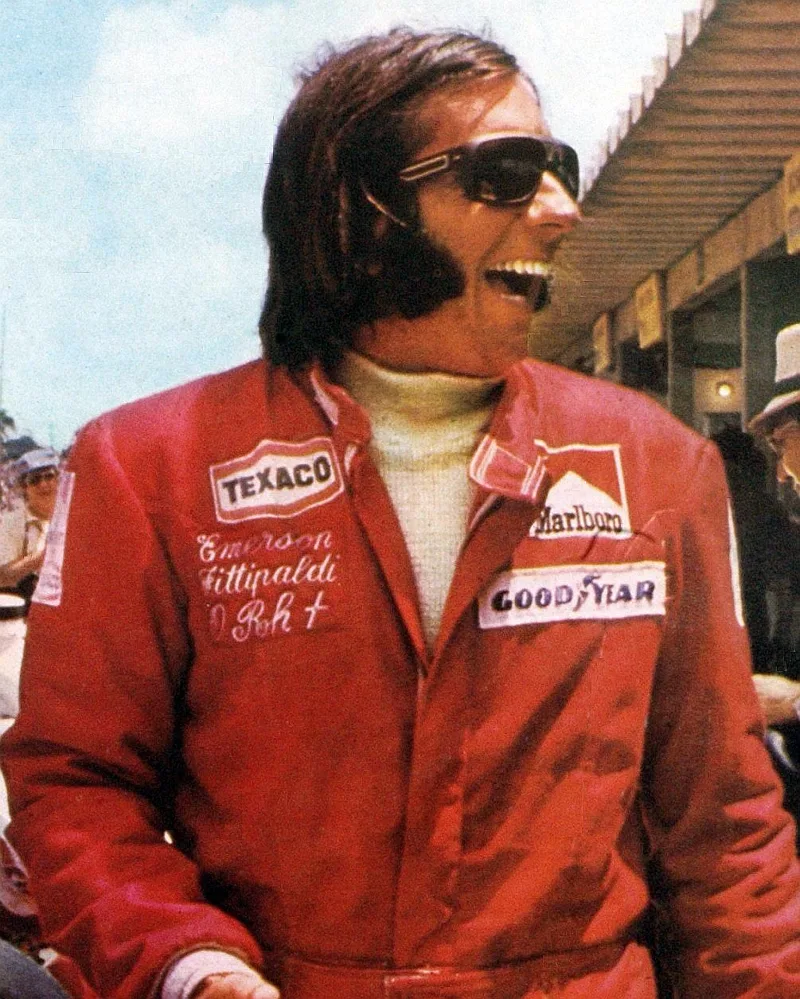
The 1973 race was another wet one, and a muddle. Niki Lauda led in a BRM from the third lap until his pit stop on the 20th, and after Francois Cevert and Jody Scheckter collided on lap 33 a bungled pace car period let those ahead gain almost a lap. Jackie Oliver ended up leading, but Peter Revson had the fastest car and went on to win, with Emerson Fittipaldi charging to second. It took hours to confirm the result. In 1974 Fittipaldi won while his title rivals Regazzoni and Scheckter finished second and crashed with a brake failure respectively. There was no race in 1975, and in 1976 James Hunt won after having his Brands Hatch points taken away and being disqualified from that earlier race.
The last race, in 1977, was Gilles Villeneuve's debut for Ferrari. It also exposed Mosport's weaknesses. Ian Ashley's Hesketh flipped over the Armco barrier on a bumpy crest and into a television tower, and the rescue operation was slow and inefficient. Jochen Mass spun his McLaren into a guardrail that more or less flattened on impact. Scheckter won in a Wolf, but the FIA now considered Mosport unsuitable for the future.
Why did Formula One race at Mont-Tremblant?
Circuit Mont-Tremblant was the idea of local business owners and hoteliers who wanted tourism beyond the winter ski season. It lies about 130 km north of Montreal, with fifteen corners that follow the natural elevation changes, and only one circuit in the country is older. The original 2.510 km layout opened with a first race on 3 August 1964, and a year later it was extended to 4.265 km.
Formula One came in 1968, with the date moved to late September to sit next to the United States Grand Prix, held at Watkins Glen. Chris Amon led from the start until his gearbox broke with 17 laps left of the 90 scheduled, and fellow New Zealanders Hulme and Bruce McLaren gave the McLaren team a one-two.
Ickx and Regazzoni scored a Ferrari one-two there in 1970, a race that was also the first Formula One start for Tyrrell Racing as a constructor. Then it was over. Formula One did not return because of safety worries about harsh winters seriously damaging the surface, along with a dispute with the local racing authorities in 1972, and the alternation stopped. Mosport held the race alone from 1971.
Mont-Tremblant stayed busy. Through the late 1960s and 1970s it welcomed Formula 5000, Formula Atlantic, Trans-Am and Can-Am, and drivers who raced there included Mario Andretti, A. J. Foyt, Jochen Rindt, John Surtees and Gilles Villeneuve. The Jim Russell Racing Driver School, established there in 1969, has produced Gilles and Jacques Villeneuve, Lance Stroll and Nicholas Latifi. Later events included the 2007 Champ Car Grand Prix and the 6 Hours of Mont-Tremblant from 2002 to 2005. A company belonging to the Montreal businessman Gad Bitton acquired the circuit in July 2022.
How did Toronto nearly get the race?
After the 1968 season, John Bassett led a group, with sponsor Imperial Tobacco, that wanted to shift the Grand Prix, along with Mosport's IndyCar race, to a street circuit in Toronto. The lap would follow Lake Shore Boulevard and cross Exhibition Place, with pits and start line inside Exhibition Stadium. Bassett abandoned the scheme as the bill reached its third reading at city council.
The idea came back in 1977, when Labatt, the sponsor holding the rights to Formula One in Canada, and the owners of Mosport revived it after the FIA's verdict on the circuit. Toronto's council rejected the plan by two votes. Within hours Drapeau had agreed terms with Labatt to take the race to Montreal for good. Toronto finally got a street race in 1986, when Molson ran the Molson Indy Toronto for Indy Cars. The first thought was to share the race between Montreal and Toronto, yet Montreal ended up the sole home.
How was the Montreal circuit built?
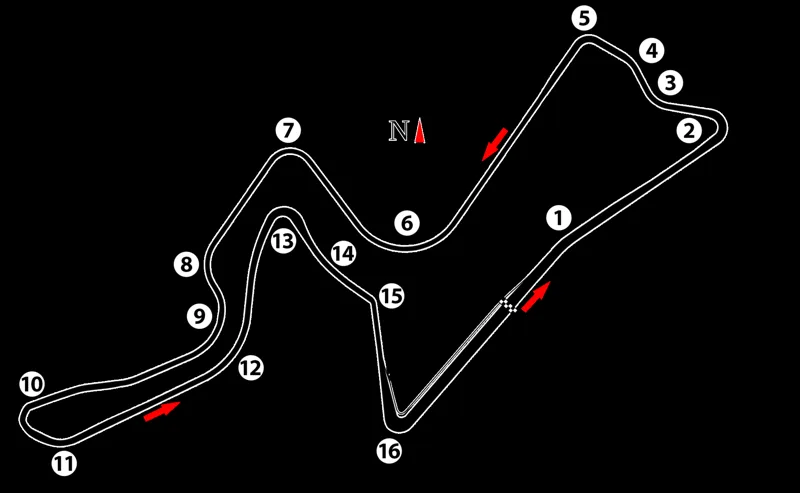
A plan was assembled quickly for the Circuit Ile Notre Dame, on an artificial island in the St Lawrence, where Expo '67 had been staged. Some of the island's roads were combined and altered, and pit facilities were added to create a temporary track. The first race on it came in 1978, and the event has returned every year bar four cancellations.
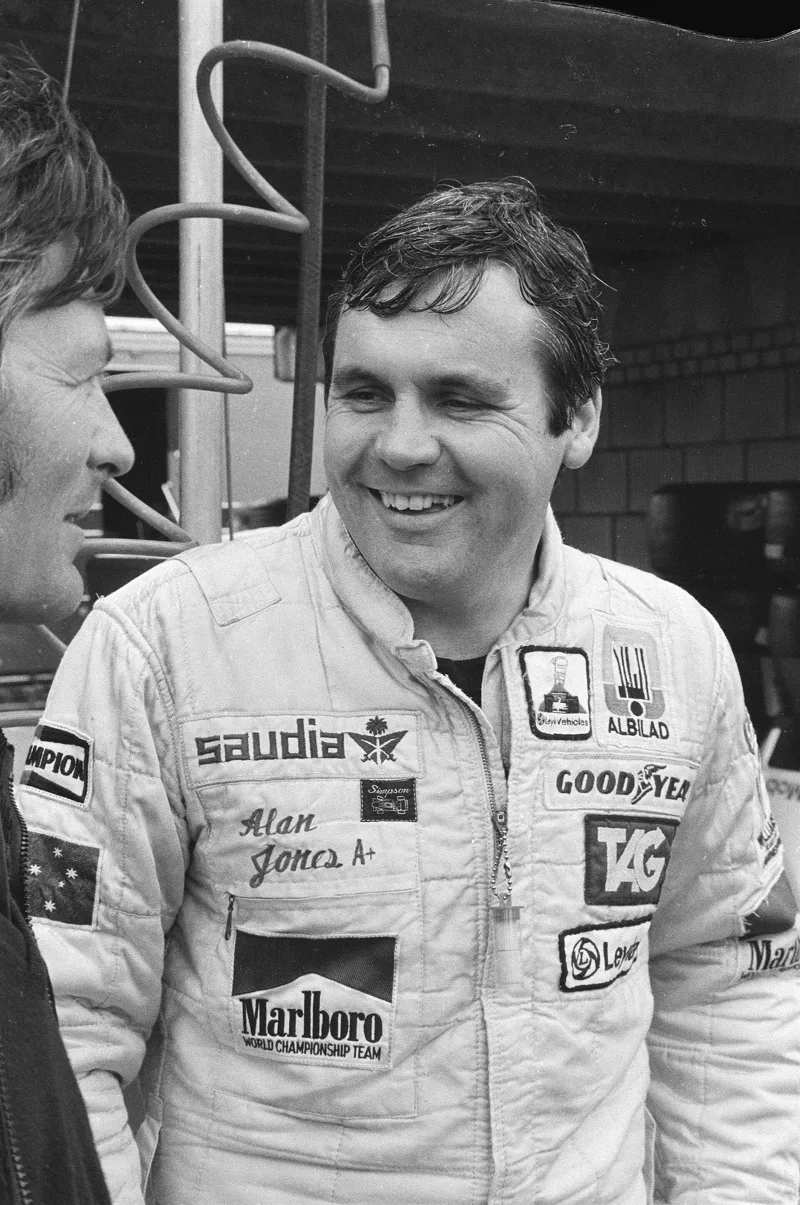
Quebec native Gilles Villeneuve won that first race in a Ferrari. The layout was changed for 1979 to make it faster, and Alan Jones won, then took the 1980 race and the drivers' title. The 1980 race began with a big pile-up at the start after Jones and Nelson Piquet collided as they entered the very quick Droit du Casino bend. Jean-Pierre Jabouille's career ended there when he hit a tyre wall head-on in his Renault and badly broke his legs.
In 1981 Villeneuve showed his control in a rain-soaked race, driving to third with the front wing of his Ferrari askew after a crash. Jacques Laffite won what was his last Formula One victory. Villeneuve died in 1982 during final qualifying for the Belgian Grand Prix, and the Montreal circuit took his name a few weeks later. One of the earliest inductees of Canada's Motorsport Hall of Fame, he remains the only Canadian winner of his home Grand Prix to date.
The 1982 race was tragic. Didier Pironi's Ferrari stalled on the front of the grid; Raul Boesel glanced off it, then Riccardo Paletti ploughed straight into its rear at more than 180 km/h (110 mph). The 23-year-old was freed after half an hour, but died in hospital. Piquet won in a Brabham, and the race was moved from October to early June, where it has stayed.
Which Montreal races stand out?
Rene Arnoux won for Ferrari in 1983, and Piquet won again in 1984 in a BMW-powered Brabham. In 1985 Ferrari finished one-two with Michele Alboreto and Stefan Johansson ahead of Alain Prost, while Lotus took its last front-row lock-out with Elio de Angelis and Ayrton Senna. Nigel Mansell won a competitive 1986 race after Keke Rosberg's charge through the field faded.
The 1987 race did not happen because of a sponsorship dispute between the local brewers Labatt and Molson, and the gap year was used to alter the track, with the start line shifted to where it now sits. Senna won in 1988 in the McLaren MP4/4 with its Honda turbo engine. In 1989 his Honda failed late, and Thierry Boutsen took the first win of his Formula One career. Senna won again in the rain in 1990.
In 1991 Mansell's Williams stopped on the final lap, a few corners short of the flag, and Piquet took his 23rd and final victory in a Benetton. Gerhard Berger won in 1992 after Mansell spun following a collision with Berger's teammate Senna, and Prost won in 1993 while fending off Senna.
After the Imola tragedies, the very fast Droit du Casino curve was turned into a chicane for 1994, and Michael Schumacher won. In 1995 Jean Alesi won on his 31st birthday, the only victory of his career, in the number 27 Ferrari once driven by Villeneuve. Schumacher had pitted with electrical trouble and Damon Hill's hydraulics failed, and when Alesi ran out of fuel on the slowing lap Schumacher gave him a lift back to the pits.
The race grew in importance. From 1993 it was the only North American Grand Prix, a position it kept until 2000 and again from 2008 to 2011 after the United States Grand Prix at Indianapolis ended. In 2005 more people watched it than any other Formula One Grand Prix, and only Super Bowl XXXIX and that year's Champions League final drew bigger audiences worldwide.
What became of Mosport?
Mosport, now Canadian Tire Motorsport Park, was repaved for 2001 to meet FIA specifications and is 13 m (42 ft) wide, with almost all the racing lines kept. Its big sports car races were seen as a key ingredient in founding the Can-Am series, which visited in every year of its history except 1968, and the venue has since added the World Sportscar Championship, Formula 5000 and many other series. Panoz Motorsports bought the facility in 1998 and the American Le Mans Series visited in 1999. Canadian Motorsports Ventures, including Carlo Fidani and Ron Fellows, bought it in June 2011, and the Canadian Tire partnership and new name followed in February 2012.
German Formula One driver Manfred Winkelhock was killed at the track in 1985 when his Porsche 962C hit a concrete wall. The fastest official race lap is Marco Werner's 1:05.823 in an Audi R10 TDI, set in 2008, while teammate Rinaldo Capello set an unofficial 1:04.094 in qualifying.
What is next for the Canadian Grand Prix?
The Canadian Grand Prix was cancelled in 2020 and 2021 because of the COVID-19 pandemic and returned to the calendar in 2022. A contract extension signed in 2025 runs to 2035.
Mosport hosts IMSA and NASCAR Canada events, and Ferrari Challenge North America and the NASCAR Craftsman Truck Series are due back in 2027.