A 4.361 km circuit on Notre Dame Island that has hosted the Canadian Grand Prix since 1978 and a wall that ended three world champions' races in one afternoon.
At 4.361 km (2.710 mi), this Montreal track on Notre Dame Island hosts the Canadian Grand Prix. It opened in 1978, and a 1982 renaming honoured the driver who died that year. Its best-known feature is a barrier that claimed three former champions' races in 1999.
Circuit Gilles Villeneuve is a 4.361 km (2.710 mi) track on Notre Dame Island in Montreal, Quebec, and the home of the Canadian Grand Prix. It was built and finished in 1978 and renamed in 1982 in honour of the Canadian driver who had died earlier that year. The circuit is also known for the Wall of Champions, which ended the races of three former world champions in 1999.
Where is Circuit Gilles Villeneuve and how was it built?
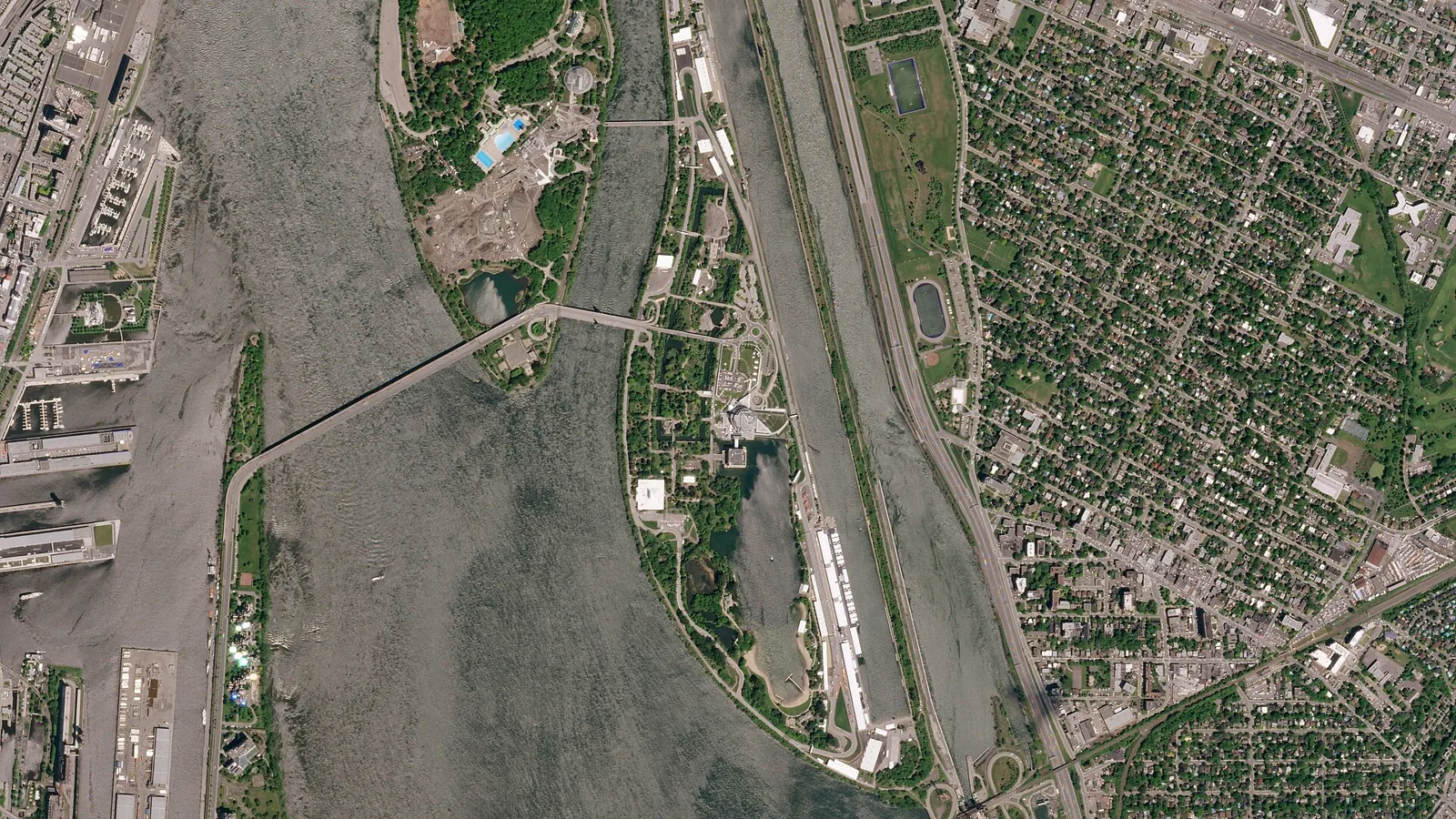
The track is set in Parc Jean-Drapeau, on Notre Dame Island, an artificial island in the St. Lawrence River. Much of that land was built up for Expo 67, the world fair held in Montreal, and the park takes its name from the mayor who organised that event.
Almost half of the lap runs alongside the Olympic Basin, a large rectangular basin constructed for the rowing and canoeing competitions of the 1976 Summer Olympics. The Biosphere, a surviving pavilion from the Expo, sits beside the circuit on Saint Helen's Island, which was enlarged for the fair.
A track on an island in the St. Lawrence River, where a wall earned its name among three former world champions.
Why was the circuit renamed after Gilles Villeneuve?
The venue was originally called the Ile Notre-Dame Circuit and was completed in 1978. It was renamed in 1982 to honour the Canadian Formula One driver Gilles Villeneuve, who died earlier that year. He was the father of Jacques Villeneuve, a later world champion, and the circuit's name links the family to the event in Montreal.
The paddock dates from 1988, but it was demolished over the winter of 2018 and 2019 and replaced by a new structure.
How did the Canadian Grand Prix come to Montreal?
Before Montreal, the Canadian Grand Prix was held at Mosport Park near Toronto on eight occasions, and it also ran at Mont-Tremblant in Quebec in 1968 and 1970. Safety concerns at Mosport marred the 1977 event, so the race was moved to the new circuit on Notre Dame Island for the following year.
Racing at the new site began in 1978, and Gilles Villeneuve took the win for Scuderia Ferrari. The race became a mainstay of the calendar for the next thirty years, and it moved from late September to mid-June in 1982 to offer a warmer weekend.
Why did the Canadian Grand Prix leave the calendar in 2009?
The Canadian race left the calendar for 2009, replaced by the inaugural Abu Dhabi Grand Prix, after more than two decades of uninterrupted racing in Montreal. A settlement between the Quebec authorities and the Canadian organisers and Formula One Administration followed on 27 November 2009, and a five-year contract was signed for the 2010 to 2014 seasons.
The 2011 edition ran for more than four hours, making it the longest World Championship Grand Prix ever, because of a lengthy rain delay.
What is the Wall of Champions?
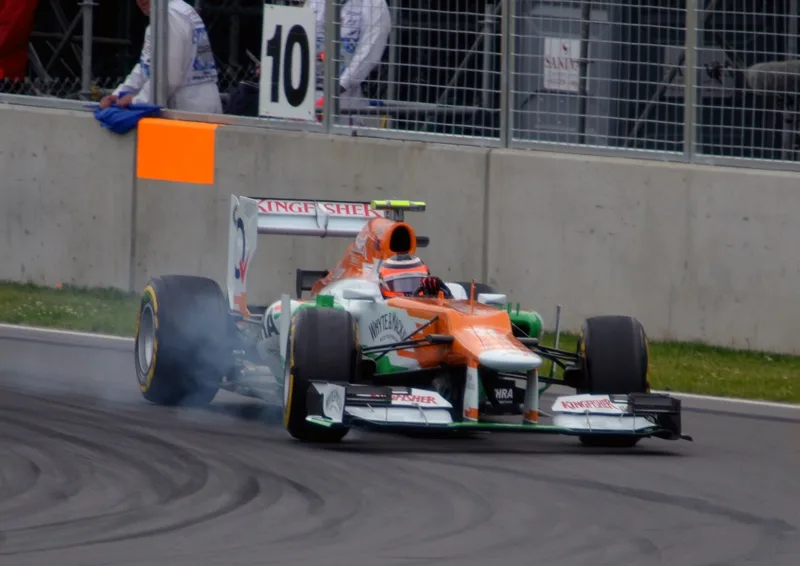
The Wall of Champions is the outside barrier at the exit of the last chicane, just before the start-finish straight. It carries the words Bienvenue au Quebec, which means Welcome to Quebec, and it is nicknamed the Quebec Wall. In 1999 it ended the races of Damon Hill, Michael Schumacher and Jacques Villeneuve, all former Formula One world champions, along with the FIA GT champion Ricardo Zonta.
Later victims included Jenson Button in 2005 and Sebastian Vettel, who hit the barrier during free practice in 2011. During the Formula One weekend the exit barrier carries Tourisme Quebec advertising, which reads Bonjour Quebec in recent years after the older Bienvenue au Quebec message. A car damaged at the wall brings out a Safety Car or a Virtual Safety Car.
What were the main layout milestones?
| Year | Change |
|---|---|
| 1978 | Circuit built and finished on Notre Dame Island |
| 1982 | Renamed in honour of Gilles Villeneuve |
| 1986 to 1988 | Pit lane and start-finish line relocated beside the fast right-left chicane's exit, with a hiatus in 1987 |
| 1994 | Chicane added between Casino corner and the hairpin after the Imola deaths |
| 1996 | Chicane and Casino corner removed; the run from the hairpin became a straight |
| 2002 | Pit lane exit changed, shortening the circuit |
| 2005 | Higher curbs on the final chicane drew criticism from drivers |
| 2017 | Tecpro barriers added after older tyre barriers were removed by May |
The 2017 changes responded to faster cornering from the new cars and to tougher safety rules from the FIA. Experts predicted those cars would be three to five seconds quicker a lap, and the angle of the final chicane exit was modified after the FIA judged it dangerous.
Which corners are the most famous at Montreal?
Turns one and two are known together as the Senna S, which looks like an S from above. Turn 8, the Pont de la Concorde corner, is a very fast kink after the bridge underpass, leading into Turn 9 and the rush towards the hairpin.
Turn 10 is the hairpin, a 180-degree corner that is one of the best examples of its type in Formula One, taken with full wheel lock. Drivers approach it with several different lines, which creates overtaking on the apex or on the exit. Turns 12 and 13 offer one of the best passing zones on the circuit, and many duels have been seen on the exit of turn 12.
Which other series have raced at the circuit?
Other top-level series that have raced here include the World Sportscar Championship, Champ Car and the Grand-Am Rolex Sports Car Series. The Champ Car event was known as the Grand Prix of Montreal from 2002 to 2006, and a Champ Car race was replaced by Grand-Am and NASCAR events when the promoter, Normand Legault, secured the rights for 2007 to 2011, plus an option covering 2012 to 2016.
On 4 August 2007 Kevin Harvick won the first NASCAR Busch Series race at the circuit, in a race that became one of the most controversial in NASCAR history after Robby Gordon claimed to have won. The NASCAR races changed the layout too, because the pit lane had to hold at least 43 cars. The 2008 race was the first NASCAR event run on rain tires.
How fast are the lap records at the circuit?
In 2006, when Champ Car and Formula One last shared the track, F1 cars were five to seven seconds quicker per lap. The fastest race lap in that year's Formula One race was 1:15.841, set by Kimi Raikkonen, while Sebastien Bourdais managed 1:22.325 in the Champ Car race.
The fastest ever lap is 1:10.240, set by Sebastian Vettel in qualifying for the 2019 Canadian Grand Prix, but it is not recognised as an official record. Lewis Hamilton had held the previous mark at 1:11.459 in the 2017 qualifying session, when his pole position equalled Ayrton Senna's pole total. Senna's family sent a helmet to honour the moment.
What happens at the circuit between races?
Between races the public may use the circuit, whether on foot, on a bike, on skates or behind the wheel. The island is one of the quietest places in Montreal for most of the year, although it becomes one of the noisiest during the Grand Prix.
On 4 June 2009 the island's administration banned competitive cyclists from the track, citing safety after 27 injuries between 2008 and 2009. The ban was later lifted following protests.