Montreal's race was shaped by a shorter DRS zone, protest threats outside the circuit and a late round of pit stops that handed Hamilton the lead.
The 2012 Canadian Grand Prix was the seventh round of the Formula One season, held on 10 June 2012 at the Circuit Gilles Villeneuve in Montreal. Lewis Hamilton won the 70-lap race from second on the grid, ahead of Romain Grosjean and Sergio Perez.
Lewis Hamilton won the 2012 Canadian Grand Prix from second on the grid, becoming the seventh different winner in seven races. The result came in the 49th Canadian Grand Prix, and it was the first of two North American rounds that year. Romain Grosjean and Sergio Perez completed the podium, and each scored their second career podium.
What changed on the track before Montreal?
The FIA shortened the DRS zone for 2012 to 600 metres from the l'Epingle hairpin, and removed the secondary zone on the pit straight. The detection point stayed after l'Epingle, but the sport's governing body said overtaking had been too easy in 2011.
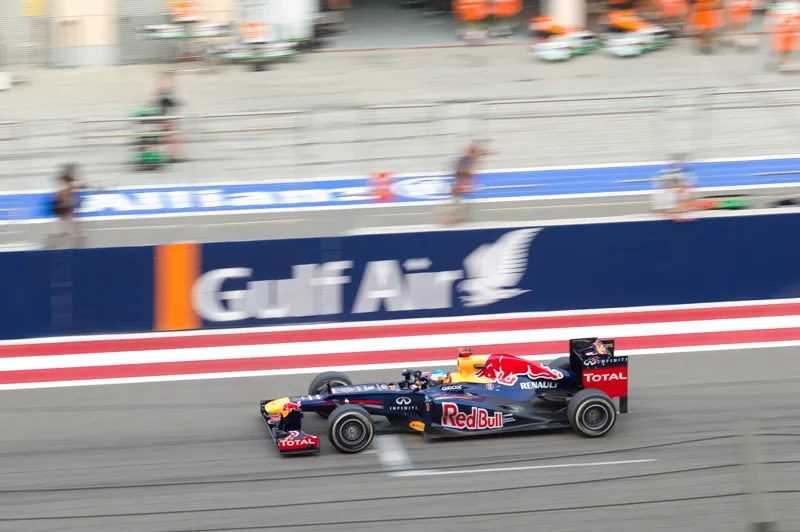
Red Bull's Monaco parts had been declared illegal by the FIA a week before Canada, after rival teams questioned them. The team was also forced to change the design of its axles, because Charlie Whiting felt the holes in them broke the technical regulations.
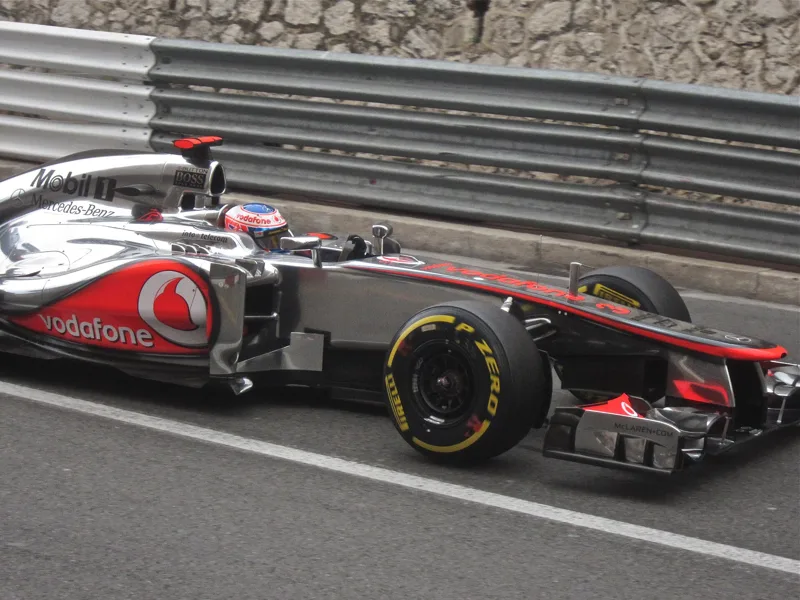
Pirelli brought the yellow-banded soft compound as the harder prime and the red-banded supersoft as the softer option, the same pattern used at the 2011 Canadian Grand Prix.
Seven different winners in seven races, and Hamilton's Montreal win made it a season record.
What was the protest campaign against the race?
Montreal's build-up was dominated by protest. After a smoke bomb incident on the Montreal Metro, student activists from the Universite du Quebec a Montreal threatened to stop the race, depicting it as a symbol of the capitalist class.
The most radical student group, CLASSE, was suggested as the organiser of any disruption. The race was named in chants directed at the Premier of Quebec, Jean Charest, and the student faculty described the Grand Prix as representing values that should be abolished.
The hacktivist community Anonymous attacked the Formula One website in protest against Bahrain and then threatened similar action in Montreal under the name Operation Quebec. Its threats included blocking access to the circuit and lighting fires within its limits, and it foreshadowed attacks on hotels in the city. A separate anti-capitalist group, CLAC, threatened Crescent Street and called the race an excess of cash.
Organisers scrapped the Open Doors Day that had been planned for the Thursday. Instead, three hundred protesters turned up at an official pre-race function, and riot police moved in to disperse them. Police raided eighteen homes and arrested eleven people suspected of vandalism.
Thirty-seven people were arrested on the Friday evening after a nude protest in front of tourists, and a third protest on the Saturday afternoon passed without arrests. Jacques Villeneuve, a Montreal resident and former world champion, was highly critical of the demonstrators and compared them to the rioters of the 2011 England riots.
Villeneuve went further, saying that plans to block the Metro on race day could be treated as terrorism, and he said he had received insulting and dangerous emails in response to his comments.
How did free practice set up the weekend?
Vettel finished the final session fastest, six thousandths of a second ahead of Fernando Alonso, with Hamilton third. Vettel had also been summoned by the stewards after cutting across the final chicane, but no action was taken.
Hamilton was the fastest in the first session, a tenth of a second ahead of Vettel and two-tenths ahead of Rosberg. Jenson Button was forced out early after his team found an oil leak in his car, but he still finished tenth. Heikki Kovalainen crashed at turn nine halfway through the session, which brought out a red flag.
In the second session Hamilton led the Ferraris of Alonso and Massa, and Bruno Senna crashed at the final chicane. The crash destroyed one of the experimental rear wings that Williams had brought to the race.
Jean-Eric Vergne became the third driver to crash in free practice, going off at turn one during his first flying lap on Saturday morning. Rosberg lost an entire hour of running to a fuel pick-up problem, and Kimi Raikkonen was investigated and later fined for a dangerous pit entry.
A HRT mechanic was taken to hospital after being hit by Pedro de la Rosa in the pit lane, though the team reported that he had not suffered any serious injuries.
Who went out in qualifying?
Vergne was knocked out in Q1 by the two Caterhams, with Heikki Kovalainen beating Vitaly Petrov by two-tenths of a second on a late lap. Sebastian Vettel was the fastest driver in the session.
Pedro de la Rosa out-qualified both Marussia cars by half a second. Narain Karthikeyan was within a tenth of Charles Pic, completing the final row of the grid.
The second period was closely fought, with several drivers separated by hundredths of a second. Pastor Maldonado spun at the final chicane and clipped the outer wall, damaging his right rear wheel and suspension, and he finished seventeenth. Romain Grosjean narrowly avoided elimination, while Raikkonen finished twelfth behind Kobayashi.
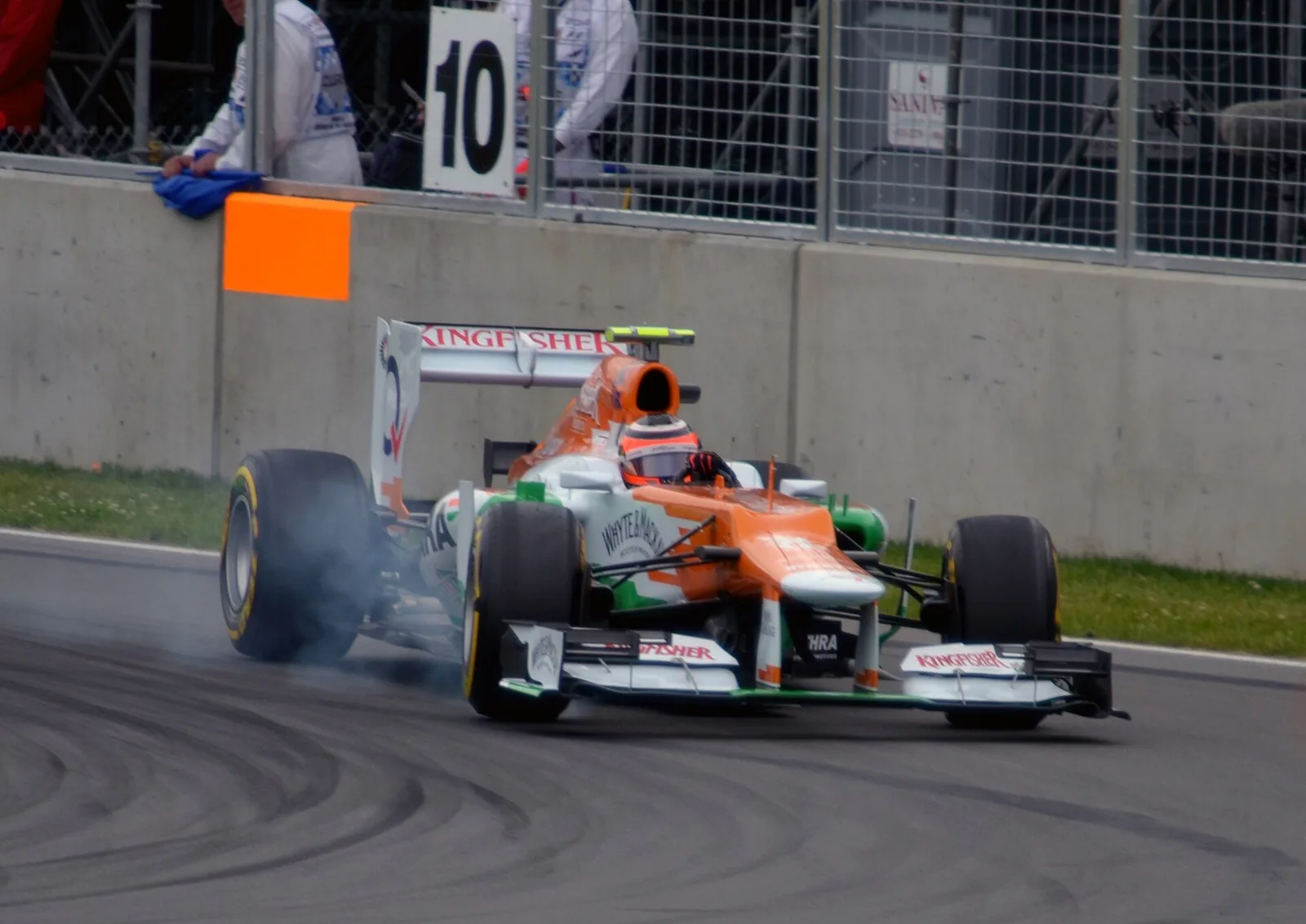
Nico Hulkenberg qualified thirteenth despite setting the early pace, and Daniel Ricciardo was fourteenth, a full second quicker than his teammate Vergne. Perez was fifteenth after locking his front tyres at the hairpin on his final flying lap, and Bruno Senna was sixteenth.
All ten cars took to the circuit for Q3. Vettel took pole ahead of Hamilton and Alonso, with Webber fourth, Rosberg fifth, Massa sixth, Grosjean seventh and di Resta eighth. Massa, who had reached Q3 at the previous race as well, was sixth. Schumacher was ninth, half a second behind Rosberg, and onboard footage showed him visibly frustrated with a slower car on his final flying lap, although no action was taken.
Maldonado's gearbox was changed after his qualifying crash, which earned him a five-place grid penalty and dropped him to twenty-second for the start.
How did the race open?
Vettel took the early lead from pole, and Hamilton, Alonso, Webber, Rosberg and Massa held their places in the opening laps. Maldonado made up several places after starting twenty-second, while Massa passed Rosberg for fifth.
Massa later spun and dropped to twelfth, at the tail of the second group led by di Resta. The front five pulled clear of the rest of the field, and a clear gap opened up between them and the pack.
Vettel built a two-second lead over Hamilton in the first four laps, but Hamilton slowly reeled him back in as the super-soft tyres began to wear.
Because of the qualifying rules, the top nine qualifiers all started on the red-banded super-soft tyres. Button, tenth after skipping the final time, chose the softer yellow-banded tyre, and five drivers including Raikkonen and Perez opted for the softs as well.
Why did the pit stops decide the lead?
Vettel pitted on lap 16 and Hamilton came in the next lap, but Hamilton rejoined ahead of him despite a slow stop. Alonso had stayed out two laps longer than Hamilton and rejoined second, behind the temporary leader Romain Grosjean, who had yet to pit.
Hamilton immediately attacked Grosjean in the DRS zone on the same lap and took second. That place became the lead two laps later, when Grosjean finally pitted.
Webber could not keep up with the leading trio on his first stint. After his stop he rejoined behind Perez and Raikkonen, who had not yet pitted, and he was held up behind them for a long time.
The leading trio built a gap of around 15 seconds over the rest of the field, and Hamilton edged out a lead over his two pursuers.
How did the one-stop attempts go?
Raikkonen and Perez, who had started on soft tyres, both had long first stints as they tried to make the race on a single stop. Rosberg made his second stop on lap 40, and Raikkonen made his only stop one lap later.
Rosberg came out ahead of Raikkonen and then passed him on the straight, using the DRS as he went. Perez stopped on lap 42 and rejoined between the two of them, in eighth place.
Schumacher's bad luck continued on lap 43. He left the pits with his DRS flap open, the team could not close it, and he was forced to retire.
Who took the lead as the tyres wore out?
Hamilton was able to open a four-second lead over Alonso, with Vettel initially held up by the Spaniard. As the stint wore on, Alonso pulled clear of Vettel and closed down Hamilton's lead to just over two seconds, and Hamilton then pitted for new tyres.
Hamilton rejoined third, 9.5 seconds behind Vettel. Both Alonso and Vettel decided they did not have the gap to stop again and rejoin ahead of him, so they stayed out to try to finish without another stop.
Behind them, Grosjean began to attack Webber for fourth. Webber pitted for new tyres and rejoined eighth, while Massa attempted a one-stop race that did not work, and he finally pitted for a new set and dropped to tenth.
On lap 62 Hamilton passed Vettel, and two laps later he passed Alonso to take the lead. Both were on worn tyres and vulnerable to the cars behind.
Vettel switched to fresh rubber on lap 64 and came back out fifth, behind Grosjean and Perez. Alonso stayed out on his worn tyres and was passed by Grosjean on lap 66, by Perez a lap later, and by Vettel on the penultimate lap.
Vettel recovered to fourth, only two seconds behind Perez at the flag. The gamble did not pay off for Alonso, who was frustrated to drop to fifth ahead of Rosberg, who had an up-and-down race.
Hamilton had no trouble over the last six laps once he was in front, and he won the race as the seventh different winner in seven races.
Final order at Montreal
| Position | Driver | Note |
|---|---|---|
| First | Lewis Hamilton | McLaren, started second, first win of the year |
| Second | Romain Grosjean | Lotus, second career podium |
| Third | Sergio Perez | Sauber, second career podium |
| Fourth | Sebastian Vettel | Red Bull, pole sitter, two seconds behind Perez at the flag |
| Fifth | Fernando Alonso | Ferrari, dropped back on worn tyres |
| Sixth | Nico Rosberg | Mercedes, fended off Webber and Raikkonen |
| Seventh and eighth | Mark Webber and Kimi Raikkonen | Red Bull and Lotus, behind Rosberg |
| Ninth | Kamui Kobayashi | Sauber, a respectable result in the other car |
| Tenth | Felipe Massa | Ferrari, took the final point |
What did the win mean for the championship?
Hamilton's victory took him to the lead of the drivers' championship on 88 points, ahead of Alonso and both Red Bull drivers. It was the seventh different winner in seven races, which set a record for a single Formula One season.
Grosjean and Perez each collected their second career podium. For Perez it was a strong result for a Sauber team that had struggled to match the front runners that year.
The race kept the title picture open. With so many different winners, no driver had yet built a lead that could be treated as safe.