Mark Webber took pole and the win in a race that started with a first-corner crash, a long safety car period and a late rain threat, and that set a new record for different winners.
The 2012 Monaco Grand Prix was won by Mark Webber of Red Bull from pole, ahead of Nico Rosberg and Fernando Alonso. The race set a Formula One record with six different winners from the first six rounds of the season.
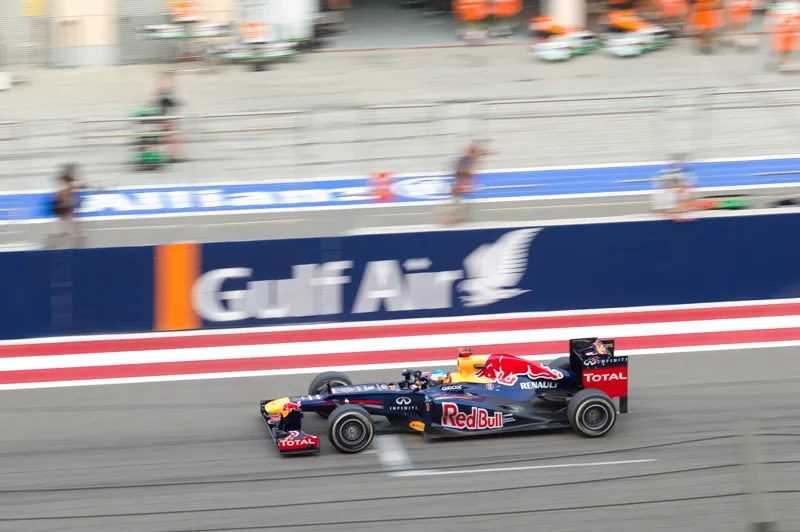
The 2012 Monaco Grand Prix, held on 27 May 2012, was the sixth round of the season and the seventieth running of the event. Mark Webber won from pole for Red Bull under sunny skies, ahead of Nico Rosberg of Mercedes and Fernando Alonso of Ferrari.
The race was shaped by an early crash that brought out the safety car, a late rain threat that kept teams from pitting early, and a qualifying session that left Sergio Perez starting from the back. It was Webber's second Monaco victory and his first win of the year, which made him the only Australian to win there more than once, as the record books show.
How did Pirelli's tyre choices shape the weekend?
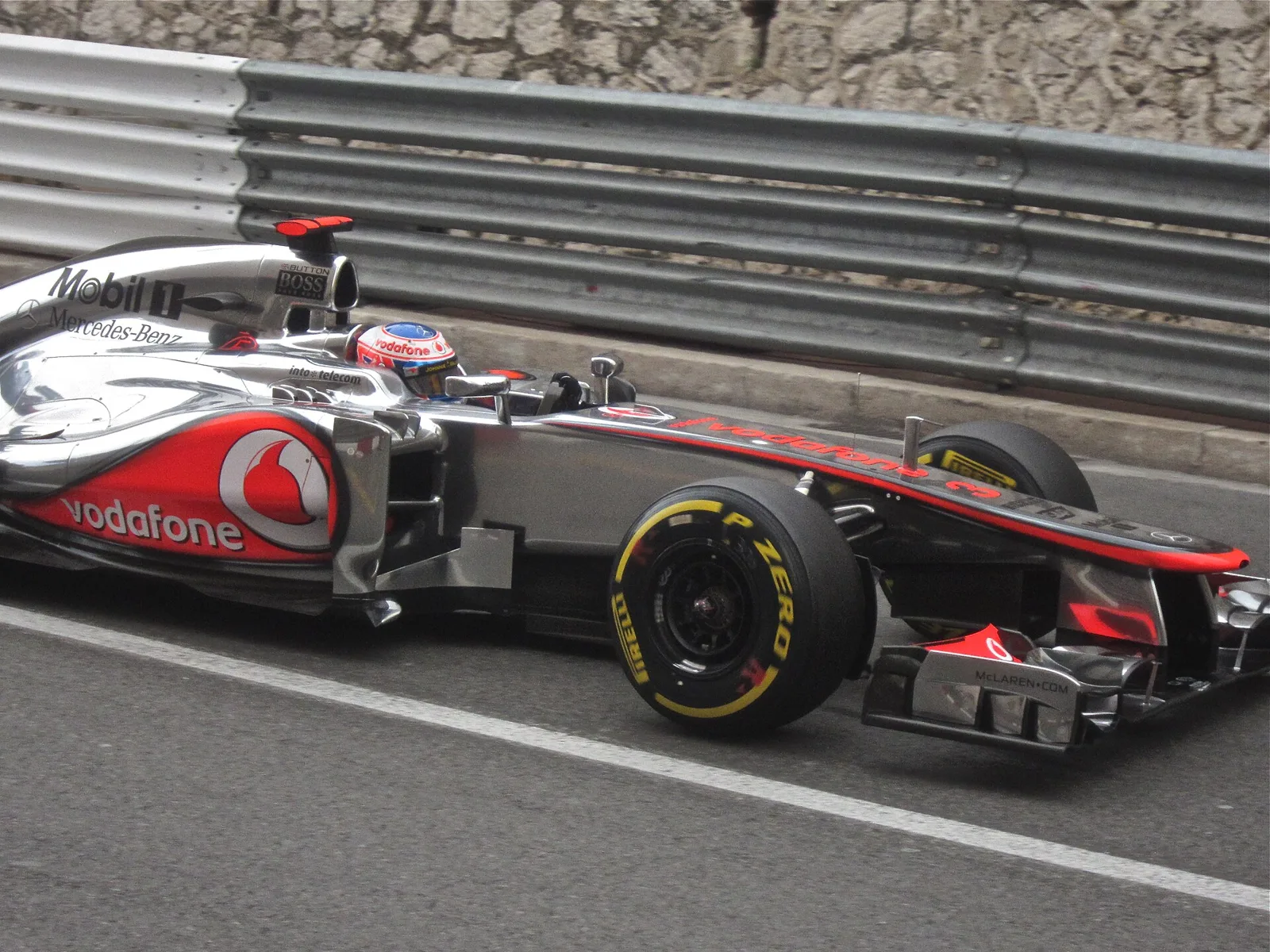
Pirelli brought its yellow-banded soft compound as the harder "prime" tyre and its red-banded super-soft as the softer "option" tyre, the same pairing used in the 2011 race at Monaco. The super-soft was making its first appearance at a race weekend that season, so the teams had little data on it in advance.
The choice mattered in qualifying, because the drivers who went out on super-softs early were often able to set quick times on the faster compound. Those who stayed on the soft tyre had to decide whether the gain was worth the risk of being eliminated in the earlier sessions.
A pole, a win and a first-corner crash that changed the race, all at Monte Carlo in May 2012.
How did the circuit change after the 2011 crash?
Sergio Perez had crashed heavily at the Nouvelle Chicane during qualifying for the 2011 race, suffering a concussion and a sprained thigh that kept him out of the race. The accident prompted the organisers to rework the approach to the chicane.
The tarmac on the approach was lowered by 20 centimetres, and the barrier Perez had struck was pushed back another 15 metres. The pit exit was widened, and nearby trees were removed to give drivers rejoining the track better visibility. TecPro barriers were added at Sainte Devote and Piscine.
Those changes were tested at the 2012 race, and the circuit's layout remained the same. The organisers' response shows how seriously the sport treated the risk of a barrier impact at the chicane.
Which penalties shaped the 2012 grid?
Michael Schumacher had a five-place grid penalty for a collision with Bruno Senna that the stewards judged avoidable at the Spanish Grand Prix. His best possible grid position was therefore sixth. Pastor Maldonado faced a ten-place penalty for hitting Perez in the final free practice session, then a further five places for a gearbox change.
Perez also took a five-place penalty for a gearbox change, which left him starting from the back of the grid.
How did qualifying unfold?
Qualifying began at 14:00 local time, in fine and sunny weather with an air temperature of 23C (73F) and a track temperature of 39C (102F). Charles Pic and Jean-Eric Vergne were the first cars out of the pit lane, and Charles Pic's first flying lap was spoiled when the slow HRT of Pedro de la Rosa held him up at Rascasse.
Kimi Raikkonen was not quick enough at first and was only half a second clear of Heikki Kovalainen, who was in danger of elimination. Raikkonen switched to super-soft tyres and avoided the drop.
Perez crashed heavily at the Swimming Pool, hitting the outer barrier hard enough to remove a wheel. A red flag lasted six minutes while the wreckage was cleared. Perez had been the only driver not eliminated in Q1 since the knockout format began, and his left-front steering appeared to have been damaged in an earlier incident with Maldonado.
Nico Hulkenberg set the fastest time of the first session on super-soft tyres. Vitaly Petrov, de la Rosa and Narain Karthikeyan were eliminated, and Perez was twenty-fourth when he did not set a time. Kovalainen had beaten his teammate Petrov by eight-tenths of a second.
In Q2 Vergne damaged his front wing and suspension on the tunnel exit, and he was eliminated. Rosberg was quickest at 1:15.022 for much of the session. When the period ended, only 0.967 of a second covered the top sixteen, and Jenson Button missed Q3 by two-tenths of a second.
Q3 was run in two phases. Rosberg led an early group that included Grosjean and Webber, and Webber set the fastest second and third sectors late in the session. Michael Schumacher was the only driver to beat Webber's time, by eight hundredths of a second, but his penalty meant that he started sixth. Webber took his tenth career pole.
Schumacher called his pole-position run the best qualifying result since his return to Formula One, joking that he would need to qualify first to make his point. Massa was happy to be fighting at the front, having enjoyed his weekend at the wheel of the Ferrari F2012.
Sebastian Vettel did not set a timed lap, choosing exploratory laps to keep his options open for the race. Maldonado started 23rd after his penalties, while Perez started 24th after his own gearbox penalty.
In Q2 Vettel came into the pits complaining that the front of his car was bouncing, and he later took a set of soft tyres. Felipe Massa was the first of the Ferrari drivers into the 1:14 range late in the session.
What happened at the start?
The race began in sunny conditions, with an air temperature of 22C (72F), a track temperature of 35C (95F) and humidity at 58 per cent. Rain was forecast, but it was unclear whether it would arrive, so the teams had to plan around that uncertainty, and several drivers chose to keep their early pit stops in reserve.
Webber and Rosberg got away cleanly. Alonso's Ferrari brushed the rear of Romain Grosjean's Lotus in the opening seconds, and the Lotus was pushed toward Schumacher's Mercedes, which was damaged. Grosjean then spun across the track at the first corner, and several cars were caught in the aftermath.
Kamui Kobayashi was launched into the air by the slowly moving Lotus, and Maldonado crashed heavily into the back of de la Rosa's car. The debris forced the safety car out, and both Kobayashi and de la Rosa returned to the pits. De la Rosa retired, while Kobayashi also retired after suspension damage from the first-corner incident.
How did the race develop?
On the restart Webber led Rosberg and Hamilton, and Perez began a fast recovery. By lap 23 he had moved up from twenty-third to fifteenth, the only car making multiple overtaking moves in that phase. Petrov retired on lap 16 with an electrical problem.
The threat of rain made the teams cautious about early stops. Rosberg pitted on lap 27 for soft tyres, and Webber and Hamilton followed on the next lap. Alonso stayed out a lap longer and set several fast sectors before switching to the soft tyre, which left him in front of Hamilton when he rejoined.
Massa inherited the lead on the next lap and then pitted, leaving Vettel, who had not yet stopped, in front with a ten-second advantage over Webber. Webber and Rosberg said later that their soft tyres had struggled to come up to temperature at that point, while Vettel's had been in the right window.
Perez was given a drive-through penalty on lap 38 for a late pit entry that had hindered Raikkonen. Vettel finally made his only stop after forty-five laps, rejoining just ahead of Hamilton, and Webber took the lead back. By lap 48 Perez was lapping 2.7 seconds per lap faster than the leaders.
What decided the closing laps?
Schumacher retired a few laps after complaining of a problem earlier in the race, and the cause was a fuel pressure fault. Pic and Ricciardo then retired on consecutive laps with electrical and steering problems. Vergne switched to intermediate tyres on lap 69, the only driver to do so, but it did not help him against his rivals.
Button tried to pass Kovalainen on the outside of turn one. The two cars touched, which punctured Button's tyre and damaged Kovalainen's front wing. Button retired, and Kovalainen dropped to thirteenth after a pit stop.
With rain still threatening, the six leaders held their positions as they lapped slower cars. Webber kept Rosberg, Alonso and Vettel behind him to the flag. He became the only Australian to win at Monaco more than once.
Caterham's Kovalainen finished 13th, the highest result of his team's season, and this lifted Caterham into tenth in the constructors' standings ahead of Marussia and HRT. Glock was 14th and Karthikeyan 15th, both their best finishes of the year.
What did the result mean for the championship?
The first four cars finished within 1.343 seconds of one another, and Webber's win was his first of the season and his first since the 2011 Brazilian Grand Prix. The race also set a Formula One record: the first six races of the year had produced six different winners.
Alonso's third place was his 76th career podium and gave him the lead of the drivers' table by three points from Vettel and Webber. Hamilton slipped to fourth, 13 points adrift of Alonso, while Rosberg climbed to fifth with 59 points.
In the constructors' championship Red Bull extended its lead over McLaren to 38 points, while Ferrari moved above Lotus into third on 86 points. Massa's sixth place was his best result of the season, six seconds behind the winner, and Hulkenberg also recorded his best result of the year.
Race classification
| Position | Driver | Team | Grid |
|---|---|---|---|
| 1 | Mark Webber | Red Bull | 1 |
| 2 | Nico Rosberg | Mercedes | 3 |
| 3 | Fernando Alonso | Ferrari | n/a |
| 4 | Sebastian Vettel | Red Bull | 9 |
| 5 | Lewis Hamilton | McLaren | 4 |
| 6 | Felipe Massa | Ferrari | n/a |
| 7 | Paul di Resta | Force India | n/a |
| 8 | Nico Hulkenberg | Force India | n/a |
| 9 | Kimi Raikkonen | Lotus | n/a |
| 10 | Bruno Senna | Williams | n/a |
| Ret | Michael Schumacher | Mercedes | 6 |