A rally-bred driver who became the first Russian in Formula One, scored Renault's podium in Melbourne and later spent a season at Caterham.
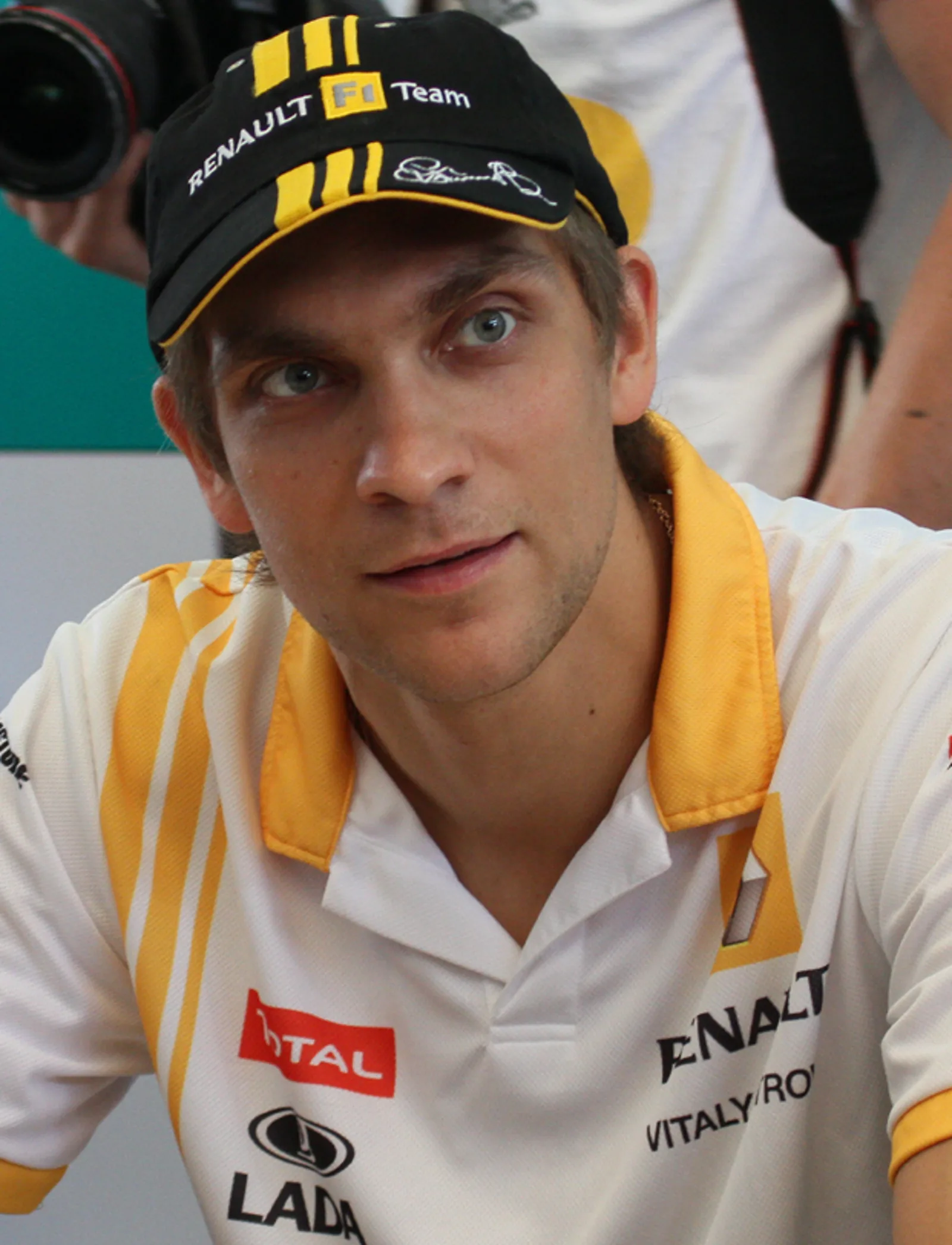
Vitaly Petrov is a Russian racing driver who competed in Formula One from 2010 to 2012, becoming the first Russian in the championship. He scored his only podium at the 2011 Australian Grand Prix for Renault and later drove for Caterham.
Vitaly Petrov was born and raised in Vyborg, and he took an unusual route to the top, starting in rallying rather than karting. He moved through Russian touring series and European single-seaters before reaching Formula One as the first Russian in the championship. He is still remembered at home as the 'Vyborg Rocket'.
Petrov drove for Renault and then Caterham in Formula One, and his only podium came at the 2011 Australian Grand Prix. Beyond the grand prix circuit he competed in GP2, the Euroseries and sports car events.
How did Petrov start in motorsport without karting?
Petrov skipped competitive karting because there was very little motorsport where he lived. He had Oksana Kosachenko as his manager from 2001. He began in 1998 with rally sprints and ice races, then entered the Russian Lada Cup in 2001. In 2002 he dominated that series, winning every round to score the maximum total of 500 points.
His first single-seater campaign came in 2003. He raced for Euronova Racing in the Italian Formula Renault Championship, finishing 19th overall, and he made his Euro F3000 debut at Cagliari. He also finished fourth in the British Formula Renault Winter Series with one win, and he took part in several rounds of the Eurocup Formula Renault 2.0 and the Formula Renault 2.0 UK series.
He returned to the Russian Lada Revolution series in 2004, starting every race from pole and finishing runner-up. In 2005 he won that championship with ten wins, and he took the Russian Formula 1600 series with five wins the same year.
Russia's first Formula One driver, a Renault podium in Melbourne and a long apprenticeship from Lada racing to GP2.
How did his European formulae and GP2 career go?
Before reaching Formula One, Petrov also made selected appearances in Formula Renault and Euro F3000 in 2004, and in 2007 he raced several Le Mans Series rounds. His F3000 International Masters pole at Brno in 2006 showed that his speed travelled beyond the Lada series.
In 2006 Petrov finished third in the Euroseries 3000 with Euronova Racing, scoring nine podiums in eighteen races. He won four of those races, at Hungaroring, Mugello, Silverstone and Catalunya. That season he also made his GP2 debut for David Price Racing, replacing Olivier Pla from the German round.
In 2007 he joined Campos Grand Prix alongside Giorgio Pantano. He scored points in five of 21 races and won at Valencia on the way to 13th in the championship. He also raced in the Le Mans Series, including the 24 Hours of Le Mans in a Courage LMP2 car that completed 198 laps before he retired and was classified 38th.
The 2008 GP2 Asia Series brought third place for Campos, with one win at Sepang behind champion Romain Grosjean and Sebastien Buemi. In the main GP2 series that year he finished seventh and won at the Valencia Street Circuit.
The team was rebranded as Barwa Addax in 2009, and Petrov finished as runner-up to Nico Hulkenberg in the championship. He won twice that year, at Istanbul Park and Valencia Street Circuit, which gave him a strong platform for Formula One.
What happened in his first Formula One season with Renault?
Petrov was announced as a Renault driver on 31 January 2010, becoming the first Russian in the Formula One World Championship. He scored his first points with seventh at the Chinese Grand Prix, where he had passed Michael Schumacher and Mark Webber in heavy rain. He then finished fifth in Hungary.
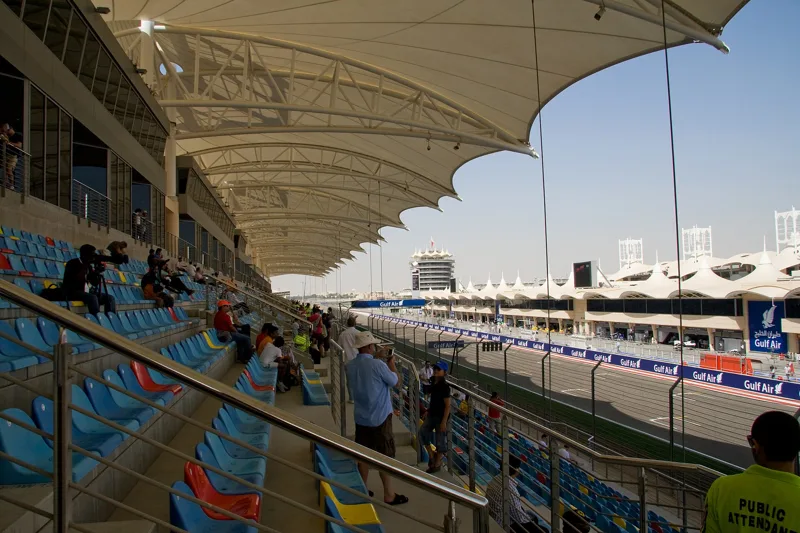
The 2010 season began with a difficult debut at Bahrain, where he qualified 17th. His right-front suspension strut was damaged after he struck a kerb while chasing Rubens Barrichello, and he retired. Later he set the fastest lap at the Turkish Grand Prix after a puncture and finished 15th.
Belgium was a standout recovery. A first-session crash in qualifying left him without a time, so he started 23rd and climbed 14 places to ninth in changeable conditions. That was his third consecutive points finish.
The season ended at Abu Dhabi, where an early safety car pit call moved him up the order. He kept Fernando Alonso and Mark Webber behind him to the flag, and that result helped Sebastian Vettel take the title.
How did the 2011 podium come about?
Petrov qualified sixth at the season-opening Australian Grand Prix, his best grid position, and finished third behind Sebastian Vettel and Lewis Hamilton. It was the only podium of his Formula One career. Renault had retained him on a two-year deal in December 2010, and the team was then renamed Lotus Renault GP.
Teammate Robert Kubica was injured in a rallying accident, and Nick Heidfeld joined the team for the start of the year. The results were mixed afterwards. In Malaysia Petrov hit a bump after running wide, the impact broke the steering column, and he retired.
In China he qualified tenth after a technical problem in Q2 and drove a consistent race to ninth. A fifth place in Canada came after a crash in Monaco that took him to hospital, from which he was released the same day. At Monza he qualified seventh, but he was eliminated on the first lap when a rival car crashed into him and Nico Rosberg.
The later part of the year brought fewer points. He had a five-place grid penalty at the inaugural Indian Grand Prix and finished 11th. He ended with a tenth place in Brazil, but Adrian Sutil finished sixth there and moved ahead of him for ninth in the final standings. Petrov also criticised the team in a Russian television interview late in the season and then apologised to staff. The criticisms centred on development, strategy and how the team managed its drivers.
Why did the Renault seat matter so much?
Petrov had been linked with Sauber, Renault and Campos for 2010 before Renault confirmed him. He signed a one-year deal with an option for two more years, and his stated aim was to start scoring points by mid-season. Teammate Robert Kubica was the established name in the team, and the car was the new Renault R30.
He showed his speed early. In Hungary he qualified ahead of Kubica and finished fifth. The season then tailed off with a first-lap collision at Japan and a crash from seventh place at Korea. Abu Dhabi offered a better qualifying result, with tenth on the grid ahead of Kubica in eleventh.
The Renault years also set up the first Russian presence in the sport. Petrov was the first Russian driver in the championship, and his results in the 2010 and 2011 seasons gave the country a driver with a real claim to Formula One points.
How did his Caterham year go?
Romain Grosjean partnered Kimi Raikkonen at Renault for 2012, so Petrov needed a new drive. Caterham signed him to replace Jarno Trulli and partner Heikki Kovalainen. He qualified 20th for the Australian Grand Prix and retired on lap 36 with a steering problem.
Caterham was the fastest of the new teams, but it lacked the pace of the midfield. Petrov finished 16th in Malaysia and again in Bahrain, and he was 18th in China after qualifying 20th. Monaco ended with electrical failure on lap 15, and at the European Grand Prix he was running as high as tenth before a collision with Daniel Ricciardo dropped him to 13th.
He improved as the year went on and finished ahead of Kovalainen in four of the last five races. In Brazil he finished eleventh with a late pass on Charles Pic, which helped Caterham take tenth in the constructors' championship. Caterham then replaced him and Kovalainen with Charles Pic and Giedo van der Garde for 2013.
Canada showed the gap between the new teams and the midfield. Petrov qualified 19th, ahead of Toro Rosso's Jean-Eric Vergne, but he could not keep that place at the start and finished where he began, one lap down. In Spain he qualified just ahead of Kovalainen, yet finished behind him, and Monaco ended early after a poor qualifying session.
At Bahrain he qualified well over a second faster than the closest Marussia, which underlined Caterham's position as the strongest of the newcomers for a third straight season. He finished 16th, matching his best result of the year so far.
What did he do after Formula One?
Petrov signed with Mercedes to race in the German touring car series DTM. After a scoreless season he finished last in the drivers' championship, and he left the sport after that single year. He has since raced in other events, and he is listed in the 2025 Middle East Trophy with SMP Racing.
The DTM stint came at the end of his top-level career, so his last main-category season was 2012 with Caterham. Touring cars were a different kind of challenge from open-wheel machinery, and the move brought no points.
Nickname, home and personal life
Petrov is widely known in Russia as the Vyborg Rocket. He lived in Valencia, Spain, from 2007 while he was a Formula One driver. In the Russian version of the 2011 Pixar film Cars 2 he voiced a character modelled on himself.
Career summary
| Years | Series | Team | Highlights |
|---|---|---|---|
| 2003 | Italian Formula Renault | Euronova Racing | 19th overall |
| 2004-2005 | Lada Revolution | Russian series | Runner-up in 2004; champion in 2005 with ten wins |
| 2006 | Euroseries 3000 | Euronova Racing | Third overall with four wins |
| 2007-2009 | GP2 Series | Campos Grand Prix, Barwa Addax | Runner-up in 2009 with two wins |
| 2010-2011 | Formula One | Renault | Third at the 2011 Australian Grand Prix |
| 2012 | Formula One | Caterham | Eleventh at the Brazilian Grand Prix |
Legacy
Petrov's legacy is a short Formula One story with real moments: the first Russian in the championship, one podium at Melbourne, and a Caterham season that showed how close the new teams were to the midfield. That Melbourne result remains the high point of his Formula One career.