Williams built an F1 suspension so effective that the sport banned it. Adaptive, semi-active, air and fully active systems let one car ride softly and corner sharply, at a price.
Adaptive suspension changes only the firmness of the dampers, often through comfort and sport modes. Active suspension adds actuators that move the chassis at each wheel, almost eliminating roll and pitch but at higher cost and complexity. Air suspension replaces steel springs with air-filled bellows whose height can be changed.
In 1992 Williams built a Formula One car with an active suspension so effective that the sport's governing body banned the technology to narrow the gap to the team's rivals. The idea behind it, a suspension that thinks, has since reached road cars.
What is the difference between passive, adaptive and active suspension?
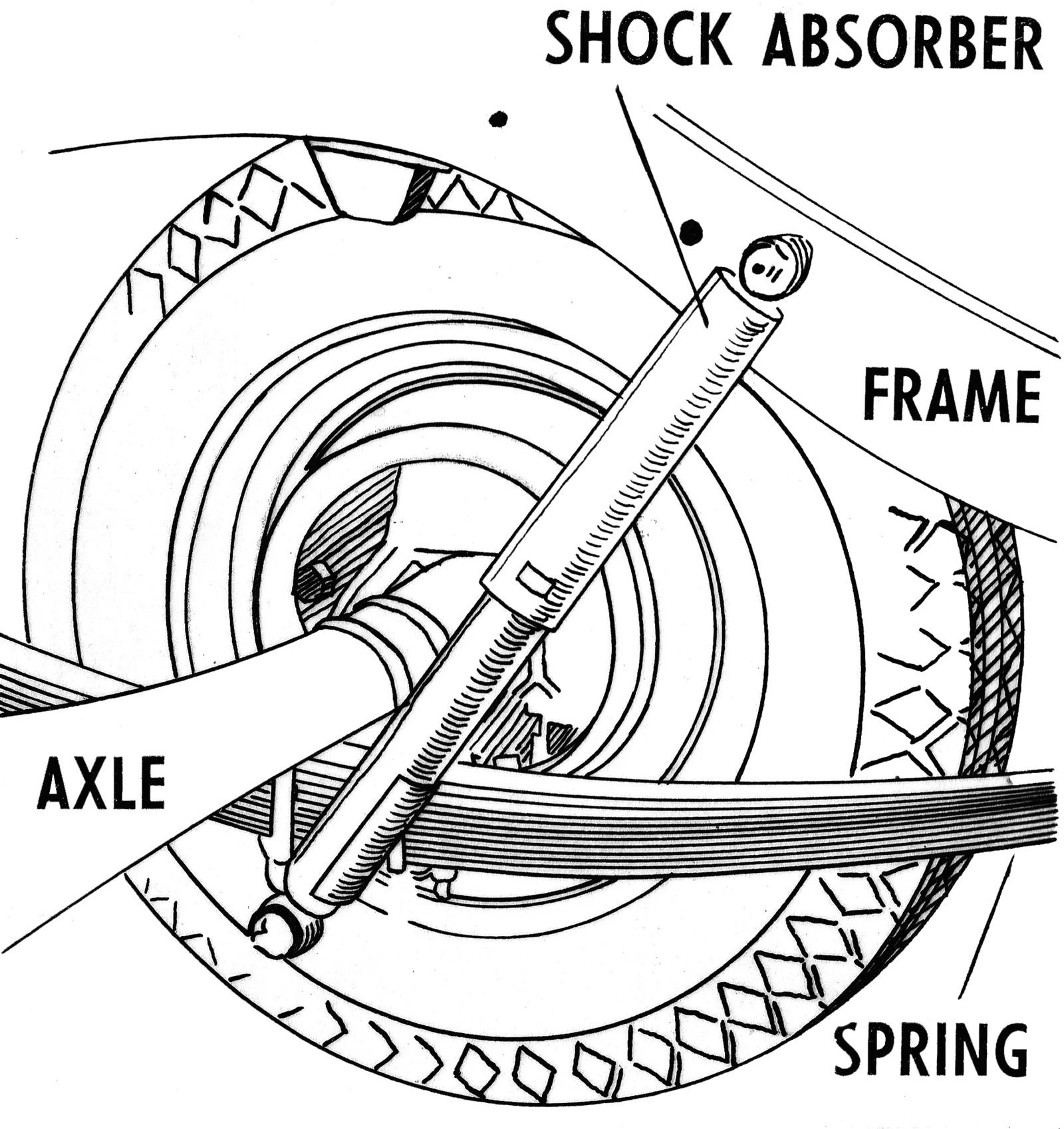
A passive suspension relies on springs alone to hold the car up and on dampers to control the bounce. An active suspension adds an onboard control system that governs the vertical movement of the wheels and axles relative to the chassis. There are two classes: true active systems, and adaptive or semi-active ones.
The dividing line is the actuator. Adaptive suspensions only vary the firmness of the shock absorbers to match the road or the way the car is moving. True active suspensions use some type of actuator that can lift or drop the body separately at every wheel.
The payoff is ride quality and handling together: the chassis stays parallel to the road in corners, the frame is protected from touching the ground, especially over a dip, and traction and steering control improve. An onboard computer reads body movement from sensors around the vehicle and decides what the suspension should do. Body roll and pitch variation are virtually eliminated in many situations, including cornering, accelerating and braking. On commercial vehicles such as buses, the same technology can lower the floor temporarily to make boarding easier.
Springs can only be a compromise between comfort and control. A computer can change its mind many times a second.
Why can't ordinary springs be soft and sharp at the same time?
Because the two jobs pull against each other. A suspension must support both road holding and ride quality, and these are at odds, so tuning is a search for the right compromise. The suspension also has to keep each wheel in consistent contact with the road, since every force between car and road passes through the tyre contact patches.
A spring that is either too stiff or too yielding makes the suspension ineffective, mostly because it fails to isolate the car from the road. A race car has heavy springs and rides uncomfortably bumpily. A luxury car, taxi or passenger bus gets soft springs so that its occupants ride in comfort. One set of metal springs cannot be both.
That is the opening for a suspension that changes character on demand. A car with an adaptive system can be soft on the motorway and tighten for a back road, because the thing that varies is not the spring but the damping around it.
What is the skyhook idea?
Skyhook theory describes the ideal: a car that holds an even, steady attitude whatever the weight transfer or the bumps, as if it were hung from an imaginary hook in the sky at constant height. A real hook is impractical, so active systems use actuators to imitate it. An acceleration sensor on the body supplies the reading used to work out the imaginary line along which the body would feel no vertical acceleration.
In a normal spring and damper suspension the car meets the ground through both parts. To match the skyhook ideal, the car would touch the ground through the spring only, with the damper tied to the imaginary line instead. In theory, a damping coefficient of infinite value would fix the car to that line so that it did not shake. The solenoid-valve semi-active systems normally run on a control algorithm that goes by the name Sky-Hook.
How do adaptive and semi-active dampers work?
Adaptive and semi-active systems can only change the damping coefficient of the shock absorber, which is how much it resists movement. They do not add energy to the suspension. That limits what they can do, but it also makes them less expensive to design and means they consume far less energy.
The two terms are not the same. Adaptive suspensions generally respond slowly and offer a limited number of damping values, so they usually just provide riding modes such as comfort, normal and sport. Semi-active suspensions react in just a few milliseconds and cover a broad span of damping values, changing the damping in real time with the road and the car's movement. One limit remains: the control force can never act in a direction different from the current vector of the suspension's velocity. As research advances, semi-active systems are closing on fully active ones.
The most basic and economical version uses a solenoid valve to change how freely hydraulic fluid moves within the shock absorber. The first production car with this approach was the Toyota Soarer, with Toyota Electronic Modulated Suspension, in 1983. In 1985 Nissan added an ultrasonic sensor in its Super Sonic Suspension, which a microcomputer read alongside steering, brake, throttle and speed signals, and a switch let the driver choose Auto, Soft, Medium or Hard. Cadillac's Computer Command Ride works on the same principle, and a version supplied by Monroe under the name CVSAe is used by a number of manufacturers across the industry.
Nissan and Bilstein jointly developed DampTronic for the 2008 Nissan GT-R, with three driver settings labelled Normal, Comfort and R. R mode is meant for high-speed driving and lets the car use its rate of yaw with less steering lock, for crisper and more communicative steering, while Comfort produces less vertical G-loading than Normal.
What are magnetic dampers?
Magnetic dampers are magnetorheological dampers, sold under the brand name MagneRide. Delphi Corporation developed them for General Motors, and they were standard on the Cadillac STS from the 2002 model year, with other GM cars getting them from 2003. With fast modern computers, they can change the stiffness at every wheel independently.
They upgraded the road-sensing semi-active systems GM had used in upscale vehicles for decades. The system was in development for 25 years, and the dampers are finding increased use in the US, while a few overseas brands have taken them up, again mostly on pricier models.
How does a fully active suspension work?
A fully active system uses its own actuators to push on the suspension, not only to resist it. The first to be introduced, they use separate actuators that exert an independent force to improve the ride. Sensors constantly watch body movement and ride level and feed a computer, and the actuators generate counter forces against lean, dive and squat almost instantly.
The hydraulic route came first. In 1954 Paul Mages developed a hydropneumatic suspension at Citroen. A high-pressure radial piston pump supplied the pressure, and in a few milliseconds the suspension could raise or lower the body. The enclosed nitrogen compressed instantly, squashing six times as readily as the steel springs in use until then. The system was self-levelling and height adjustable, with the height later tied to speed so the car lowered itself for aerodynamics. It handled straight-line driving very well, even on uneven surfaces, but did little to control roll stiffness. Variations on the system have gone into millions of production cars.
Computers then took over the hydraulics. The original idea of managing hydraulic suspension by computer came from Colin Chapman in the 1980s, aimed at better cornering in racing cars. Lotus fitted a prototype electro-hydraulic system to a 1985 Excel but never put it on sale. Nissan followed in 1990 with Full-Active Suspension on the Q45 and President, a system since revised into the Hydraulic Body Motion Control System, which equips the Patrol and the Infiniti QX80. In 1991 Toyota fitted hydraulic struts and four-wheel steering to a variant of the Soarer coupe, using numerous accelerometers to compensate for acceleration, cornering and braking forces at each wheel in real time. The Mercedes-Benz CL-Class of 1999 introduced Active Body Control, with high-pressure hydraulic servos under electronic control, and the feature is still available.
Electric actuators are the newer route. Electromagnetic active suspension puts linear electromagnetic motors at each wheel, giving extremely fast response and letting the motors act as generators to regenerate the power they consume. That nearly overcomes the slow response and high power consumption of hydraulic systems. Bose has a proof-of-concept model, and a technology called ECASS, whose patent from the 1990s belongs to the University of Texas Center for Electromechanics, was taken further by L-3 Electronic Systems for military vehicles. A Humvee fitted with it exceeded all its performance specifications. Michelin's Active Wheel, from 2004, puts an in-wheel suspension motor next to an in-wheel traction motor.
Audi introduced an electromechanical system in 2017 in which each wheel has its own electric motor powered by the 48-volt main electrical system. A lever exerts up to 1,100 newton metres (810 ft lb) on the suspension through a coupling rod. A front camera spots bumps early, and a preview function tells the actuators how much movement to apply before the car arrives. In corners the motors on the outside push up or pull down to give a flatter drive with less body roll.
Which suspension type does what?
| Type | What it controls | Response and cost | Example |
|---|---|---|---|
| Passive | Springs and fixed dampers only | No control system | Most conventional cars |
| Adaptive | Damper firmness, in a few modes | Slow response, limited damping values | Comfort, normal and sport modes |
| Semi-active | Damping, in real time | A few milliseconds, wide range, cheaper and far less energy than active | Nissan GT-R DampTronic, MagneRide |
| Hydraulic active | Actuators raise and lower the body at each wheel | Counter forces within milliseconds; high cost, complication and mass | Citroen hydropneumatic, Mercedes-Benz Active Body Control |
| Electromagnetic or electromechanical active | Electric motors at each wheel | Extremely fast; electromagnetic type regenerates power | Audi 2017 system, Michelin Active Wheel |
| Air spring | Ride height and spring pressure | Self-levelling; height can be changed independent of load | Range Rover, Tesla Model S |
How does air suspension work, and where did it come from?
Air suspension replaces steel springs with bellows of flexible rubber, normally reinforced with textile, which an electric or engine-driven compressor fills with air. The pressure raises the chassis from the axle. It resembles hydropneumatic suspension in many features but uses pressurised air where that system uses liquid. The correct name for the part is an air spring.
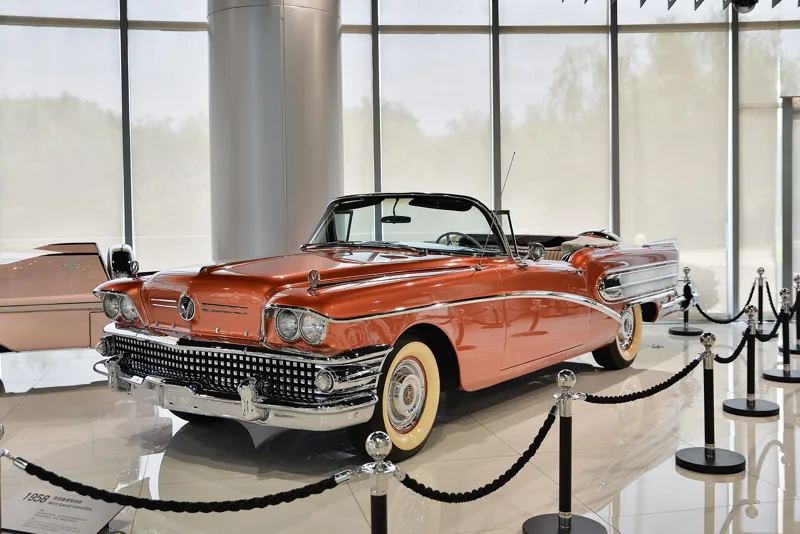
The idea is old. Archibald Sharp patented a seal in January 1901 and days later applied to use it for air suspension on bicycles, and William W. Humphreys patented a pneumatic spring for vehicles in the same month. George Messier sold aftermarket pneumatic systems from 1920. In America the technology reached the showroom in 1957, when General Motors made air suspension standard on the Cadillac Eldorado Brougham, with an Air Dome assembly at each wheel to hold ride height. Buick followed in 1958 with its optional Air-Poised Suspension and a Bootstrap control to raise the car 139.7 mm (5.5 in). American Motors tried a $99 option on Rambler Ambassadors, but buyers did not take to it and it was dropped for 1960.
Europe took it up too. In 1962 the Mercedes-Benz W112 platform had air suspension on the 300SE, with a constant ride height maintained from an air reservoir. Rolls-Royce used a self-levelling system, built under licence from Citroen, on the 1965 Silver Shadow. The Range Rover got Electronic Controlled Air Suspension, or ECAS, for the 1993 model year, a system that offers five heights, from Loading at the bottom to Off-Road Extended at the top, with Highway, Standard and Off-Road in between. The Highway setting is not selectable manually: it engages when the car holds over 80 km/h (50 mph) for more than 30 seconds.
What does it cost to live with adaptive and active suspension?
The drawbacks of fully active designs are high cost, added complication and mass. Some implementations need frequent servicing, which may call for specialised tools, and certain faults are difficult to diagnose. Semi-active systems are the cheaper alternative, since they cost less to design and use far less energy.
History backs this up. The 1991 Toyota Soarer with active suspension cost considerably more than other versions of the car, and fewer than 900 were sold during its five-year production run. In 1975 Mercedes-Benz fitted hydropneumatic suspension to the 450SEL 6.9 to replace a compressed-air system that was expensive, complex and problematic, and that stayed on the 600 models until 1984.
The air-spring route has a practical upside as well. Owners who tow can add air helper springs to the rear or front of a pick-up, SUV, van or car to raise load capacity, and can deflate them when not towing to keep the factory ride.
What does it mean for someone buying a car with this technology?
Air suspension is now widely used. Marques that have used it include Audi, Bentley, BMW, Cadillac, Jaguar, Land Rover, Lamborghini, Lexus, Mercedes-Benz, Porsche, Rivian, Rolls-Royce, Tesla, Volkswagen and Volvo. Some Jaguar and Porsche models have systems that alter spring rate and damping for their sport and track modes. The Lincoln Mark VIII linked its suspension settings to the memory seat so that the car adjusted itself to individual drivers.
Most air designs are height adjustable, which makes the car easier to get into and helps it clear bumps and rough terrain. Because a lower car has different aerodynamics, makers can use the technology for efficiency as well as handling. Tesla's Active Air Suspension, found on the Model S and Model X, raises or lowers the car to help aerodynamics and range.
For comfort in corners there is a further trick. In 2014 the Mercedes-Benz S-Class Coupe introduced Active Curve Tilting, an update to Magic Body Control that lets the body tilt as much as 2.5 degrees through a bend, a bit like a tilting train. The intention is to offset the centrifugal force felt by those inside, and it was available only on rear-wheel-drive models.
Where does suspension go next?
Semi-active and fully active systems keep moving closer together. In 2021 dynamic roll control, built on air springs whose ride height can be adjusted and paired with adaptive dampers, was on offer in some vehicles, and Audi's camera-led preview function shows the direction of travel: a suspension that reacts to the road ahead rather than the road underneath.
Not every advance involves a computer. In 2002 Malcolm C. Smith invented the inerter, a passive suspension component that raises the effective inertia of the wheel suspension with a geared flywheel and without adding significant mass. It was first used in secret in Formula One and has since spread to wider motorsport.