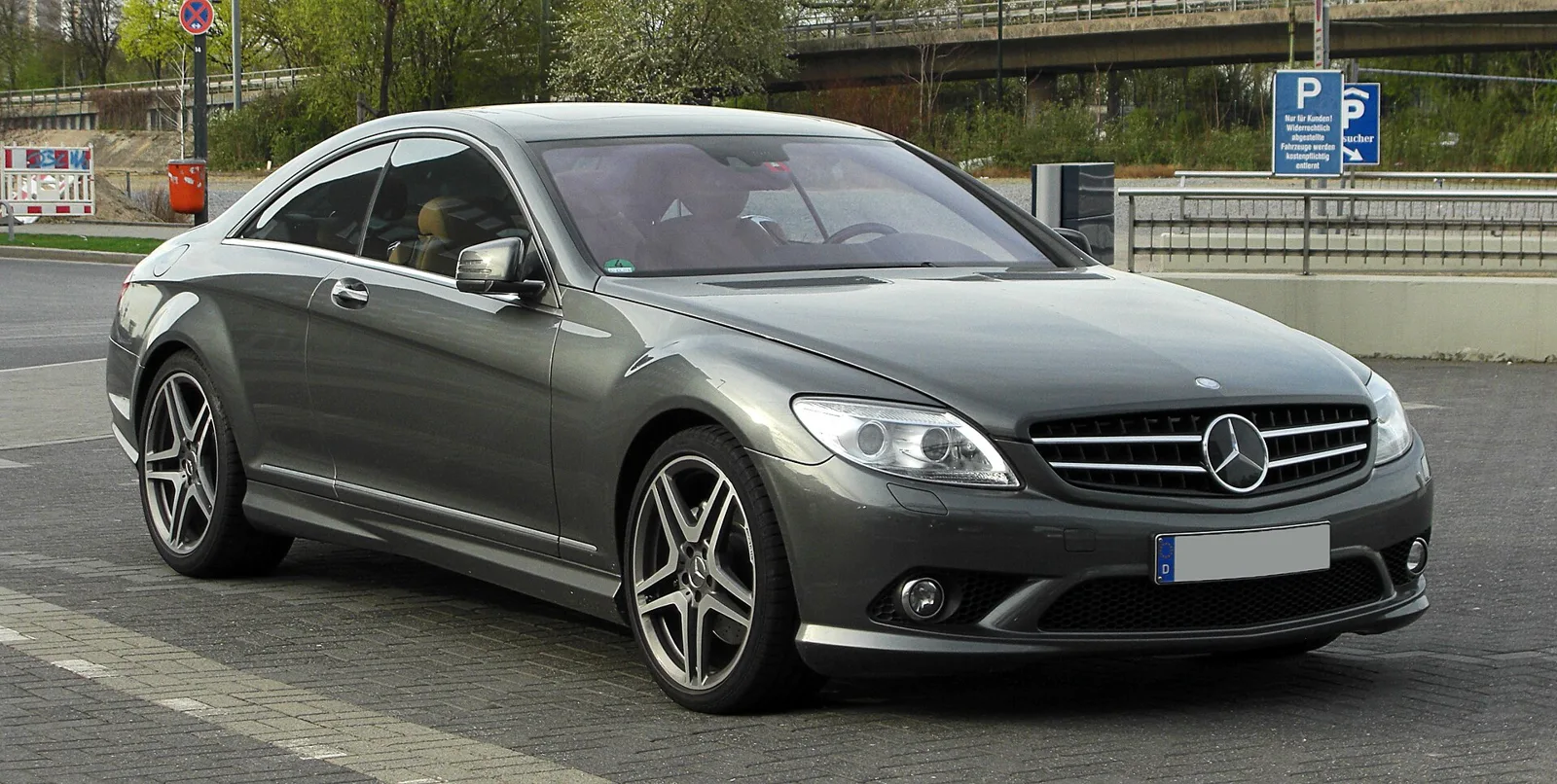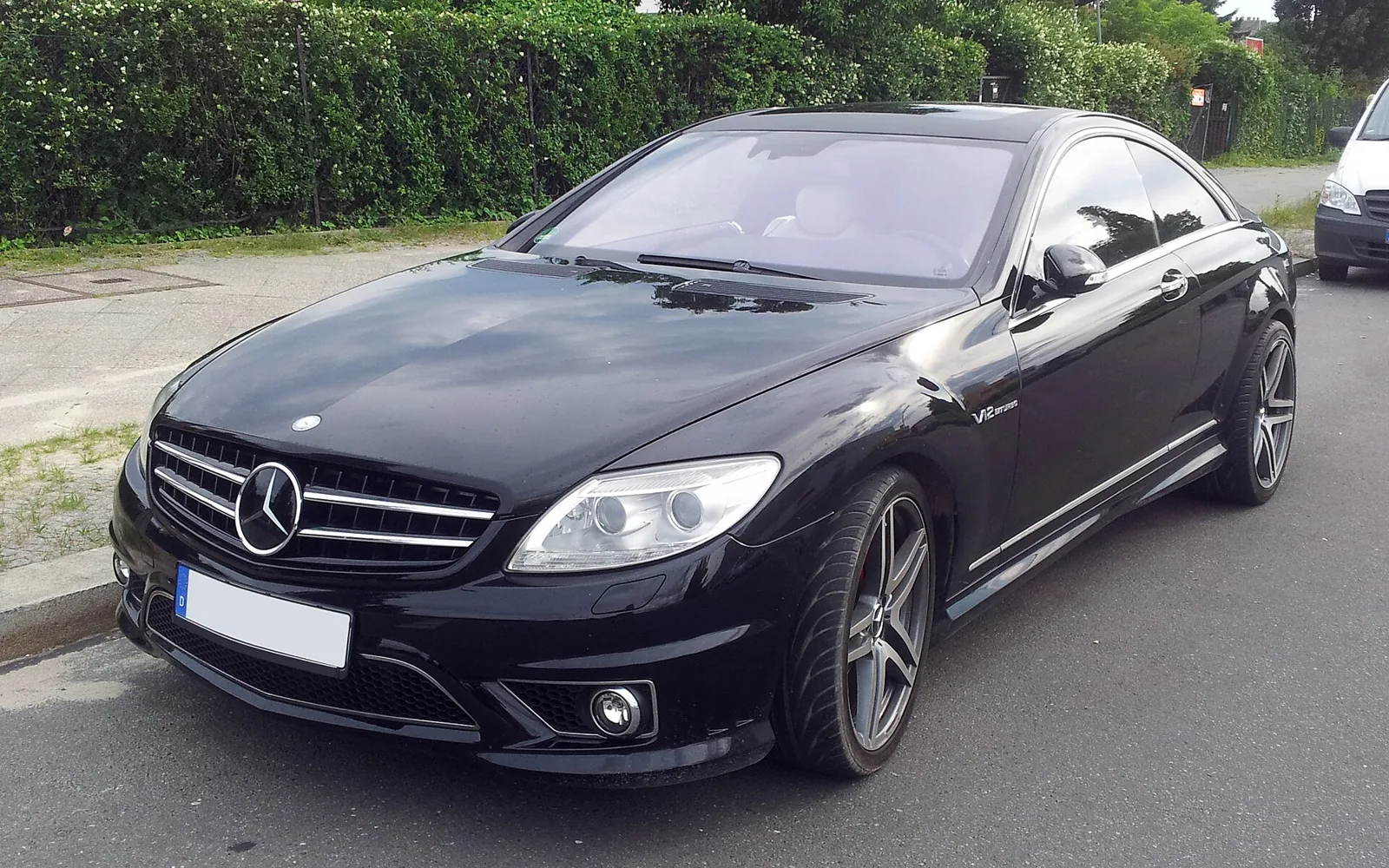
A coupe built on the S-Class platform from 1992 to 2014, with V12 engines, AMG versions and an unusual lack of a centre pillar.
The Mercedes-Benz CL-Class was a luxury coupe from 1992 to 2014. It began life as the SEC, took the CL name in 1996 and returned to the S-Class Coupe name in 2015.
The Mercedes-Benz CL-Class was a two-door grand tourer built on the S-Class platform from 1992 to 2014. It grew from a coupe version of the saloon into Mercedes' premier coupe, with V12 engines, AMG versions and a roof that had no centre pillar.
What was the CL-Class?
The name stands for Coupe Luxusklasse, German for coupe luxury class. The car was the coupe derivative of the S-Class saloon, and it shared that car's platform while riding on a shorter wheelbase. Mercedes built it on its own line at Sindelfingen and treated it as the top of its model range.
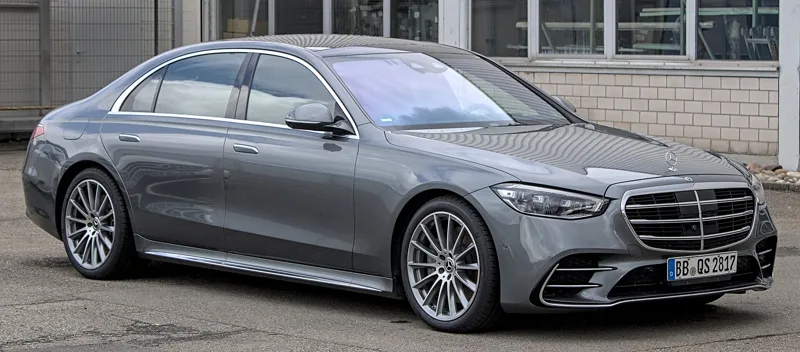
In 2015 Mercedes stopped using the CL designation and returned the car's name to the S-Class Coupe and Convertible, which marked the start of the C217 S-Class Coupe.
A coupe with no centre pillar, built on the S-Class and sold as Mercedes' premier coupe for more than two decades.
How did the CL-Class get its name?
Before the CL name, the car was known as the SEC, an abbreviation for Sonderklasse-Einspritzmotor-Coupe, and later as the S-Coupe. The model was spun off into its own name in 1996, with the North American change following in 1997.
The name tied the car closer to the luxury flagship and gave Mercedes a separate badge to sell. The CL kept the same development cycle as the S-Class, but it was never a simple re-skin of its saloon sibling.
How was the first CL built?
The first generation was the C140, a coupe based on the W140 chassis that was produced from 1992 to 1998. Designer Bruno Sacco approved the final shape in late 1987 and early 1988, and the body changed little across its life.
The first V8 and V12 coupes were called the 500 SEC and 600 SEC in 1992 and 1993. The 600 SEC was the first V12 coupe ever offered by Mercedes-Benz, and the model names changed to the S500 Coupe and S600 Coupe for 1994.
Twelve-cylinder cars were identified by V12 emblems behind the passenger windows. The M119 5.0-litre V8 was widely regarded as one of the best engines the company had built, and an entry-level CL420 with a 4.2-litre V8 was offered where the market allowed.
Production ended in 1998, with 1999 as the final model year. In total, 26,022 coupes left the line for the first generation.
What changed with the C215 generation?
The second generation was the C215, a four-seat coupe built from 1998 to 2006. It was based on the W220 S-Class, which had launched in late 1998 in Europe, but it rode on a wheelbase 8 inches (203 mm) shorter than the saloon's.
At launch it was the only pillarless hardtop in production, a status it held until the CLK arrived in 2001. Its front fascia used four oval headlights similar to those of the W210 and W211 E-Class, and the double-hinged doors moved slightly forward as they opened.
The C215 introduced Active Body Control, a fully active suspension that uses four hydraulic rams. Its pressure of 2,960 psi (20,400 kPa) kept the car level through corners, a system the W220 saloon offered only on its top trims.
How many engine options did the C215 offer?
The C215 was offered with a naturally aspirated V8 in the CL 500 from 1999 to 2006, and a naturally aspirated V8 in the CL 55 AMG from 2000 to 2002. The naturally aspirated V12 powered the CL 600 from 2000 to 2002, and the CL 55 AMG switched to a supercharged V8 from 2003 to 2006.
The V12 in the CL 600 received two turbochargers in 2003 and a smaller displacement, going from 5980 cc to 5513 cc. The CL 65 AMG used a 6.0-litre twin-turbo V12 from 2004 to 2006, with 196 cars built in total.
What makes the CL 55 AMG F1 Edition special?
Only 55 examples of the 2000 CL 55 AMG F1 Edition were built, as a tribute to the modified Safety Car used in Formula One during the 1999 and 2000 seasons. Its naturally aspirated 5.4-litre V8 produced 354 bhp at 5,500 rpm and 391 lb-ft at 4,100 rpm.
The F1 Edition is reported to have been the first production road car with carbon ceramic brakes, using vented and cross-drilled Brembo discs. That detail alone makes it one of the most unusual CL variants.
How did the CL 63 AMG and CL 65 AMG differ?
Only 26 CL 63 AMG cars reached customers, all from a single run in November 2001. Its V12 made 438 bhp and 390 lb-ft between 2,500 and 5,800 rpm, and it was sold only in Europe and Asia through AMG rather than through Mercedes-Benz itself.
The CL 65 AMG was the flagship of the C215 range. It produced 612 PS (450 kW; 604 hp) from 2004 to 2006 and was sold in limited numbers, which kept it exclusive.
What did the third-generation C216 offer?
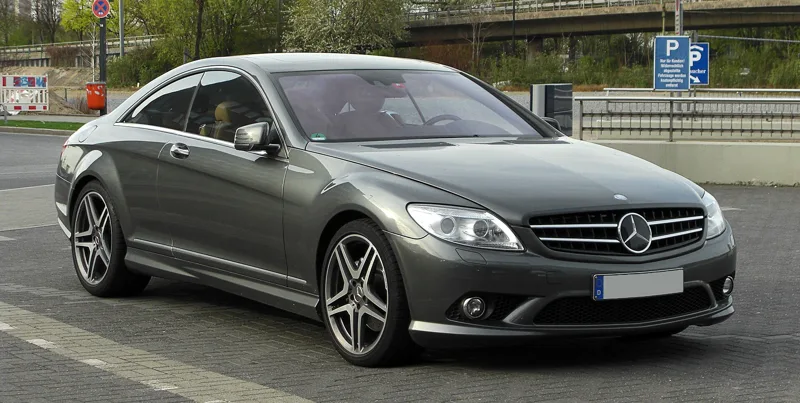
The C216 was unveiled at the end of June 2006 and presented at the 2006 Paris Motor Show. Like its predecessors it had no B-pillar, and it was built on the chassis of the W221 S-Class. The two-door coupe weighed 2,045 kg (4,508 lb), which made it heavier than the equivalent saloon.
The wheelbase was 116.3 inches (about 8.2 inches shorter than the long-wheelbase S-Class sold in the United States). Rear legroom remained limited, in keeping with the tradition of 2+2 luxury coupes, although the trunk was as large as that of the Audi A8.
Distronic Plus cruise control, which could bring the car to a full stop and resume, came with the C216. So did Active NightVision, which let drivers see the road ahead in the dark.
The C216 range covered several engines, from the 5.5-litre V8 of the CL 550, which came with standard 4MATIC in Canada and the USA, to the V8 of the CL 63 AMG and the twin-turbo V12s of the CL 600 and CL 65 AMG.
What was the 40th Anniversary Edition?
In 2007 Mercedes-Benz sold 40 CL 65 AMG units as the 40th Anniversary Edition, to mark AMG's founding 40 years earlier. Each car carried a badge near the COMAND controller and had special upholstery and roof lining.
The special paint, called AMG Alubeam, was designed to gleam like liquid metal. Only a small selection of showcars received it, so the anniversary cars were unusual even within the CL range.
How did the 2010 update change the CL?
The facelifted C216 made its world debut in July 2010 at the Goodwood Festival of Speed. The exterior gained a new grille, bi-xenon headlights with LED technology, LED fog lamps and new exhaust pipes, while the interior received a new wood trim.
Under the bonnet, the CL 500 used a new 4.7-litre V8 that made 435 PS (320 kW; 429 hp) and 700 Nm (516 lb-ft), paired with a seven-speed automatic. It reached 60 mph in 4.9 seconds, while the CL 600 kept its twin-turbo 5.5-litre V12, rated at 517 PS (380 kW; 510 hp) and 830 Nm (612 lb-ft).
The CL 63 AMG used a new 5.5-litre V8 developing 525 PS (386 kW; 518 hp) and 800 Nm (590 lb-ft), mated to a seven-speed dual-clutch gearbox. The CL 65 AMG's V12 was tuned to 630 PS (463 kW; 621 hp) and 1,000 Nm (738 lb-ft), with a five-speed automatic and AMG SpeedShift.
Specifications across the generations
| Model | Years | Engine | Output |
|---|---|---|---|
| CL 500 (first generation) | 1992 to 1999 | M119 5.0-litre V8 | Electronically limited |
| CL 500 (C215) | 1999 to 2006 | Naturally aspirated V8 | Electronically limited |
| CL 55 AMG F1 Edition | 2000 | 5.4-litre V8 | 354 bhp at 5,500 rpm |
| CL 63 AMG | 2001 | V12 | 438 bhp |
| CL 55 AMG (supercharged) | 2003 to 2006 | Supercharged V8 | 500 PS (368 kW; 493 hp) |
| CL 65 AMG | 2004 to 2006 | 6.0-litre biturbo V12 | 612 PS (450 kW; 604 hp) |
| CL 500 (C216, 2010) | 2010 onward | 4.7-litre V8 | 435 PS (320 kW; 429 hp) |
| CL 65 AMG (C216, 2010) | 2010 onward | 6.0-litre twin-turbo V12 | 630 PS (463 kW; 621 hp) |
How well did the CL sell?
CL sales were the third-lowest of any Mercedes-Benz model in North America in 2006, with under 1,400 units sold. Only the G-Class and the two-seat SLS AMG sold in smaller numbers, and annual CL sales equalled Ford truck sales for a single day.
The CL 65 AMG was the most powerful CL and the most expensive Mercedes-branded vehicle, edging out its S-Class equivalent, the S 65 AMG, and the SLS. Buyers saw that exclusivity as part of the appeal.