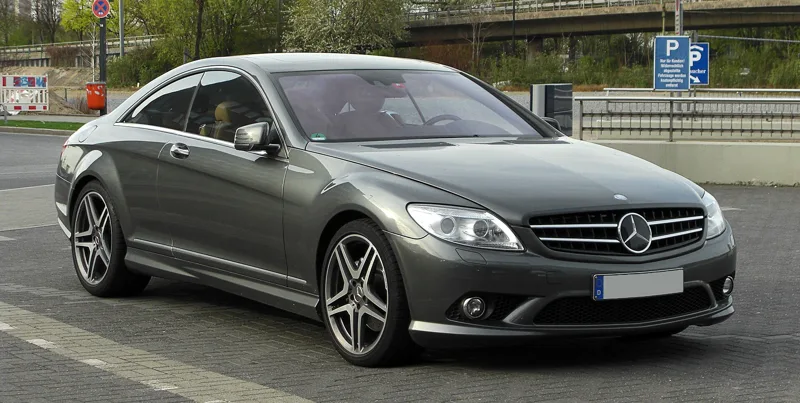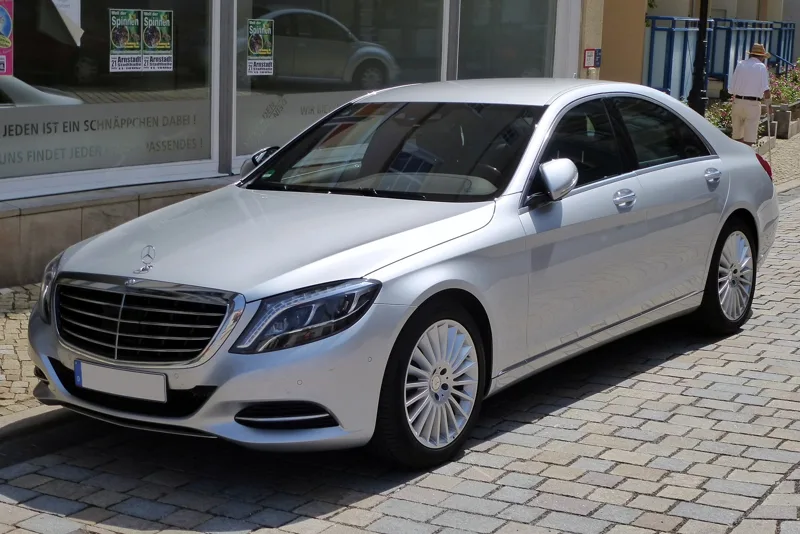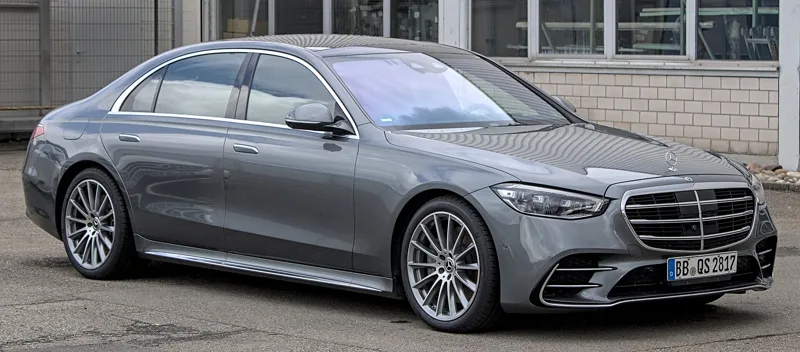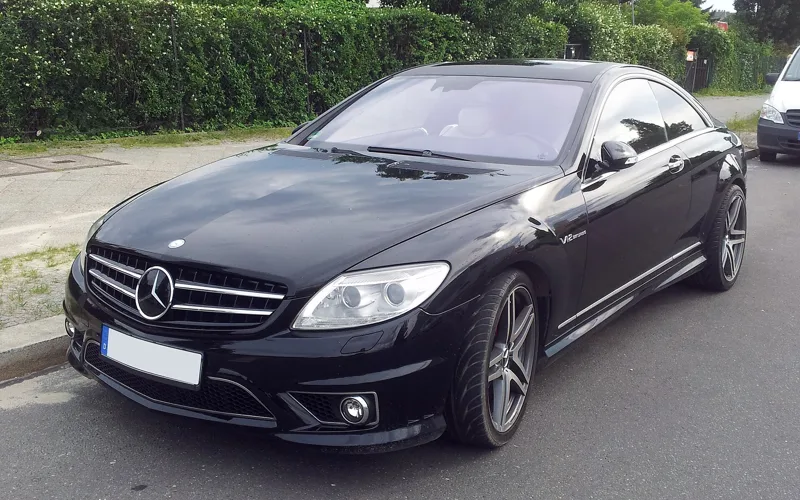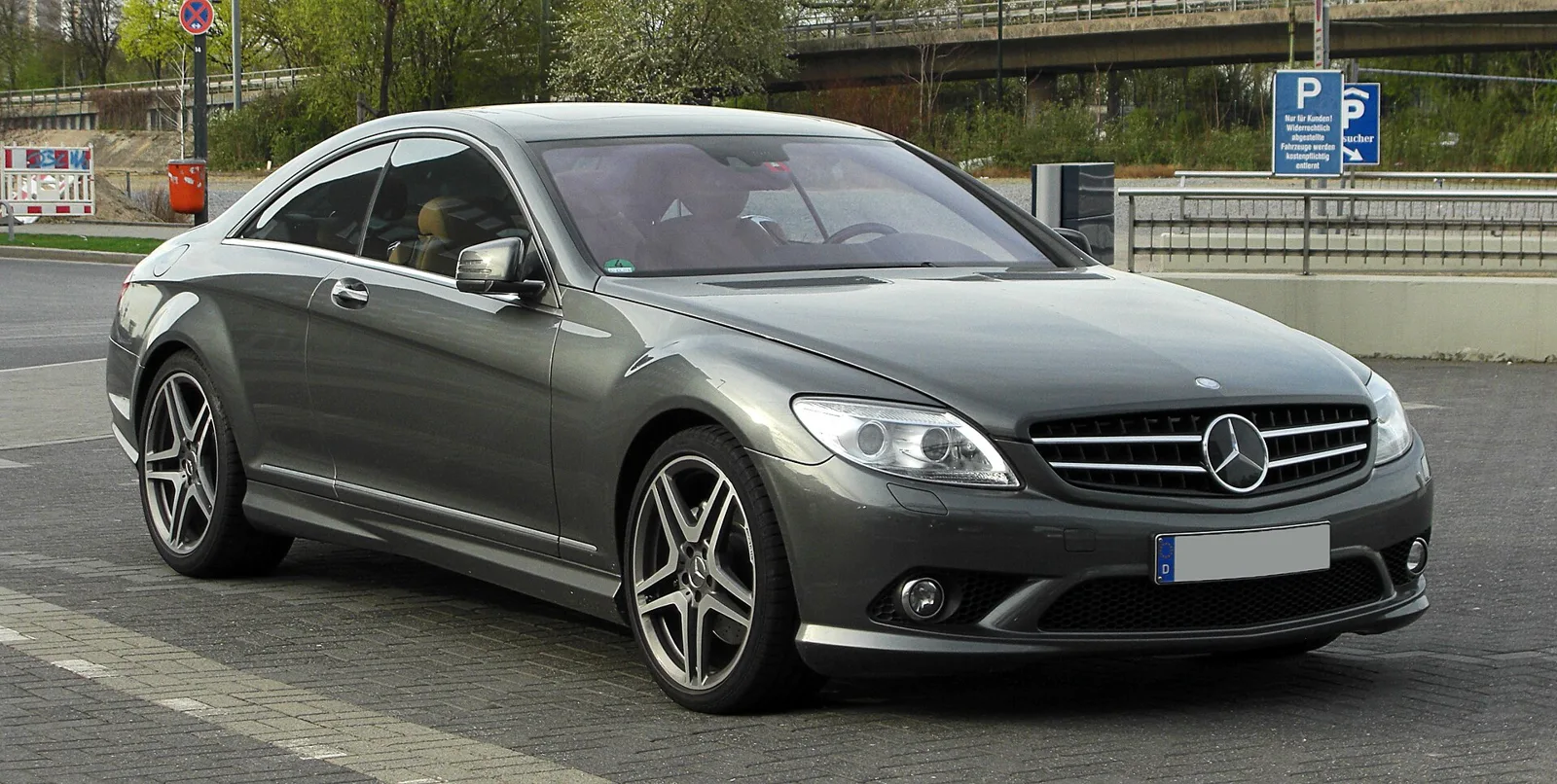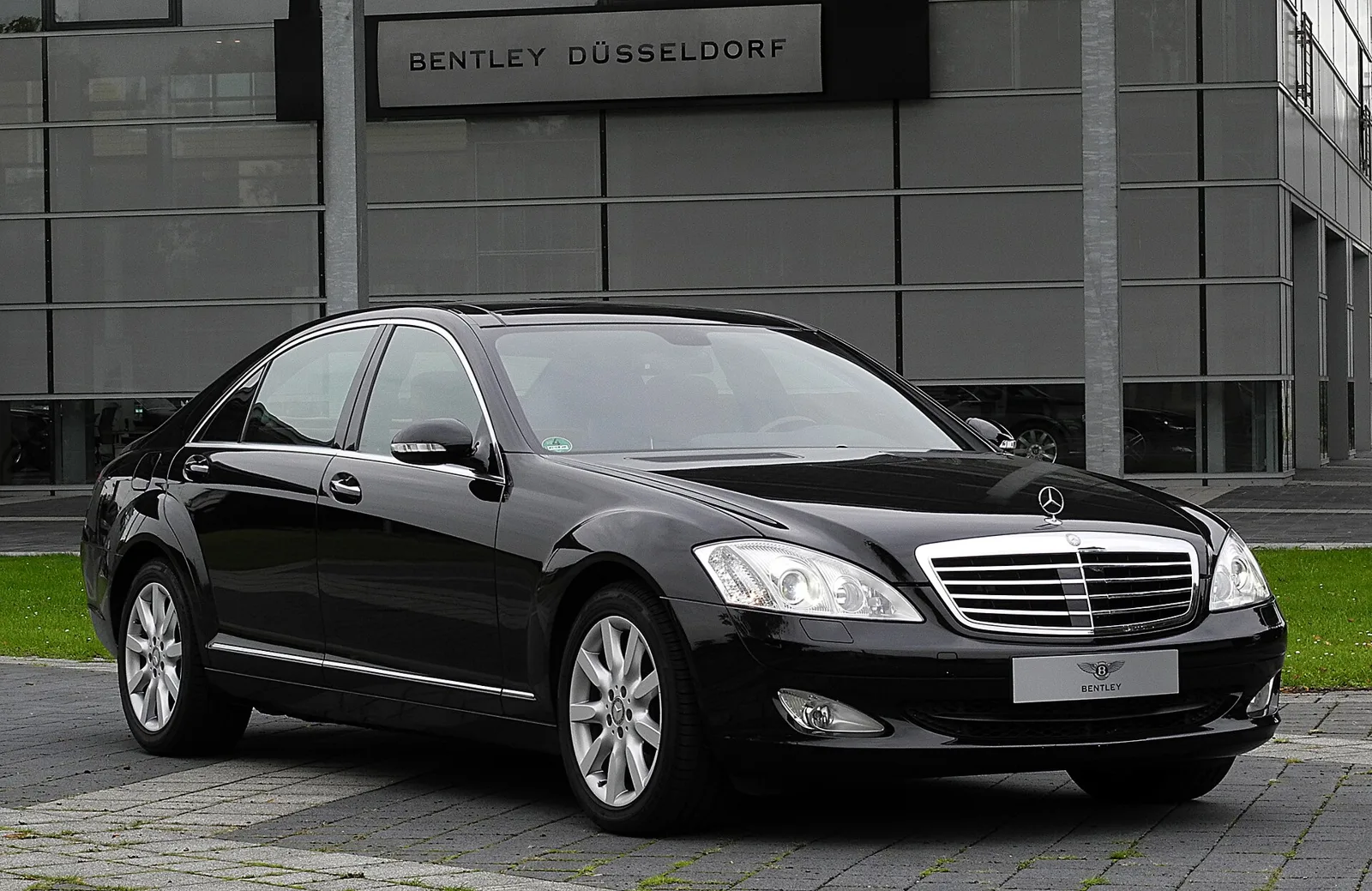
Gorden Wagener's fifth-generation S-Class brought wood, leather and metal to the cabin, Airmatic suspension and Distronic Plus radar cruise control from 2005 to 2013.
Built between 2005 and 2013, the W221 brought Airmatic air suspension, Distronic Plus radar cruise control and eight dual-stage airbags to the S-Class. Its range ran from a mild hybrid S 400 to a 630 PS S 65 AMG V12.
The W221 was the fifth-generation S-Class, built from August 2005 to June 2013. It was larger than the car it replaced in every dimension, and its Distronic Plus radar cruise control could bring the car to a complete halt. Its cabin swapped much of the W220's plastic for wood, leather and metal, and its air suspension became the standard setup for most of the range.
Where did the W221 S-Class come from?
Work on the W221 began in 1999, and design work followed from 2000 in Tokyo at the Advanced Design Center. Gorden Wagener's final design was signed off in 2001 and locked for production in early 2002, then shown to journalists at a consumer design clinic in December 2002.
The rear styling took cues from the Maybach saloon, the larger flagship that Daimler had shown to the public in 1997. The production car followed in 2005.
The W221 also changed the tone of the cabin. Wood, leather and metal took over surfaces that the W220 had finished in plastic.
Air suspension, a V12 at the top and a cabin that moved away from plastic defined the W221 S-Class.
What changed inside the W221?
The W221 used more wood, leather and metal than the W220, and it dropped the central gear lever in favour of a stalk on the steering column. Two large flat panel screens sat in the instrument cluster, one showing COMAND navigation and one replacing the analogue speedometer with a graphic display.
The COMAND controller was larger than before and offered haptic feedback, while the 8-inch main display sat higher in the driver's line of sight, with adjustable brightness and tilt. Metal tab switches controlled the climate system, and the door panels carried seat, mirror, window and boot controls.
Behind a panel sat a DVD changer with a CompactFlash card reader. Linguatronic voice control was optional and added voice entry of navigation destinations, which widened what the system could do.
The optional harman/kardon Logic7 system used 14 speakers and a 600 W, 13-channel DSP amplifier, with Dolby Digital 5.1 and DTS processing. Rear-seat passengers could also have a factory entertainment package with two screens and two sets of headphones.
Which safety systems did the W221 introduce?
The W221 carried Electronic Stability Program, Brake Assist Plus and Distronic Plus radar cruise control, and its Pre-Safe Plus system used radar closing speed to judge whether a collision looked likely. Eight dual-stage airbags completed the passive protection, and Tele Aid could call for help after an airbag fired.
When a crash looked probable, Pre-Safe Plus closed the windows and sunroof, moved the front seats and head restraints to safer positions and tightened the belts. It could also puff up the bolsters on the sides of the optional multi-contour seats.
Night View Assist used two near-infrared illuminators set into the headlamp units, with a windscreen camera picking up their light. Mercedes said it gave the same viewing distance as high beams without dazzling oncoming drivers, and the picture appeared in the instrument cluster.
Brake Assist Plus used radar to decide how much brake pressure to apply. Mercedes estimated that 90 percent of drivers held back on the pedal in an emergency, and the radar-based system was intended to offset that tendency. Speedtronic, a speed limiter that holds a set speed, was also standard.
How did Airmatic differ from Active Body Control?
Airmatic swapped steel springs for compressed air and used adaptive damping to firm or soften the ride. Active Body Control kept steel springs but added high-pressure hydraulics, which keep the body level in fast corners, and it came as standard only on the S 600 and both AMG flagships, the S 63 and S 65.
Both systems could raise the ride height at the press of a button, which helped on rough ground or snow. Active Body Control was optional on most other models, but it could not be fitted to 4Matic cars, which ran on Airmatic instead.
For buyers who chose all-wheel drive, the air system was therefore the only suspension on offer, and the adaptive damping came with it.
What did the 2009 facelift add?
The 2009 update was announced on 8 April 2009 at Stuttgart. It added Adaptive Highbeam Assist, Blind Spot Assist and Lane Keeping Assist, and Attention Assist arrived as well, watching more than 70 parameters to spot driver fatigue. Night View Assist Plus gained pedestrian recognition.
When drowsiness is detected, a warning sounds and an 'Attention Assist. Break!' prompt appears in the instrument cluster.
Torque Vectoring Brake braked the inside rear wheel in corners to reduce understeer. PRE-SAFE Brake applied maximum braking pressure about 0.6 seconds before an unavoidable collision was recognised.
COMAND gained a SPLITVIEW dual-view display. The APS navigation system replaced DVD maps with a 40 gigabyte hard-disk drive, and the revised cars reached showrooms in June 2009 across a range that stretched from the S 350 CDI to the S 600.
Which hybrid and diesel engines did the W221 use?
The W221 range ran from petrol V6 and V8 engines to a V12 at the top, with several diesels in between. The S 400 BlueHybrid was a mild hybrid with a 3.5-litre V6, the S 250 CDI used a four-cylinder diesel and the S 350 BlueTEC used a V6 diesel.
The S 400 Hybrid debuted at Chicago's 2009 auto show, and its 3.5-litre engine plus the hybrid system made 220 kW (295 hp) and 385 Nm of torque, which equals 284 lb ft. In the city it managed 12 L/100 km, which is 19 mpg US or 23 mpg imp, and on the highway 9.0 L/100 km, or 26 mpg US and 31 mpg imp.
Its battery pack came from Continental, with cells supplied by Johnson Controls-Saft, and it was the first hybrid to adopt a lithium-ion battery. Airmatic also lowers the body at higher speeds, a behaviour built into the system. The S 400 Hybrid went on sale in the United States in August 2009 and in Japan in October 2009.
The S 250 CDI, unveiled at the Paris Motor Show, used a four-cylinder diesel that made 201 hp (150 kW; 204 PS) and 500 Nm (369 lb ft). It reached 100 km/h in 8.2 seconds and was capped at 240 km/h (149 mph), with CO2 of 149 g/km. It later took the World Green Car of the Year title in 2012.
The S 350 BlueTEC arrived in late 2011 with 258 hp (192 kW) and 620 Nm (457 lb ft). It gained start-stop and an AdBlue system, and the engine was approved for Euro 6, the same engine later used in the W222.
How fast were the AMG S 63 and S 65 models?
The S 63 AMG used a 525 PS (386 kW; 518 hp) M156 V8 that reached 100 km/h in 4.6 seconds, and its top speed was capped at 250 km/h (155 mph). The S 65 AMG's M275 V12 made 612 PS (450 kW; 604 hp) before a 2010 update raised it to 630 PS (460 kW; 620 hp).
Both debuted at Detroit in 2006. The S 63 gained AMG SpeedShift 7G-TRONIC from 2009, while the S 65 kept a five-speed AMG SpeedShift because that gearbox could cope with its 1,000 Nm (738 lbf ft) of torque.
The S 65 AMG was offered only in the long-wheelbase body, and its rear seats were roomy enough for chauffeured use. From 2011 the Sport-Paket AMG option added a sportier look, bigger brakes and new alloy wheel choices across the range.
Guard and Pullman armoured models
The S 600 Guard carried European B6 and B7 armour, which resists military-standard small-arms projectiles and fragments from hand grenades. It came with run-flat tyres, a fire-extinguishing system and a 90 L fuel tank that seals itself, and it was built at Sindelfingen on a separate line.
The S 600 Guard could reach 210 km/h (130 mph) and had a gross weight of 4,200 kg (9,300 lb). Its equipment included an emergency fresh-air system, a pneumatic emergency control for the power windows that works independently of the on-board electronics, and a rear camera.
The Guard also offered an emergency boot-opening facility, an optional panic alarm, heated front windscreen and windows, and an adjustable doorhold system for all four doors.
The S 600 Pullman Guard stretched the armoured car into limousine form, with four seats behind the driver's partition. Deliveries began in late 2008, and the President of India travelled in a black S 600 Pullman Guard, which is a long-wheelbase version of the car.
How did the W221 perform in sales and awards?
Mercedes-Benz announced on 11 May 2009 that 270,000 units had been sold since the W221 launch. The car had also shared first place in its category with the Audi A8 when J.D. Power ran its 2007 Initial Quality Study, for the fewest quality problems after 90 days of ownership.
Awards followed in several markets. The W221 won the Golden Steering Wheel from Bild am Sonntag's 2006 awards in the luxury class, won best luxury car in its Australian price class, and collected Topauto's 2006 innovation award for Distronic Plus. Popular Mechanics gave it the 2007 Automotive Excellence Award for Safety.
The seats took the 2006 Automotive Interior of the Year award for Best Seat, and What Car? gave the car its 2007 Safety Award. Wheels magazine recognised the design with its 2006 Automotive Design Award.
What were the S-Class Collection and concept cars?
Mercedes-Benz Accessories introduced 17 products under the S-Class Collection between 2005 and 2009. They included a wrist watch designed with the Sindelfingen Design Centre, cufflinks, a pen and a 1/43 scale model car, and a run of 1,200 units of an S-Class freight train model was also made.
The Concept Ocean Drive, which debuted at the North American show in 2007, carried aluminium wheels with 275/35ZR21 tyres. Its production relatives were a long way off, and the concept mainly showed how the company was thinking about the car's look.
The S 320 CDI BlueEFFICIENCY replaced the S 320 CDI in 2008, with a power steering pump that works only when needed, standstill decoupling for the 7G-TRONIC gearbox and 17-inch light-alloy wheels with low-rolling-resistance tyres. In Germany the short-wheelbase car listed at 70,864.50 euros including VAT.
Specifications at a glance
| Specification | Detail |
|---|---|
| Production | August 2005 to June 2013 |
| Chassis | W221, successor to the W220 |
| Sales milestone | 270,000 units by 11 May 2009 |
| S 400 Hybrid | 3.5-litre V6 with lithium-ion battery; 295 hp (220 kW); 284 lb ft (385 Nm) |
| S 350 BlueTEC | V6 diesel; 258 hp (192 kW); 620 Nm (457 lb ft) |
| S 250 CDI | Four-cylinder diesel; 150 kW (201 hp; 204 PS); 500 Nm (369 lb ft) |
| S 63 AMG | M156 V8; 525 PS (386 kW; 518 hp); 4.6 seconds to 100 km/h |
| S 65 AMG | M275 V12; 612 PS (450 kW; 604 hp), later 630 PS (460 kW; 620 hp) |
| S 600 Guard | Armour B6 and B7; 210 km/h (130 mph); 4,200 kg (9,300 lb) |
| Airbags | Eight dual-stage airbags |