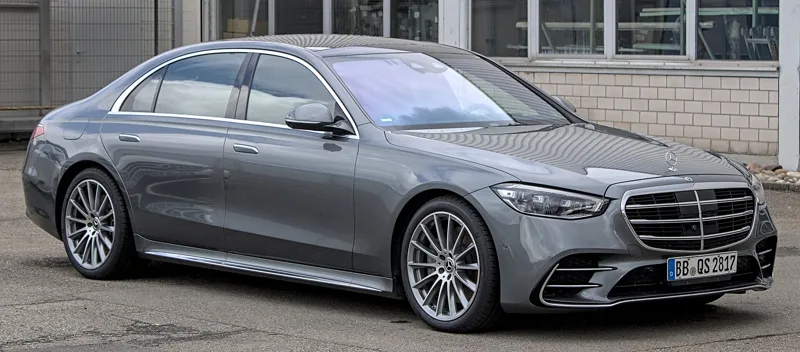
Magic Body Control, a V12 at the top of the range and a 2017 facelift shaped the sixth-generation Mercedes-Benz saloon built from 2013 to 2020.
Built from 2013 until 2020, the W222 brought Magic Body Control, a road-scanning suspension, to the S-Class. Its range ran from the S 500 e plug-in hybrid to the 621 hp S 65 AMG V12, with AMG and Maybach variants alongside the standard saloons.
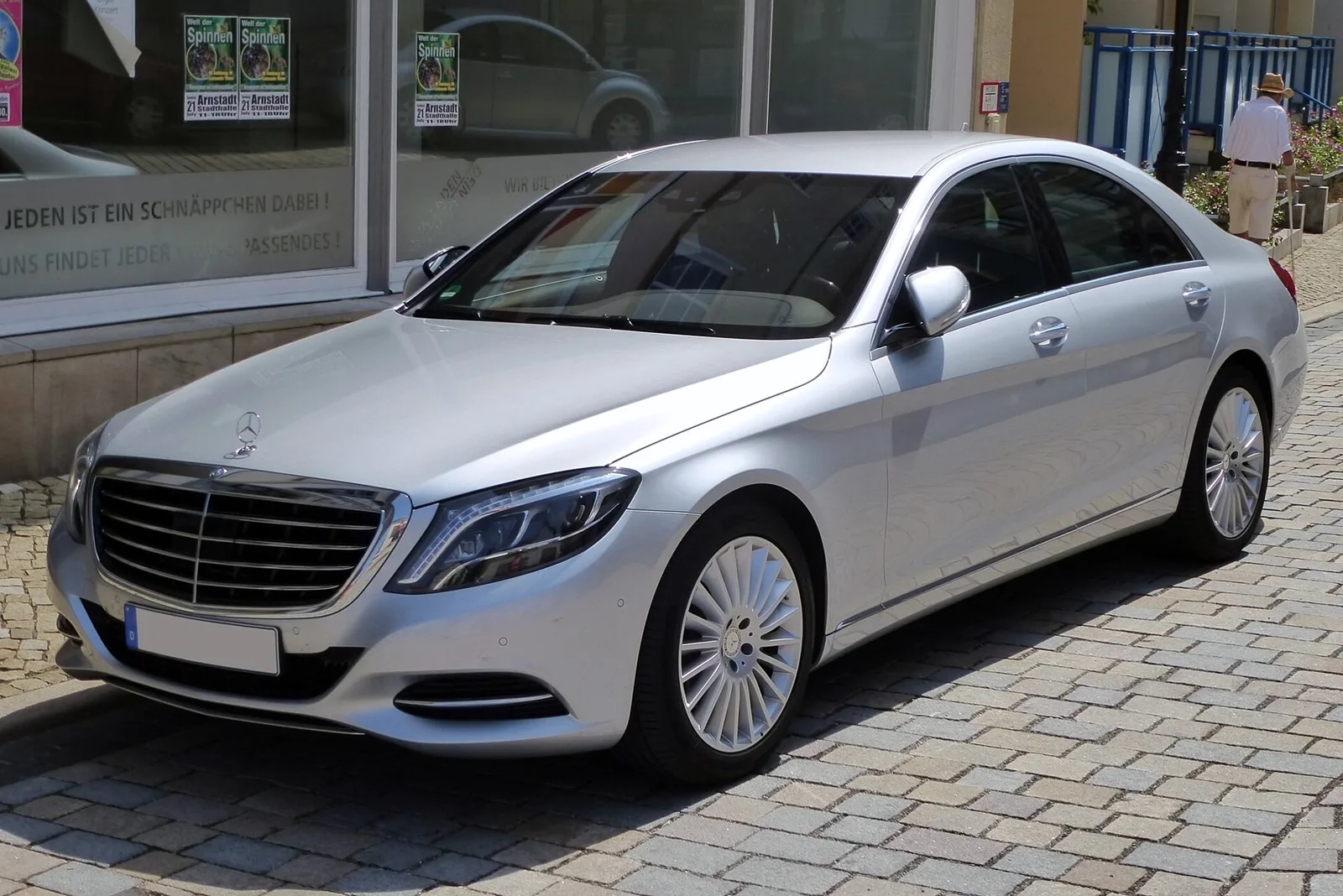
The Mercedes-Benz W222 was the sixth-generation S-Class, built from 2013 until production ended in September 2020. Its suspension read the road up to 15 m ahead and set each damper before a bump arrived, and the range climbed to a 6.0-litre V12 that produced 630 PS. The car also revived the Maybach name as a separate luxury line.
Where did the W222 S-Class come from?
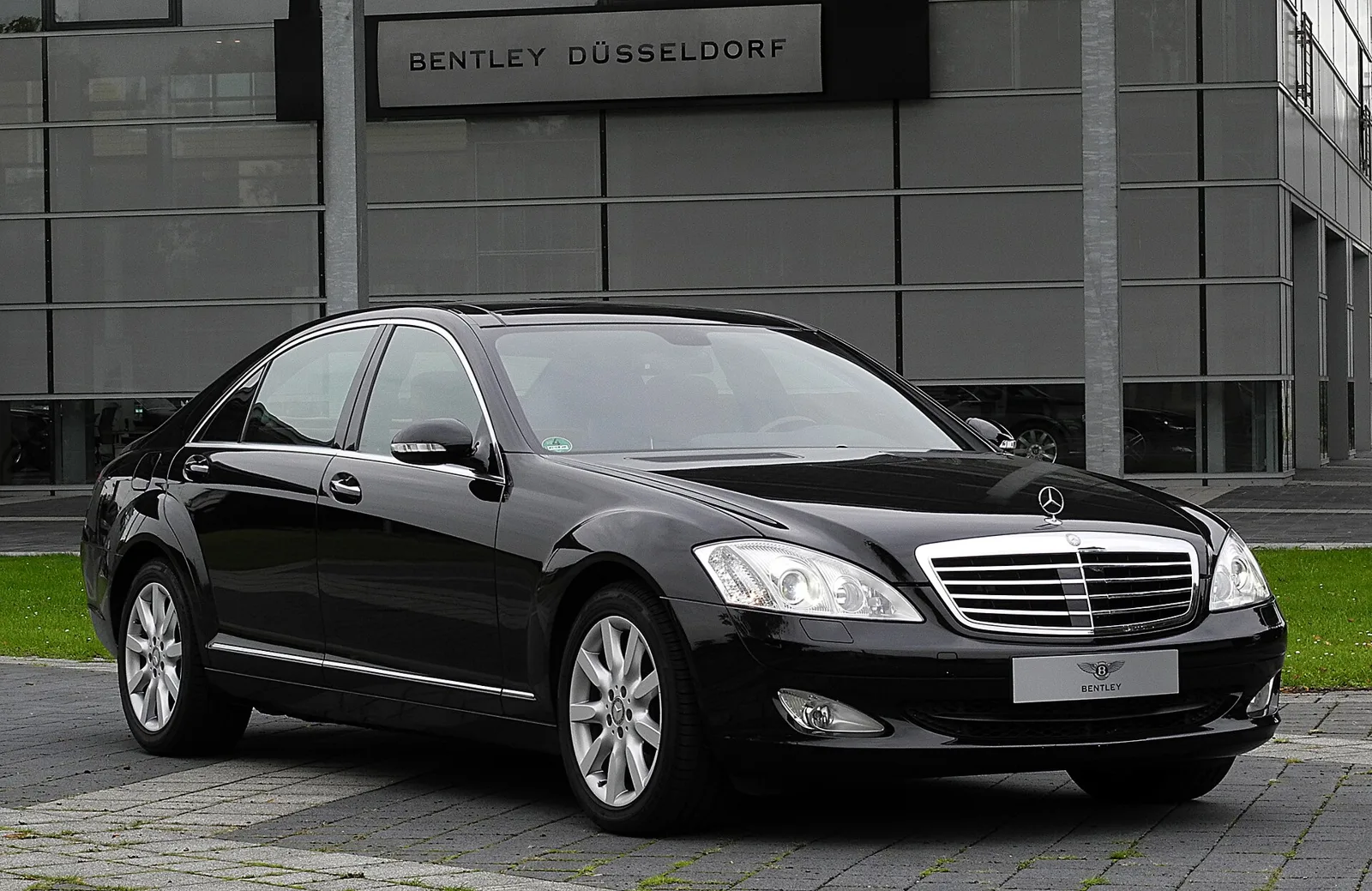
The W222 replaced the W221 and was styled in 2009 by Il-hun Yoon, a designer from Korea who took inspiration from the F700 concept that Mercedes-Benz had shown. Robert Lesnik, a Slovenian designer, led the exterior team, and the car's look matched the C-Class (W205) and the E-Class (W213) families.
The debut came on 15 May 2013 in Hamburg, and production started in Sindelfingen in June 2013. Mercedes then took the car to Shanghai's Mercedes-Benz Arena and showed the S 400 Hybrid at the 2013 Osaka Motor Show. Customers could place orders from May, and the first dealer deliveries took place on 20 July 2013.
European sales opened in September 2013 with the S 400 Hybrid, S 350 BlueTEC, S 350 BlueTEC Hybrid and S 500, while the US version, badged S550, arrived in the same month. The four-wheel-drive 4Matic followed in November, and V12 and AMG variants were added during 2014.
A camera that read the road ahead and a V12 at the top of the range made the W222 distinctive.
How did Magic Body Control work?
Magic Body Control was an updated form of the hydropneumatic Active Body Control suspension. A stereo camera read the road ahead to a distance of 15 m, and each wheel's damping was adjusted for potholes and bumps at speeds of up to 130 km/h (81 mph). By 2017 the system was not offered on any 4Matic model.
The aim was to prepare each damper before the wheel reached a bump, rather than reacting once the impact had already happened. The road scan gave the car a short look ahead, something a conventional damper with no sensing cannot do.
Because 4Matic all-wheel drive models could not take the system, buyers who chose four-wheel drive had to live without the road-scanning feature. The most advanced ride technology in the range was therefore tied to the rear-drive cars for most of the model's life.
How strong were the W222's V8 and V12 engines?
The AMG S 63 used a twin-turbocharged M157 V8 that produced 430 kW, with 577 hp (585 PS) reached at 5,500 rpm and 900 Nm (664 lb ft) of torque. The S 65 relied on a 6.0-litre V12 biturbo that delivered 463 kW, which equals 621 hp (630 PS), arriving at 4,800 rpm.
The S 63 paired its engine with an AMG SpeedShift MCT 7-speed transmission and carried a 78 Ah lithium-ion battery of lightweight construction, borrowed from the SLS AMG Black Series. The S 65 used a seven-speed automatic and the same type of 78 Ah battery.
The US version of the S 63 AMG 4Matic was rated at 300 km/h (186 mph), and it was due on sale in November 2013. Mercedes also listed an optional AMG Driver's Package among the extra-cost items for the performance engines.
The S 65 AMG made its first public appearance at the 2013 Los Angeles and Tokyo shows, with the 2013 Osaka Motor Show following. Sales were planned to begin in March 2014.
What early engines did the W222 launch with?
The launch range included a hybrid S 400, a plug-in S 500 and the S 350 BlueTEC, which Mercedes badged differently before 2015. The S 300 BlueTEC Hybrid followed in early 2014, and the S 600 and the S 65 AMG reached showrooms in March 2014.
The S 600 was a V12 rated at 390 kW and 523 hp (530 PS), and it produced 830 Nm (612 lb ft) from 1,900 rpm. Its public debut came at the North American show in 2014, ahead of sales in March 2014.
Six-cylinder petrol and diesel engines sat beneath the V8 and V12 engines in the early line-up, and hybrid, diesel and petrol versions were offered in different markets. Mercedes presented the early range as a set of choices that buyers could match to their own needs.
What was the S 500 e?
The S 500 e combined a 3.0-litre twin-turbo V6 with an electric motor in a long-wheelbase car that could be recharged from the mains. Its battery held 8.7 kWh, and Mercedes gave a figure of roughly 30 km (19 mi) on the New European test cycle. US EPA testing produced 14 mi (23 km) of electric range.
Deliveries began in September 2014 in Europe, at a launch price of 108,945 euros (about US$146,000). By that September 17 cars had been registered in Germany, and JATO Dynamics counted 38 across Europe. US deliveries were expected in early 2015.
The electric motor was rated at 80 kW, or 108 hp (109 PS), and it worked alongside the V6 in a single hybrid system. The car offered four hybrid operating modes, called Hybrid, E-Mode, E-Save and Charge. It had second-generation regenerative braking, a haptic accelerator pedal and pre-entry climate control, and its hybrid charging strategy used data from the COMAND navigation system.
Why did Mercedes bring back Maybach?
Mercedes revived the Maybach brand in 2015 as a sub-brand, and the Mercedes-Maybach S-Class was positioned against two of the most expensive saloons, the Mulsanne from Bentley and the Phantom VIII from Rolls-Royce. It measured 5,453 mm (214.7 in) long on a 3,365 mm (132.5 in) wheelbase.
Building of the Maybach S 500 began in Pune, India, in September 2015, making India the second nation to produce a Maybach. The range comprised the S 500 and S 600, with 4MATIC optional, and the V12 was reserved for the S 600.
The Maybach cars could be ordered with massaging rear seats that were also air-conditioned and heated, along with heated armrests and a first-class rear suite. A 24-speaker Burmester High-End 3D surround system rated at 1,540 watts was also offered. The S 600 gave way in 2017 to the S 650, which received the powerplant of the earlier S 65 AMG. A Chinese-only S 680 arrived for the 2018 model year, and its name follows the number 8, which is seen as lucky in China.
Were there Pullman and armoured Maybach versions?
The Pullman was a chauffeur-driven version with a partition between the front and rear compartments and two sets of paired-facing rear seats. It used rear-wheel drive, the V12 dual-turbocharger engine and a seven-speed automatic transmission, and the same vehicle was also sold as the armoured Pullman Guard.
Both versions kept the same rear compartment layout. Mercedes presented the Pullman versions as a separate chauffeur-driven line, with the armoured Pullman Guard as the security-focused variant. Mercedes positioned them as limousines, so the rear seats and partition, rather than the driver's controls, shaped the car from the inside.
What did the 2017 facelift change?
The mid-cycle refresh was shown in April 2017, and it was built from 3 July 2017 onwards for the 2018 model year. It added a 48-volt integrated starter/alternator, a new range of six-cylinder inline engines and LED lamps with new styling. The 4.7-litre V8 gave way to a 4.0-litre biturbo V8, and the S 300 h hybrid left the range.
The return of the six-cylinder mattered because the S-Class had not offered an inline six since 2005. The petrol and diesel units measured 2,999 cc and 2,927 cc, and both received a 20 kW (22 hp) electric boost.
The integrated motor-generator on those six-cylinder cars also acted as the starter motor, replacing a dedicated unit. It powered the air conditioning as well as recharging the battery, so the electrical system did more work than before.
Inline-six and V8 engines moved to the 9-speed 9G-TRONIC automatic, while V12 cars kept the 7G-TRONIC PLUS. The S 63 AMG 4MATIC+ became the only V8 model, so the rear-wheel-drive version disappeared, and the V8 range was consolidated to a single engine size.
The grille was also revised so that six-cylinder and eight-cylinder cars, as well as long-wheelbase and V12 versions, could be told apart at a glance.
How quiet was the W222?
Mercedes claimed the S-Class was the quietest production car, and Auto Bild's 2014 test found the long-wheelbase model quieter than the Ghost from Rolls-Royce or the Flying Spur from Bentley. Both rivals were luxury saloons of the same era, so the comparison placed the Mercedes among its natural competitors.
The S 500 Intelligent Drive, a self-driving derivative of the S 500 saloon, appeared at the 2013 Frankfurt Motor Show. It relied on sensors that were also fitted to the production car, and it gathered large volumes of traffic data as it drove.
The S 65 Final Edition and the end of AMG's V12
Mercedes announced the S 65 Final Edition on 24 February 2019 and showed it at Geneva on 2 March 2019. The run was limited to 130 units, finished in Obsidian Black metallic with bronze highlights on the bumpers, beneath the doors and on the alloy wheels.
The AMG emblems sat on the C-pillars, and the black interior was trimmed in Exclusive Nappa leather with bronze stitching and carbon ornamental elements.
Production of the S 65 AMG ended in November 2019, and the AMG V12 went with it. The M279 V12 carried on in the Maybach S 650 and other non-AMG models, so the engine lived on outside AMG.
The W222 remained in production until September 2020, when the W223 replaced it, so the car covered the whole period from 2013 to 2020.
How did the W222 range change before the facelift?
The range widened quickly after the launch models. The S 350 BlueTEC 4MATIC added four-wheel drive to the diesel line-up, and the long-wheelbase S 550 4MATIC arrived in the United States in November 2013. The S 300 BlueTEC Hybrid joined in early 2014, one of several new models that spring.
Engine badges changed again in 2015, because several early hybrid and diesel models had carried different names before that date. The S 400 Hybrid, the S 500 plug-in hybrid and the S 350 BlueTEC badges therefore mark the early years of the car rather than its later life.
Specifications at a glance
| Specification | Detail |
|---|---|
| Production | 2013 to 2020, succeeded by the W223 |
| Debut | 15 May 2013, Hamburg |
| Predecessor | W221 |
| S 63 AMG | Peak 577 hp (585 PS) and 430 kW at 5,500 rpm; 900 Nm (664 lb ft) |
| S 65 AMG | Peak 621 hp (630 PS) and 463 kW at 4,800 rpm; 1,000 Nm (738 lb ft) |
| S 600 | 390 kW; 523 hp (530 PS); 830 Nm (612 lb ft) at 1,900 rpm |
| S 500 e | 3.0-litre twin-turbo V6 with 80 kW motor; 8.7 kWh battery |
| Transmission | 9G-TRONIC (inline six and V8); 7G-TRONIC PLUS (V12) |
| Maybach length | 5,453 mm (214.7 in); wheelbase 3,365 mm (132.5 in) |
| S 65 Final Edition | 130 units, 2019 |