The round five-pin plug that carried AC charging across North America for more than a decade, how its signalling works and why it is giving way to newer connectors.
SAE J1772, also called the J plug or Type 1 connector, defines the North American plug for AC charging of electric vehicles, along with its signalling and safety behaviour. The SAE J3400 NACS connector is now surpassing it in North America, and the CCS Combo extension added DC fast charging.
SAE J1772 is the North American standard for AC charging of electric vehicles. It defines the plug, the signalling that tells a car how much power it may draw and the safety behaviour during charging. The same shell gained two extra pins for DC fast charging, creating the Combined Charging System, while J3400 NACS is now overtaking it in North America.
What is SAE J1772?
SAE J1772 is a standard maintained by SAE International that covers the conductive charge coupler for electric vehicles. Its formal title is the SAE Electric Vehicle Conductive Charge Coupler. It sets the physical, electrical, communication and performance requirements for the vehicle inlet and the mating connector.
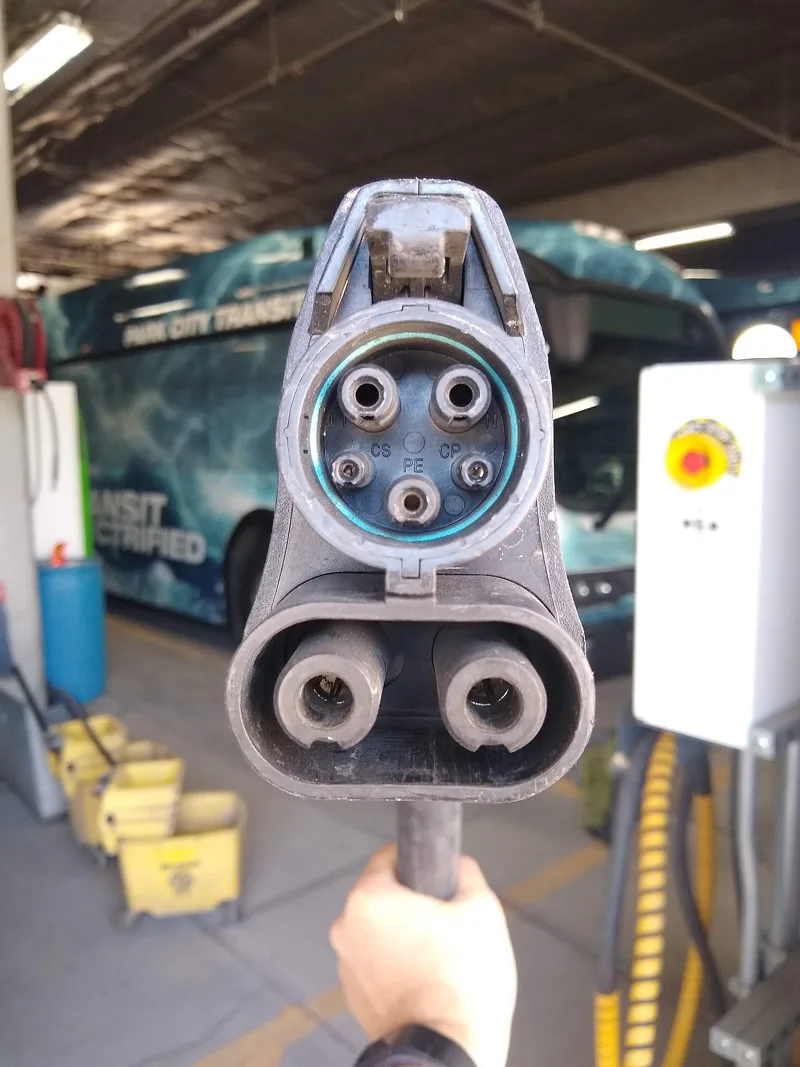
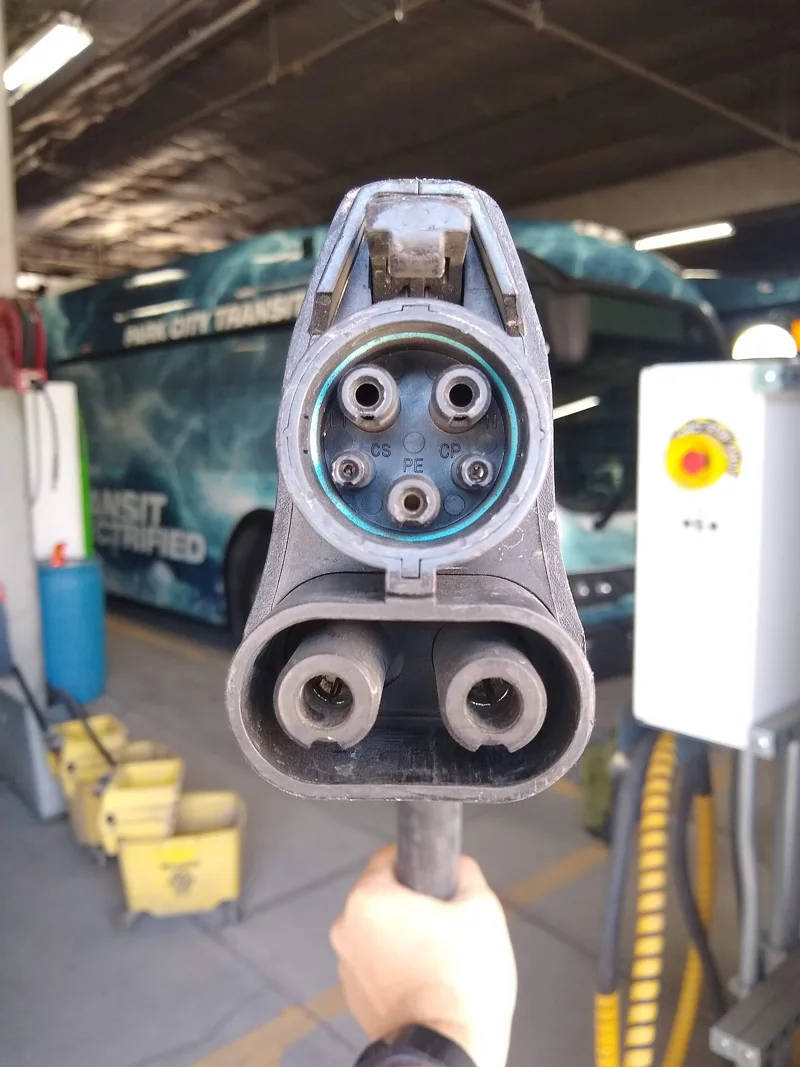
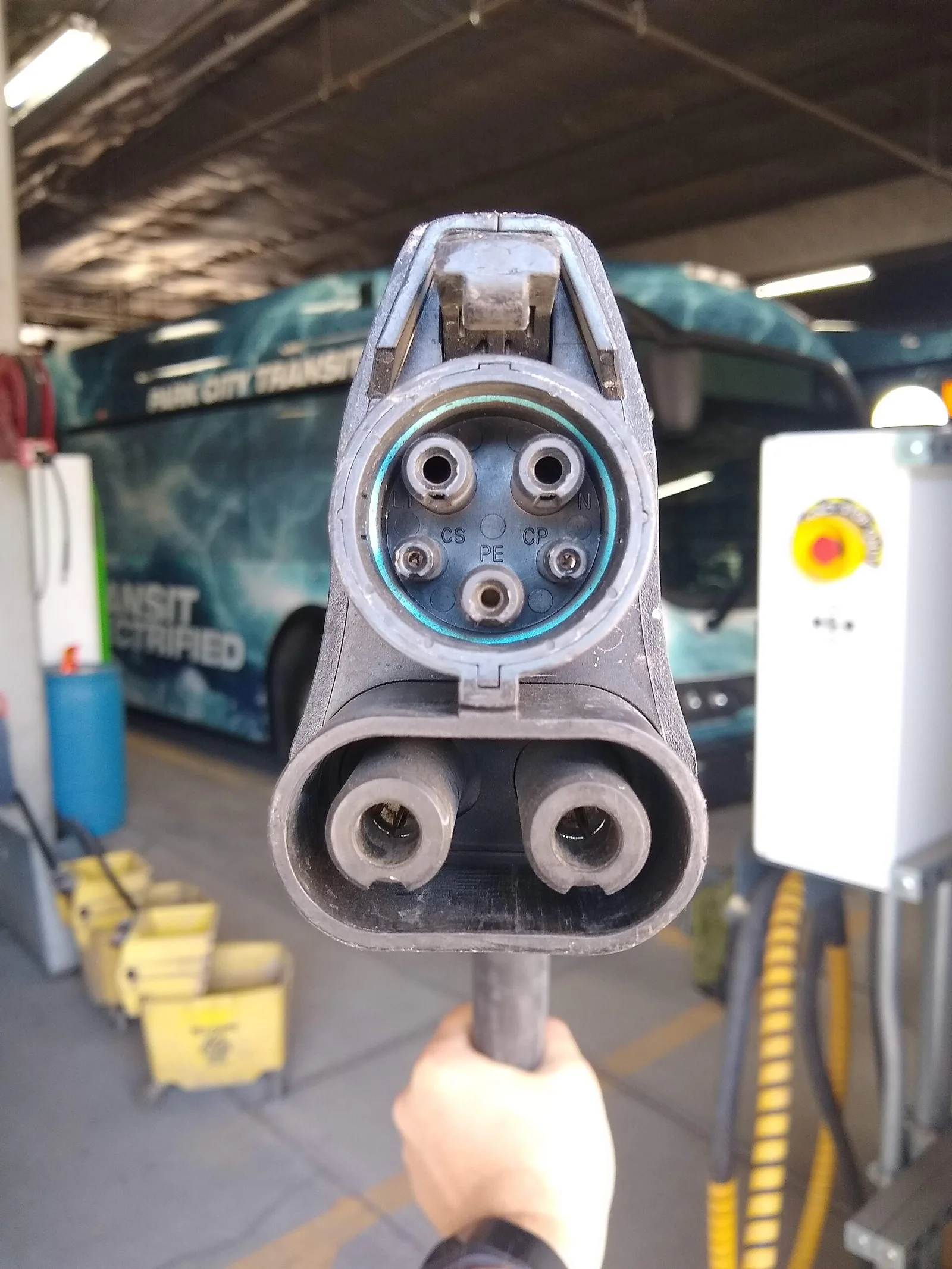
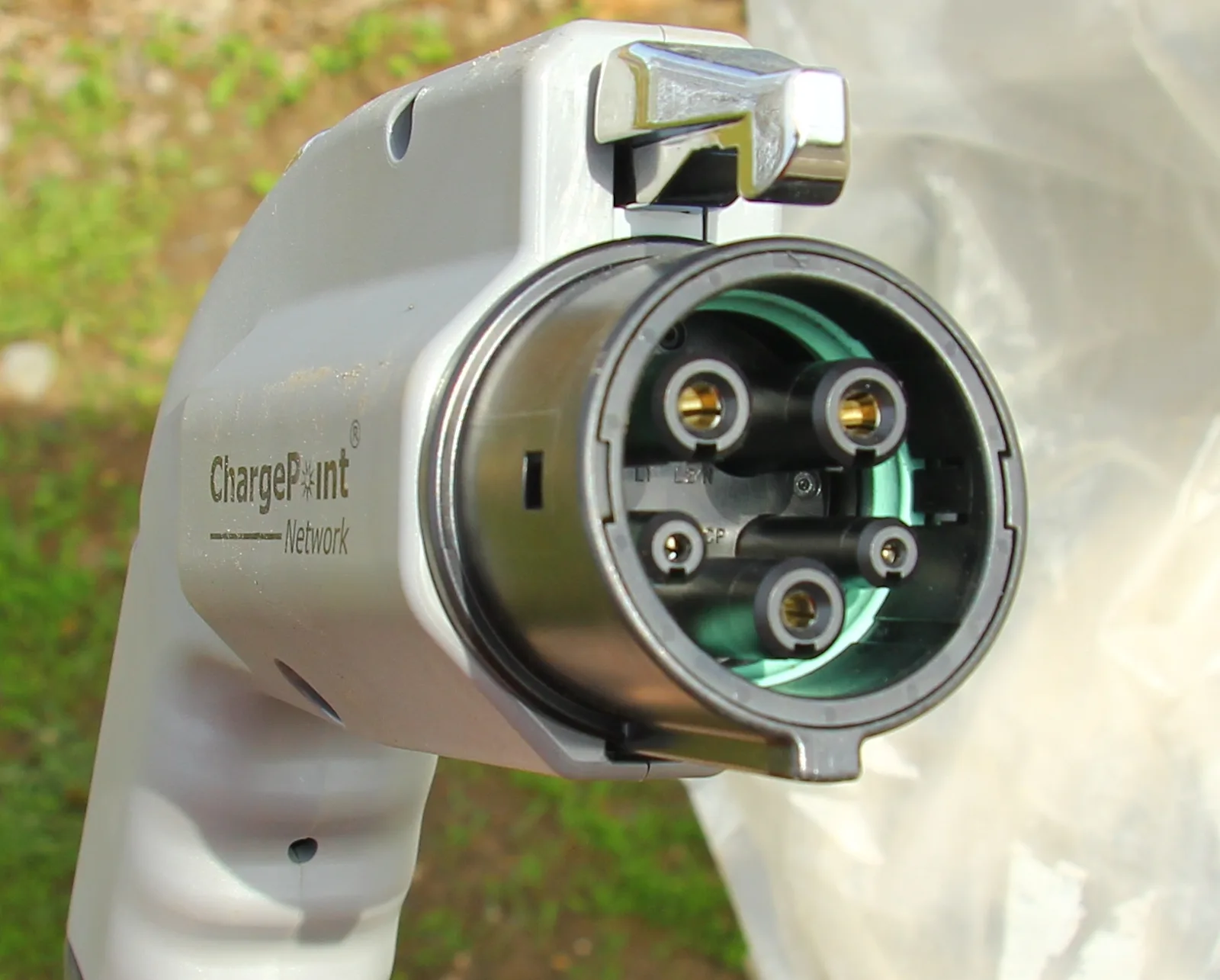
The standard is also called the J plug or the Type 1 connector, after its international counterpart IEC 62196 Type 1. Its five-pin layout supports single-phase alternating current across a wide range of ratings, from portable cords to hardwired units. Those units are formally electric vehicle supply equipment, or EVSE, because they only supply AC power to the car. The on-board charger then converts it to direct current for the battery, so the box on the wall is not really a charger in the strict sense.
A round five-pin plug that carried AC charging across North America, then gave its extra pins to fast charging.
How much power does J1772 deliver?
A J1772 connection supplies single-phase AC, with the lowest rating at 1.44 kW from a household NEMA 5-15 outlet. The top AC rating is 19.2 kW from hardwired equipment at 80 A and 240 V. Both ends of that range use the same five-pin connector.
The three routes to a battery are easiest to compare through a single example. The 2020 Chevrolet Bolt, with a 66-kWh battery and a 7.2-kW onboard charger, shows how the level of supply changes the result.
| Charging route | Supply | Range added per hour |
|---|---|---|
| AC Level 1 | 120 V, 12 A | Up to 4 mi (6.4 km) |
| AC Level 2 | 240 V, 32 A | Up to 25 mi (40 km) |
| DC fast charging | Up to 55 kW | Up to 180 mi (290 km) |
The standard defines four levels in its 2017 revision: AC Level 1, AC Level 2, DC Level 1 and DC Level 2. An AC Level 3 appeared in earlier revisions but was never implemented, so the practical choice for AC charging comes down to the first two levels.
Where did the standard come from?
The California Air Resources Board drove the standard's development. It rejected inductive charging in favour of conductive coupling, and in June 2001 it adopted SAE J1772-2001 as the charging interface for electric vehicles in California. That early version used a rectangular connector rated up to 6.6 kW.
The General Motors EV1 and the Toyota RAV4 EV had used an inductive system called SAE J1773 Magne Charge, and CARB turned away from it. California then required the 2001 standard from the 2006 model year. CARB soon wanted more current than 6.6 kW could deliver, and that pressure set the next chapter.
Yazaki proposed a round connector rated up to 19.2 kW at 80 A. In 2008 CARB published a new standard that mandated the connector from the 2010 model year, and the state approved it in 2012.
How was the standard finalised?
The Yazaki plug completed certification at UL, and the SAE committee voted on the revised specification in July 2009. The SAE Motor Vehicle Council adopted SAE J1772 REV 2009 on January 14, 2010. Companies including smart, Chrysler, GM, Ford, Toyota, Honda, Nissan, Rivian and Tesla backed that revision.
The 2009 connector then joined the international IEC 62196-2 standard, with the final vote slated to close in May 2011. Under that standard the connector is a Type 1 implementation that provides a single-phase coupler.
Which cars and markets adopted it?
The Chevrolet Volt and the Nissan Leaf adopted the SAE J1772-2009 connector, and it became the standard connector in the US market. Charging networks helped drive that adoption, with funding from the ChargePoint America program and grants under the American Recovery and Reinvestment Act.
European versions also started with a J1772-2009 inlet, until the IEC Type 2 connector became the standard inlet across the region. Every IEC connector uses the same J1772 signalling protocol, so manufacturers sold cars with either inlet depending on the market. Passive adapters convert between the two in either direction.
Many European versions carry an on-board charger that can use three-phase power. The on-board charger can take advantage of three-phase power, with higher voltage and current limits even for the same basic model.
How does DC fast charging use the same plug?
The combined charging system adds two larger pins to the standard five-pin J1772 connector for DC fast charging, reaching up to 350 kW. SAE developed the combo variant in 2011, and it uses power-line communication between the vehicle, the off-board charger and the grid.
Automakers agreed in late 2011 to introduce the Combined Charging System in mid-2012. The first SAE Combo vehicles were the BMW i3, released in late 2013, and the Chevrolet Spark EV, which arrived in 2014. In Europe the combo coupler is built on the Type 2 AC connector, so it keeps full compatibility with the SAE specification for DC charging.
Tesla introduced a CCS Combo 2 plug in Europe with the Model 3 in 2019. Its V2 Superchargers gained CCS cables alongside Tesla's own DC Type 2 cables, while the European V3 and V4 Superchargers carry only a CCS cable. Hyundai's 800 V E-GMP platform shows what the faster side can do: the IONIQ 5 charges from 10 to 80 percent in 18 minutes on a 350 kW charger, according to the manufacturer.
How is the plug kept safe?
The connection pins are isolated inside the connector when mated, and they stay unpowered until the vehicle commands them. A proximity pin tells the car when the plug is in place. Pressing the release button switches the proximity circuit, which makes the vehicle stop drawing current before the power pins separate.
Removal order is deliberate. The shorter control pilot pin disconnects first, which makes the supply drop power before the power pins part. The ground pin is the longest, so it connects first and breaks last. That order keeps the power pins from separating under load, where arcing would shorten their life.
The hook on the J1772 plug is operated by hand, so anyone can press the button and stop a charge, and even take the cable. Many modern cars extend a pin that blocks the latch from being raised while the plug is in, which becomes essential for CCS because the connector cannot break heavy DC current. The European Type 2 connector solves the same problem differently, with openings for automatic locking and remote release controlled by the owner.
What does the signalling protocol do?
The protocol follows a fixed sequence, so the supply and the vehicle agree on current before any energy flows. The charging station sends a 1 kHz square wave on the control pilot, and resistors on the vehicle side tell it what the car needs.
The sequence begins when the supply equipment signals that AC input power is present, and the vehicle detects the plug through its proximity circuit. That detection stops the car from driving away while it is connected. The station then detects the plug-in vehicle, signals that it is ready to supply current, and the vehicle works out its ventilation needs before current is provided.
The control pilot does double duty. A resistance set by the vehicle selects the mode: 2.7 kohm announces a Mode 3 compatible vehicle, 880 ohm says the car is ready to charge, and 240 ohm requests ventilated charging. The same signal's duty cycle sets the maximum current, so a 16% PWM signal means a 10 A maximum, 25% means 16 A, 50% means 32 A, and 90% flags a fast charge option.
The protocol needs no integrated circuits, which is one reason the design holds up across a temperature range from minus 40 to plus 85 degrees Celsius. Ground continuity is also monitored continuously for the duration of the charge.
How does the standard compare with its rivals?
The Mennekes connector, promoted by RWE and Daimler, was standardised in 2011 as IEC 62196 Type 2 and became the European Union's standard single- and three-phase coupler. It allows up to 63 A and 43.6 kW. The connector uses the same pilot protocol as the J1772 plug, which is why the two can share signalling.
In 2018 the SAE J3068 committee released an enhancement to the European connector for the North American industrial market, allowing up to 160 A and 166 kW on three-phase power. The IEC Type 3 connector with shutters was deprecated after a 2016 approval for a small change to the Mennekes design, which made shutters optional on Type 2.
Japan's route is separate. CHAdeMO was promoted by the Tokyo Electric Power Company together with Mitsubishi, Nissan and Subaru, and it uses the JARI DC connector for high-voltage automotive fast charging. It is a different system from the combo coupler rather than an extension of J1772.
What are the advantages and drawbacks of J1772?
The chief strengths are a simple signalling method with no integrated circuits, a rated life of 10,000 mating cycles, and a design that works across a wide temperature range. The chief weakness is the manual release, which lets anyone stop a charge, and the fact that SAE J3400 NACS now surpasses it in North America.
The advantages go further. The round connector is rated for 10,000 mating cycles, and at one mating per day the standard says its lifespan should exceed 27 years. The pins are isolated when mated, and the staged disconnection order protects both the pins and the people handling them.
The drawbacks are real. The manual hook is the most obvious one. Some vehicles also extend AC Level 1 charging above 16 A, which is useful at RV parks, but that level was never codified into the standard. Finally, the SAE J3400 NACS connector has been named as the successor for North American electrical connectors, so J1772 is being surpassed in its home market.