A company founded in 2009 that reached the stock market in 2021, built an electric pickup and van for Amazon, and launched the lower-priced R2 in 2026.
Rivian, founded in 2009, sells an electric SUV and pickup built on one skateboard platform, plus an electric delivery van for Amazon. Its first deliveries came in late 2021, the same year it listed on the Nasdaq. The lower-priced R2 reached customers in June 2026.
Rivian is an American electric vehicle maker founded in 2009 that builds an electric SUV and pickup on a shared skateboard platform, plus a delivery van for Amazon. It began delivering its R1T pickup in late 2021, followed by the R1S in 2023 and the midsize R2 in 2026. Its story combines a rapid stock market debut with production setbacks, a Volkswagen venture and a charging network of its own.
What is Rivian and what does it build?
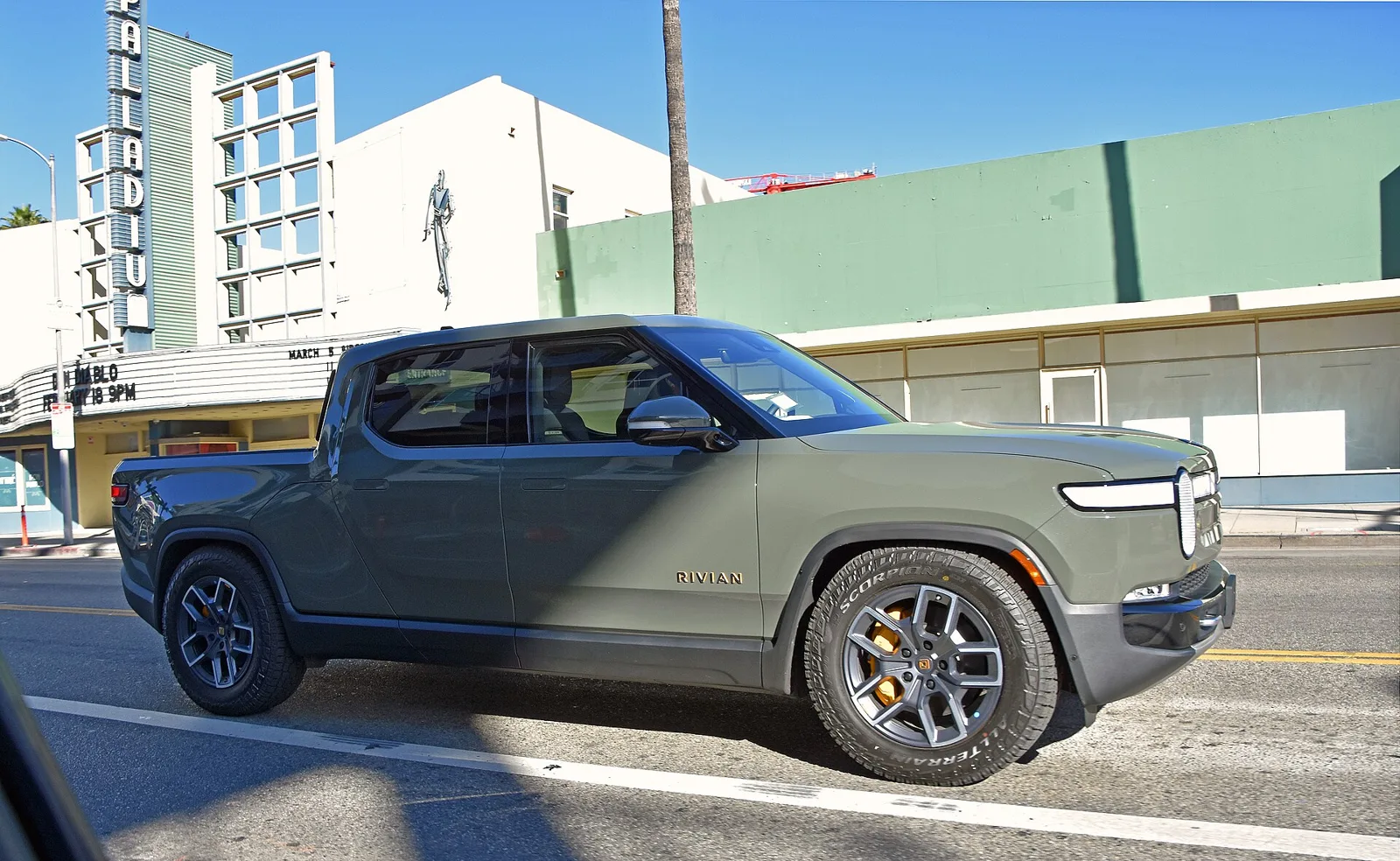
Rivian Automotive is an electric vehicle manufacturer and automotive technology company founded in 2009. It produces a sport utility vehicle and a pickup truck, both built on a skateboard platform that the company says can support future vehicles and be adopted by other manufacturers. Its R1T pickup went on sale first, followed by the R1S.
The company also produces the Rivian EDV, an electric delivery van sold to Amazon for its deliveries. Its charging arm, the Rivian Adventure Network, is an open DC fast-charging network across the country, and the company has committed billions to new factories and partnerships.
Rivian is headquartered in Irvine, California, with its manufacturing plant in Normal, Illinois. Other facilities are in Palo Alto, Carson, Plymouth, Vancouver, Wittmann, Woking and Belgrade, and the company has announced a large factory in Social Circle, Georgia.
A Florida start-up that reached the stock market in 2021 now rests its future on a lower-priced SUV.
How did Rivian start in 2009?
Rivian was founded in Rockledge, Florida, in 2009 as Mainstream Motors by RJ Scaringe. The business was renamed Avera Automotive, then Avera Motors, and in 2011 it became Rivian Automotive, a word play on the Indian River in Florida where Scaringe grew up.
The first model was meant to be a sports car. Dubbed the R1, it was prototyped as a mid-engine hybrid coupe for the American market, with a design by Peter Stevens. The project was shelved in late 2011 as the company looked to restart its business to have a larger impact on the car industry.
In 2015 Rivian received a large investment and grew significantly, opening research facilities in Michigan and the San Francisco Bay Area. Soon afterwards it turned to electric autonomous vehicles, aiming to build a network of related products aimed at ride-sharing and driverless car markets.
Why did Rivian buy the Normal plant?
By September 2016 Rivian was negotiating to buy a manufacturing plant in Normal, Illinois, which had been owned by Mitsubishi Motors. In January 2017 it acquired the plant and its machinery for $16 million, and the site became Rivian's primary North American manufacturing facility.
Buying a near production-ready plant rather than building a new factory has been likened to Tesla's purchase of the NUMMI plant in California. For Rivian it meant a head start on production, with the costs of a new site avoided.
Normal has grown steadily since then. In July 2020 the town approved additions totalling 576,000 square feet (53,500 m2), and in October 2021 Rivian made public plans for a 623,000 square foot (57,900 m2) addition on the west side.
What were Rivian's first products?
In December 2017 Rivian revealed its first two products: a five-passenger electric pickup and a seven-passenger electric SUV, provisionally named the A1T and A1C. In November 2018 they were renamed the R1T and R1S and unveiled at the Los Angeles Auto Show.
Both vehicles were described as ready for rough terrain and semi-autonomous driving, and the company outlined plans for a fully autonomous next generation. Production was scheduled to begin in 2020, a date that later slipped as the company worked through its early programme.
How fast did Rivian's workforce grow?
Rivian had 250 employees at the start of 2018. By February 2019 it employed 750 people across facilities in Michigan, Illinois, California and the United Kingdom. In November 2020 the workforce passed 3,000, and it roughly tripled over the following year to more than 9,000 by November 2021.
When did the first Rivian trucks reach customers?
In late 2020 Rivian planned to begin R1T shipments in June 2021. The date slipped to August, and vehicle shipments were delayed again, partly by the global shortage of microchips. In September 2021 Rivian is credited as the first automaker to bring a fully electric pickup to the consumer market, ahead of established names such as GM, Ford and Tesla.
Deliveries of the R1T to customers began in October 2021. The R1S SUV followed in 2023, after the company had ramped up production of its pickup.
In December 2021 the R1T was named Motor Trend Truck of the Year. Rivian had also reported more than 71,000 pre-orders for its R1 models by that month, a figure that showed how much demand existed before the first deliveries.
How did the 2021 IPO work?
On 10 November 2021 Rivian became a public company through an initial public offering. A total of 153 million shares were sold at an initial price of $78.00, which valued the company at $66.5 billion. Trading on the Nasdaq began under the RIVN ticker.
Shares closed the first day at $100.73, a valuation just short of $100 billion. The net proceeds to the firm were $13.5 billion. Initial price targets had been in the $58 to $62 range, so the final offering price was well above expectations.
Scaringe's ownership of 17.6 million shares was worth about $2 billion at that first close. At that value Rivian was worth more than General Motors or Ford, and it trailed only Tesla among automakers by market capitalisation.
How did Ford and Amazon shape Rivian's investment?
Amazon led a $700 million investment round on 15 February 2019, and Ford invested $500 million that April at a pre-money valuation of $4.5 billion. Cox Automotive added $350 million in September 2019, which brought the total raised that year to $1.5 billion.
On 19 November 2021 Ford and Rivian announced that they would no longer co-develop an electric vehicle. Ford had planned a model for its luxury Lincoln brand, but those plans were cancelled in 2020. Ford kept a 12 percent stake, which was worth more than $10 billion after the IPO.
Ford later sold around 90 percent of that stake for $3 billion by the end of 2022, compared with its original $1.2 billion investment. Amazon bought $200 million of stock in the IPO, which raised its total stake to 22 percent.
Why did Rivian raise prices in 2022?
On 1 March 2022 Rivian raised the R1T price by 17 percent and the R1S by 20 percent, blaming chip scarcity and higher component costs. Customers who had already reserved vehicles were hit as well, and the backlash was immediate.
Rivian later apologised for the retroactive increases and said that the original configured price would be honoured for anyone with a preorder as of the 1 March announcement. The episode damaged trust at a moment when the company needed to show it could deliver.
In March 2022 the company was named on TIME's list of the 100 Most Influential Companies of the year. A few months later, on 27 July 2022, Rivian said it would cut its workforce by 6 percent in response to high inflation, rising interest rates and higher parts prices.
What setbacks hit Rivian in 2022?
In September 2022 Rivian signed a memorandum of understanding with Mercedes-Benz Group to set up a joint venture that would produce large commercial electric vans in Europe. The partnership was cancelled in December 2022, although the companies said future collaborations might still be possible.
In October 2022 Rivian issued a voluntary recall of 13,000 vehicles after receiving seven reports of loose torque bolts, none of which led to injury. In January 2023 The Wall Street Journal reported a run of departures among top executives, including longtime employees.
How strong is the R1T's performance?
The R1T is a body-on-frame pickup with an independent air suspension, hydraulic roll control and up to four electric motors, with up to two on each axle. The Quad version makes 1,025 hp (764 kW) and 1,198 lb-ft (1,624 N-m) of torque, and Rivian claimed a 0-60 mph time of 2.6 seconds in 2021.
Battery options are 108 kWh and 140 kWh. Rivian projects a 2026 range of 329 miles (529 km) on the Large Pack and 410 miles (660 km) on the Max Pack.
Both R1 models offer 14 in (360 mm) of ground clearance, which suits off-road use. Early testing claimed the truck could wade through 3 ft 7 in (1.1 m) of water and climb a 45 degree incline, which underlined its off-road intent.
What makes the R1S and the skateboard platform different?
The R1S is a sport utility version of the R1 platform. Because of its shared electric chassis, the R1S was designed in 2018 to have 91 percent of its components in common with the R1T. The chassis includes braking, suspension and cooling systems, with the battery in the centre.
The skateboard platform has a flat, low centre of gravity, typical of electric vehicles, and that makes it straightforward to adapt for different body types. The same logic underpins the company's plan for future vehicles that other manufacturers might also adopt.
How did the Amazon van deal develop?
Rivian entered a commercial agreement with its investor Amazon in February 2019. By September 2019 Amazon's logistics division had agreed to design, produce and purchase 100,000 electric delivery vehicles. Amazon expected to have as many as 10,000 electric vans in operation by 2022, but it did not plan to take the full 100,000 until 2030.
Rivian delivered 1,000 EDVs to Amazon by November 2022. Deployment began in nine US cities in July 2022, and by 2026 Amazon said it had reached half of its goal, with more than 50,000 electric delivery vans in its fleet.
The van is built in three sizes, carrying 14, 20 or 25 cubic metres of packages (500, 700 or 900 cubic feet). It uses a steel chassis instead of the aluminium of the R1 models and a basic single-motor drive on the front wheels. The line was designed as a low-feature-content operation to keep costs down.
Under the 2019 agreement Rivian had to sell all of its vans to Amazon. After Rivian sought relief from that exclusivity, Amazon agreed in January 2024 to end the arrangement. In February 2025 Rivian opened orders for its Electric Commercial Van to business fleets, which are branded Rivian Commercial Vans.
What is the R2 and when did it arrive?
The R2 is a smaller and less expensive midsize SUV on a new platform. Rivian unveiled it in March 2024 with a starting price of $45,000, and it also previewed the R3, which was to cost even less. Full trims and pricing followed on 12 March 2026.
The 2026 R2 line-up ranged from the Performance with Launch Package at $57,990 to the Premium at $53,990 and a Standard single-motor rear-drive variant from $48,490. A lower-priced version of about $45,000 was set to follow in late 2027. The R2 uses a native NACS charge port that reaches Tesla's Supercharger network.
Customer production of the R2 began at Normal on 22 April 2026, and the first customer deliveries began on 9 June 2026. The company says the R2 is its first lower-priced mass-market model and central to its long-term growth.
What are the R3 and R3X?
The R3 is slated as a compact electric crossover on the R2 platform, with no price or date set as of mid-2026. The R3X is a higher-performance variant with higher ground clearance and a tri-motor setup.
How does the Rivian charging network work?
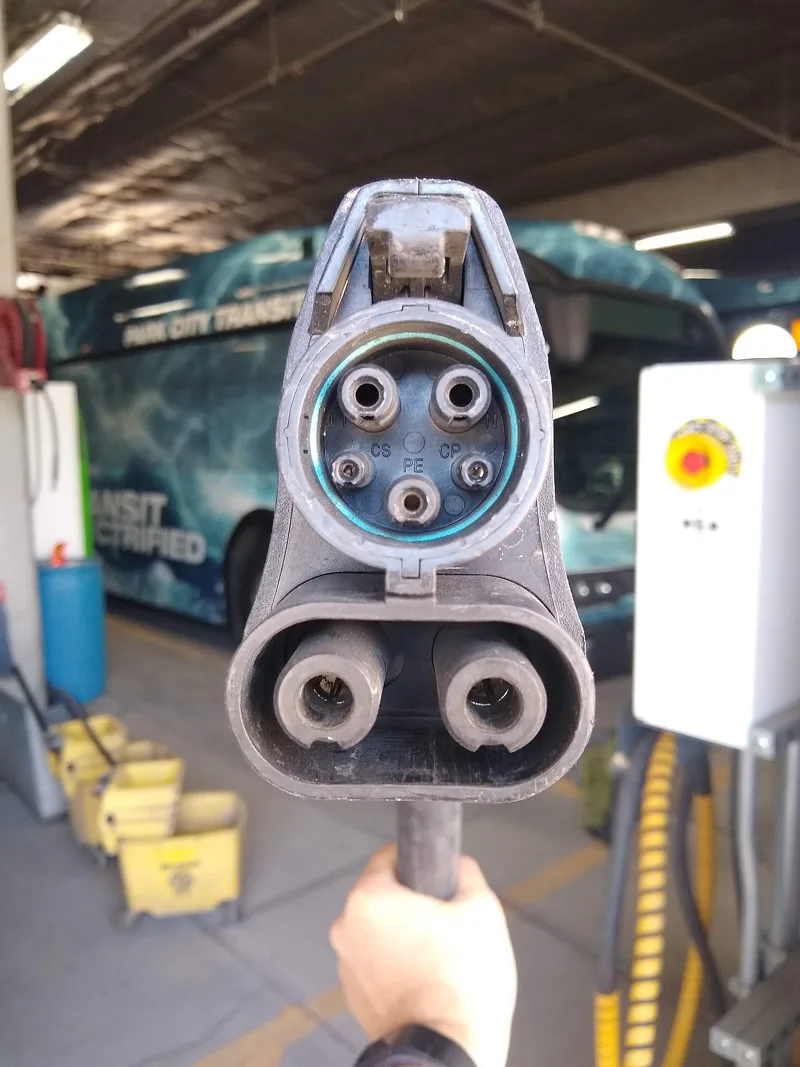
In March 2021 Rivian announced plans for the Rivian Adventure Network, a network of public charging stations across the United States and Canada. Usage was initially restricted to Rivian owners, but by 2026 any electric vehicle with a CCS port or adapter could use most Rivian chargers, and many were being converted to NACS.
The company also planned 10,000 destination chargers, called Rivian Waypoints, at retail, lodging and dining businesses and in parks. They are rated at 11.5 kW and designed to work with any vehicle that has a J1772 connector. In July 2021 Rivian agreed to install Waypoint chargers at all 56 Tennessee state parks, and the first site was unveiled in October 2021.
By 2026 the network counted over 50,000 CCS DC fast chargers nationwide, all run on renewable power.
Where does Rivian build its vehicles?
The Normal plant in Illinois is the company's sole production factory, and it covers 2.6 million square feet (240,000 m2). It has a paint shop, robotics, stamping machines and injection moulding, and it makes vehicle components such as battery packs. The plant has grown into a site of around 3,900,000 square feet (360,000 m2) with planned additions.
In December 2021 Rivian announced a $5 billion battery and assembly plant east of Atlanta, with production of up to 400,000 vehicles a year. The plant was projected to employ 7,500 workers, with possible growth to 10,000, and Georgia proposed $125 million to support it. Local opposition cited environmental concerns and government costs.
In early 2024 Rivian put the Georgia construction on hold, though the land had been at least 90 percent graded. The project restarted in November 2024 after a $6 billion federal loan was announced, and the company expects the Georgia facility to add R2 manufacturing capacity after it comes online in 2028.
How did the Volkswagen partnership come about?
On 25 June 2024 Volkswagen said it would put up to $5 billion into Rivian, starting with $1 billion. The first $1 billion was to be followed by a further $4 billion expected by 2026. The commitment included $1 billion each for 2025 and 2026 and $2 billion more for a joint venture on electrical architecture and software.
The joint venture was formally launched in November 2024 to develop next-generation software-defined vehicle platforms. Germany's competition authority cleared the form of the venture on 29 July 2024, and the total investment was structured to reach up to $5.8 billion by 2027.
By May 2026 Volkswagen's stake had reached 15.9 percent, or about 209.7 million shares, making it Rivian's largest shareholder. Amazon held about 12.28 percent, and RJ Scaringe about 1.1 percent. Volkswagen's small electric model, expected in 2027, is anticipated to be the first to use the joint venture's architecture.
How have Rivian's shares performed?
Rivian's stock peaked at a closing price of $146.07 on 13 November 2021. It then fell more or less continuously during the tech sell-off of early 2022, reaching $30.68 on 26 April 2022, and it closed at an all-time low of $22.78 on 9 May 2022, a decline of nearly 85 percent from the peak.
The share price recovered through the first half of 2023 to a period high of $28.06 on 27 July 2023. A $1.5 billion convertible green note was poorly received by markets, and the price dropped to a daily low of $15.88 on 26 October 2023.
Insiders hold about 28 percent of the shares. By the close of April 2022 the company was worth about $29 billion, down 79 percent from the peak.
What legal and safety issues has Rivian faced?
In July 2020 Tesla sued Rivian for allegedly stealing proprietary information and for poaching employees. In March 2021 the Illinois Automobile Dealers Association sued Rivian and Lucid Motors over plans to sell electric vehicles directly to consumers.
In November 2021 a former sales and marketing vice president, Laura Schwab, sued the company after she said she was fired a month after raising concerns about discrimination. Other employees have made claims of harassment and discrimination, and at least four have sued over racial discrimination.
In 2024 Bloomberg reported that the company's only factory had racked up more serious US safety violations than any other automaker since the start of the previous year. The company has faced scrutiny on several fronts, and its quality record remains a question for buyers.
Which Rivian models matter most?
| Model | Timing | Note |
|---|---|---|
| R1T | Deliveries from October 2021 | Electric pickup, Motor Trend Truck of the Year 2021 |
| R1S | Deliveries from 2023 | SUV on the shared R1 platform |
| EDV | Deployment from July 2022 | Electric delivery van built for Amazon |
| R2 | Deliveries from 9 June 2026 | Midsize SUV and first lower-priced model |
| R3 | Planned | Compact crossover on the R2 platform, no price or date |
Rivian's road so far has been a mix of ambitious engineering, a fast stock market debut and hard operational lessons. The company's future rests on whether the R2 can broaden its customer base beyond the early buyers of the R1.