A fleet lease in 1997, a 2012 Tesla-powered sequel and a battery that never found a cheap replacement.
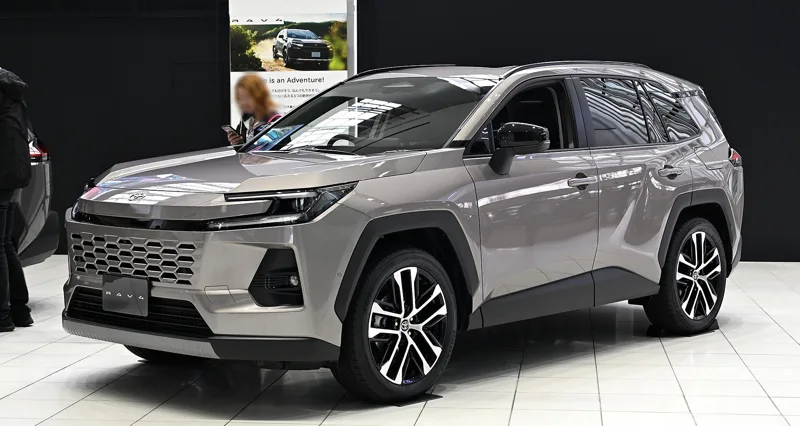
The Toyota RAV4 EV was an all-electric version of the RAV4 SUV, sold from 1997 to 2003 and again from 2012 to 2014. Toyota sold about 1,900 first-generation cars and 2,489 second-generation cars in California, and the newer model used a battery and motor from Tesla.
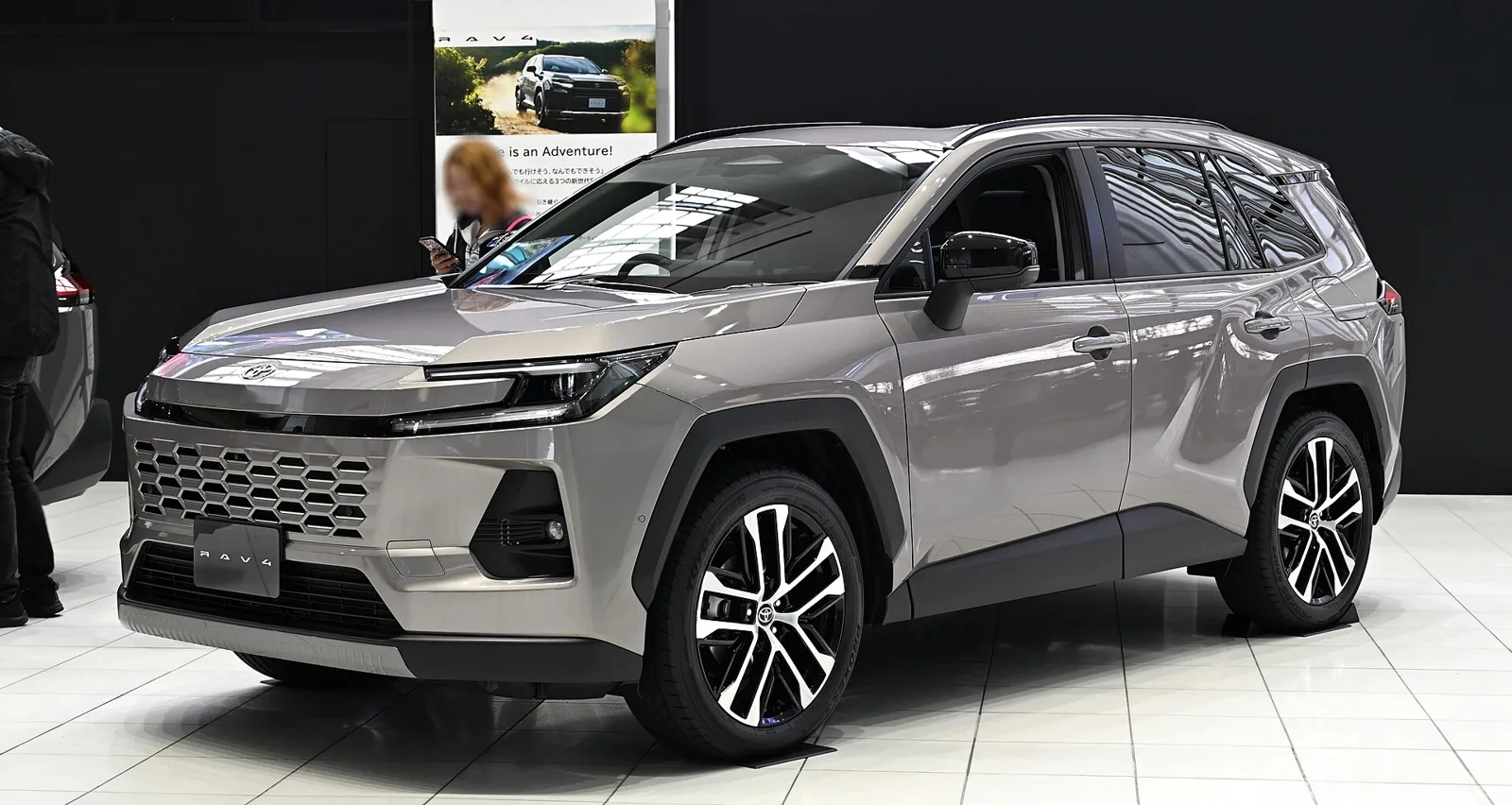
Toyota's all-electric RAV4 EV came in two generations, almost a decade apart, and both were sold mainly in California. The first arrived as a leased fleet car in 1997, and the second, developed with Tesla, went on sale in 2012 and ran until 2014.
When did the first RAV4 EV reach customers?
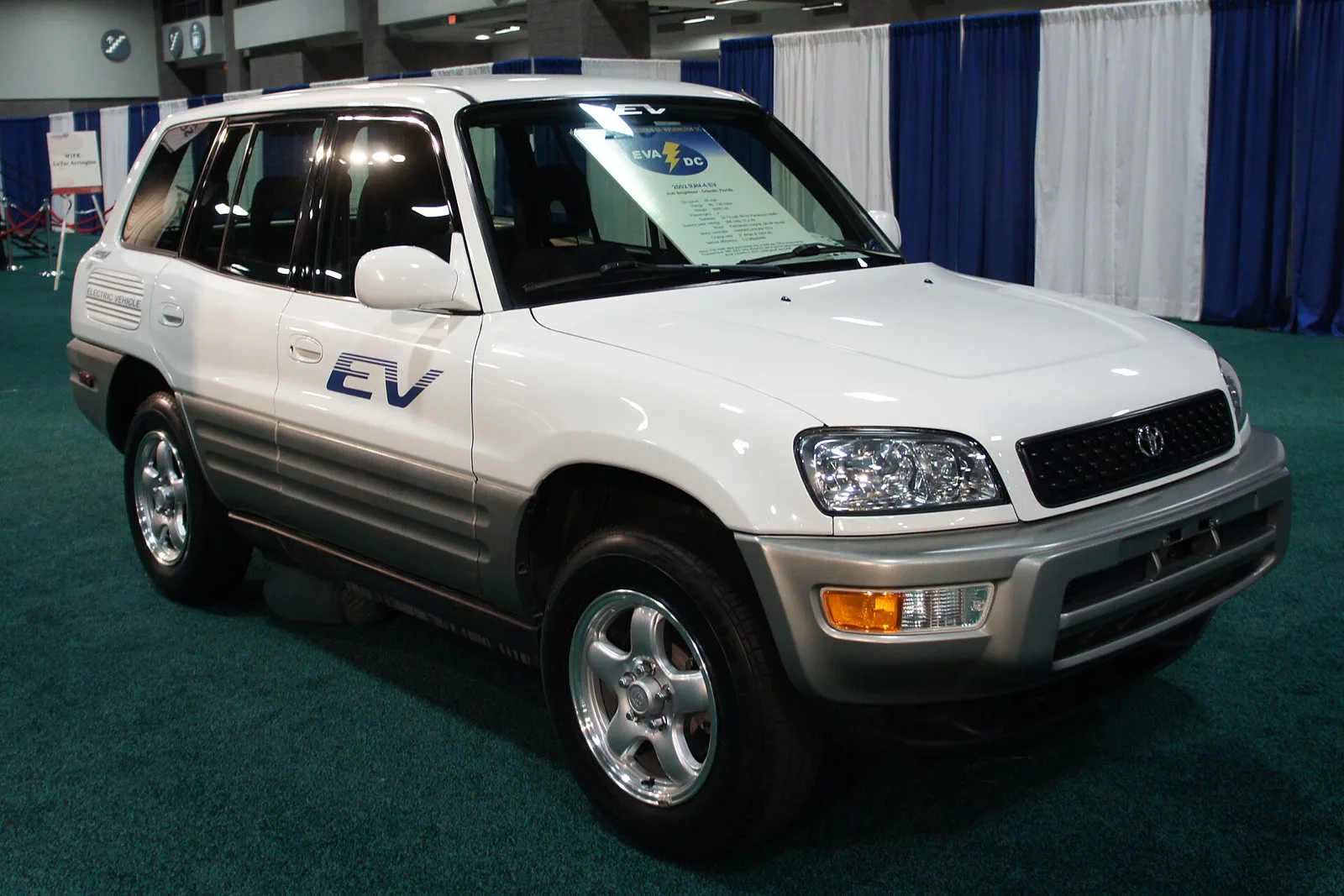
The first fleet version appeared on a limited basis in 1997. From 2001 businesses, cities and utilities could lease one or two cars. Toyota then opened sales to the general public in March 2002, and all 328 cars it had made were sold, with the last going out in November 2002.
Including sales in other countries, roughly 1,900 cars were sold or leased by 2003: about 1,500 in the US and 400 in Japan. Within the US figure, 1,484 went to California, where a zero-emission mandate was the reason for the programme.
Demand outran supply at the end. Toyota filled every order, even though the last few dozen had to be assembled from spare parts, and deliveries dragged on into September 2003 as a result.
By mid-2012 almost 500 of the cars were still in use in California. Nobody outside Toyota knows for certain why the company changed its position in 2002. It had already met its obligations under the California Air Resources Board's mandate through its fleet leases, and waiting lists of prospective buyers were long.
A fleet-only electric SUV that became a public car, then a Tesla-powered sequel that Toyota ended in 2014.
How did the first-generation RAV4 EV drive?
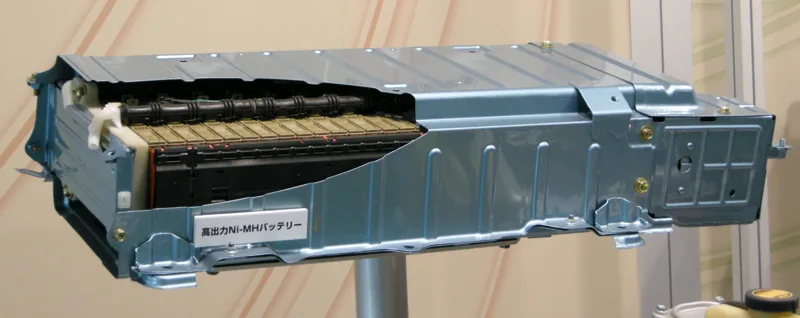
The first-generation car looked much like the petrol RAV4, only without a tailpipe. Its speed was capped at 137 km/h (85 mph), it used a single-speed gearbox, and the EPA range was 95 mi (153 km) from a 27.4 kWh nickel-metal hydride pack.
The battery was made up of 24 twelve-volt, 95 Ah NiMH modules storing 27 kWh. Some cars covered over 150,000 miles (240,000 km) on the original pack, which proved very durable in service.
Beyond the battery, motor and controller, the car kept most of the petrol model's chassis parts. Its brakes used an electric pump to create vacuum, and its power steering ran on an electric motor. The cabin was heated and cooled by a heat pump, the first such application in a road vehicle fleet.
How did the first-generation RAV4 EV charge?
Production cars used the Magne Charge inductive paddle, made by Delco Electronics, with the inlet mounted on the front grille. The same connector appeared on other electric vehicles of the period, including the EV1 and the Chevy S10 EV. Delco Electronics was a General Motors subsidiary, which also supplied the paddle for those cars.
A 6 kW charger on a 240-volt, 30-amp circuit could take the battery from empty to full in about five hours, with a passive balancing system keeping the cells even. Some prototypes used a conductive coupling on the front fender, made by Yazaki Corporation, instead.
The car also had a charge timer built into the dashboard. Owners used it with a time-of-day meter to take advantage of cheaper night-time electricity, which became standard practice among RAV4 EV drivers.
What did it cost to run the first-generation RAV4 EV?
Charging from empty to full used about 30 kWh, which cost around US$2.70 at US$0.09 per kilowatt-hour. The charging system drew more than the pack held, but the running cost stayed low next to petrol.
EPA ratings for the car changed over time. The 2003 model was rated at 125 mpg-US in the city, 100 mpg-US on the highway and 112 mpg-US combined. The EPA's 2007 revision lowered those figures to 87, 69 and 78 mpg-US.
Toyota said the replacement cost of the battery pack was higher than the value of a used car, which made the battery a consumable item. Testing in Japan covered 300,000 miles (480,000 km) across two years before the US launch.
Why did Toyota choose nickel-metal hydride batteries?
Prototypes used Panasonic nickel-metal hydride packs in some cars and high-performance Panasonic lead-acid batteries in others. Utility evaluators preferred the NiMH prototype for its longer range, but Toyota built only the NiMH version because developing two battery types for a limited programme was impractical.
Many electric-vehicle advocates were disappointed. They argued that lead-acid could deliver similar performance at a far lower price, and that the NiMH choice raised the purchase price. Lithium-ion batteries later displaced both nickel and lead in electric vehicles.
Why was the NiMH battery hard to replace?
Chevron inherited worldwide control of the NiMH battery patents when it merged with Texaco, which had bought them from General Motors. A settlement of US$30,000,000 went from Toyota and Panasonic to Chevron's unit, and the factory line that made the large NiMH packs was shut down and taken apart.
The case was settled at the ICC International Court of Arbitration and was not publicised, because a gag order was placed on Toyota. Only smaller NiMH packs, unable to power an EV or be plugged in, stayed on sale.
How did the second-generation RAV4 EV come about?
Toyota signed a joint development agreement with Tesla and helped the young electric carmaker start production at the NUMMI plant in Fremont, California, which Toyota was vacating. The Tesla work and the Toyota Technical Center in Michigan jointly produced the electric SUV, and testing began in July 2010.
Building the first prototype took just three weeks from the day the agreement was signed. Toyota went on to build 35 converted RAV4s, called Phase Zero vehicles, for a demonstration programme that ran through 2011. Their lithium metal-oxide batteries and other powertrain parts came from Tesla.
The first demonstrator appeared at Los Angeles in November 2010. The production version, Phase One, premiered in May 2012 at a Los Angeles electric vehicle symposium.
On 15 July 2011 Tesla agreed to supply a validated electric powertrain, covering the battery, charging system, inverter, motor, gearbox and software. The production car's battery, electronics and powertrain parts were similar to those used in the Tesla Model S sedan.
What powertrain and battery did the second generation use?
The second generation used an AC induction motor from Tesla, with a fixed-gear transaxle at a 9.73 ratio. The battery was a 386-volt lithium-ion pack of about 4,500 cells, rated at 41.8 kWh of usable energy and capable of 129 kW maximum output.
Peak motor output was 115 kW (154 hp), with peak torque of 296 Nm (220 lb-ft) in Normal mode and 370 Nm (270 lb-ft) in Sport mode. Top speed was 85 mph (137 km/h) in Normal and 100 mph (160 km/h) in Sport, and Sport mode also gave a sharper accelerator pedal feel.
The car weighed 4,030 lb (1,830 kg), which was 470 lb (210 kg) heavier than the front-wheel-drive RAV4 Limited V6. The battery pack alone weighed 840 lb (380 kg), and because it sat low in the chassis the centre of gravity was lower than the petrol car's.
The battery pack sat below the floorpan, which cost a couple of inches of ground clearance. Cargo space stayed at 36.4 cubic feet (1.03 m3), the same as the petrol model. The EPA rated the combined economy at 76 MPGe (44 kWh/100 mi), with 78 MPGe in the city and 74 MPGe on the highway.
How far could the second-generation RAV4 EV go on a charge?
The EPA rated the car at 103 mi (166 km) on a single charge. Standard mode, which limited charging to 35 kWh, was expected to give 92 mi (148 km), while Extended mode, which filled the full 41.8 kWh, was estimated at 113 mi (182 km).
Standard mode was designed to protect battery life rather than maximise range. Toyota expected the Monroney label to show the combined 103 mi figure, because that is how EPA procedures worked.
Charging on a 40 A, 240-volt station needed 5 hours in standard mode or 6 hours in extended mode, with a 10 kW onboard charger delivering 9.6 kW. Toyota arranged a Leviton Level 2 station for US$1,590, including basic installation.
On a 120-volt household outlet, a full charge took 44 hours in standard mode against 52 in extended. An aftermarket firm, Quick Charge Power, offered a 48 kW CHAdeMO DC upgrade that cut charging time sharply where the network existed.
The battery warranty covered 8 years or 100,000 miles, and it applied whichever charge mode owners chose over the life of the pack.
Where was the second-generation RAV4 EV sold?
Sales were limited to California. The launch markets were the San Francisco Bay Area, Los Angeles and Orange County, and San Diego. Production was capped at 2,600 units over three years, and the car was offered to both individual buyers and fleet customers.
The launch price was US$49,800 before incentives. Toyota offered a 36-month lease at US$599 a month with a US$3,499 down payment, and a federal tax credit of US$7,500 plus a California rebate of US$2,500 brought the cost down.
Sales reached 192 units in 2012 and 1,096 in 2013, with 2,489 sold through April 2015. Production ended in September 2014.
Where was the second-generation RAV4 EV built?
Toyota Motor Manufacturing Canada, located in Woodstock, Ontario, built the second generation from 2012, alongside the petrol version. The plant turned out both the electric and the petrol models side by side. Tesla built the electric powertrains at its plant on the former NUMMI site in Fremont, California, and shipped them to Canada.
About 2,500 cars were built from 2012 to 2014. The battery supply arrangement concluded in August 2014, and in 2017 Toyota sold its stake in Tesla.
What are the RAV4 EV specifications?
| Specification | First generation | Second generation |
|---|---|---|
| Years | 1997 to 2003 (fleet and public) | 2012 to 2014 |
| Battery | 95 Ah NiMH, 27.4 kWh | 386 V lithium-ion, 41.8 kWh usable |
| Motor | Single-speed drive | AC induction, 115 kW (154 hp) peak |
| Top speed | 137 km/h (85 mph) | 137 km/h (85 mph) Normal, 160 km/h (100 mph) Sport |
| EPA range | 95 mi (153 km) | 103 mi (166 km) |
| EPA combined economy | 78 mpg-US equivalent under the 2007 rating | 76 MPGe (44 kWh/100 mi) |
| Weight | Not published | 4,030 lb (1,830 kg) |
| Units | About 1,900 | About 2,500 |