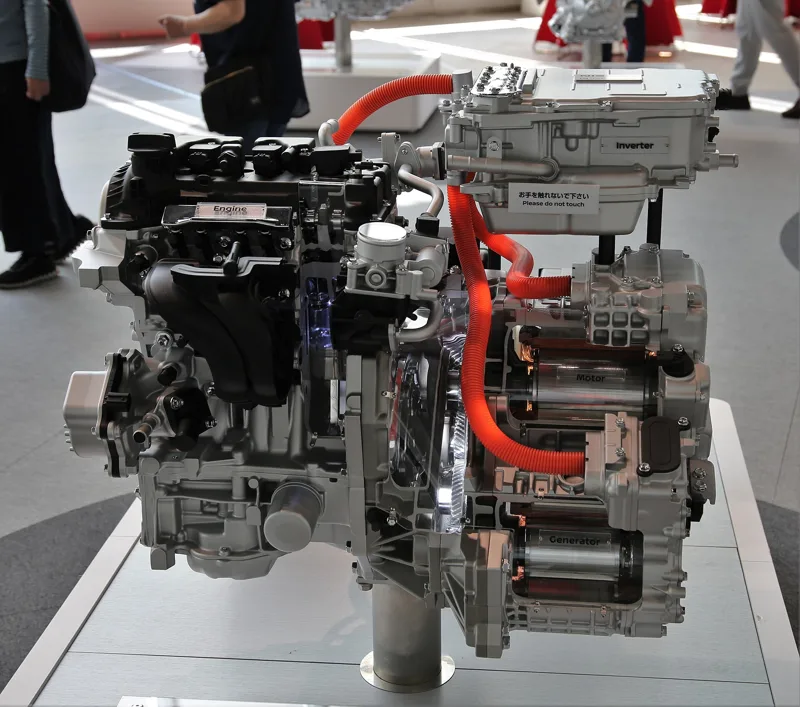
All-aluminium petrol engines developed by Renault and Nissan, running from a 1.5 litre three-cylinder hybrid unit to turbocharged 1.8 litre fours in Alpine sports cars.
The Nissan MR family is a Renault-Nissan group of three and four-cylinder all-aluminium petrol engines with four valves per cylinder. Its members run from the 1.8 litre MR18DE of 2004 to the MR15DDT hybrid generator of 2025, with turbo and diesel versions in between.
The Nissan MR family is a group of all-aluminium petrol engines that Renault and Nissan developed together, and it runs from a 1.5 litre three-cylinder hybrid generator to turbocharged 1.8 litre fours that powered Alpine sports cars. Renault brands the family as its M engine, and the range grew through hatchbacks, crossovers, MPVs and sedans across both brands.
The engines share a set of engineering habits that explain much of their character. Their designers paid attention to intake runner lengths, the timing chain, the way the block was made and the offset of each cylinder, and those choices gave the family a consistent feel from one model to the next.
What is the Renault-Nissan MR engine?
The MR family is a group of three and four-cylinder petrol engines, all aluminium and water-cooled, with four valves per cylinder. Renault and Nissan developed them together, and Mercedes-Benz joined in 2010 for one diesel that shares the same wider alliance.
Several design choices run through the family. The intake runners are acoustically equal in length, and the intake manifold uses a tumble control valve to shape airflow. The timing chain is designed to run quietly, and the crankshaft and camshaft journals are mirror-finished to reduce friction. Each cylinder is placed slightly offset from its neighbour, an arrangement Renault and Nissan adopted in the search for extra efficiency.
Manufacture is unusual too. While each block is being bored, a torque plate places the block under stress, so it distorts temporarily. When the head is torqued down, the block is pulled back into its correct shape. Engineers accepted the extra step because it produced bores that were true once the engine was assembled.
One family, built under stress and tuned for everything from hatchbacks to Alpine sports cars.
Which are the main MR versions?
The family covers a wide span of capacities, from the 1.5 litre MR15DDT hybrid generator to the 2.0 litre MR20DD. The table below sets out the main petrol versions, with the figures recorded for each engine and the first car it appeared in.
| Engine | Displacement | Output | First application |
|---|---|---|---|
| MR18DE | 1.8 L (1,798 cc) | 96 kW (128 hp; 130 PS) | 2004 Nissan Tiida |
| MR20DE (Renault M4R) | 2.0 L (1,997 cc) | 108 kW (145 hp; 147 PS) | 2005 Lafesta, Serena and SM5 |
| MR16DDT (Renault M5Mt) | 1.6 L (1,618 cc) | 140 kW (187 hp; 190 PS) | 2010 Nissan Juke |
| MR18DDT (Renault M5Pt) | 1.8 L (1,797 cc) | 165 to 221 kW (222 to 296 hp; 225 to 300 PS) | 2015 Renault Espace V and Talisman |
| MR20DD (Renault M5R) | 2.0 L (1,997 cc) | 108 kW (145 hp; 147 PS) | 2010 Nissan Serena |
| M9R (diesel) | 2.0 L (1,995 cc) | 110 kW (148 hp; 150 PS) in the 150 PS tune | 2006 Renault Laguna |
How did the MR18DE and MR20DE start the family?
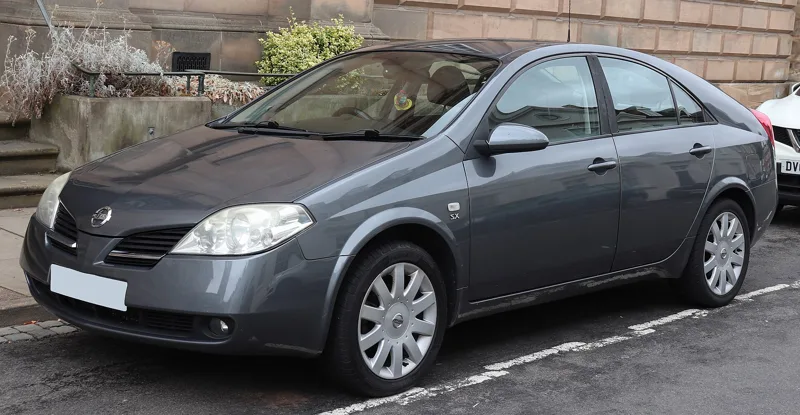
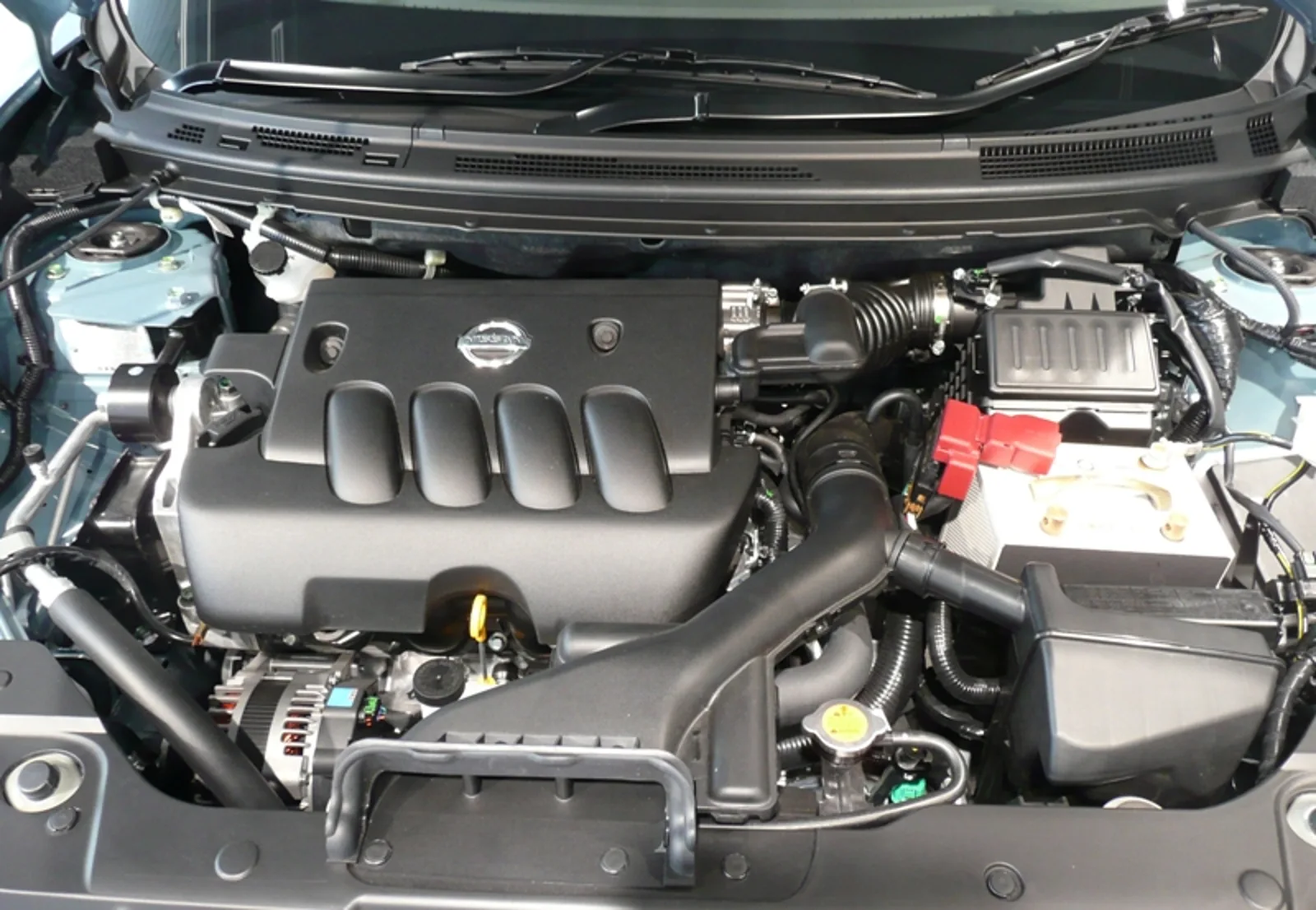
The 1.8 litre MR18DE was the first MR engine to reach a production car, appearing in the 2004 Nissan Tiida. Its bore was 84 mm and its stroke 81.1 mm, and it produced 96 kW (128 hp; 130 PS), while the North American version made 91 kW (124 PS; 122 hp) at 5,500 rpm.
From 6 July 2006 the engine also went into the Livina Geniss for China and the Grand Livina for Indonesia and Malaysia, where it made 93 kW (124 hp; 126 PS) at 5,200 rpm. In Brazil the MR18DE was fitted to the Tiida and Livina with flex-fuel capability, so it could run on petrol or ethanol.
The MR20DE followed in 2005. It was the first MR-series engine that Nissan developed as a replacement for the QR20DE, and it had an undersquare layout, with an 84 mm bore and a 90.1 mm stroke. It first appeared in the Lafesta and Serena MPVs and the Renault Samsung SM5 before Renault adopted it in the Clio III as the M4R.
What is the MRA8DE and why does it matter?
The MRA8DE is a 1.8 litre (1,797 cc) engine with twin variable valve timing on both the intake and exhaust valves and a diamond-like carbon coating. It produced 96 kW (128 hp; 130 PS) at 6,000 rpm and had a compression ratio of 9.9:1.
It was a different engine from the MR18DE despite the similar displacement. Its 79.7 mm bore and 90.1 mm stroke gave it a longer stroke than the earlier unit, and its valve timing was controlled on both camshafts.
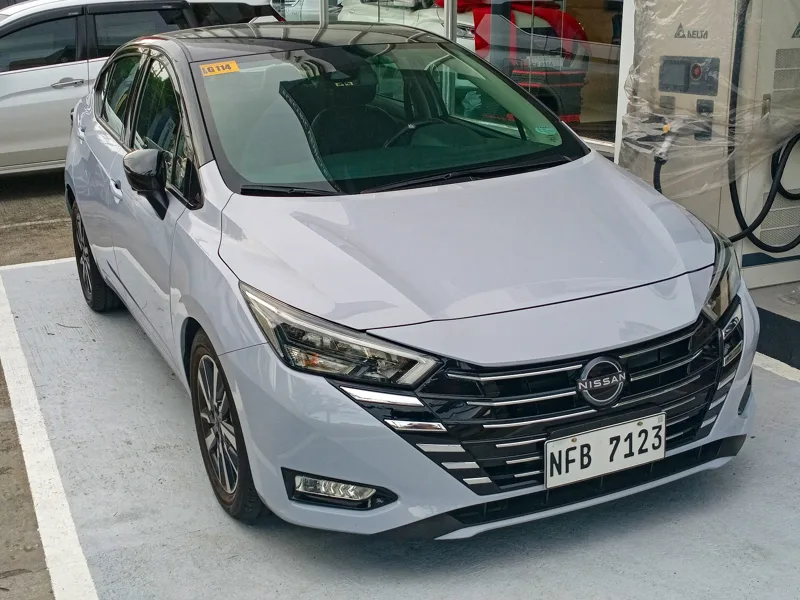
The MRA8DE went into the Nissan Sylphy B17 in Asian markets, the Sentra in North America and the Middle East, and the Pulsar in Australasia. Those applications ran from 2013 to 2019.
What made the MR16DDT turbo popular?
The MR16DDT is a 1.6 litre direct-injection turbo inline-four with 16 valves. It arrived in autumn 2010 under the bonnet of the Nissan Juke, a small SUV, where its torque figure of 240 N m (177 lb ft) came with 190 PS (140 kW; 187 hp).
The engine carried twin variable valve timing control on both intake and exhaust valves, a compression ratio of 9.5:1 and a lightweight design with reduced friction. It was turbocharged and intercooled, and its dimensions were 79.7 mm by 81.1 mm.
Nissan and Renault took the engine into several cars. The 2014 Juke NISMO RS FWD lifted output to 158 kW (212 hp; 215 PS), with 285 N m (210 lb ft) of torque. Nissan's Teana adopted the 1.6 turbo in 2015 in place of a 2.0 litre naturally aspirated engine, and in 2013 the Renault Sport Clio carried it as the M5Mt with 147 kW (197 hp; 200 PS).
Motorsport also used the design. A 2012 race car, the Deltawing, ran a version making 221 kW (296 hp; 300 PS) at 7,400 rpm. Later production Renault models carried it in higher states of tune, including the Clio Trophy at 162 kW (217 hp; 220 PS) and the Megane GT at 151 kW (202 hp; 205 PS).
What do the MR20DD and its hybrids offer?
The MR20DD is a 2.0 litre direct-injection engine with twin variable valve timing. Its first permutation made 108 kW (145 hp; 147 PS) at 5,600 rpm with an 11.2:1 compression ratio, and it was certified SU-LEV in Japan.
The export version gave 102 kW (137 hp; 139 PS) at 5,200 rpm. In 2016 the engine entered Renault's line-up as the M5R in the Koleos II, and it later powered the eighth-generation Sentra with 148 hp (110 kW; 150 PS) at 6,400 rpm and a 10.6:1 compression ratio.
Australian and New Zealand Qashqai ST and Ti models used a variant with 106 kW (142 hp; 144 PS) at 6,000 rpm, peaking at 200 N m (148 lb ft) by 4,400 rpm, with an 11.2:1 compression ratio. The Rogue Sport and the second-generation Kicks used a version making 141 hp (105 kW; 143 PS).
Hybrid versions added electric assistance. The MR20DD Hybrid produced 144 PS (106 kW; 142 hp), and a synchronous electric motor adding 41 PS (30 kW; 40 hp) and a lithium-ion battery brought the combined output to 179 PS (132 kW; 177 hp). It went into the X-Trail Hybrid from 2013. The MR20DD S-Hybrid used a 48 V battery instead and appeared in the Serena S-Hybrid from 2012.
What is the MR15DDT?
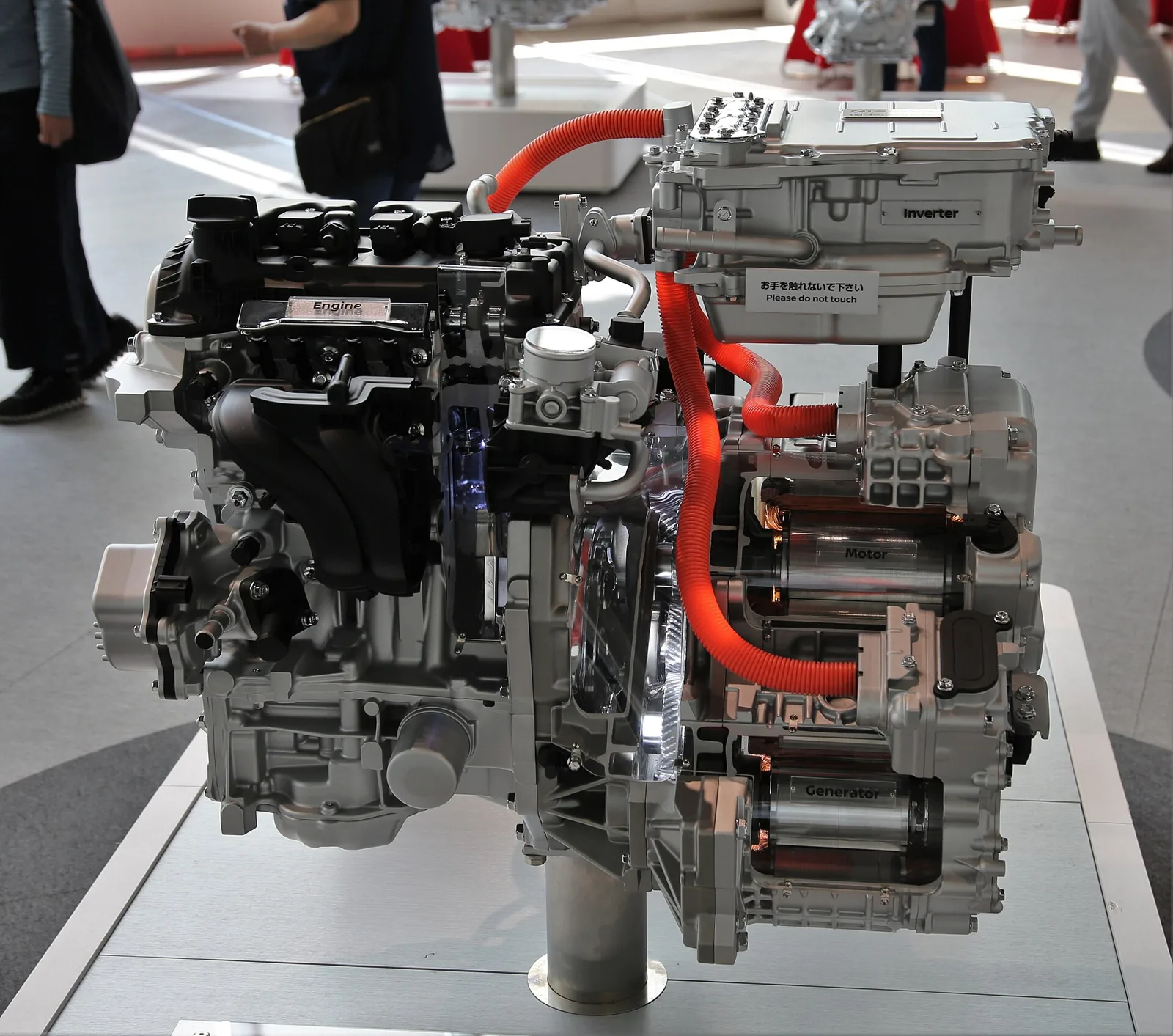
The MR15DDT is a 1.5 litre (1,499 cc) three-cylinder turbo built as a third-generation E-Power hybrid engine. Its designers focused on thermal efficiency rather than throttle response, because the engine exists only to charge the battery, and its compression ratio is 13.5 to 1.
It keeps the MR16's 79.7 mm bore, but its stroke is 100.2 mm, much longer than the 81.1 mm stroke of the MR16DDT. That longer stroke suits an engine that runs mainly for generating electricity, rather than for the quick response a driver expects from a conventional car.
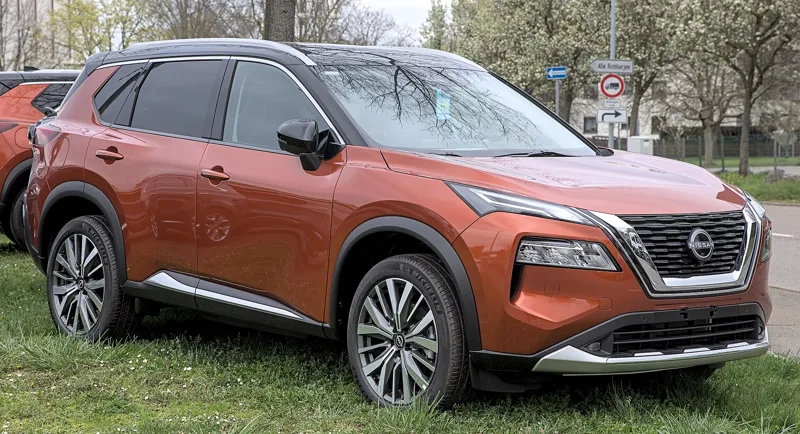
The MR15DDT appears in the 2025 Nissan Qashqai as the ZR15DDTe.
Where did the MR18DDT appear?
The MR18DDT, called the M5Pt by Renault, is a turbocharged 1.8 litre (1,797 cc) unit with variable valve timing on both camshafts and a 9.0:1 compression ratio. It produces 165 to 221 kW (222 to 296 hp; 225 to 300 PS) at 6,000 rpm, depending on the application.
Renault and Alpine have used it since 2015. It powered the Espace V Energy TCe 225 EDC7 from 2015 to 2023 and the Talisman from 2015 to 2022, while the Megane IV RS280 and Megane R.S. 300 Trophy used it in their performance versions.
The Alpine A110 has used the MR18DDT since 2017, and the Zagato AGTZ Twin Tail has used it since 2024. Torque ranges from 300 to 420 N m (221 to 310 lb ft) at 3,600 rpm, which gives the engine its wide spread of pulling power.
How did the MR20DE spread through the range?
The MR20DE reached Renault's line-up in the Clio III in November 2006 as the M4R, after first appearing in Nissan's Lafesta and Serena MPVs in early 2005. Its 2.0 litre capacity was 1,997 cc, and its undersquare layout was designed to replace the QR20DE.
In the Clio III it made 108 kW (145 hp; 147 PS). A detuned version with 98 kW (131 hp; 133 PS) went into the Bluebird Sylphy in late 2006, while the X-Trail, Qashqai and C-Platform Sentra produced 108 kW at 5,100 rpm and 199 N m (147 lb ft) at 4,800 rpm.
The engine was offered with Nissan's XTRONIC CVT in several applications. Its list of users is long, covering the Renault Samsung SM5, Renault Clio, Nissan Qashqai, Renault Scenic, Renault Fluence, Renault Samsung SM3, Renault Latitude and Nissan NV200. The Sentra in Brazil ran on flex-fuel, using gasoline or ethanol.
What were the M9R and M9T diesels?
The M9R and M9T are straight-four 16-valve turbo diesels co-developed by Nissan and Renault, with Mercedes-Benz joining for the M9T. Both have cast-iron blocks and aluminium heads with double overhead camshafts, and the diesels are only loosely related to the MR petrol engines.
The M9R is a 2.0 litre (1,995 cc) diesel that was first installed in the 2006 Renault Laguna. Its 150 PS (110 kW; 148 hp) tune produced 340 N m (251 lb ft) of torque at 2,000 rpm, and it went into the Qashqai, X-Trail, Megane, Koleos and Laguna. The 2.0 Energy dCi versions from 2011 added stop and start and a variable capacity oil pump, which cut the Laguna's CO2 to 118 g/km.
The Gen 5 M9R, redesigned in late 2018, measured 85 mm by 88 mm for 1,997 cc. It added BluedCi, a small adBlue tank that cuts nitrogen oxides. It arrived in the Renault Talisman II with 160 and 200 PS (118 and 147 kW; 158 and 197 hp), and a single 190 PS version replaced both in December 2020.
The M9T is a 2.3 litre (2,299 cc) diesel measuring 85 mm by 101.3 mm, aimed at light commercial vehicles such as the Renault Master. Power runs from 75 to 110 kW (101 to 150 hp), with torque from 185 N m (136 lbf ft) to 350 N m (260 lbf ft). The Nissan Navara twin-turbo version made 190 PS (140 kW; 187 hp), and Nissan calls the engine the YS23 while Mercedes-Benz uses the name OM699 in the X-Class.