A minivan built to Japanese class limits since 1991, from the rear-drive C23 to the e-Power hybrid and seven or eight seats.
The Nissan Serena is a minivan that Nissan launched in 1991 as a compact passenger van for Japan. Built within the country's 4.7 m by 1.7 m class limits, it has grown through six generations and now offers seven or eight seats, with e-Power hybrid and petrol engines.
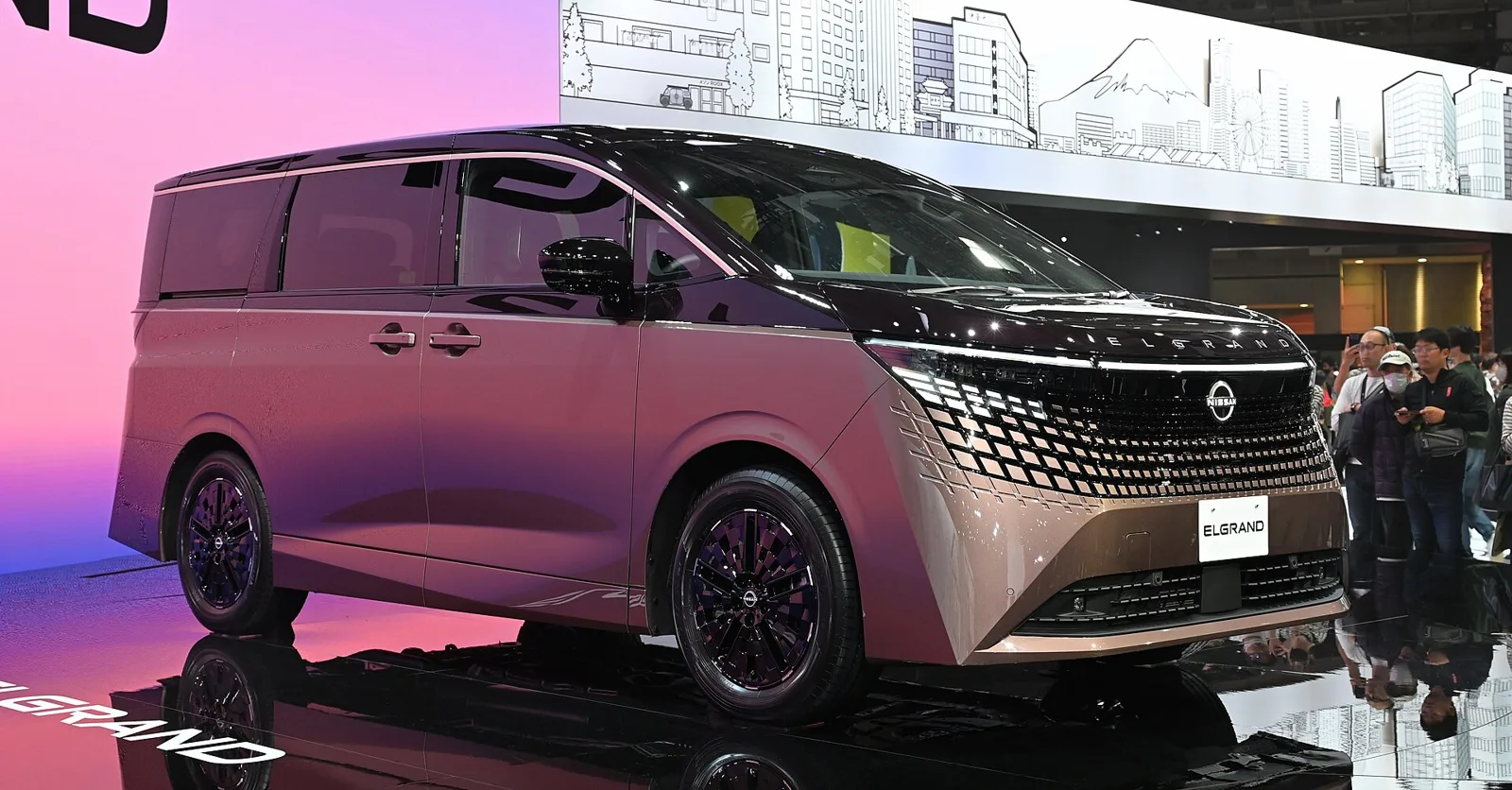
The Nissan Serena is a Japanese minivan that Nissan first sold in 1991, designed to fit within the country's compact vehicle class. It sat beneath the larger Elgrand in Nissan's range and became one of the country's best sellers, topping the minivan charts in 2007, 2008 and 2009.
What does the name Serena mean?
The name Serena comes from the Latin word serenus, which means clear, tranquil or pleasant. Nissan's engineers at the Aichi Manufacturing Division developed the first car to carry it, a compact passenger van launched in 1991 that joined the slightly larger Vanette in the company's line-up.
The name is Latin, and the car was launched as a compact passenger van. The name has carried through six generations, and the car grew larger with each one.
A class-limited family van that grew from rear-drive simplicity to e-Power hybrid seating for seven or eight.
Why was the Serena built to Japanese class limits?
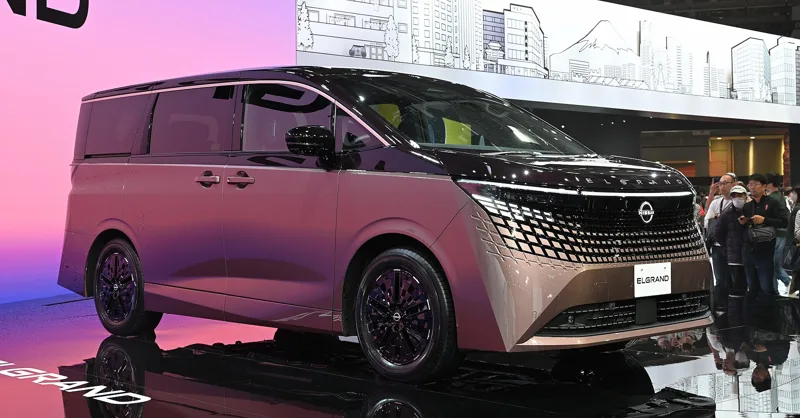
The Serena was designed to comply with Japan's vehicle class rules, which restrict external dimensions to 4.7 m in length and 1.7 m in width. Within those limits it slotted below the larger Nissan Elgrand, offering families a smaller and cheaper alternative in Japan.
The main rivals in that market were the Toyota Noah, the Honda Stepwgn and the Mitsubishi Delica. Each of these vans competed for the same family buyers, and the Serena's class-limited size shaped its packaging from the start.
Suzuki also sold a version of the car under its own badge. Marketed as the Suzuki Landy, it ran from 2007 to 2022, and Suzuki changed only the front grille and emblem. The Landy was later replaced by a version based on the Toyota Noah, which began with the fourth generation of that van.
How did the first generation C23 work?
The first-generation C23 used a front engine and rear-wheel drive, with a live axle carried on leaf springs. Later generations moved to front-wheel drive or four-wheel drive. Facelifts of the C23 can be told apart by changes to the grille, which were introduced in 1994 and 1997.
Early engines included the SR20DE and the 1.6-litre GA16DE, along with the CD20 and the CD20T. The CD20T was a 1,973 cc diesel turbo, while the naturally aspirated 2.3-litre diesel was never sold in Japan. Japanese cars were offered in several grades, and some were fitted with all-wheel drive.
Interior and body changes were modest through the production run. Airbags were added, and bench seats for the second and third rows arrived with later updates.
What engines did the Serena offer in Europe?
In European markets the C23 Serena was offered with 1.6 or 2.0 litre petrol engines and a 2.3 litre diesel, designated LD23. Trim levels were LX, SLX, SGX and SGXi, and the vans were sold alongside the Vanette in the region.
The Vanette was a small van made in Spain by Nissan, alongside the European Serena models. The Vanette E shared the Serena's basic body shell but had no rear windows and no passenger seats. The Vanette Cargo was longer and had a higher roof from behind the front seats.
How quick was the Serena?
The Serena was never a performance car. Auto Express once named it the slowest passenger car in its benchmark 0-60 mph test, with the 2.3 litre diesel taking 27.8 seconds to reach that speed. The benchmark later moved to 62 mph.
The mid-mounted engine helped the Serena handle better than most people expected. Its power-to-weight ratio was particularly poor, though, and only the SR20DE models offered marginally acceptable acceleration.
The Serena was aimed at the family buyer rather than the enthusiast, and sales figures show that the target market accepted it.
How was the Serena received by critics?
The first-generation Serena was said to have an image problem. Fifth Gear presenter Quentin Willson criticised it in a 1997 Top Gear episode, describing it as far from seductive or desirable. Top Gear's Buyers Guide went further in 2000, listing it as the worst new car sale in Britain.
The critics' verdict did not stop the car selling in large numbers at home, where it was the best-selling minivan in Japan for three years running.
What was the Nissan Largo?
The Largo was the W30 generation of the Serena, a rebodied and wider car unveiled on 21 May 1993. In Japan it was the top-of-the-line Nissan minivan, and it was sold only through Nissan Satio Store locations as a larger load carrier beside the Sunny.
Trim levels from lowest to highest were RX-G, SX-G and Grandage. The Umibozu, a recreational version released in 1994, had a front guard bar and large fog lamps. An eight-seat Plus variant also arrived in 1994, and a Highway Star trim was added in 1995.
The Largo was available with a 2.4-litre KA24DE petrol engine producing 145 PS (143 hp; 107 kW), or a 2.0-litre CD20ETi unit producing 105 PS (104 hp; 77 kW). The diesel's torque figure was 242 N m (178 lb ft). Facelift work on the Largo arrived on 21 October 1996, and production ended in May 1999.
How did the second generation C24 change the Serena?
The second-generation C24 was launched in Japan in June 1999 and dropped rear-wheel drive in favour of front-wheel drive. Early cars used a 2.0-litre engine, with the optional 2.5-litre becoming available from 2002. The QR20DE and QR25DE were the engines that followed.
A facelift in December 2001 brought a tailgate lining, larger rear combination lamps and remote-controlled automatic sliding doors. The licence plate moved from the centre of the tailgate to the inside of the lower garnish, and the model name logo changed to the NE-01 design.
Nissan's minivans were withdrawn from Europe as the company's partnership with Renault took shape. Renault products such as the Espace and Scenic were sold and better accepted there, so the Serena's European life came to an end with the C24.
Where else were the C24 and its variants built?
The C24 was also built in other markets, and each one took on its own character. The Malaysian car was assembled by Tan Chong Motor in Kuala Lumpur, while Indonesian cars used the 2.0-litre QR20DE inline-four and came in Comfort Touring, Highway Star and Autech trims.
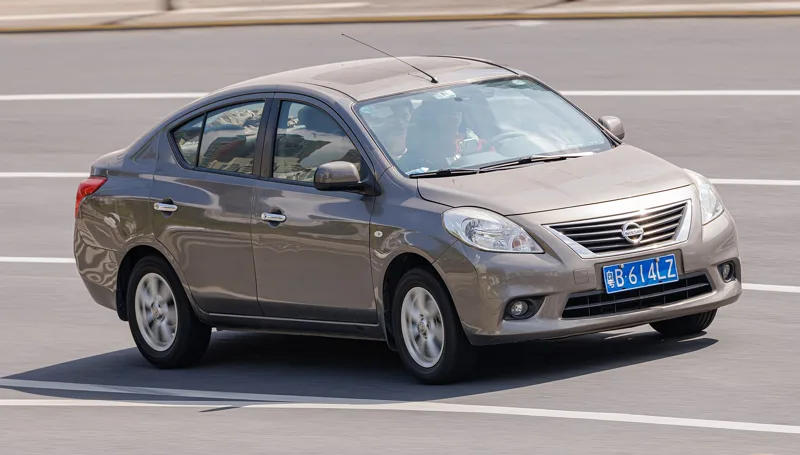
In Taiwan, Yulon built a longer version under the Nissan label, 141 mm (5.6 in) longer than the original and all of that extra length behind the C-pillar. The Taiwanese car gained the 160 PS (118 kW) 2.5-litre QR25DE after its 2006 facelift and stayed in production until 2012.
In China, Zhengzhou Nissan sold the Taiwanese car under the Yuxuan or Yumsun names, rebadged under the Dongfeng brand. A separate restyled version called the Dongfeng Succe was also produced by the same subsidiary.
What did the third generation C25 bring?
The third-generation C25 debuted in Japan in May 2005. It was officially sold in Japan and Hong Kong, and it also reached Singapore, Indonesia and Brunei through parallel imports. The model was named the best-selling minivan in Japan in 2007, 2008 and 2009.
The C25 was discontinued in Japan in late 2010 and in Hong Kong in 2011. By then, Nissan had begun supplying the Suzuki Landy from the Serena's platform, a practice that continued through the fourth and fifth generations.
What changed with the fourth generation C26?
The C26 went on sale in late 2010 with a new 2.0-litre MR20DD direct-injection inline-four petrol engine. It was sold in Japan, Hong Kong, Malaysia and Indonesia, and Indonesian cars were locally assembled from January 2013.
In August 2012 Nissan added its simple hybrid system, called S-Hybrid, which used an upgraded alternator to provide idle stop and engine restart. A lead sub-battery was fitted in the engine bay to extend energy regeneration. The S-Hybrid was rated at 15.2 km/L (approx 35.8 mpg) under the JC08 test cycle.
Malaysia received the S-Hybrid in July 2013, fully imported from Japan and offered in the Highway Star trim only. A facelift followed in November 2014, with locally assembled cars in two trims. Autech's version of the Highway Star arrived in Indonesia in September 2013.
What was the fifth generation C27?
Nissan unveiled the fifth-generation C27 on 6 July 2016, and sales began in Japan on 24 August 2016. It was the first Serena to carry ProPilot, a lane-centring system designed for highway use that works between 30 km/h (19 mph) and 100 km/h (62 mph).
The C27 debuted in Hong Kong in April 2017, and a NISMO variant followed in November 2017 with a redesigned front fascia and 17-inch aluminium wheels. Malaysia launched a seven-seat C27 on 14 May 2018, and Indonesia received fully imported cars from 19 February 2019.
Japan's C27 facelift arrived on 1 August 2019, with a redesigned grille, new front and rear bumpers and omnidirectional driving support. The Serena e-Power was displayed at the 2019 Singapore Motor Show.
How does the e-Power Serena work?
The Serena e-Power is a series hybrid with no plug-in capability. It went on sale in March 2018 with the HR12DE straight-three engine, which generates electricity to drive the wheels rather than driving them directly.
In a series hybrid the wheels are turned by an electric motor, while the petrol engine supplies the electricity, so the HR12DE works as a generator rather than driving the car directly. The e-Power name carried through the later generations.
What is the sixth generation C28?
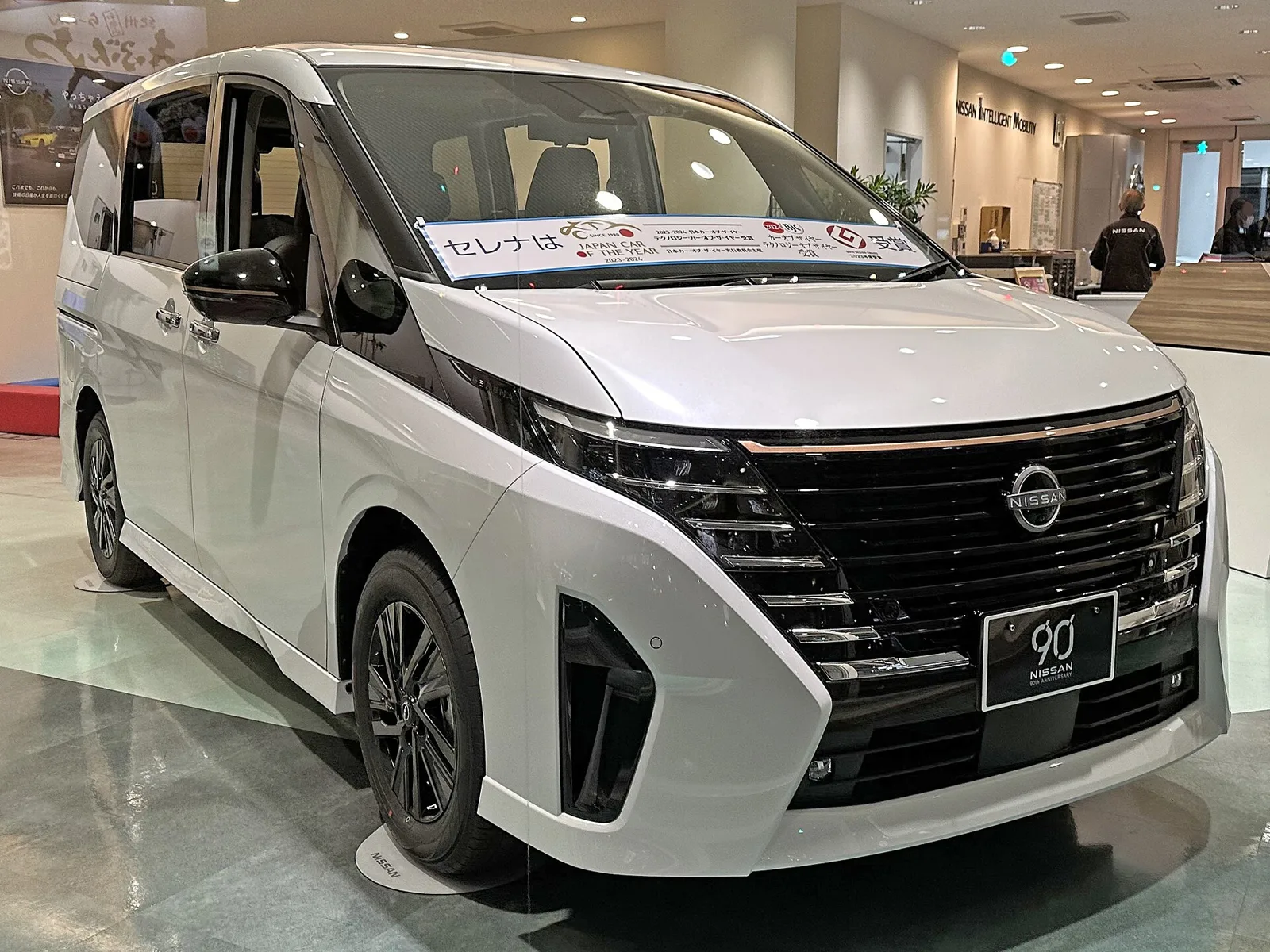
The sixth-generation C28 was unveiled on 28 November 2022. It is offered in seven- or eight-seat layouts, with a choice between the carried-over 2.0-litre MR20DD petrol and the new 1.4-litre HR14DDe e-Power.
The new Luxion grade is based on the Highway Star V and is available only as a seven-seat e-Power model. It carries ProPILOT 2.0, which allows hands-free driving on highways at speeds of 40 km/h (25 mph) and above. The other grades kept the older ProPILOT system.
An optional e-4ORCE four-wheel-drive system arrived in October 2024 for every grade except the Luxion. A facelift was unveiled on 18 December 2025, with a V-theme applied to the grille and headlamps and redesigned aluminium wheels.
Where is the sixth generation sold?
The sixth-generation Serena reached Singapore on 13 May 2024, where buyers could choose a Premium eight-seater or a Highway Star Prestige seven-seater. Thailand followed on 24 March 2025 with the Highway Star seven-seat variant only, and both markets used the e-Power powertrain.
Indonesia launched the sixth generation in July 2024 at the 31st Gaikindo Indonesia International Auto Show. Malaysia previewed the car in December 2025 and launched it on 3 March 2026, with five variants that are all e-Power.
What awards did the Serena win?
The Serena won the Technology Award at the Japan Car of the Year awards for 2023 to 2024, and it was named Technology Car of the Year in the same awards. The awards came with the sixth generation, which introduced the Luxion grade and its ProPILOT 2.0 system.
The 2023 to 2024 recognition came long after the critics of the 1990s had panned the first-generation car, which gave the model a useful turnaround story.
What are the Nissan Serena specifications?
The Serena was a Japanese compact minivan built to class limits of 4.7 m in length and 1.7 m in width. Across its generations it used petrol and diesel engines from the early years, then moved to e-Power hybrids, and the table below gives the key figures for each.
| Specification | Detail |
|---|---|
| Launch | 1991, compact passenger van |
| Class | Japanese compact minivan, 4.7 m long and 1.7 m wide |
| Largo petrol | 2.4 L KA24DE, 145 PS (143 hp; 107 kW) |
| Largo CD20ETi | 2.0 L CD20ETi, 105 PS (104 hp; 77 kW), 242 N m (178 lb ft) |
| C23 diesel 0-60 mph | 27.8 seconds for the 2.3 L diesel |
| C26 petrol | 2.0 L MR20DD direct injection |
| S-Hybrid economy | 15.2 km/L (approx 35.8 mpg), JC08 |
| C27 e-Power | HR12DE straight-three series hybrid, from March 2018 |
| C28 engines | 2.0 L MR20DD petrol, 1.4 L HR14DDe e-Power |
| C28 seating | 7 or 8 seats |
| Four-wheel drive | e-4ORCE from October 2024, except Luxion |