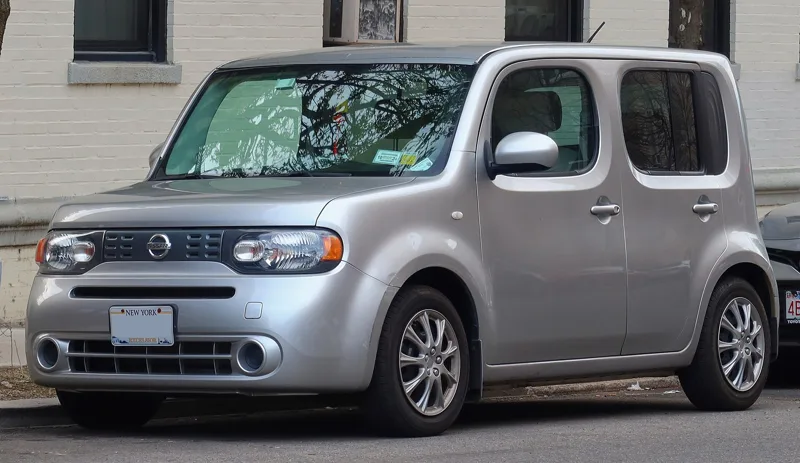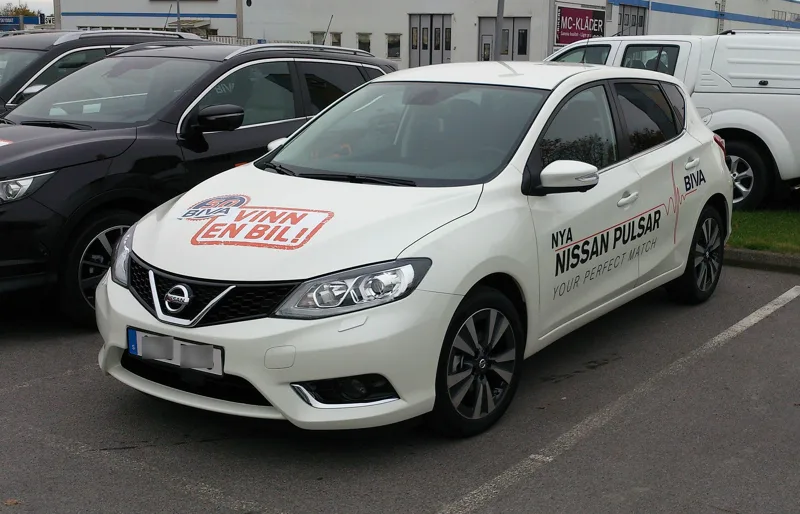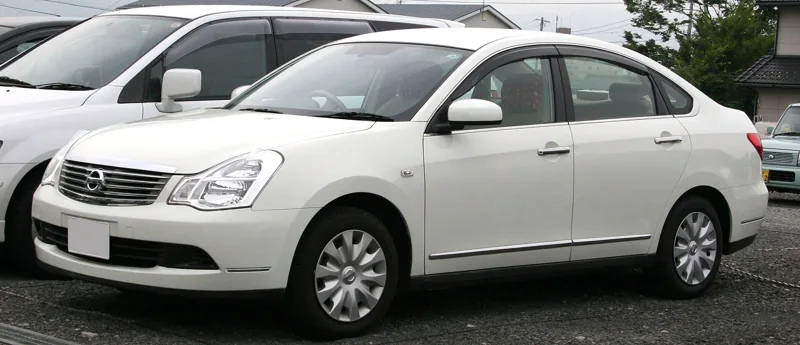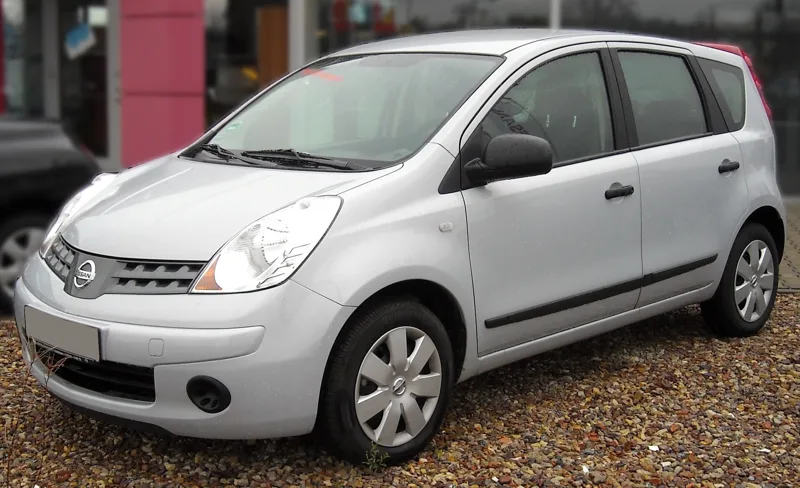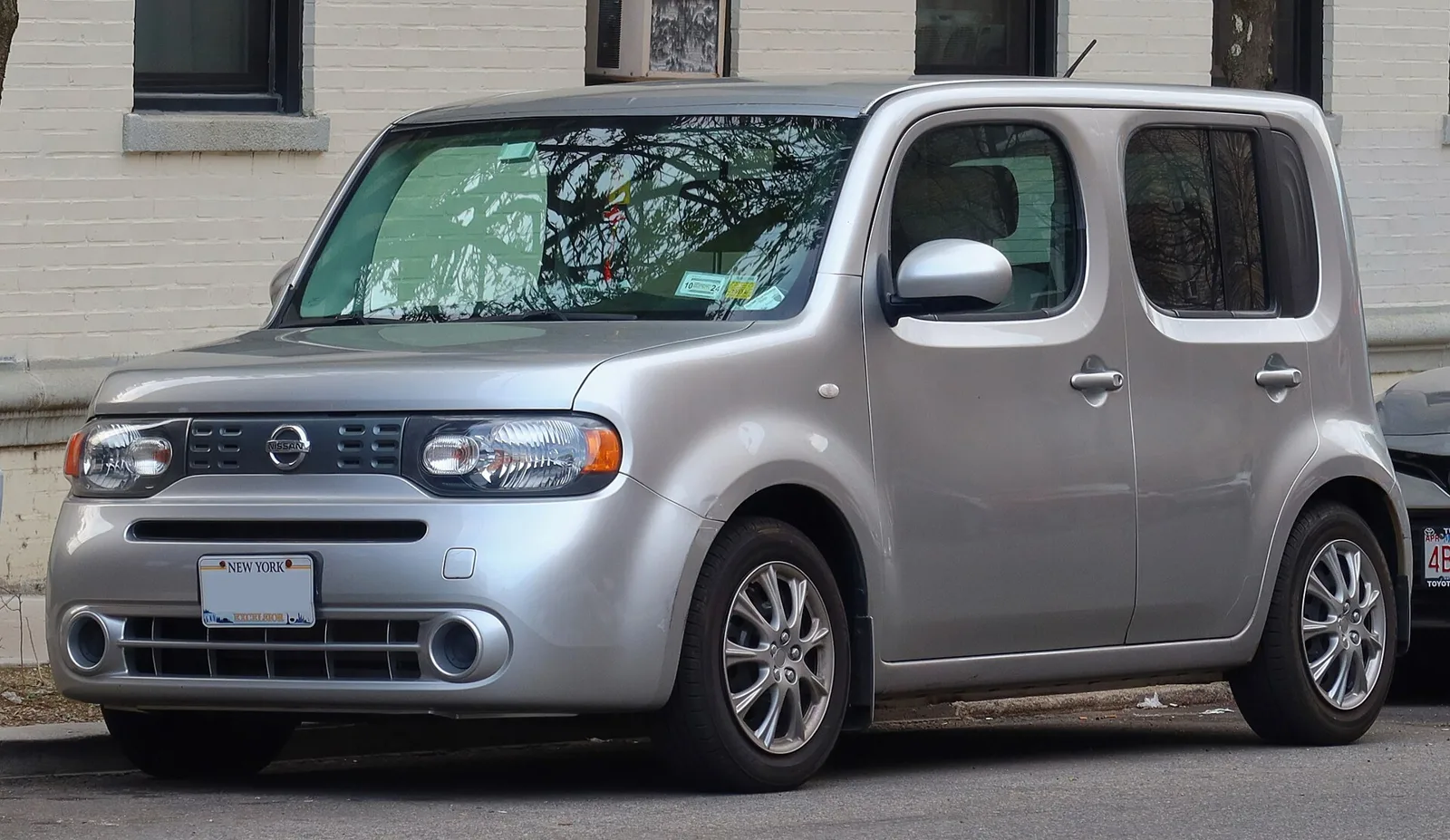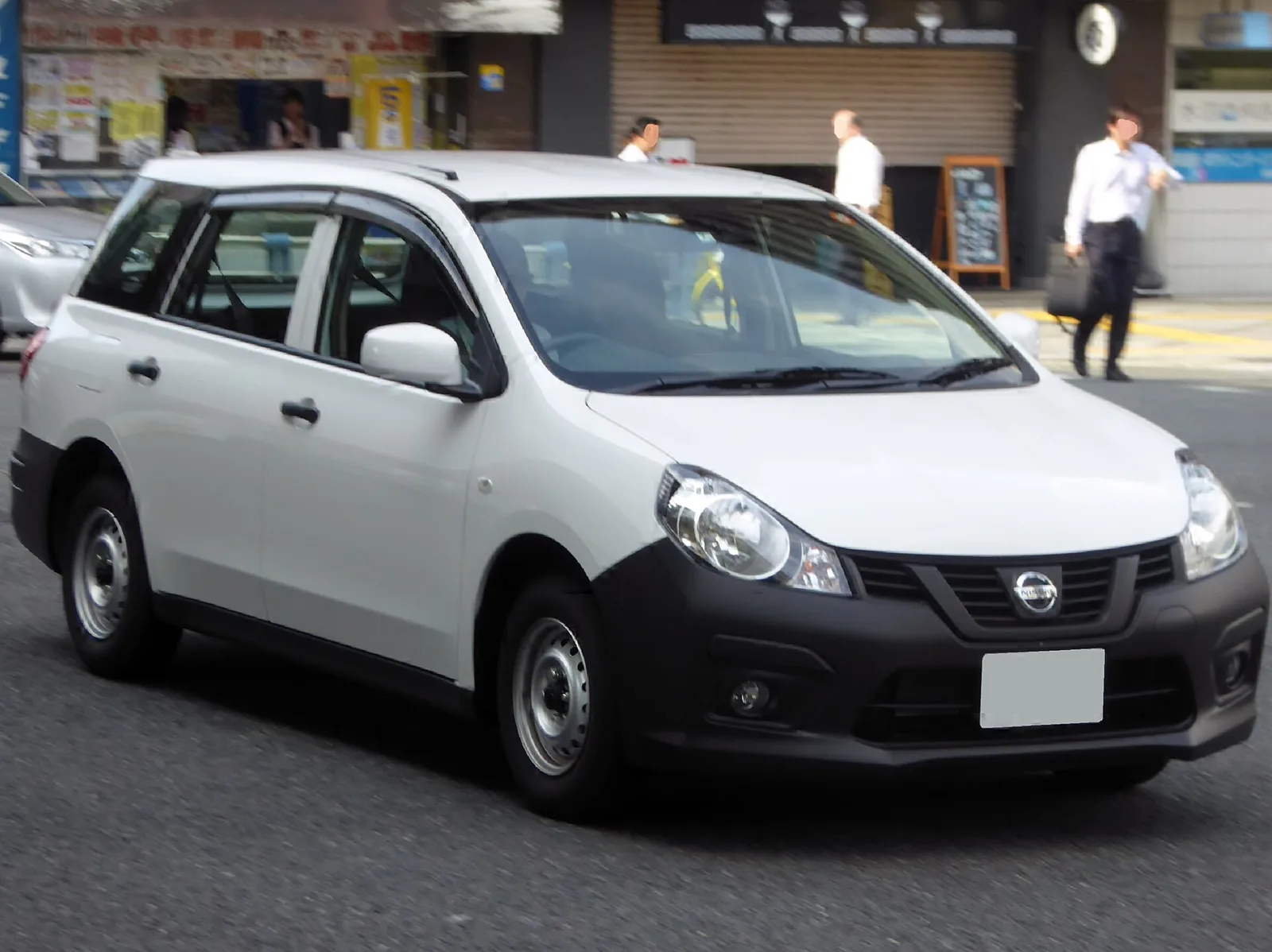
From a basic delivery van to the Wingroad RV-style wagon and the AD Max with its raised cargo bay, the generations that carried the name until production ended.
From 1982 until production ended in November 2025, the Nissan AD was sold in many markets under many names. Its passenger counterpart, the Wingroad, arrived in 1996, and Mitsubishi, Mazda and Subaru also sold versions of the range under their own badges.
Nissan's AD began life as a delivery van in 1982 and, alongside the Wingroad passenger model from 1996, kept going until production ended in November 2025. Its name changed across markets, and it was also badged as a Mitsubishi, a Mazda and a Subaru.
What was the Nissan AD?
The Nissan AD was a compact van and wagon built by Nissan from 1982 to 2025. It began as a commercial van replacing delivery vehicles based on other Nissan models, and in 1996 a passenger-car sibling called the Wingroad joined the range. Across its life the range carried many nameplates in different markets.
In October 1982 the AD Van supplemented, and then gradually replaced, the delivery vans built on Nissan's other vehicles. Two older Nissan vans, the Cedric and the Gloria, were discontinued in 1983.
The first van had four front doors and a liftback hatch. A two-door version arrived in July 1983, which allowed the B310 Sunny Van to be retired. The range sat on the B11 series Sunny wagon but looked squarer and more utilitarian.
A basic delivery van that grew a Japanese RV-style wagon, borrowed Mazda and Subaru badges and finally ended in 2025.
How was the first AD Van built?
The engineers prioritised a cheap build, a light body and a floor that sat low and flat for loading. The rear suspension used a simple leaf spring setup, and it was not designed with ride quality in mind. That choice suited a van built for basic duties.
The front-wheel-drive layout was shared with the Sunny. The options list was kept short to keep running costs down, because the van was made for very basic duties.
The van was sold with a small set of choices, and the basic approach stayed in place for years. Its appearance changed little until the second generation arrived.
What engines did the AD Van use?
The first AD Van was offered with three engines: carburetted E13S and E15S petrol units, measuring 1.3 and 1.5 litres, and a CD17 diesel of 1.7 litres. Japanese 1984 figures read 55 kW (75 PS) for the first, 63 kW (85 PS) for the second and 45 kW (61 PS) for the diesel.
The van used a front-wheel-drive engine layout shared with the Sunny. A two-door AD arrived in July 1983, and the three-door van was also made as a strict two-seater.
Where was the AD sold outside Japan?
Outside Japan the AD was sold under several names. In Europe it was marketed as the Nissan Sunny in some markets, such as Belgium, where a glazed five-door was offered from the 1984 model year. In Australia, the three-door panel van was sold as part of the Pulsar range.
Nissan Australia sold the VB11 three-door panel van from September 1983 to December 1985, with the 1.3-litre E13 engine and a four-speed manual. At 840 kg (1,852 lb), the Pulsar panel van carried a payload of 540 kg (1,190 lb).
The Dutch got it as both a van and a Stationwagen, each with the 1.3-litre engine. Three trims of the Sunny's three-door panel van were sold in Britain, each running the 1.3-litre E13 unit rated at 60 hp (45 kW). The payload was 505 kg (1,113 lb).
What changed with the Y10 generation?
The second-generation AD Van arrived in October 1990 as the Y10 series. It replaced the Sunny B12 series wagon, although it had a different rear end from exported Sunny wagons. For private buyers it was sold as the Sunny California wagon, while the van kept the AD name.
Powerplants were GA15DS and GA13DS DOHC units of 1.5 and 1.3 litres, with the 1.7 L CD17 diesel carried over. The AD Van was joined by the larger Avenir and Expert, which replaced the Bluebird U12 wagon and van.
In May 1996 the Sunny California was renamed the Nissan Wingroad. The name had first been a trim level on the Bluebird U11 wagon, and it moved onto the new passenger model.
What was the Wingroad?
The Wingroad was a passenger-car version of the AD, aimed at Japan's late-1990s recreational vehicle craze. Its name first appeared as a trim on the Bluebird U11 wagon. It took the van and added sporty winged trim, usually with more powerful engines, and four-wheel drive was optional.
Its rear end was also redrawn, larger than the van's, with a longer overhang. Autech built a limited edition around the SR20DE engine, a unit that carried the 1.8 chassis code.
From October 2000 the Wingroad was offered as the G Extra trim, which offered an optional screen that folded down from the roof for rear passengers. Trim packages then arrived roughly every six months, including aero packages and limited names such as Aero Sport Limited.
What was the AD Max?
The AD Max arrived in April 1992 with an unusual raised cargo bay. It was called a fourgonnette after the French term, with two French doors at the back and two doors for passengers. Its wheelbase grew 70 mm (2.8 in), reaching 2,470 mm (97.2 in).
Length went up to 4,270 to 4,290 mm (168.1 to 168.9 in), and the cargo height measured 1,810 mm (71.3 in). Two rear wipers sat on each French door, a touch Suzuki also tried on the Alto Hustle.
The AD Max could be ordered with regular rectangular side windows or a triangular arrangement, and there was also a panelled version. No successor followed it when the AD was revised in 1999, and sales had never been strong.
Europe saw the AD Max panel van as the Nissan Sunny Van between May 1992 and April 1998. European panel vans could carry as much as 585 kg (1,290 lb), with the figure varying by model.
Most European markets took only the 55 PS (40 kW) CD17 diesel. Nissan also offered the GA16 engine, first carburetted and then fuel injected from October 1992 as the GA16DE.
Which other badges carried the AD?
Subaru took the van as the Leone Van from April 1994, and Mazda followed in August 1994 with its Familia Wagon and Van. The Subaru version was dropped in 2001 as the Sambar began encroaching on Leone sales, while the Mazda Familia badge continued until June 2018.
The Mazda Familia name was unrelated to the Familia passenger car range, which had been replaced by the Axela. The commercial van kept the Familia name as a result.
What did the 1996 and 1997 updates bring?
April 1996 brought a driver-side airbag as an extra-cost option. May 1997 brought minor cosmetic changes, the GA13DE and GA15DE engines in place of the DS versions for better emissions, a 2.0 L CD20 diesel with ATTESA four-wheel drive, and ventilated front discs on all trims.
The Y10 platform reached Thailand, Taiwan and Malaysia from September 1993 under the AD Resort name. In Thailand the Y10 was built under licence as the Nissan NV, on the longer AD Max wheelbase.
Thai pickup bodies included a double-cab, and there was a wagon based on the pickup. Thai cars mostly had the 95 PS (70 kW) GA16DS engine.
In Mexico only the Y10 station wagon was sold, between 1993 and 2001, under the Nissan Tsubame name. It was a companion for the B13 saloon range, which was sold there as the Tsuru, and it came in GS and GST trims.
What did the Y11 generation change?
The third series, the Y11, began in May 1999 with station wagon bodies only, sold in Japan, New Zealand (as the Pulsar) and the Caribbean. It shared its mechanics with the Sunny B15 but had a different exterior design, and a driver-side airbag became standard on both the AD Van and the Wingroad.
The Y11 van started with the 1.3 L QG13DE, with a 1.5 L QG15DE following. A 1.8 L QG18DE was 4WD only, and a 2.2 L YD22DD diesel with four-wheel drive sat at the top.
From January 2000 an LPG-powered, front-wheel-drive 1.8 was offered in the van. Compressed natural gas versions found buyers slowly, reaching 1,000 cumulative sales only after more than 30 months (July 2002).
The 1.3 carried 300 kg (661 lb), while every other variant was rated at 400 kg (882 lb). The diesel was dropped after April 2004 because Japan was turning against diesel in its cities.
In March 2001 manufacturing shifted from a Kyoto factory to Shonan. The Wingroad's 2.0 L SR20VE was replaced by the QR20DE at the same time, and a facelift in August 2002 reworked the boot lid and grille.
What did the Y12 generation bring?
The all-new AD Van arrived on 20 December 2006 on the Renault-Nissan B-platform. It was almost the same car as the Nissan Note E11 hatchback and the Livina wagon sold in Asia, sharing body hardpoints, engines, transmission and suspension.
A better equipped commercial version, the AD Expert, was also available. It was offered with a 1.8-litre engine, which the smallest AD Van did not have.
Load ratings were 450 kg (992 lb) on the 1.5 and 1.8 front-drive models, 300 kg (661 lb) on the 1.2 van, and 400 kg (882 lb) on the 1.6 four-wheel drive that came later.
The Wingroad went on sale on 14 November 2005, after its October showing at the 39th Tokyo Motor Show. It had a 2600 mm wheelbase, like the Tiida and Versa, and the new HR15DE, MR18DE and CR12DE engines.
The AD Van originally came only with front-wheel drive, while the Wingroad had 4WD from the start. Both used a four-speed automatic or an optional CVT.
A Familia Cargo, built on the Y12 AD Van, arrived in 2007. Mitsubishi put out its own Lancer Cargo version of the Y12 in late December 2008.
The Wingroad got limited editions with names such as Rider Alpha II, Sport Acapello and V Selection. When the Nissan Stagea was discontinued in June 2007, the Wingroad and AD Van became the only station wagons Nissan still built.
Nissan then introduced MPVs such as the Lafesta, Presage and Elgrand. December 2008 added the HR16DE engine and an e4WD all-wheel-drive setup to the AD Van.
Intelligent Key arrived on the Wingroad on 11 September 2006, and an HDD-based GPS navigation package was available. From May 2009 the passenger airbag became standard across the range, and the 1.2-litre option was dropped in May 2013.
A facelift came on 30 November 2016, and the van was then called the NV150 AD. The passenger Wingroad ended on 24 March 2018, and in May 2021 the name went back to Nissan AD with the look unchanged.
Why did production end in November 2025?
Nissan announced in January 2025 that AD production would end in November 2025. The decision followed a loss of sales to Toyota's rivals and to Nissan's own Clipper kei van, along with a need for restructuring tied to a merger with Honda that was later cancelled.
New orders stopped in May 2025, because the remaining planned output had been sold out by then. The AD Expert subvariant remained available until the end, with better equipment and body-coloured bumpers.
Nissan AD specifications
| Specification | Detail |
|---|---|
| Production | 1982 to 2025, with VB11, Y10, Y11 and Y12 generations |
| First engines | 1.3 L E13S, 1.5 L E15S, 1.7 L CD17 diesel |
| 1984 Japan outputs | 75 PS (55 kW), 85 PS (63 kW), 61 PS (45 kW) |
| Y10 engines | 1.5 L and 1.3 L GA15DS and GA13DS (DOHC), 1.7 L CD17 diesel |
| Y11 engines | 1.3 L QG13DE, 1.5 L QG15DE, 1.8 L QG18DE (4WD only), 2.2 L YD22DD diesel |
| Y12 engines | 1.5 L, 1.8 L and 1.2 L; 1.6 L four-wheel drive later |
| Payload, first van | 505 kg (1,113 lb) |
| Payload, Y11 | 300 kg (661 lb) for the 1.3; 400 kg (882 lb) for others |
| Payload, Y12 | 450 kg (992 lb) for 1.5 and 1.8; 300 kg (661 lb) for 1.2; 400 kg (882 lb) for 1.6 4WD |
| Pulsar van | 840 kg (1,852 lb) weight; 540 kg (1,190 lb) payload |
| AD Max wheelbase | 2,470 mm (97.2 in) |
| AD Max overall length | 4,270-4,290 mm (168.1-168.9 in) |
| Y12 wheelbase | 2600 mm |
| UK Sunny panel van | 1.3-litre E13 engine, 60 hp (45 kW) |
| Production end | November 2025 |