A sedan sold under five names, a mid-size twin of the Altima and a people carrier that debuted in China and later became a Mitsubishi in Nissan clothing.
The Nissan Sylphy, Teana and Livina serve Asian markets. The Sylphy (from 2000) merged with the Sentra in 2012, the Teana (2003) became a rebadged Altima in 2013, and the Livina (2006) moved to the Mitsubishi Xpander platform in 2019.
In August 2000 Nissan launched a small sedan in Japan under a name that kept the retiring Bluebird alive. Abroad, buyers received the same car as the Almera in Europe, the Pulsar in Australia, the Sentra in Malaysia and the Sunny in Singapore.
That sedan, the Sylphy, is one of three cars that anchor Nissan's Asian range. The Teana is its larger sibling, a mid-size sedan that shares a platform with the American Maxima and Altima. The Livina is a people carrier that began in China and has been, since 2019, a Mitsubishi in Nissan clothing.
Nissan Sylphy history: a Bluebird name on a Pulsar
The first Bluebird Sylphy, the G10 series, went on sale in Japan in August 2000 at Nissan Blue Stage dealers, replacing the Pulsar. Nissan was about to retire the long-running Bluebird, and the new name kept it alive. Other markets kept the older N16 code from the Pulsar. In Japan it was a single body style, a well-equipped small four-door sedan.
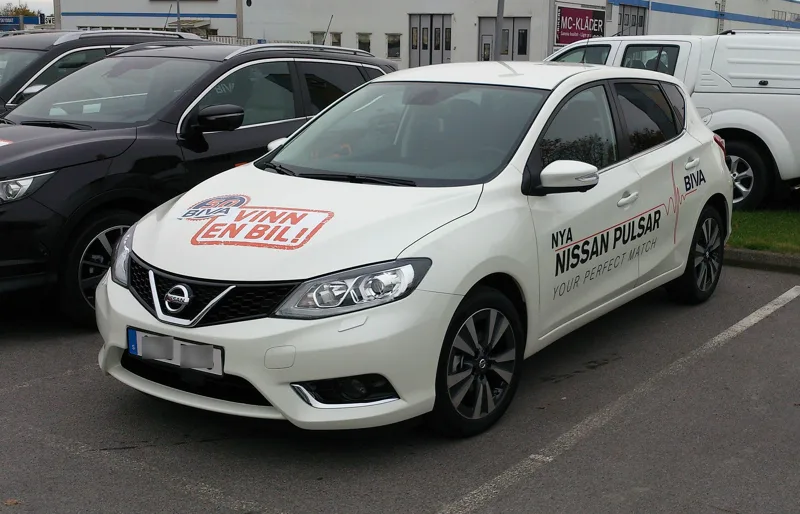
Exports used a long list of names. Taiwan, the Philippines, Malaysia and Indonesia knew it as the Sentra, Sri Lanka, the Middle East, Hong Kong, Singapore and Thailand as the Sunny, Australasia as the Pulsar, and Europe and Brunei as the Almera. North America never saw it. The Sunny-based Sentra B15 served there instead. The new platform also spawned a compact MPV for the first time, the Almera Tino.
The Sylphy around Asia and beyond
In Japan the engines were the 1.5-litre QG15DE, 1.6 QG16DE, 1.8 QG18DE and 2.0-litre QR20DD. A five-speed manual came only with the 1.5, and four-wheel drive only with the 1.8. Sri Lanka sold it as the Sunny N16 in EX saloon and Super Saloon trims, the EX with a 1.3-litre QG13DE and a black grille. Thailand sold a sedan beside a five-door imported from the UK, while China built the Sunny through Dongfeng.
Singapore sold the N16 from 2000, with 1.5 and 1.6-litre engines and a 2004 facelift limited to the 1.6, until 2011. The Philippines called the early car the Sentra Exalta from 2001 to 2003, and sales ended there in 2014. Indonesia sold the Sentra between 2002 and 2004 in small numbers, in one 1.8 Super Saloon trim with ABS and dual airbags, and used a 1.6-litre Sunny Neo for taxis. Malaysia built the Sentra SG and SG-L, and a Sentra Sport 1.6 until 2014.
Australia and New Zealand stayed with the Pulsar name, taking a sedan from Japan and a hatchback that was a rebadged British Almera. The trims were LX, ST, Q and Ti, with 1.6 and 1.8-litre petrol engines making 88 kW (118 hp) and 94 kW (126 hp). The base LX sedan had a driver's airbag, air conditioning, remote locking and power mirrors, but no ABS or power windows.
In Europe the Almera was built in the UK as three- and five-door hatchbacks, with a less common sedan, and ran from 2000 to 2006 with a facelift in 2003. The British cars also went to Australia as Pulsars.
The Samsung branch
From 2006 a derivative of the Sylphy, the Renault Samsung SM3, was sold as the Nissan Almera Classic in Ukraine and Russia and as the Almera in Central and South America, though Chile saw a Samsung. From 2007 it became the Nissan Sunny in the Middle East with one 1.5-litre trim, and it also carries the Renault Scala name in Mexico, Egypt and Colombia.
One small sedan, five names, and a people carrier that ended up built by Mitsubishi.
Nissan Sylphy vs Sentra: the second to fifth generations
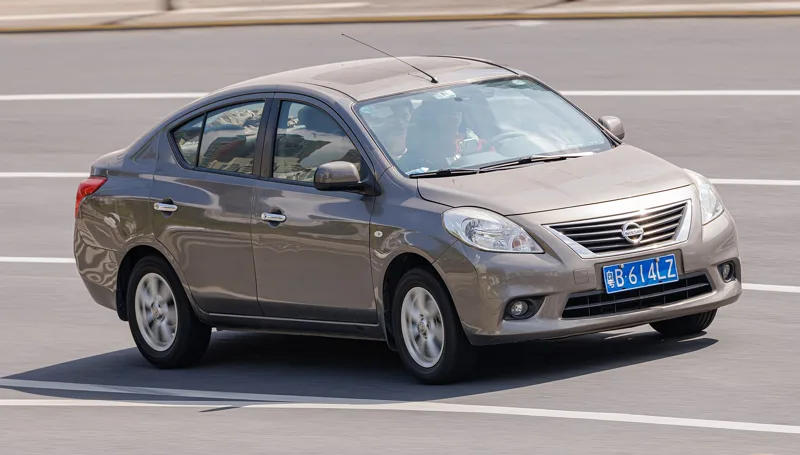
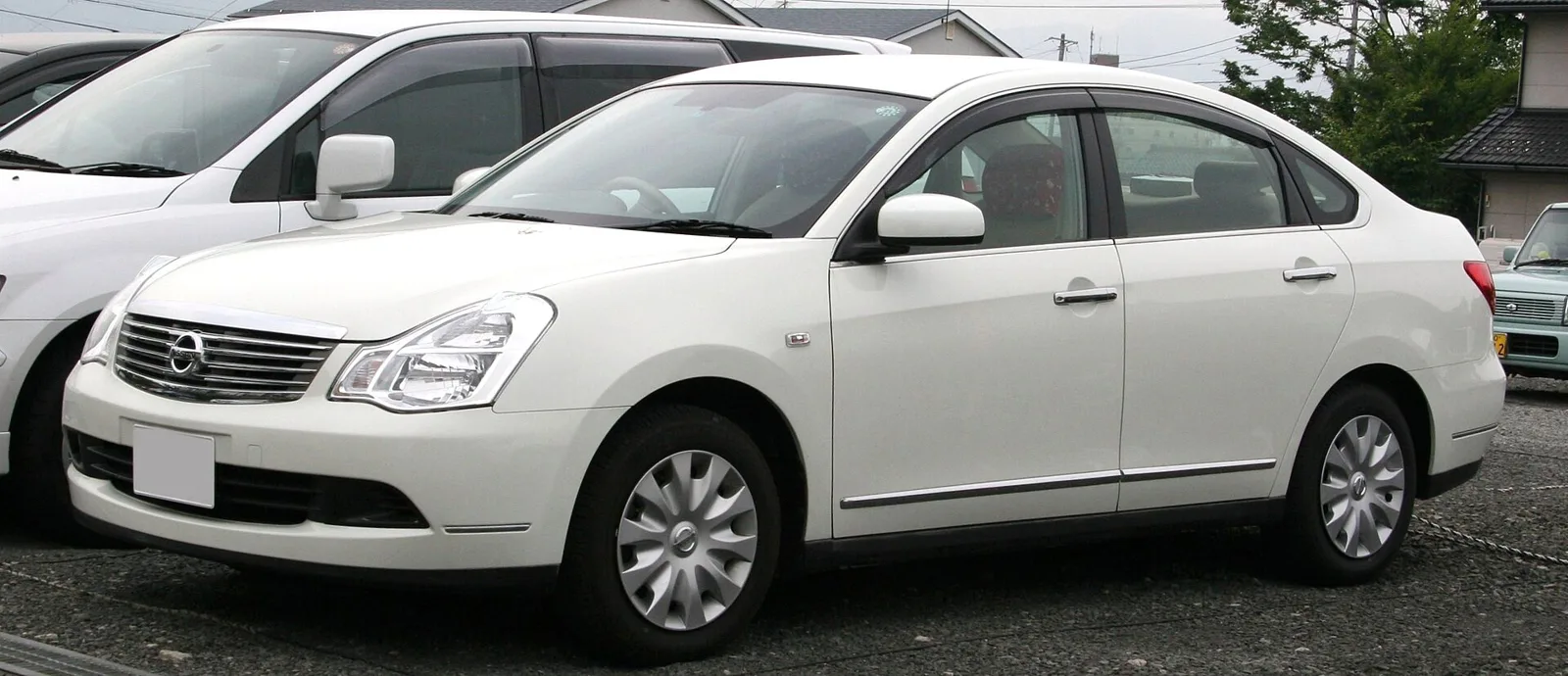
The second-generation G11 was launched at the 2005 Tokyo Motor Show on an extended version of the B platform shared with the Tiida and the Livina. A wheelbase of 2,700 mm and a 504-litre boot, the biggest in its class, gave it more room, and engines were the 1.5-litre HR15DE and a new 2.0-litre MR20DE with Nissan's Xtronic CVT. From 2008 it was available overseas as the Nissan Sylphy. In China it ran from 2006 to 2018 as the Sylphy Classic, and Dongfeng turned the old shape into an electric car, the E11K, from 2018, in a 451 km version and a 405km version as of 2022.
Malaysia received the G11 in June 2008 in Comfort and Luxury trims with the MR20DE and a CVT, and added Impul accessories in June 2009 and a navigation pack in January 2010. Taiwan's Yulon built it as the Nissan Bluebird. Russia sold it as the Almera between 2012 and 2018, built at the AvtoVAZ plant in Tolyatti with a 1.6-litre 75 kW (102 hp) engine and a Renault Logan dashboard.
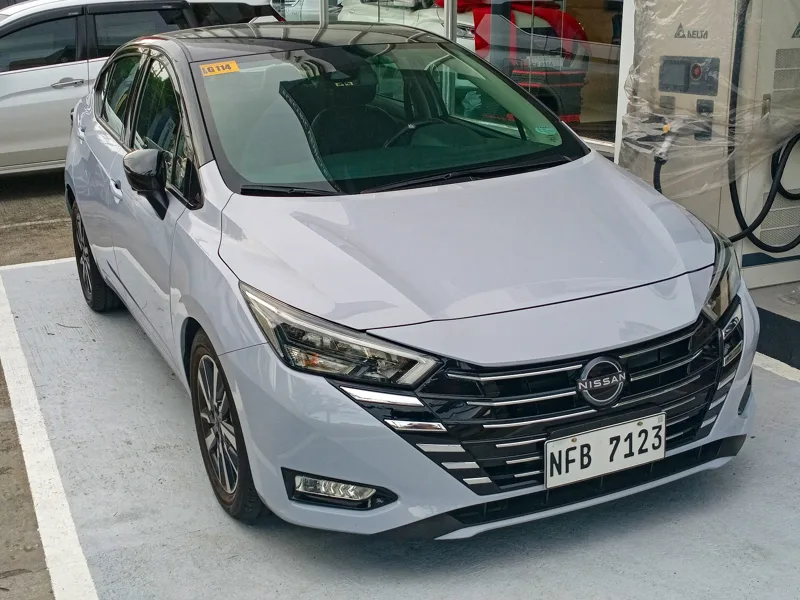
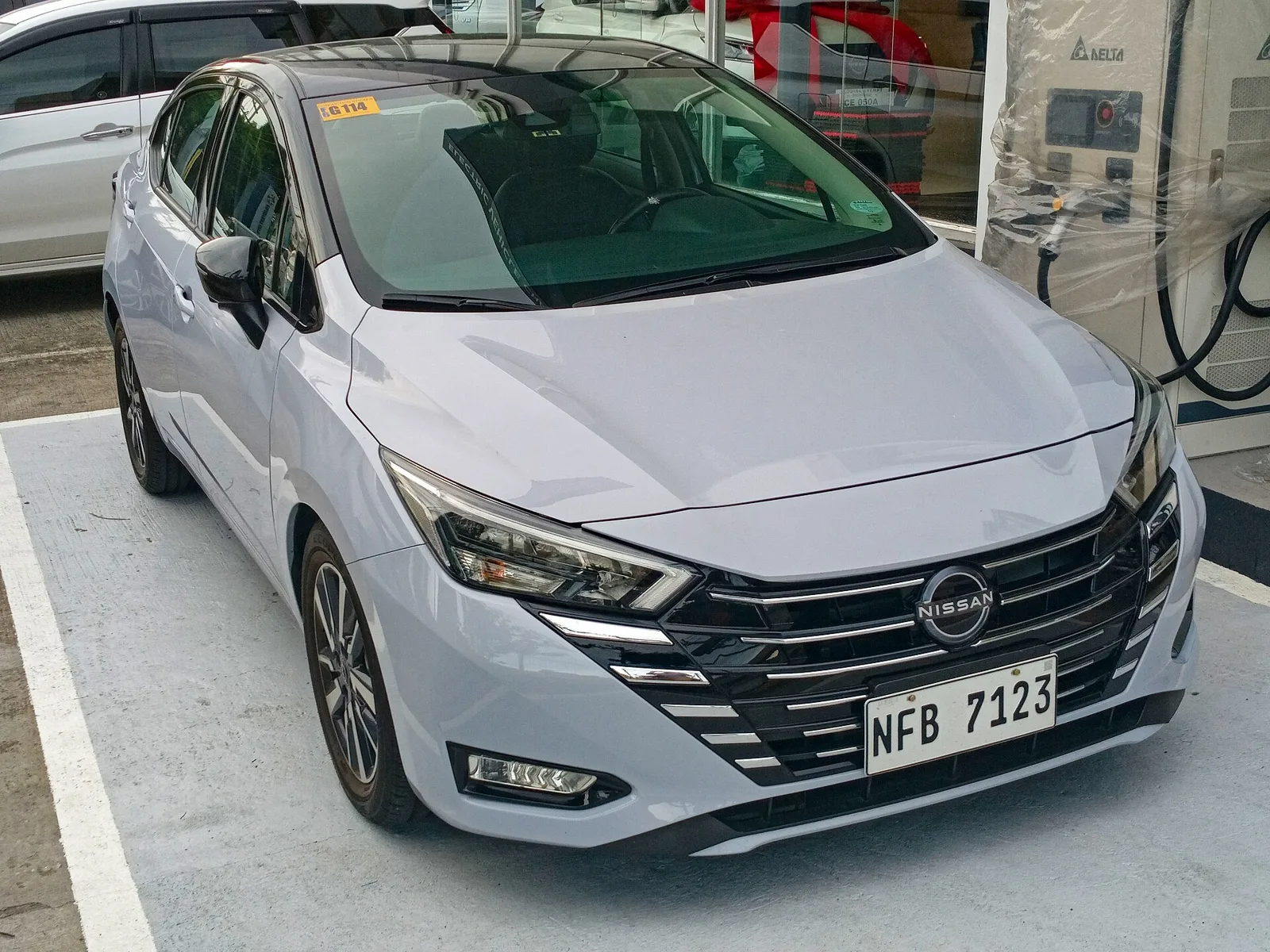
The Sylphy and the Sentra merged with the third generation. Revealed at the 2012 Beijing show, the B17 shared a basis with the seventh-generation Sentra to cut development costs, with changes for Asian customers, so it was no longer a standalone model. The fourth generation, the B18, was unveiled on 16 April 2019 at the Shanghai show, ahead of the Sentra it shared with, which reached North America at the Los Angeles show later that year. The fifth generation, the B19, was unveiled on 11 September 2025 and released in China in February 2026.
Nissan Teana: the larger sedan with a Western twin
The Teana is a mid-size sedan that Nissan exported as the Maxima and the Cefiro. It replaced the Bluebird, Laurel and Cefiro in Japan and shares its platform with the Maxima and Altima sold in North America and the Presage minivan in Japan. Buyers have found it from East Asia to Russia and Ukraine, through South and Southeast Asia, and in Australia, New Zealand, Latin America and the Caribbean. Its name comes from a small village in Italy, a naming idea shared with the Murano.
The first generation, the J31, appeared in Japan in February 2003 as a companion to the Murano, sold at Red Stage dealers and ranked one level below the Skyline. The interior borrowed from home design rather than from technology, and Japanese buyers alone could order the CarWings internet and navigation system. For most of the world it was Nissan's largest front-wheel-drive sedan.
Many names in many markets
The Cefiro badge went on the J31 in Latin America, the Caribbean, Nepal, Sri Lanka, Brunei, Mauritius, Singapore and Hong Kong, although it had little to do with the old Cefiro line. It was the Teana in Japan, Thailand, the Philippines, India, Taiwan, Malaysia, Indonesia and mainland China, and the Maxima in Australia and New Zealand, where it competed with the Mitsubishi 380 and Toyota Aurion. In 2004 it reached Europe, replacing the Maxima QX.
Engines were 1998 cc, 2349 cc and 3498 cc, with trims named 200JK, 230JK, 230JM and 350JM on the FF-L platform. A December 2005 update brought new lights, chrome bumpers and amber indicators, with a CVT on every engine. Dongfeng built it in China, Yulon in Taiwan, and it was assembled in Thailand and, as the Cefiro, in Karachi. South Korea received a restyled version as the Renault Samsung SM7, and a lower-specification relative became the SM5 and later the Renault Safrane. Japanese production stopped in 2008, and Thailand carried on until 2009.
J32 to L34
The second generation, the J32, was shown at the 2008 Beijing show on the Nissan D platform shared with the North American Maxima and Altima. Its engines were a 3498 cc V6 needing high-octane fuel, a 2495 cc V6 and 2488 and 1997 cc fours, all with a CVT. In Japan the only four-cylinder was the 2.5-litre QR25DE, and it came only with four-wheel drive. The Intima concept of October 2007 previewed the shape. It was not sold in Western Europe, where Renault's Laguna and Latitude took its place. It brought a Music Box feature that recorded CDs, and the Maxima name continued in Australia from June 2009 in 250 ST-L, 350 ST-S and 350 Ti forms.
Nissan Teana vs Altima
From 2013 the difference all but vanished. The third-generation Teana, the L33, was a rebadged North American Altima for some markets. The nameplate was retired temporarily in 2020, replaced by the L34 Altima or dropped without a successor, and it returned in 2025 for China as the fourth generation. That Teana is a more premium variant of the L34 Altima, which had launched in China in December 2018 as the Altima while keeping the Chinese name Tianlai. A 2026 model year Teana was unveiled in August 2025 to sell beside the outgoing Altima, equipped with Huawei's Harmony Space 5.
Nissan Livina: an MPV that began in China
Dongfeng Nissan introduced the Livina at the Guangzhou show in July 2006, and it went on sale that December. It shared its platform with the first Note, and it was the first Nissan to debut in China before reaching other countries. There were two lengths, the longer with three rows. Production covered Brazil, Malaysia, Indonesia, the Philippines, Vietnam, South Africa, China and Taiwan.
The short two-row car was the Livina or Livina XR, or the Livina Urban and Sport in Taiwan, and the three-row version was the Livina Geniss in China and the Grand Livina elsewhere. The three-row model was more of a station wagon, and the short one a roomy hatchback. China received the Geniss in November 2006 and the two-row car in April 2007, Taiwan in October 2007, and South Africa began building both in January 2008 with forty percent local content. Engines of 1.5, 1.6 and 1.8 litres came from the Tiida, Latio and Versa.
Grand Livina in Southeast Asia
The Grand Livina launched in Indonesia on 5 April 2007 as the 1.5 SV, 1.5 XV, 1.8 XV and 1.8 Ultimate, later adding a Highway Star with a body kit. A facelift came on 10 February 2011 and a Highway Star Autech on 27 September 2011. Malaysia began in December 2007 with the HR16DE and MR18DE engines, with an Impul edition in January 2009 and an Autech version in July 2012. The Philippines and Brazil took only the 1.8, while South Africa had the 1.6.
A crossover-styled version arrived as the Livina C-Gear in China in April 2008 and as the X-Gear elsewhere: Indonesia in May 2008, South Africa the same year, Brazil in August 2009 and Malaysia in September 2011. It added unpainted cladding, rugged bumpers and roof rails to the two-row car. The L11 update was shown in Shanghai in April 2013 and reached Indonesia on 29 May 2013 as an all-new model, with a CVT replacing the four-speed automatic. Nissan Motor Indonesia ended the 1.8-litre X-Gear for lack of demand.
The Xpander-based Livina
The second-generation Livina launched in Indonesia on 19 February 2019, a month after the L11 Grand Livina ended there. It is a rebadged, restyled Mitsubishi Xpander, a product of the Renault-Nissan-Mitsubishi Alliance, made alongside the Xpander at Mitsubishi's Cikarang plant in West Java. Nissan kept the Livina name because it was already established. It is a single three-row body with crossover-like proportions, and Nissan redesigned the V-Motion grille, headlights, bumpers, front fenders, front doors and tailgate.
Grades are E, EL, VE and VL. A Sporty Package for the VE came in June 2020 in a run of 100 units, and the E grade was dropped in 2021. The Philippines began selling the car on 6 September 2022 in left-hand drive, imported from Indonesia. As of 2022 these are the only two markets.
| Model | Debut | Western counterpart | Link |
|---|---|---|---|
| Sylphy | August 2000 in Japan | Sentra | Merged with the Sentra from the 2012 third generation |
| Teana | February 2003 | Altima, Maxima | Rebadged Altima from 2013, a premium Altima variant in China from 2025 |
| Livina | July 2006 in China | None; Mitsubishi Xpander | Second generation is a rebadged Xpander |
What sets the Asian cars apart
The three cars took three routes. The Sylphy now shares its basis with the Sentra but is adjusted for Asian customers. The Teana started as a Japanese sedan with a home-inspired interior and ended as a variant of the Altima. The Livina went furthest, from a Note-based Chinese debut to an Xpander built in Indonesia.