A cubic Nissan built at Oppama from 2008 to 2019, with Autech variants, a long run of special editions and a Japanese sales base that far outran Europe.
The third-generation Nissan Cube was built at Oppama in Japan from 2008 until 2019. Its success was regional: Japanese buyers took about a quarter of a million, American buyers about 75 thousand, and European buyers few.
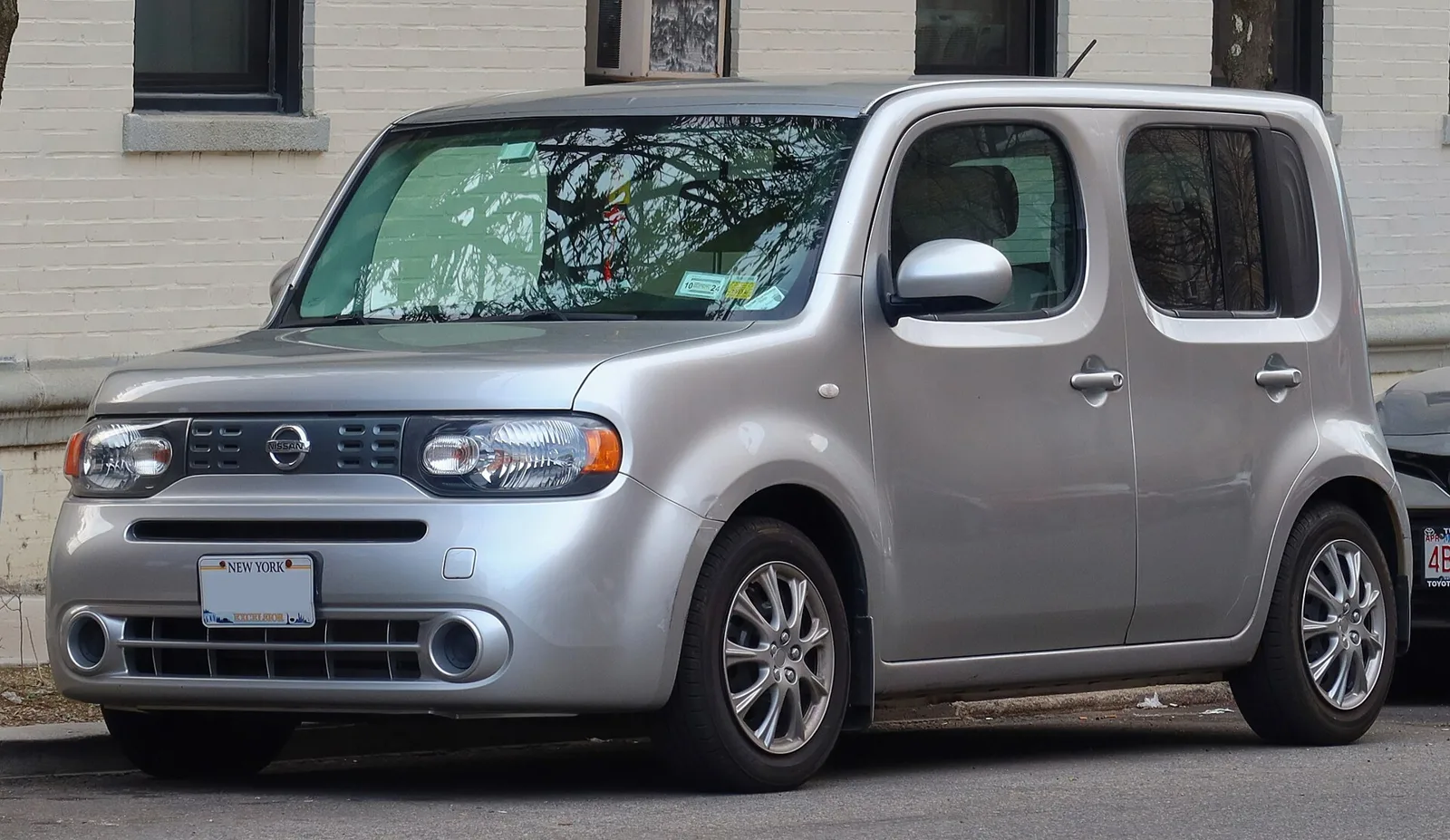
The third-generation Nissan Cube was a cubic car built at the Nissan Oppama Plant in Yokosuka from 2008 to 2019. It sold about a quarter of a million cars in Japan and around 75 thousand in the USA, but it struggled in Europe. The name comes from its box-like body, which was its most recognisable feature.
Where was the Cube built and sold?
The world premiere took place on 18 November 2008, at the same time in Japan, European countries and the USA. Sales in Japan began on 26 November 2008. Cars for the home market and for export were assembled at the Oppama plant in Yokosuka.
Sales in the USA began on 5 May 2009, and the North American model had been shown at the Los Angeles Auto Show in November 2008. In Europe the car went on sale in the United Kingdom in December 2009, with other countries following in the first months of 2010. The model was never officially sold in Russia.
A cubic shape that sold about a quarter of a million cars in Japan and only six thousand in Europe.
What did the Cube cost at launch?
At Japanese launch the Cube sold from 1,449,000 to 1,911,000 yen in front-wheel-drive form, and from 1,687,350 to 1,928,850 yen with all-wheel drive. Every model used the 1.5-litre HR15DE engine, and the company planned to sell about 4,200 cars a month.
The trim levels ran from the basic to the top: 15S, 15X, 15X V Selection, each with an all-wheel-drive version, and 15G. The range was later pared back to three trims in November 2014.
What did Autech add to the Cube?
Autech, the Nissan division, presented two modifications of its own. The first was the tuned Autech Cube Rider, based on the 15X and 15X FOUR. It had different bumpers and radiator grille, an Autech badge, side sill trim, 195/55 R16 tyres, exclusive seat trim and a leather-wrapped steering wheel. Its price was 1,879,500 yen with front-wheel drive and 2,107,350 yen with all-wheel drive.
The second was the Cube Enchante Slide-up Passenger Seat, intended for people with disabilities. It had a powered front passenger seat that could be controlled by remote or by buttons inside the car, and it turned and slid out to make getting in and out easier for disabled or elderly people. Its price ranged from 1,989,750 to 2,385,600 yen.
The Autech Cube Rider High Performance Spec arrived on 23 April 2009. Its HR15DE engine gained 7 hp through computer tuning and a revised camshaft profile. Its suspension was retuned with rear shock absorbers from another maker, and it had a sporty exhaust and more sensitive steering assistance. It cost 2,131,500 yen.
What was the Autech Cube Axis?
The Autech Cube Axis was a tuned version introduced on 30 October 2012, with an exclusive radiator grille and bumpers. It sold at 1,795,500 to 2,023,350 yen, which was 262,500 yen more than the basic 15X and 15X FOUR trims.
Inside, the Axis had beige seat upholstery, leather steering wheel trim and chrome door handles. Exclusive 16-inch alloy wheels in Bitter Chocolate were offered as an option, and the Cube Rider High Performance Spec was priced at 2,058,000 yen.
What was the Rider Black Line?
The Rider Black Line was a range of tuned Autech cars, announced on 5 October 2011 and launched from 19 October, which included the Cube. It stood apart from the ordinary Rider with a black body colour, a dark chrome radiator grille and a special badge.
The car also gained bi-xenon headlamps and the ionising air conditioner. The price was 1,797,600 yen for the front-wheel-drive car and 2,044,450 yen for the all-wheel-drive one.
What was the Cube Chair Cab for?
The Cube Chair Cab was an Autech model for social services, released on 23 April 2009. It had a ramp in the boot, so that a person using a wheelchair could be taken into the car.
Two rear-seat arrangements were offered. One was a folding bench, and the other had seats for accompanying persons at the sides, with room beside them for up to four wheelchairs. It cost 2,300,000 yen, or 2,480,000 yen with the Plus Navi HDD navigation system from October 2009.
How did the Cube's trims and prices change over time?
Special editions and small updates arrived almost every year. The main steps are listed below, with the front-wheel-drive figure given first where two versions were sold, which keeps the comparison simple for buyers in Japan.
| Date | Change | Price |
|---|---|---|
| 26 November 2008 | Japanese launch | 1,449,000 to 1,911,000 yen (front-wheel drive) |
| 23 April 2009 | 15X M Selection and 15X FOUR M Selection | 1,533,000 yen (front-wheel drive) |
| 20 October 2009 | Indigo Selection | 1,564,500 yen (front-wheel drive) |
| 26 November 2010 | Party Red Selection | 1,498,350 yen (front-wheel drive) |
| 31 May 2011 | Komorebi Green Selection | 1,611,750 yen (front-wheel drive) |
| 30 October 2012 | Engine and CVT update | 1,533,000 to 1,932,000 yen |
| 6 November 2014 | Kodawari Selection and reduced trim list | 1,598,400 to 1,987,200 yen |
| 31 May 2017 | My cube special version | 1,854,360 yen |
| 17 April 2018 | Autech Rider update | 2,034,400 yen |
What was the Cube Drive Shot?
The Cube Drive Shot was a concept shown at the Tokyo Motor Show in January 2009. Its idea of a car that gives pleasure was developed within the Imaginary Vehicle Project.
A camera on the instrument panel could photograph the car's surroundings and save the pictures to a special hard disk. The photos then appeared on the infotainment screen, and from there they could be uploaded straight to the Internet. Autech also showed a tuned concept, the Cube Rider High Performance Spec.
Which special editions did Nissan release?
The Indigo Selection, from October 2009, was distinguished by an indigo interior, a colour the designers said was inspired by the sea water of Yokohama. It also had chrome interior door handles, leather steering wheel trim and the Intelligent Key system, and it cost 31,500 yen more than the standard car.
The Party Red Selection followed in November 2010, with a grey cabin and red seats in suede-like fabric. According to the company, the look created a party atmosphere, hence the word in its name. Its price fell by 34,650 yen compared with the basic model, despite the extra equipment.
The Komorebi Green Selection came out on 31 May 2011 in brown or white bodywork, with green pile velour seats decorated with a four-leaf clover pattern. The Lorboo Selection of October 2013 had a Scandinavian interior, a name that comes from the Scandinavian fishing hut. A new body colour, Suomi Blue, arrived with it, and the company said that colour was inspired by the nature of Northern Europe.
In May 2014 the 80th Special Colour Limited versions of the Cube and Leaf marked the company's 80th anniversary, with three exclusive body colours. The Kodawari Selection of November 2014 mixed natural leather with artificial leather from another supplier, and the My cube of May 2017 offered five interior colours with eleven exterior colours. Its price was 1,854,360 yen, 72,360 yen more than the standard version.
How did the 2009 and 2012 updates change the engine?
On 23 April 2009 the Cube, together with six other models including the Tiida and Note, received a modified engine, a revised CVT control system and battery management. The changes qualified the car for the Japanese green tax benefits, and the Cube became a car that could claim them.
On 26 November 2010 the ECO Mode, which coordinates the engine and transmission to cut emissions, became standard, and a Plasmacluster Ion air conditioner was offered. On 30 June 2011 Nissan released Plasma versions of the Tiida, Tiida Latio, Note and Cube with that air conditioner. The Cube version was also reissued with an indigo interior, and it was priced 3,150 yen above the standard car, at 1,529,850 to 1,757,700 yen.
On 30 October 2012 the HR15DE gained an idle-stop system, twin injectors and variable valve timing on the exhaust side, with an extra reduction gear added to the CVT. The company said this cut fuel use to 19 km/l. Two more body colours, Light Ginger and Lagoon Blue, were added, along with a new interior upholstery colour, Vintage Camel.
How did the Cube sell in North America?
In North America the Cube was offered with a single 1.8-litre MR18DE engine, the same unit as in the Versa, paired with a six-speed manual or a CVT. There were three trims, the 1.8, 1.8S and 1.8SL, and prices from 13,990 US dollars were announced in early February 2009.
A fourth model, the Cube Krom, was a renamed Japanese Autech Cube Rider, differing from it only in name. It had a chrome grille with three horizontal bars, a bumper with a two-bar chrome intake, side sill trims, a roof spoiler and 16-inch aluminium wheels.
Canadian prices were announced on 24 April 2009, from 16,998 to 21,498 Canadian dollars. Sales in the United States began on 5 May 2009. Because sales were low, the Cube was withdrawn from North American sale in mid-2014.
Why did the Cube struggle in Europe?
The Cube was a failure in Europe. Over several years only six thousand cars were sold there, and sales in the United Kingdom stopped in October 2010.
From January 2011 exports of the Cube to European countries were stopped for good. The model was not officially sold in Russia.
Why was the Cube a regional success?
The Cube's success stayed regional. Japan took about a quarter of a million cars and the USA about 75 thousand, while Europe took only about six thousand over several years.
Reviewers praised the radical, unusual design and the roomy interior, but noted ambiguous handling and performance that was not the best. Safety was its strong point. The American IIHS institute gave the Cube its Top Safety Pick 2012 award, because it earned the maximum rating on every criterion.
How did the Cube come to an end?
On 3 September 2019 Nissan announced that production of the Cube would soon end. The last car left the line in December 2019, and sales ended at the close of March 2020. The model's 21-year history covered three generations, with the first appearing in 1998 and the second in 2002.
Nissan had originally planned a fourth-generation Cube, but financial problems froze its development and it was eventually cancelled. Three years after production ended, in January 2023, a Cube Refreshed and Retro Concept was shown at the Tokyo Motor Show. It was based on a used 2014 Cube with about 68,000 km on the clock.
What did the 2023 Refreshed and Retro concept look like?
The concept was almost completely rebuilt. The exterior received a two-tone black and grey paint, new headlamps, wipers, mirrors, wheels and tyres, and a roof rack that imitates the pantographs of trams. Inside, the cabin was styled as a coffee shop, with a black interior, small yellow inserts, red chinchilla-style front seats and grey rear seats.
The concept was shown later at the Nissan Customize 2023 exhibition, held from 10 to 12 February 2023 at the International Exhibition Centre in Osaka.