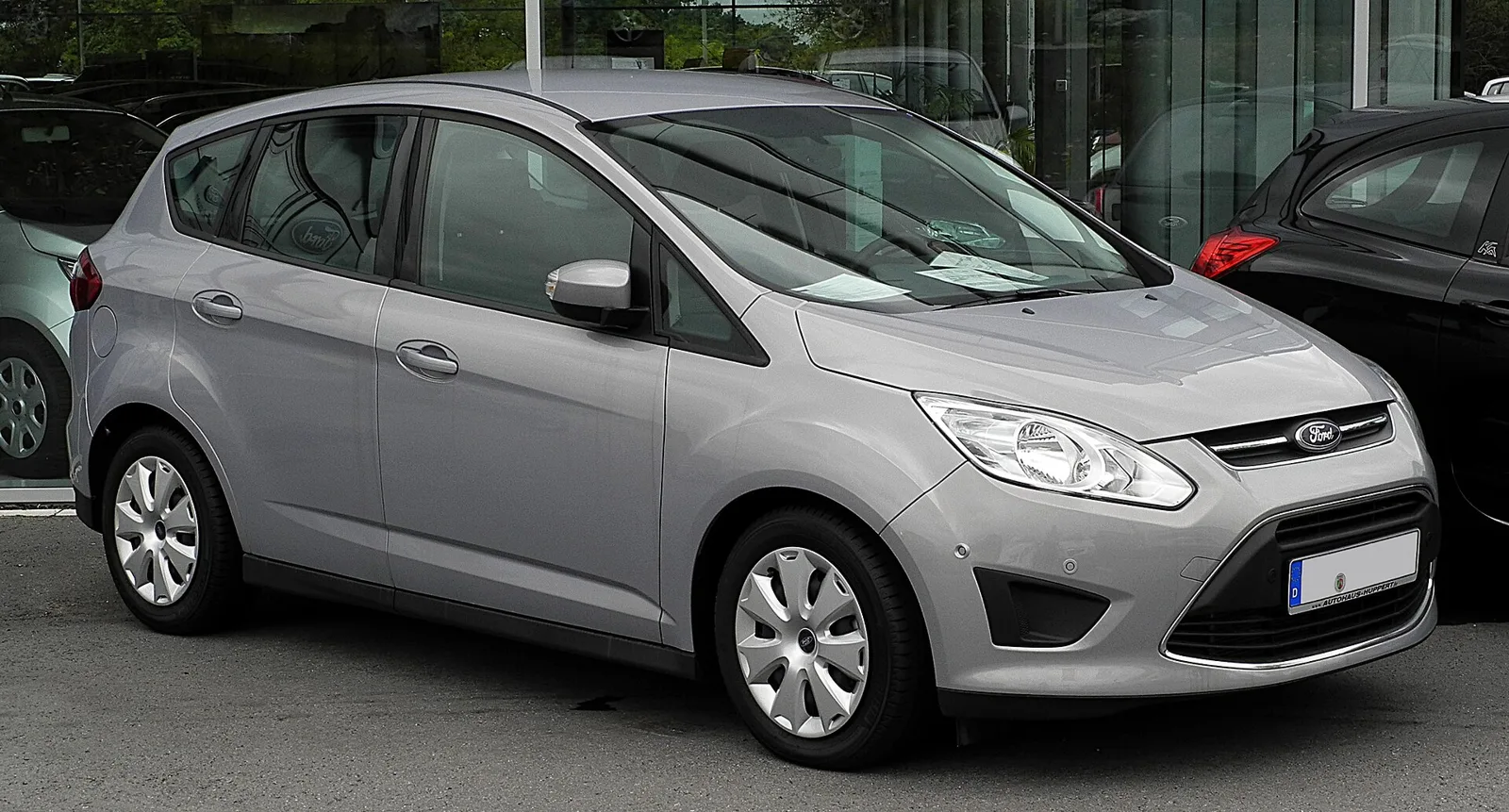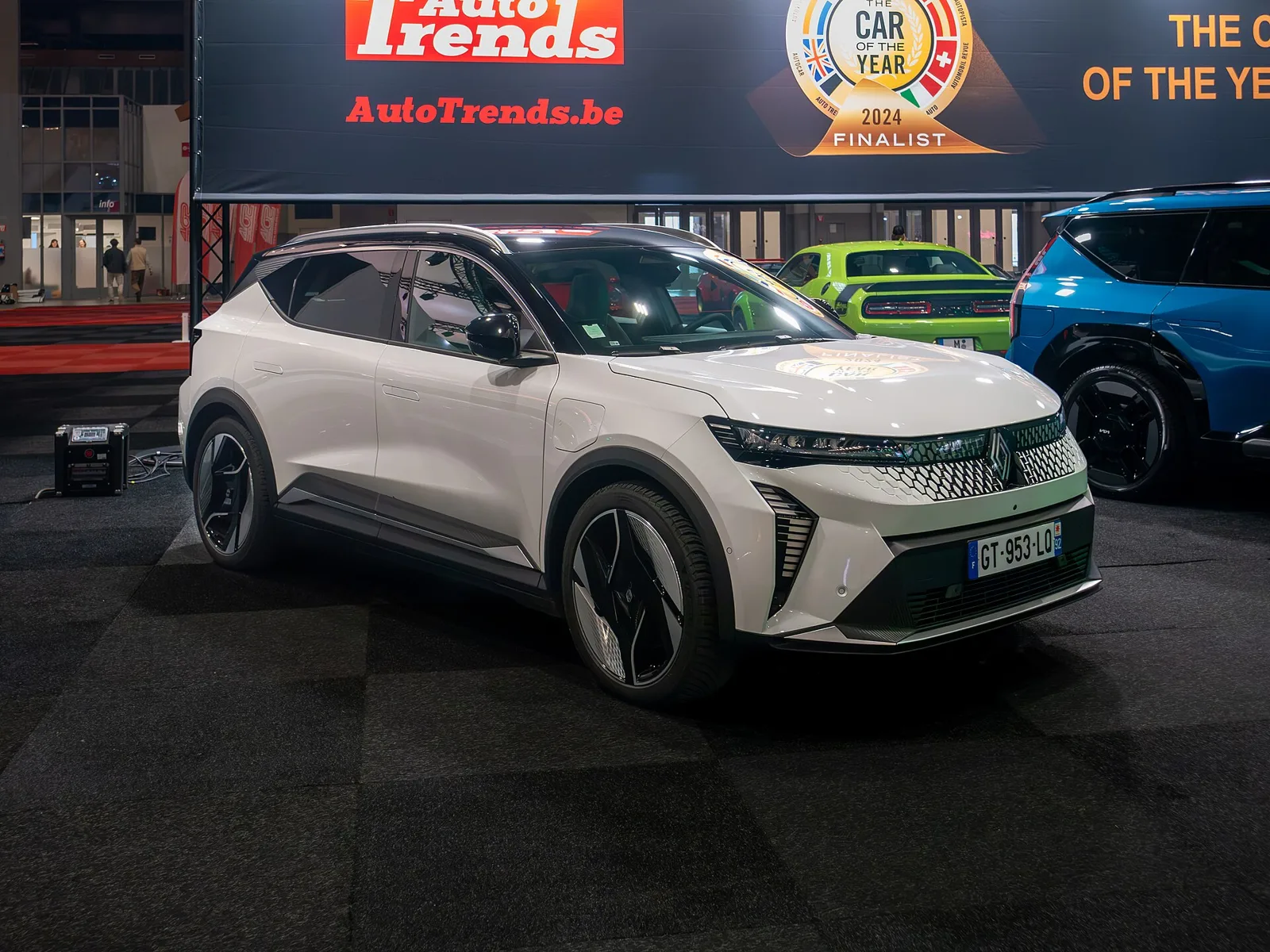
A 1996 people carrier built on a family hatchback chassis, with a rare four-wheel drive RX4 and a fully electric successor in 2024.
The Renault Scenic was a compact multi-purpose vehicle launched in November 1996 on the Megane chassis. The short-body version ended production in July 2022 after 190,636 units, and a fully electric Scenic E-Tech followed in 2024.
The Renault Scenic reached showrooms in November 1996 as a compact people carrier built on the Megane hatchback's chassis. Renault described it as the first small multi-purpose vehicle in Europe, and the car went on to win the 1997 European Car of the Year title.
Where did the Scenic come from?
The story begins with a 1991 concept called the S.C.E.N.I.C., which stood for Safety Concept Embodied in a New Innovative Car. Anne Asensio, then a Renault designer, supervised the concept. The production car kept the concept's independent seats, although the sliding doors of the concept did not make the production run.
Renault added an acute accent to the production name to assert its European identity. The move came as newer manufacturers from Japan were growing their share of European sales.
The first small MPV in Europe, with a four-wheel drive version that few owners kept running.
Why did Renault underestimate the Scenic?
Renault expected the Scenic to be a niche model, planning for 450 cars a day at its Douai plant. Output there eventually peaked at nearly 2,500 cars a day, which showed how far the forecast had fallen short of demand.
The mechanical underpinnings were shared with the Megane hatchback, which was itself based on the older R19. The 1.4-litre, 1.6-litre Energy and 1.8-litre F Type petrol engines, plus a 1.9-litre diesel, all came from the same family.
Did the Scenic win awards?
The Scenic was named European Car of the Year for 1997, a year after its launch. In the United Kingdom, What Car? also gave it its Car of the Year title for 1997, which was the first Car of the Year award the Scenic earned in Britain.
For its first two years in the UK, the Scenic had no mainstream rival in the compact MPV class.
What changed in the first generation?
A major frontal restyle came in September 1999, and the newer 16-valve engines arrived with it. From then on the car was officially called the Renault Scenic, though a small Megane badge stayed on the rear door as a reminder of its origins.
The Phase 2 cars added a storage compartment in the dashboard and a separate opening rear window in the tailgate. The rear head restraints were fixed over the seatbacks rather than upright, which improved visibility to the rear.
Production of the first generation ended in June 2003, shortly before the second-generation car took over.
Renault positioned the Scenic between the Modus, its mini MPV, and the Espace, its large MPV, which left the new car a clear place in the range.
What was the Scenic RX4?
The RX4 was a four-wheel drive crossover derivative of the original Scenic, launched in 2000 in left-hand and right-hand drive. It used a viscous multi-disc central differential from Steyr Daimler Puch, which gave part-time four-wheel drive, and it sat higher than the standard car.
Engineers re-engineered the rear suspension, strengthened the springs and dampers, and thickened the engine undercover. The spare wheel moved to the tailgate, which was a split swing-out design made of plastic. That plastic door could crack under its own weight, especially as it aged.
Only a five-speed manual transmission was offered, paired with a 2.0-litre petrol engine or a 1.9 dCi diesel. Renault built 40,000 RX4s, of which 5000 were right-hand drive and 35000 left-hand drive, and it became France's best-selling 4wd vehicle in 2001.
Gearbox reliability damaged sales, and production stopped in December 2003 with no direct successor. By 2023 roughly 1,500 of the original 40,000 remained on the road worldwide, which makes the RX4 the second rarest Renault of the 2000s after the Avantime.
The RX4 came with twin electric sunroofs as an option, and a luxury pack added leather seats, climate control and a CD player. Trim names varied by market, from Sport Alize and Privilege Monaco in 2000 to Expression, Dynamique, Salomon, Sportway and Privilege between 2001 and 2003.
Australia, New Zealand, Japan and Malaysia bought few RX4s, with fewer than 500 units sold in each country. Those markets missed out on the diesel and received only the petrol F4R engine.
How did the second generation differ?
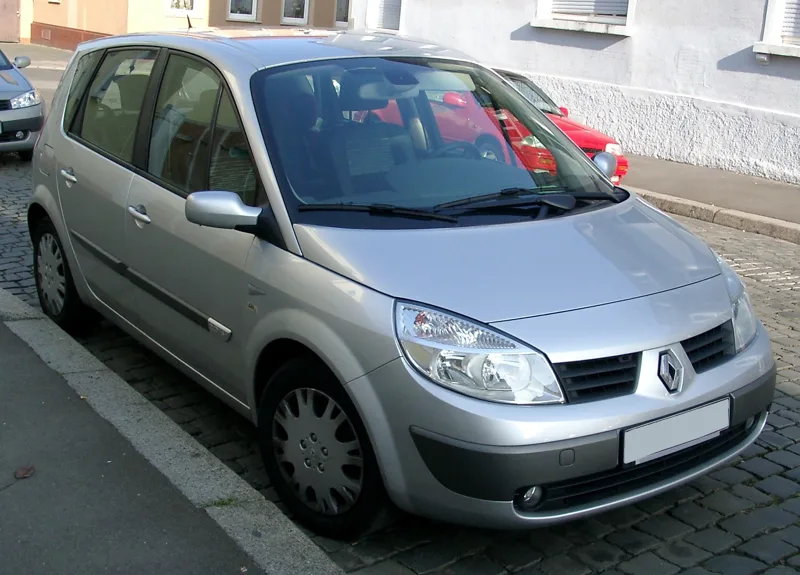
The second-generation Scenic arrived in June 2003, shortly after the Megane II. It introduced the Renault Card keyless immobiliser and an automatic parking brake on some trims, and LEDs appeared on every trim from 2006.
The Grand Scenic followed in April 2004 as a seven-seat compact MPV with a longer wheelbase and rear overhang. Its two small child-sized seats sat in an enlarged luggage area, while the rest of the cabin matched the five-seat car.
The dashboard was different from the Megane's, with a fully digital electroluminescent instrument display. The rear seats folded and could be taken out individually.
Equipment included a folding front passenger seat on some trims, a rear-seat table, automatic headlights and wipers, a child minder mirror and electric windows front and rear.
What did the Scenic II facelift bring?
A phase 2 facelift went on sale in September 2006. It brought a revised grille, a larger diamond badge, restyled headlights and a RENAULT word badge on the bootlid, along with new wheel designs and interior trim.
A raised Megane logo sat on the C-pillar, as it had on the phase 2 first-generation car, and the facelift followed the Megane's own update by a few months.
In June 2007 Renault revealed the Scenic Conquest, which it described as the spiritual successor to the RX4. It was two-wheel drive, but it had a body kit, raised ride height and SUV-style accessories.
What did the third generation bring?
The seven-seat Grand Scenic came first, in May 2009, and the regular Scenic III followed in July 2009. Renault also offered the Grand as a five-seater, with plastic cladding, raised suspension and different wheels in the mix.
The March 2013 update brought new interior and exterior styling and driver aids. Renault added the Scenic Xmod crossover, which had a larger grille, roof racks, body protection, new tyres and alloys, and Renault Extended Grip traction control.
An Efficient Dual Clutch gearbox could be paired with the 1.5dci engine rated at 110 bhp.
What changed in the fourth generation?
Renault unveiled the fourth-generation Scenic at the 2016 Geneva Motor Show. Based on the R-Space concept, it was slightly larger than its predecessor and added crossover design elements, although Renault still described it as an MPV.
Six diesel and two petrol engines were offered. Cars with a six-speed manual and the Energy dCi 110 diesel could take an optional Hybrid Assist unit, and the rear bench was split one-third to two-thirds, a cost-cutting step that replaced three separate seats.
Euro NCAP awarded the fourth generation five stars. Its Active Emergency Braking System with pedestrian detection was standard, which made it the only compact MPV with that feature as standard in its class at launch.
The fourth-generation boot offered 572 dm3 (20.2 cu ft), while the five-seat Grand Scenic reached 765 dm3 (27.0 cu ft). Lane Keeping Assist and a Fatigue Detection Alert completed the safety set, and the fatigue system worked above 50 km/h (31 mph).
In May 2022 Renault announced that the short-body Scenic would be discontinued, with the Grand Scenic following a few months later. Production of the short-body car stopped in July 2022.
Specifications across the generations
| Generation | Launch | Notable figures |
|---|---|---|
| First generation | November 1996 | Megane-based chassis, 16-valve engines from 1999 |
| RX4 | 2000 | 40,000 built, five-speed manual only |
| Second generation | June 2003 | Grand Scenic seven seats from April 2004 |
| Third generation | July 2009 | Grand Scenic from May 2009, 1.5dci 110 bhp |
| Fourth generation | 2016 | 572 dm3 (20.2 cu ft) trunk, 765 dm3 (27.0 cu ft) on the Grand |
| Scenic E-Tech | 2024 | Battery electric, production version of the Scenic Vision concept |
How did the Scenic sell in the UK?
Sales in the United Kingdom began in May 1997. The Scenic was the only compact MPV from a mainstream manufacturer for its first two years, though the Vauxhall Zafira, Citroen Xsara Picasso, Fiat Multipla and Nissan Almera Tino all arrived within five years.
The second generation reached British showrooms in September 2003, the third in May 2009 and the fourth at the end of 2016. UK sales ended completely in 2019 as the MPV segment lost popularity there.
In October 2014 Top Gear placed the Scenic Xmod on its list of the worst cars buyers could purchase at the time. The facelifted versions could be specified with the R Link touchscreen system, which included a digital radio.
How did the Scenic sell in Australia?
Sales in Australia began in 2001, alongside the Scenic RX4, Clio and Megane Convertible. The RX4 was introduced to compete with crossovers such as the Toyota RAV4 and Honda CR-V, but it sold just 418 units from 2001 to 2003.
The second generation was sold in Australia from 2004 to 2010. Sales were poor, and the Koleos, introduced in 2008, took many buyers. Renault Australia declined to bring the third or fourth generation, and by 2024 it sold only SUVs and vans.
Where else was the Scenic built?
Renault built the Scenic in Curitiba, Brazil, from 1998 until July 2010 for South American buyers, and the Brazilian cars offered flex-fuel engines. The Scenic Sportway appearance package followed in 2006, with black plastic bumpers and fog lamps.
A Mexican build ran from December 2000 to mid-2004 at a Nissan plant in Cuernavaca. That arrangement was the first cross-manufacturing operation between the two brands in the newly formed Renault-Nissan Alliance.
In Iran, Kish Khodro planned a facelifted version as the Sinad Veek in 2004. Renault then chose to focus on its long-standing partner SAIPA in 2005, ended its other Iranian projects and the car never entered production.
Were there recalls on the Scenic?
Renault issued two recalls linked to electronics. In October 2009 the instrument panel could stop working, which left drivers without readings for speed, fuel, direction indicators or anything else in the cluster.
Defective soldering caused a power transistor to overheat and fail, and the fault affected Scenic II cars built between 2003 and 2006. In Finland several independent workshops offered an affordable fix when Renault did not reimburse owners there.
The second recall, in August 2010, covered a fault in which the electric handbrake could engage by itself while the car was moving.
For the first recall, Renault UK and Ireland later agreed to reimburse customers up to a set limit after media pressure. Owners had first been asked to pay for the replacement part themselves.
What is the Scenic E-Tech?
The Scenic E-Tech is a fully electric car that Renault launched in 2024 under the Scenic name. It is the production version of the Scenic Vision concept shown in 2022. Renault had planned to unveil the production car at the 2023 Munich Motor Show on September 4.
The Cleanova III, presented at the 2005 Geneva Auto Show, was an alternative-propulsion concept based on a Scenic platform.