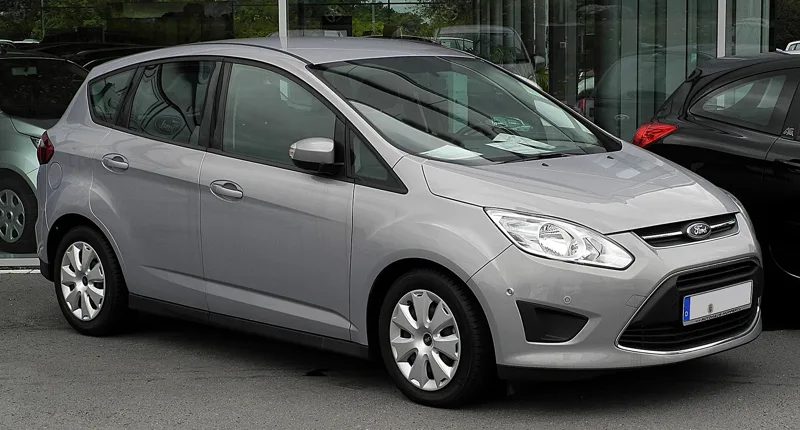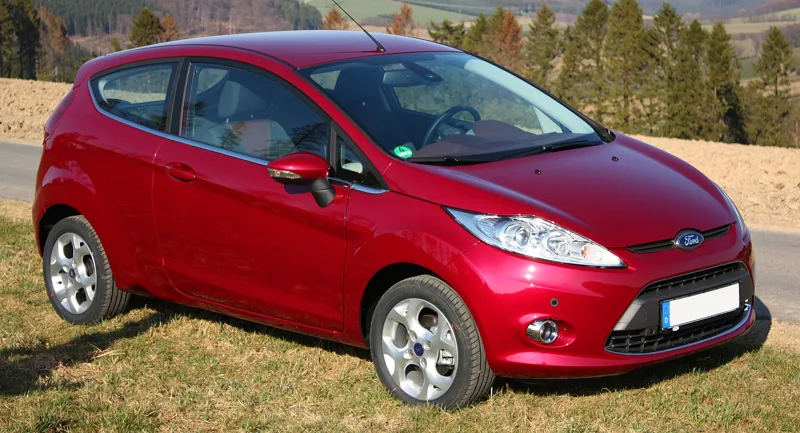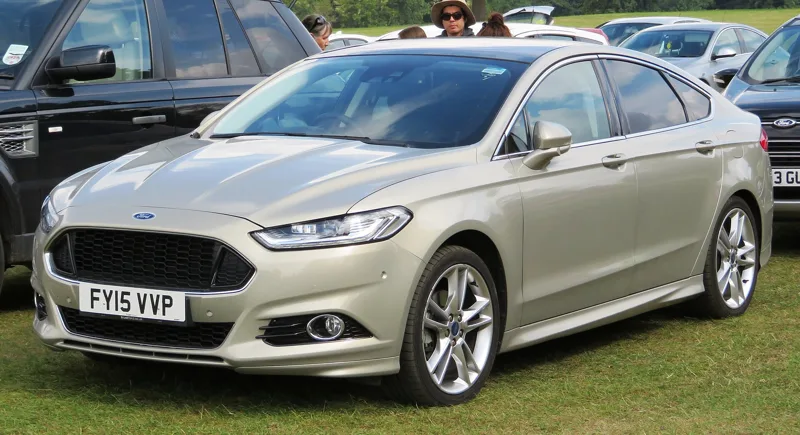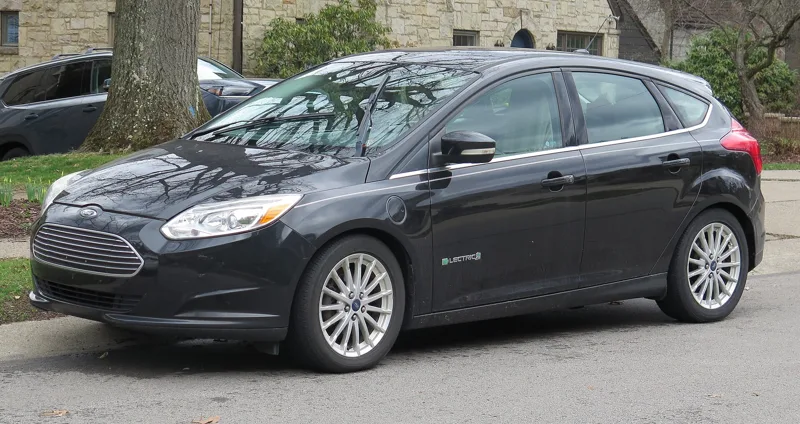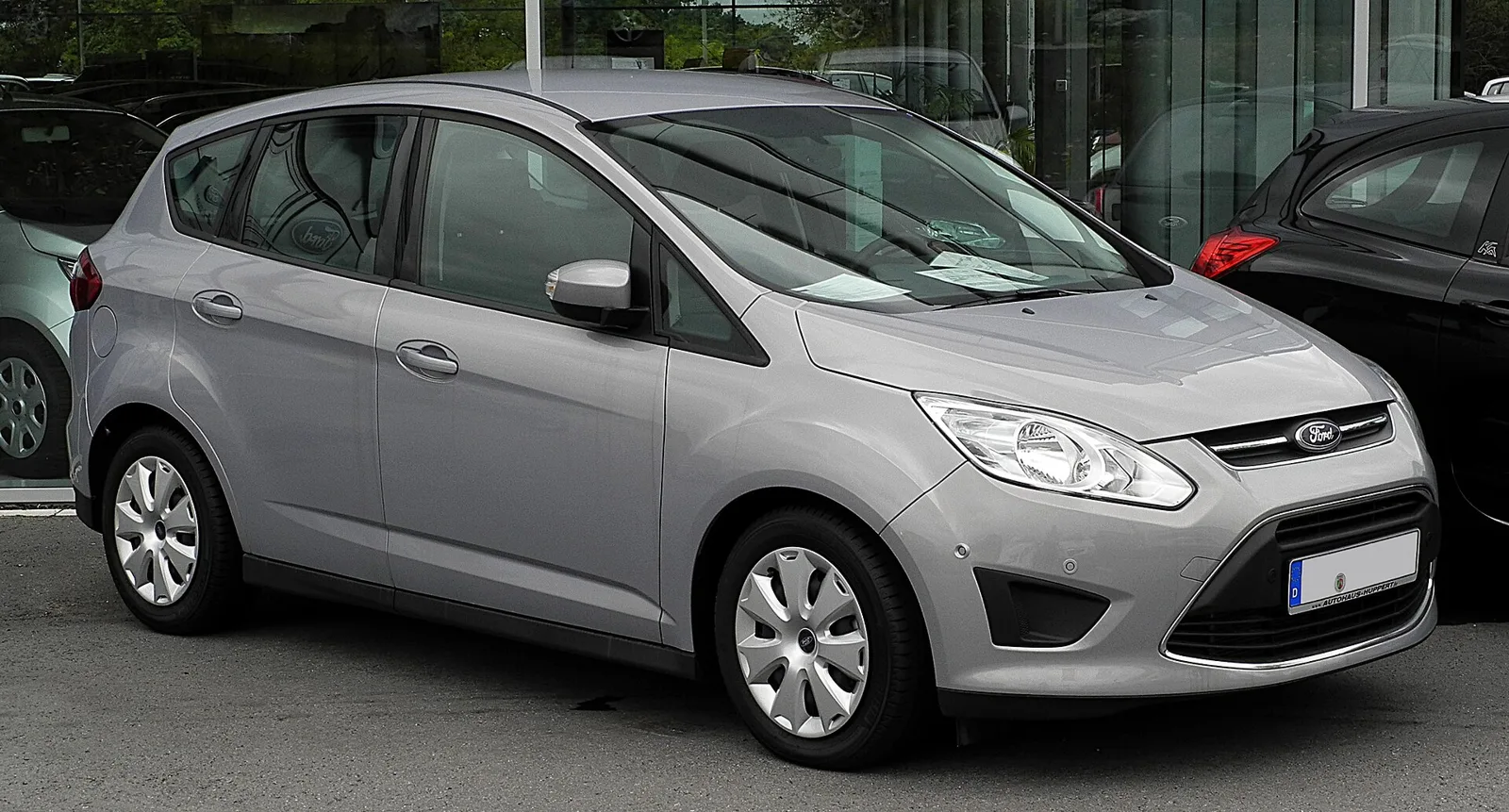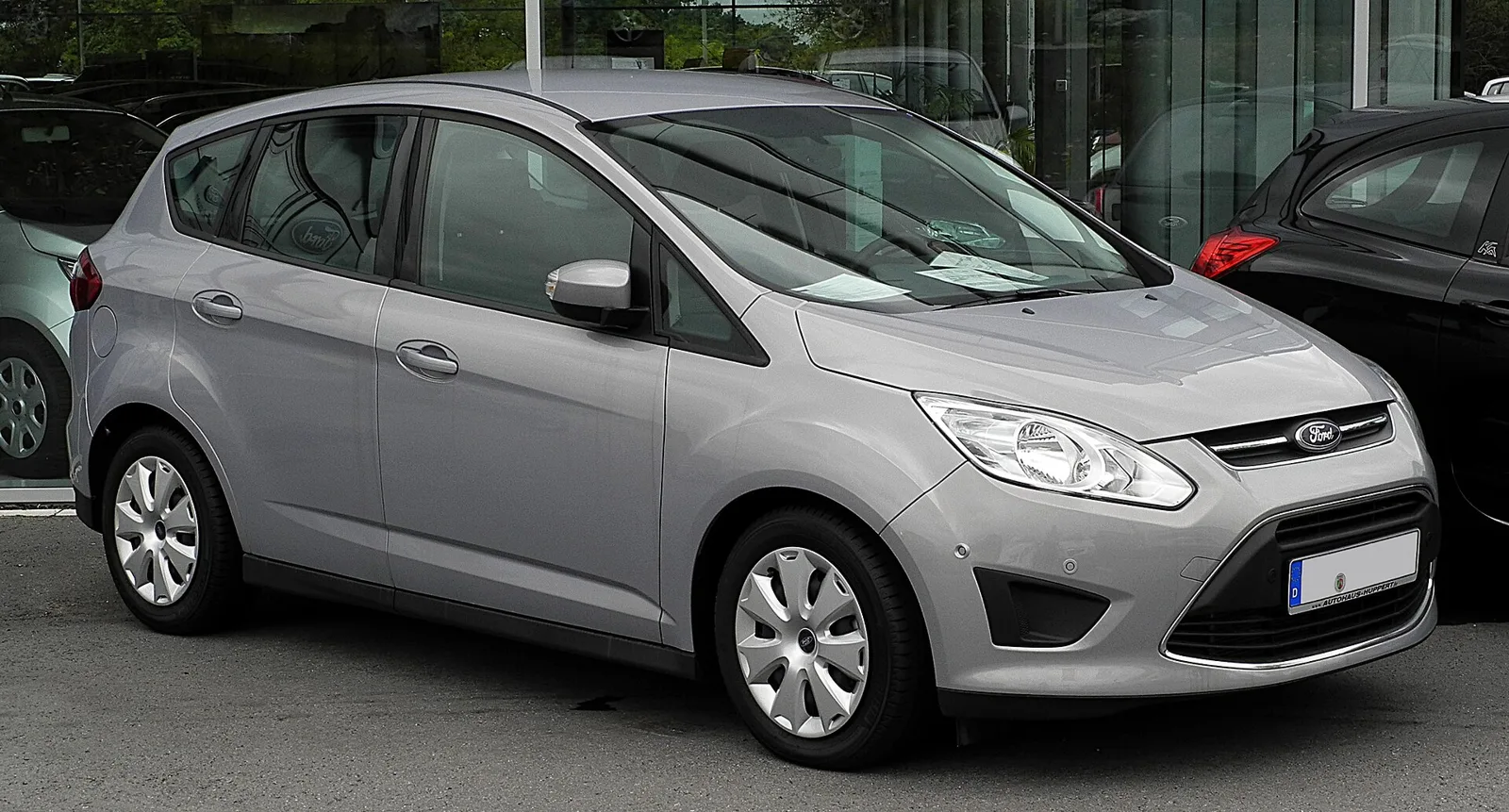
Renault started the small people-carrier idea in 1996, and Ford's C-Max answered it seven years later with a Focus-based five-seater that became the company's first hybrid-only line.
Renault's Scenic was launched in November 1996 and was the first small MPV sold in Europe. The Focus-based C-Max arrived in 2003 and later became Ford's first hybrid-only range, while Renault added a four-wheel drive RX4 and a seven-seat Grand Scenic.
The Renault Scenic and the Ford C-Max both took the five-seat compact people-carrier idea and built it around a family's everyday needs. Renault's Scenic came first, in 1996, as the first car in Europe to be labelled a small multi-purpose vehicle. Ford's C-Max followed in 2003 on a Focus platform, and it went on to become the company's first hybrid-only line.
Who came first in the compact people-carrier market?
Renault launched the Megane Scenic in November 1996, and it was the first car in Europe labelled a small MPV. Its concept had been shown in 1991, and the production car was marketed as a smaller and cheaper alternative to Renault's own Espace.
The Ford C-Max arrived seven years later, in 2003, as the Focus C-Max. Ford had first planned a release in 2000 to compete with the 1996 Megane Scenic, so the Scenic was the target from the start.
The Scenic also set a sales lesson. Renault expected only about 450 a day from the car, but production at the Douai plant eventually peaked near 2,500 a day.
Renault started the small people-carrier idea, and Ford's C-Max answered with a hybrid that fell short of its own fuel economy claims.
How did Ford's plan change along the way?
Ford's original plan was for a five-seat compact, but the Opel Zafira's seven-seat layout changed the brief. The company restarted development to target a seven-seater as well, which meant a new platform in place of the Ford C170 used by the Focus Mk1.
The C-Max became the first product to use Ford's C1 platform, which the Focus Mk II and the Premacy and Mazda5 also shared. Its internal code was C214. Technical difficulties stopped Ford from ever releasing a seven-seat version of that first generation.
The Focus C-Max still offered a lot of cargo room. Its rear seats folded flat, and some versions had diagonally sliding outer rear seats, which helped with loading. It shared the Focus's control blade independent rear suspension.
What engines did each car offer?
The C-Max's first-generation engines were largely the Focus's. The 1.6-litre Duratec was the basic engine, with a 1.6 Ti-VCT and 1.8 and 2.0-litre Duratec HE units above it, and Duratorq diesels filled out the range.
A 1.8-litre flexible-fuel engine from Volvo could run on petrol or E85 ethanol, and ethanol added about 25 hp for a total of 125 hp. The Scenic's first-generation engines were the 1.4 and 1.6 Energy, the 1.8 F Type and a 1.9 diesel, all shared with the Megane hatchback.
The Scenic's 16-valve engines arrived in the 1999 facelift, which also brought a front restyle with a more distinct face. The Scenic kept the Megane's chassis, so its engines were familiar to Renault's buyers.
Specifications side by side
| Specification | Ford C-Max | Renault Scenic |
|---|---|---|
| Launch | 2003 as the Focus C-Max; C-Max name from 2007 | November 1996 as the Megane Scenic |
| Platform | Ford C1 (first generation); Global C (second generation) | Based on the Megane hatchback chassis |
| Seating | Five seats; seven-seat Grand C-Max in Europe from 2010 | Five seats; Grand Scenic seven-seater from 2004 |
| Four-wheel drive | Not given | Scenic RX4 from 2000, part-time |
| Hybrid | C-Max Hybrid from 2012; Energi plug-in | Scenic IV with optional Hybrid Assist |
| Engines | 1.6 Duratec, 1.8 flexifuel, 2.0 Duratec HE, Duratorq diesels | 1.4, 1.6 Energy, 1.8 F Type petrol; 1.9 diesel |
| Cargo (hybrid or largest) | Hybrid 52.6 cu ft (1,490 L) seats folded | Scenic IV 572 dm3 (20.2 cu ft); Grand 765 dm3 (27.0 cu ft) |
| Drag coefficient | Not given | Not given |
| Safety | Not given | Euro NCAP five stars; Active Emergency Braking with pedestrian detection standard on the fourth generation |
| Build location | Saarlouis, Germany (Europe); US production ended in 2017 and 2018 | Douai, France (peak near 2,500 a day); Curitiba, Brazil; Cuernavaca, Mexico |
| End of production | June 2019 | Short-body car stopped July 2022; electric E-Tech from 2024 |
How did the facelifts and names change?
The C-Max's facelift was revealed at the Bologna show in December 2006, and it went on sale in late spring 2007. The change of name from Focus C-Max to C-Max followed Ford's strategy of a 'Max' line of MPVs, which had started with the S-Max in 2006.
The facelift also brought Ford's Kinetic Design language, with twin trapezoidal grilles, large wheel arches and angular headlights. Ford said the car had only elements of that language, because its body had not been designed for it.
The Scenic's facelift in 1999 changed the front end and rear lights, and from then on the car was called the Renault Scenic, with a small Megane badge still on the rear door to show its origin. A later phase added a storage compartment on the dashboard and a separate opening rear window.
How did the four-wheel drive versions compare?
Renault offered a four-wheel drive Scenic, the RX4, launched in 2000 in left-hand and right-hand drive. It had a viscous multi-disc central differential from Steyr Daimler Puch, giving part-time four-wheel drive, and a plastic-clad body with a spare wheel on the tailgate.
Its engines were a 2.0-litre petrol and a 1.9 dCi diesel, and the gearbox was a five-speed manual only. It was France's best-selling four-wheel drive in 2001, but gearbox reliability hurt sales, and about 40,000 were built before production ended in December 2003.
The C-Max had no four-wheel drive version, so the RX4 is the Scenic's distinctive answer to the compact people-carrier market. Only about 1,500 of the original RX4s were still on the road by 2023.
How did the second-generation C-Max compare with the Scenic?
The second-generation C-Max, codenamed C344, was built on Ford's Global C platform alongside the third-generation Focus Mk III. Its appearance was inspired by the Iosis Max concept shown at the 2009 Geneva show, and the long-wheelbase seven-seat Grand C-Max joined it.
Ford announced a seven-seat C-MAX for North America at the 2011 show, but the model was cancelled before launch. The Energi and Hybrid versions, unveiled in Detroit that year, were five-seat only and replaced the Escape Hybrid and the Mercury Mariner Hybrid.
The Scenic's second generation, launched in June 2003, had a seven-seat Grand Scenic from April 2004. The third generation followed in July 2009, with a Grand Scenic from May 2009, and the Scenic II's folding rear seats were separately adjustable and removable.
How did the hybrid C-Max perform in real use?
The C-Max Hybrid carried a 2.0-litre Atkinson-cycle engine with an 88 kW electric motor and a 1.4 kWh lithium-ion battery, for a system output of 188 hp (140 kW; 191 PS). Its base price started at US$24,995, including destination.
Its electric top speed was 65 mph (105 km/h), and in hybrid mode it reached 115 mph (185 km/h). Cargo space was 52.6 cu ft (1,490 L) with the seats folded, which beat the regular Prius liftback but fell short of the Prius V's 67.3 cu ft (1,910 L).
Ford first rated the hybrid at 47 mpg-US, then cut its figures after criticism and lawsuits over real-world economy. The August 2013 revision brought the combined rating down to 43 mpg-US, and Consumer Reports found 37 mpg-US combined in its own tests.
Sales were strong at first. The hybrid sold 10,935 units in 2012 and 28,056 in 2013, though the car had its three worst sales months after the rating cut. Some 72,330 had been sold in the United States by December 2015.
How safe were the fourth-generation Scenic and the C-Max?
The fourth-generation Scenic was unveiled at the 2016 Geneva show, based on the R-Space concept and slightly larger than its predecessor. It earned five stars from Euro NCAP, with an Active Emergency Braking system and pedestrian detection standard.
Its lane keeping assist and fatigue detection alert could warn a tired driver above 50 km/h, and if the driver did not respond the car could correct its own path. Renault claimed that made it the only compact MPV with that pedestrian feature as standard.
The C-Max's safety record is not given in these figures, so the Scenic is the only one of the two with a published Euro NCAP result in this comparison.
How did the two families end?
The C-Max ended in Europe in June 2019, at the Saarlouis plant in Germany. Its US production had ended earlier, with the Energi in September 2017 and the Hybrid in 2018.
Renault discontinued the short-body Scenic in May 2022, with the Grand Scenic following. The short-body car's production stopped in July 2022 after 190,636 units. The name returned in 2024 as the electric Scenic E-Tech, the production version of the Scenic Vision concept.
In the UK, the Scenic had been the only compact MPV from a mainstream maker for its first two years, and What Car? named the Megane Scenic its Car of the Year for 1997. Its UK sales ended in 2019 as MPVs lost popularity there.
How did the Scenic reach Latin America and Asia?
From 1998 to July 2010 the Scenic was built in Curitiba, Brazil, for South American markets, and it was offered with flex-fuel engines. From 2006 a Scenic Sportway package added black plastic bumpers and fog lamps, which differed from the European RX4 version.
The Scenic was also assembled in Mexico from December 2000 to mid-2004, at the Cuernavaca plant of Nissan. It was the first cross-manufacturing operation between Renault and Nissan after the Renault-Nissan Alliance was formed.
In 2004 Iran's Kish Khodro planned a facelifted Scenic as the Kish Khodro Sinad Veek. Renault instead chose to focus on its long-standing relationship with SAIPA in 2005, and the Sinad Veek appears not to have reached production.
How did the Scenic's seats and body work for families?
The production Scenic kept the independent rear seats of the concept car, but it had no sliding doors. Those seats could be folded and removed to create a flexible load area, which was the car's main family argument.
From the fourth generation the Scenic changed to a 1/3 and 2/3 bench rear seat instead of three separate seats, a cost-cutting step. The Grand Scenic kept seven seats, and the Scenic's long run meant that families could find older and newer versions on the used market.
What did the UK market make of the Scenic?
For its first two years in the UK, the Scenic was the only compact MPV sold by a mainstream manufacturer. Within five years the Vauxhall Zafira, the Citroen Xsara Picasso, the Fiat Multipla and the Nissan Almera Tino had arrived, so the segment filled quickly.
The Scenic II reached UK showrooms in September 2003, and the Scenic III in May 2009. The fourth generation arrived at the end of 2016, and UK sales ended completely in 2019 as MPVs lost popularity there.
Top Gear placed the Scenic XMOD on its list of the worst cars you could buy in October 2014, a setback for the crossover-styled version of the family car.
Which buyer suits each car?
A buyer who wanted a Focus-based five-seater with a large boot, a hybrid option and, from 2011, a Global C platform would look at the C-Max. Its hybrid economy was the headline, although real-world results were below its claims.
A buyer who wanted the original small people-carrier, with the option of a four-wheel drive RX4 or a seven-seat Grand Scenic, would look at the Scenic. Its later Euro NCAP record and the Scenic's long run suit a family that values safety in numbers.
Neither car wins across the board. The Scenic set the segment's pattern, while the C-Max brought Ford's hybrid technology to a compact MPV. The better choice depends on whether a family wants a pioneer or a hybrid.