A compact MPV from 2003 to 2009 that spawned a seven-seat Grand Scenic, an off-road Conquest and a hydrogen prototype built with Nissan.
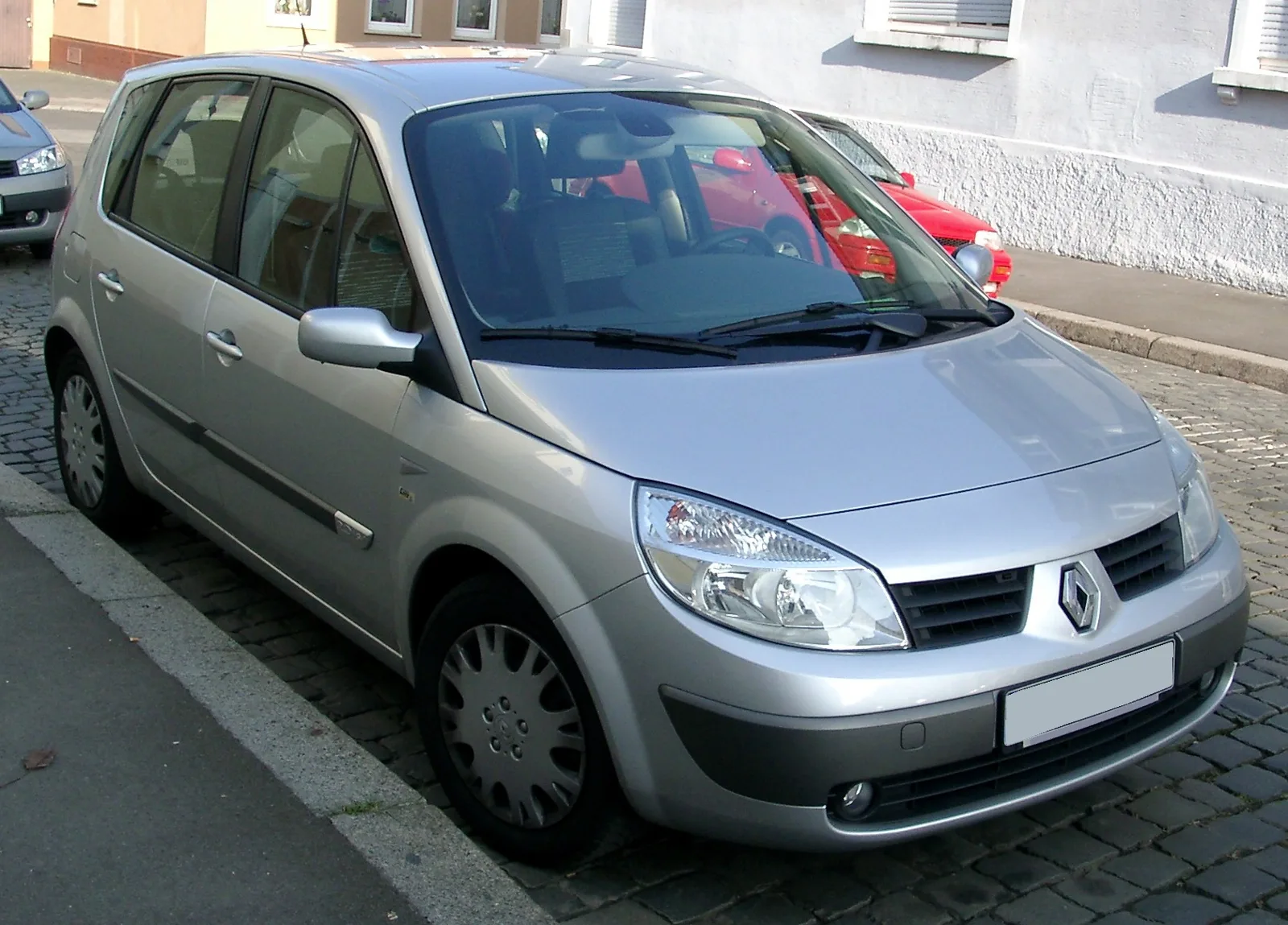
The Renault Scenic II was the second-generation compact MPV from Renault, built from 2003 to 2009 on the Megane platform. It came in five-seat and seven-seat Grand Scenic forms, was facelifted in 2006 and 2008, and spawned the Scenic Conquest and the hydrogen ZEV H2.
Renault's second Scenic arrived in 2003 and gave the compact MPV niche a seven-seat sibling, the Grand Scenic. Over its run it picked up two facelifts, an off-road Conquest version and a hydrogen prototype built with Nissan, and each step tells a different part of the model's story.
Where did the second Scenic come from?
The first Scenic, launched in 1996, created the compact MPV class, and rivals such as the Opel Zafira and Citroen Xsara Picasso followed in 1999. The Nissan Almera Tino came in 2000 and the Toyota Corolla Verso in 2001. In 2003, alongside the second-generation model, the Volkswagen Touran and Ford C-Max also appeared.
By the time the second generation appeared, more than two million first-generation cars had been sold. As the niche grew and competition tightened, Renault increasingly needed to update the Scenic with a new generation.
Development was complete by the summer of 2002. The new car was originally to be shown at the Paris Motor Show that September, alongside the new Megane, but the premiere slipped by half a year for reasons that remain unclear.
The five-seat model was unveiled at the Geneva Motor Show in March 2003. At the show it stood on a closed platform, with its doors welded shut. European sales began in June 2003 at prices from 17,400 to 25,450 euros.
A compact MPV that ended up as a test bed for hydrogen.
How did the Grand Scenic change the range?
The Grand Scenic was the longer seven-seat version, shown at the Frankfurt Motor Show in September 2003 and sold in Europe from March 2004 at 19,800 to 26,650 euros. It had an enlarged wheelbase to accommodate the extra row of seats, and Renault presented it as a new addition to the range.
Sales in Russia of both models began in June 2004, and as of 2005 the Scenic was available there from 19,499 dollars and the Grand Scenic from 22,599 dollars. The car also began selling outside Europe. South Africa received the five-seat model in March 2004 at 170,000 to 220,000 rand, and the Grand Scenic followed in November 2004 at 210,000 to 242,000 rand.
Australia took the five-seat car in March 2005 at 29,990 to 37,690 Australian dollars. The seven-seat Grand Scenic arrived there much later, in February 2007, after the model had already been facelifted. Its price was 39,990 dollars, against 33,990 to 36,490 dollars for the five-seater.
Why did Renault cut the third row of seats?
The seven-seat version sold three times worse than the five-seat, so Renault introduced a cheaper variant of the Grand Scenic with no third row. The change came with the July 2006 facelift.
Without the third row the boot floor sat 30 mm lower, and boot volume grew by 58 litres, to 533 litres. With the rear seats folded it offered 1,960 litres. A new 32-litre underfloor compartment appeared beneath the boot floor, and the total of the cabin's hidden storage came to 104 litres.
What changed in the 2006 facelift?
The July 2006 facelift focused on equipment, engines and gearboxes rather than on looks. It added Bluetooth support, a USB port and a 3.5 mm jack in the glovebox, a more powerful climate system and a front parking sensor to join the rear one.
On the optional Carminat multimedia system, with its CD changer and colour 6.5-inch screen, a joystick now sat on the centre console under the driver's right hand. Russia did not get that option.
The electric power steering was retuned for a smoother effort and less assistance near zero speed, and the dampers were revised as well. A new two-litre turbodiesel with 150 PS (110 kW; 148 hp) joined the range. Its maximum torque of 340 Nm (251 lb ft) arrived at 2,000 rpm, and it was not sold in Russia.
An adaptive six-speed automatic gearbox, developed jointly with Nissan, also became available. Outside, the Scenic received a V-shaped grille similar to the Megane updated that year, and a front bumper with a wider air intake like the one on the Espace. Five new body colours arrived, namely Twilight Blue, Extreme Blue, Iceberg Blue, Beige Grey and Guava Green.
The development cost of the updated models was about 66 million euros. Prices in France ran from 18,750 to 30,700 euros for the standard model, and from 21,050 to 31,900 euros for the seven-seat Grand Scenic.
Specifications at a glance
| Item | Detail |
|---|---|
| Production | 2003 to 2009 |
| Platform | Second-generation Renault Megane |
| Body | Five-seat Scenic; seven-seat Grand Scenic with a longer wheelbase |
| Turbodiesel (from 2006) | Two-litre, 150 PS (110 kW; 148 hp), 340 Nm (251 lb ft) at 2,000 rpm |
| Scenic Conquest engines | 1.5-litre or 1.9-litre diesel; 1.6-litre or 2.0-litre petrol |
| Scenic Conquest ground clearance | Raised by 20 mm |
| Boot (Grand Scenic without third row) | 533 litres; 1,960 litres with rear seats folded |
| ZEV H2 hydrogen tank | 350 bar |
| ZEV H2 battery and motor | 400 volts, 25 kW battery; 90 kW electric motor |
| ZEV H2 mass | 1,850 kg (4,079 lb) |
| ZEV H2 performance | 160 km/h (99 mph), 0 to 100 km/h in 14.65 seconds, 350 km range |
What was the Scenic Conquest?
The Scenic Conquest was the off-road styled version presented in March 2007, with plastic body add-ons, 20 mm more ground clearance and roof rails. It kept front-wheel drive, unlike the earlier RX4, and it was built only as a short-wheelbase model.
The look was darker. The headlights were darkened, the interior had a dark trim and special rubber mats with a logo, and ten body colours were offered, including the exclusive Cayenne Orange. New dampers with a longer travel and special anti-slip tyres joined a retuned stability control system.
Buyers could choose a 1.5-litre or 1.9-litre diesel, or a 1.6-litre or 2.0-litre petrol. The Russian version had extra steel sump guards, revised suspension and an engine suited to cold running. The Conquest went on sale in June 2007 and cost 16,765 to 18,965 pounds in the United Kingdom, which was 550 pounds more than the base car. In Russia it arrived in mid-October 2007 at 701,500 to 784,950 roubles.
In South Africa the model became the Scenic Navigator. It launched in February 2008 with a two-litre petrol engine and a six-speed manual gearbox, at 238,000 rand. A 1.9-litre diesel joined in April 2008 at 252,000 rand, and the update of autumn 2008 also reached this version.
What were the limited editions?
Renault built several limited British and German editions. The Scenic Rush arrived in July 2004 between the Authentique and Expression trims, while the Scenic Maxim of April 2005 was based on Dynamique and added 16-inch alloy wheels by Louxor and climate control.
The Rush offered air conditioning, a 4x15 W RDS radio with CD, six speakers, six airbags and adjustable front head restraints. It came in Pacific Blue or one of three metallic colours, and it cost 12,995 pounds sterling. The Megane hatchback was produced in the same version alongside the Scenic.
The Maxim added cruise control with a speed limiter, partial leather trim and a sliding central storage box, available for an extra 1,150 pounds. Orders ran from April to June 2005, after which sales stopped.
In January 2006 Germany received the Scenic Avantage and Scenic Exception, which changed mainly the interior. The Exception had 17-inch Nervasport wheels and a Luxe pack with automatic air conditioning and Keycard Handsfree keyless entry. In October 2007 it was re-released for all European Union markets with an almost entirely black interior, 1.6-litre petrol and 1.5-litre diesel engines, and a price 500 euros above the Dynamique base.
The Avantage version, meanwhile, added a panoramic roof and the Confort and Fairway packs. These brought electric windows at both ends of the car, electrically adjusted heated mirrors, air conditioning and a four-disc CD radio of 15 W. Outside, it had fog lights, exclusive wheel designs and mirrors and door handles painted in body colour.
A British special called the Scenic Extreme was also offered, and from November 2008 it was renamed Scenic Team. It was available on both the short- and long-wheelbase bodies.
How did the ZEV H2 come about?
The Scenic ZEV H2 was a hydrogen-fuel prototype built by Renault with its alliance partner Nissan, based on the five-seat long-wheelbase Scenic. The two companies agreed in 2006 to develop it, and it was demonstrated at an ecological forum in Barcelona in June 2008.
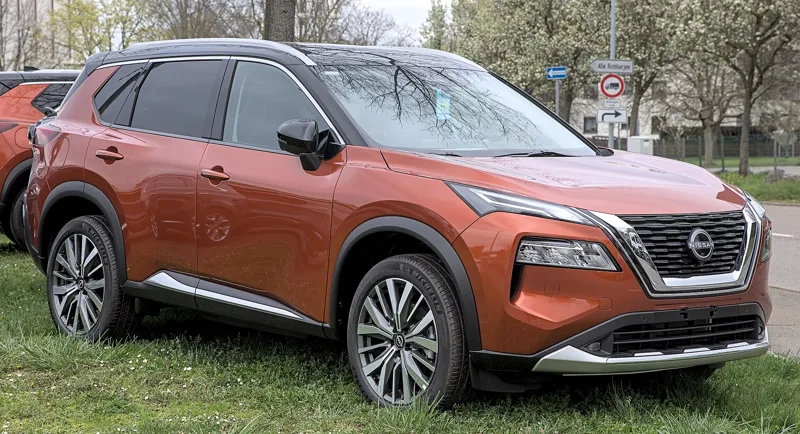
Nissan had already built hydrogen cars on its own, including a 2005 car based on the first-generation X-Trail. Development on the Scenic took about 15 months. The cars for the hydrogen engines were assembled in France, and in September 2007 they were sent to Japan to check computer calculations in practice.
Checks in Japan showed that Nissan parts would work in Renault cars. Road tests of the first prototype began late in 2007, and the project was complete by the end of April 2008. The companies saw the Scenic project as one piece of a wider plan for hydrogen-powered vehicles.
The power unit combined a hydrogen tank at 350 bar, a lithium-ion battery of 400 volts and 25 kW, and a 90 kW electric motor. Nissan supplied all the powertrain components, and Renault adapted the car to take them. The system could work in five different power modes.
On starting, parking and at low speeds, the motor drew power only from the hydrogen tank. At steady motorway speed it ran from the batteries and sent surplus energy back to them. For fast overtaking or high speed, the tank and battery powered the motor together, and under braking only the fuel cell worked.
Renault raised the ground clearance by 60 mm and lifted the boot floor to house the tank. A different radiator grille set the car apart outwardly. The fuel gauge became a hydrogen pressure indicator. The mass rose from 1,550 kg (3,417 lb) in the 1.9-litre diesel model to 1,850 kg (4,079 lb). The top speed was 160 km/h (99 mph), 0 to 100 km/h took 14.65 seconds, and the range was 350 km.
What did the 2008 facelift change?
The September 2008 facelift added a chrome radiator grille and black headlight surrounds, and it removed the plastic body trim so that the cladding matched the paint. Chrome trim also appeared on the door handles and mirrors. It cut the option packs from ten to four and reduced the possible equipment combinations from 84 to 27.
Inside, the model gained air conditioning, an RDS CD radio, a leather steering wheel, an automatic handbrake and front and rear electric windows. The four packs were City, Comfort, Convenience and Handling. The Handling Pack included ESP, traction control and tyre pressure monitoring.
The UK base price was 14,495 pounds. Orders opened in October 2008 and sales in November. This update closed the second-generation story, which gave way to the third-generation Scenic and Grand Scenic presented at Geneva in March 2009. Sales of the new seven-seat model began in May 2009, and the five-seat followed in July 2009.