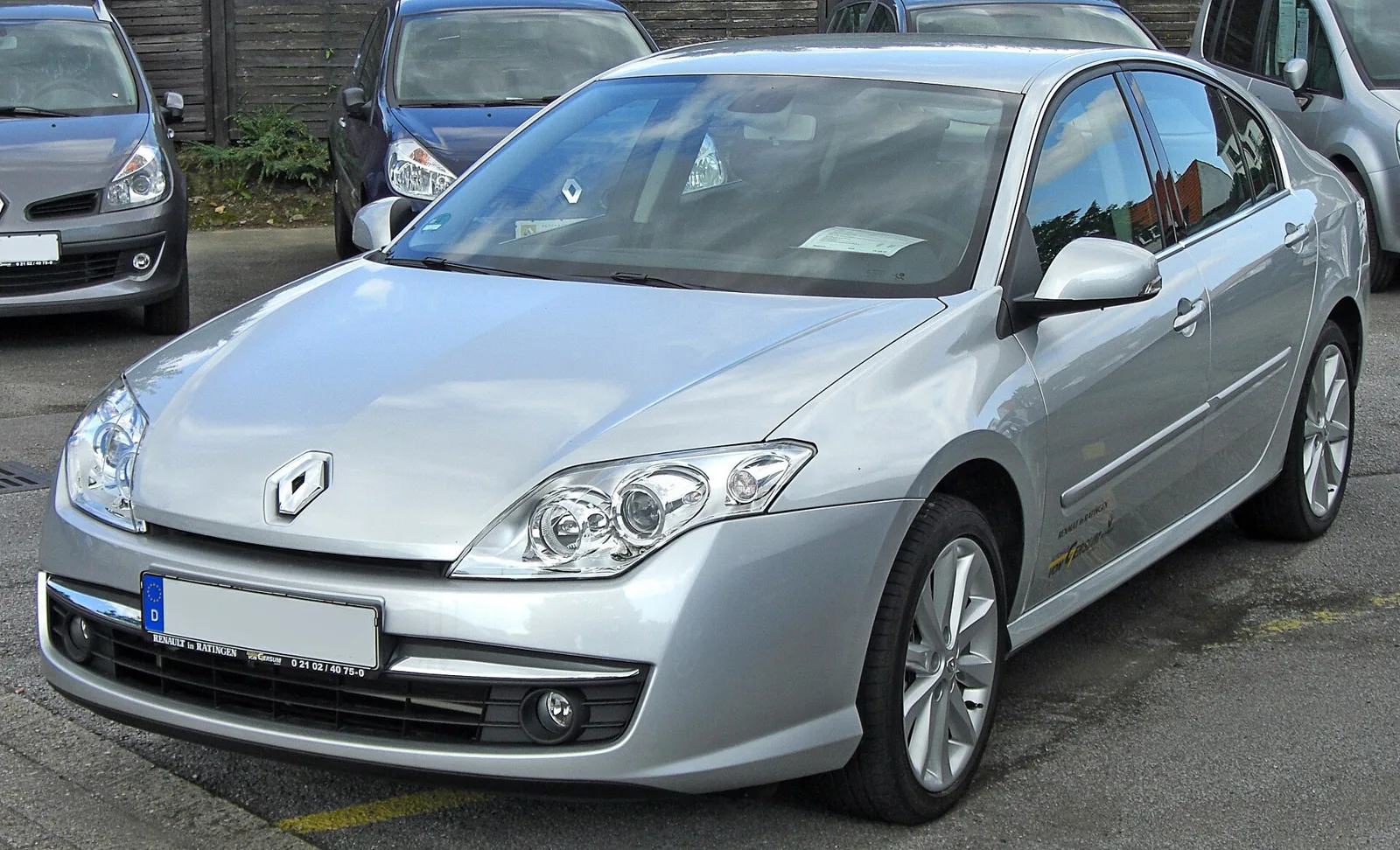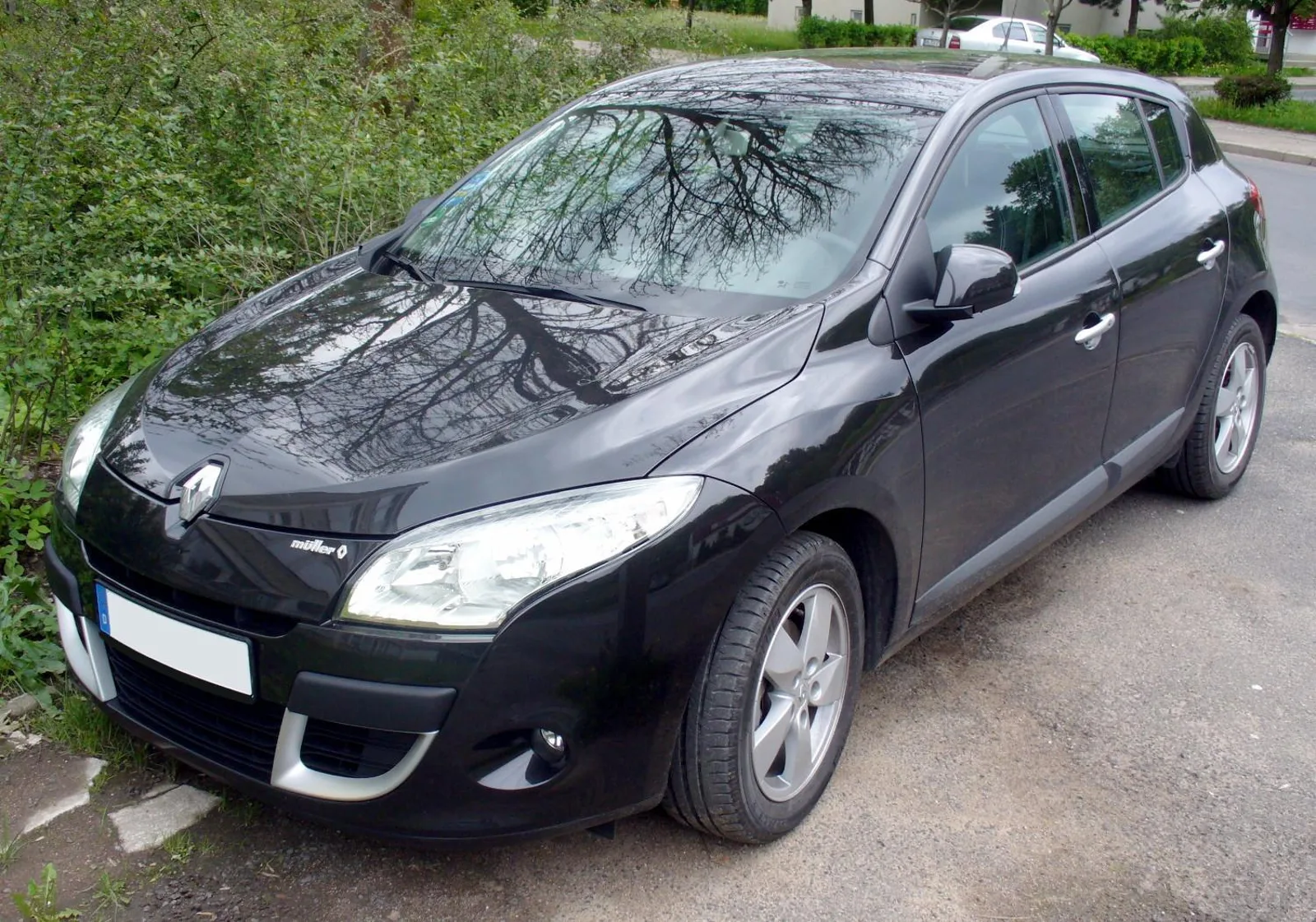
A cautious third-generation Megane from 2008, with a sporty coupe, a supercharged RS and two restyles before the fourth generation arrived.
Launched in 2008, the Megane III brought a more cautious design and a range of petrol and diesel engines. A three-door coupe followed in 2009, with a supercharged RS later, and two restyles came before the fourth generation took over.
The Renault Megane III was the third generation of the Megane, a lower-medium car built by Renault from 2008 to 2016. It arrived after sales of its predecessor had slipped, and Renault set out to win broad approval rather than devoted fans. The three-door coupe followed in 2009 as the sportier version of a saloon with restrained lines.
Why did Renault change direction for the third-generation Megane?
Sales of the second-generation Megane began to fall in the second half of the noughties. Chairman Carlos Ghosn, in charge from 2005, chose a more cautious, customer-driven approach than his predecessor Louis Schweitzer, who had favoured original solutions. The aim was wider approval, without splitting buyers into fans and critics.
Ghosn also had to persuade the design chief, Patrick Le Quement, to take the same line. Le Quement had produced striking cars before, including the first Twingo and the Megane II, and some less fortunate bolder ones such as the Vel Satis and the Avantime.
The new car was meant to beat the Opel Astra and Volkswagen Golf, as well as the first-generation Peugeot 308, which would appear before the compact Renault did. Caution was the tool for that job, since bolder shapes risked dividing the customers the car needed to win.
Caution was the tool, since bolder shapes risked dividing the customers the car needed to win.
How was the B95 project developed?
The B95 project began under Schweitzer, who had started it a year before Ghosn took over at Renault. From 2006 it was carried forward by the Renault Technocentre, a design and development centre built in 1998 about 20 km from Paris. The centre was already using advanced methods such as performance simulation in virtual reality.
The project cost 1.8 billion euros, which was 30% less than the cost of the project that produced the second-generation Megane. Hundreds of prototypes were put through punishing tests in the harshest weather, from Lapland's frozen tracks to the heat of Turkish dirt roads.
Renderings reached the specialist press in 2006, and almost a year later the main motoring magazines published forms that were close to final. This time the split was inside Renault's headquarters. Project managers and senior executives were divided between those who trusted the new car and those who were uneasy about its less bold bodywork.
What did the third-generation Megane look like?
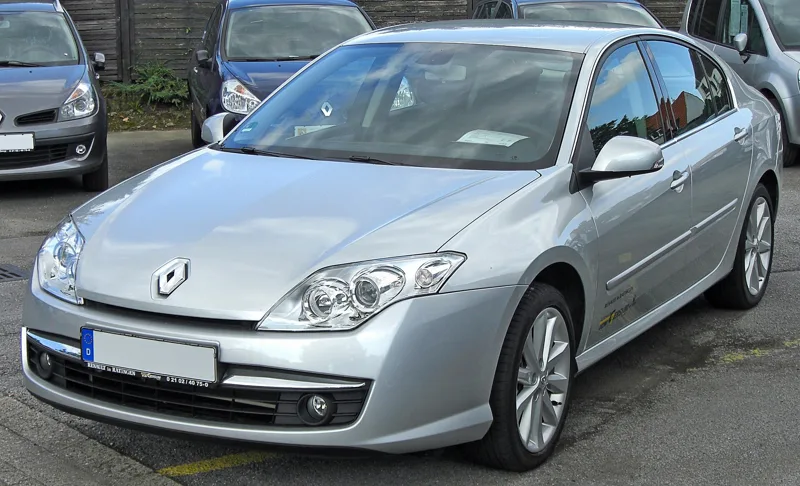
From the first look, the saloon showed a less daring approach than the five-door Megane II it replaced, with rounder lines and a handful of angular details added to give the car a family feel.
The front had no grille, and its light clusters had lower sections cut in a design that echoed the third-generation Laguna shown a year earlier. Two longitudinal ribs ran along the sides of the bonnet and converged on the logo, giving the whole sheet metal a concave shape.
The side view showed the conservative approach most clearly. The beltline rose towards the rear, where the old Megane kept it almost parallel to the road. Bumper strips were built into the doors, and the rear lights were elliptical with a double point on the upper edge. The rear window was larger than in the previous generation.
What was the Megane III interior like?
The cabin was roughly as roomy as that of the Megane II, even though the body grew by 9 cm while kerb weight fell by 8 kg, because the wheelbase barely changed, with just one centimetre added. The driving position borrowed curved lines from the Coupe Concept, most visibly in the dashboard.
The dashboard mixed analogue instruments, a rev counter, with digital ones, a speedometer and an information display. Round dials sat beside a rectangular screen, and the controls were grouped in a rational way with no excess. A digital display dominated the dashboard, with the air vents and climate controls below it and the CD player further down.
Front headroom was good, but rear headroom was less so because the roofline sloped down, which caused problems for taller passengers. The boot was where the car beat its rivals at launch: 405 litres, expandable to 1,162 litres with the rear backrest folded. Numerous storage compartments were spread around the cabin, a choice made to match rivals such as the Opel Astra, which was by then near the end of its third-generation life.
What engines did the Megane III launch with?
At its debut the Megane III came with six engines: two petrol, one bi-fuel petrol and LPG, and three diesel. They ranged from a 90 PS 1.5 dCi up to a 2.0 16v petrol with 140 PS, and only the 1.5 dCi 90 PS had a five-speed manual.
The mechanical base offered nothing new, because the platform was an update of the one used for the Megane II. Improvements to the suspension made the car more precise and lively. The front uses the traditional MacPherson layout, the rear is a torsion beam with interconnected wheels and a trailing arm, and both axles have coil springs and telescopic hydraulic dampers.
Three gearbox options applied at the start. The 90 PS 1.5 dCi was the only one with a five-speed manual, the 2.0 16v came with a CVT continuously variable transmission, and the other engines were paired with a six-speed manual.
Megane III engines by version
| Engine | Displacement | Output | Introduced |
|---|---|---|---|
| 1.6 16v petrol | 1,598 cc (97.5 cu in) | 110 PS (81 kW; 108 hp) | Launch |
| 1.6 16v LPG bi-fuel | 1,598 cc (97.5 cu in) | 105 PS (77 kW; 104 hp) | Launch |
| 2.0 16v petrol | 1,997 cc (121.9 cu in) | 140 PS (103 kW; 138 hp) | Launch |
| 1.5 dCi | 1,461 cc (89.2 cu in) | 90 PS (66 kW; 89 hp) or 110 PS (81 kW; 108 hp) | Launch |
| 1.9 dCi | 1,870 cc (114.1 cu in) | 130 PS (96 kW; 128 hp) | Launch, replaced in 2012 |
| 1.4 TCe | 1,397 cc (85.3 cu in) | 130 PS (96 kW; 128 hp) | Coupe debut, 2009 |
| 2.0 TCe | 2-litre turbo | 180 PS (132 kW; 178 hp) | 2009, 190 PS (140 kW; 187 hp) in some markets from 2012 |
| 2.0 dCi | 2-litre diesel | 160 PS (118 kW; 158 hp) manual, 150 PS (110 kW; 148 hp) automatic | Late 2009 to early 2010 |
| RS | Supercharged 2-litre petrol | 250 PS (184 kW; 247 hp) | 2009 |
| 1.2 TCe | - | 115 PS (85 kW; 113 hp) | 2012 |
How did the Megane III change through 2010?
The coupe arrived with the new 1.4 TCe, a unit of 130 PS (96 kW; 128 hp) that the saloon soon received too. The 2.0 TCe with 180 PS (132 kW; 178 hp) debuted in 2009, and the 2-litre diesel followed at the turn of the decade in two power variants.
In 2009 the base trim was renamed Confort. The same year brought the top performance version, a supercharged 2-litre petrol with 250 PS (184 kW; 247 hp), which took over the name and badge of the old Megane RS. It was the largest novelty of 2009, and a bioethanol version with the 1.6 16v rated at 110 PS (81 kW; 108 hp) arrived too, though not in Italy.
Nothing much happened in 2010, apart from the 2-litre diesel reaching markets that had not yet received it. The GT Line trim arrived that year for the 2.0 TCe 180 PS and the 2.0 dCi 160 PS. It brought a chassis with sporty settings, lowered by 12 mm, which was the same chassis used on the coupe, plus bumpers of a specific design.
What happened with the 1.6 and the 2012 restyle?
In 2011 the 1.6 version left some European price lists, though not Italy's, because its engine was rather dated in concept. In March 2012 a light restyle reworked the lower part of the front light clusters and widened the bumper to take in the fog lamps.
The headlamps gained LED technology, although the base versions did without it. The 1.2 TCe took over from the naturally aspirated 1.6 16v in many countries. In some markets the 2-litre TCe moved up to 190 PS (140 kW; 187 hp), and the diesel range added the 1.6 dCi from the Energy family, with very low consumption and emissions.
The 1.6 dCi produced 130 PS and replaced the older 1.9 dCi of the same power, sitting alongside the 1.5 dCi. The smaller diesel also received major updates that brought it into the Energy range, and it was offered with 90 and 110 PS. The stronger 1.5 could be ordered with an EDC dual-clutch gearbox. The three new engines of the restyle came as standard with Stop and Start.
What changed in the 2013 restyle?
In 2013 the 1.6 was offered only in bi-fuel form where it was still sold, and the petrol version disappeared for good. The 2.0 dCi was revised, with its output rising from 160 to 163 PS (120 kW; 161 hp). In September the second restyle was unveiled at the Frankfurt Motor Show, and this time the cosmetic changes went further.
The front received a new grille, no longer almost invisible, in line with the new design direction chosen by Renault's design chief Laurens van den Acker. It now consists of two black moustache shapes that widen in the centre to house a larger Renault logo. The front light clusters became flatter and more aggressive, and the front bumper integrated LED lights.
The R-Link infotainment system debuted on the Megane, and the 1.2 TCe at 131 PS (96 kW; 129 hp) replaced the old 1.4 TCe of the same power. It sat alongside a 116 PS (85 kW; 114 hp) 1.2 TCe, and the naturally aspirated 1.6 with 110 PS lived on in some markets. The larger petrol engines left the list, apart from the 2-litre of the RS, which remained a coupe-only offering. On the diesel side, the base 1.5 dCi rose from 90 to 95 PS (70 kW; 94 hp).
How did the Megane Coupe differ from the saloon?
The coupe came from the Paris Motor Show of 2008 and reached European price lists in February 2009. Its introduction marked Renault's return to the compact coupe segment, a gap of five years since the Megane Coach left the price list in 2003. The sportier variant had been previewed by the Megane Coupe concept at the Geneva Motor Show.
The coupe's bodywork was much more aggressive, especially at the rear, where the roofline curves most noticeably. The front had triangular air intakes taken straight from the concept, which set its bumper apart from the saloon's. The rear lights were square with curved upper sides, unlike the saloon's upward-pointing tips, and the rear window was semicircular and followed the curve of the boot lid.
Boot capacity was lower than the saloon's, at 377 litres, dropping to 991 litres with the seat folded. The cabin mixed saloon features with new ones aimed at sportiness, including a lower driving position and more enveloping seats. Mechanically the coupe took almost everything from the saloon, with the 12 mm lowered suspension as the main difference.
At launch the coupe offered nearly the same engines as the saloon, with the addition of the new 1.4 TCe. That engine came from Nissan's engine production and displaced 1,397 cc (85.3 cu in) with turbocharging, giving 130 PS (96 kW; 128 hp). Its capacity paid tribute to the much-loved 1.4 Renault that powered the Supercinque GT Turbo in the eighties. The coupe's 2-litre turbo with 180 PS also debuted there, and both engines later spread to the other body styles.
How did the Megane III end its run?
The saloon was removed from price lists in January 2016, although its production had already ceased in autumn 2015. The fourth generation was presented at the 2015 Frankfurt Motor Show and was due in the first months of 2016. During the summer the Sportour estate also stopped being sold.
That left the coupe alone to represent the third generation in the months that followed, while the fourth generation was being prepared for sale.
What did the GT220 add in 2014?
A year after the 2013 update the range gained the GT220, aimed only at the British market. It sat immediately below the RS and used the 2-litre turbo with 220 PS (162 kW; 217 hp), previously seen only in an estate variant for a few European markets. The GT220 came as a saloon, coupe and estate.